
Washed Sand Calculator
— How Much Do You Need?
Instant washed sand calculator—precise yardage, weight, and bag estimates for your project.
How to Use This Washed Sand Calculator
Planning a washed sand project requires precise measurements to ensure you order enough material without overspending.
- 1 Enter Dimensions — Input the length and width of your area in feet. Round up slightly for a buffer.
- 2 Choose Depth — Select the depth in inches. For most washed sand projects, 3–6 inches is standard.
- 3 Review Results — Instantly see cubic yards and tons needed to accurately plan your order.
Visual Area Guide
Use these diagrams to measure your project area correctly.
Rectangular Area
Measure length × width for square or rectangular areas. Most driveway, patio, and grading projects use this method.
Circular Area
Measure the radius (half the diameter) for round beds, drain fields, or circular landscaping. Formula: π × radius².
Material Coverage & Grading
Common washed sand grades and applications per ASTM, AASHTO, and DOT standards
| Grade | Application |
|---|---|
| ASTM C33 | Well-graded fine aggregate (100% passing No. 4 sieve, ≤3–5% passing No. 200) washed to remove silt, clay, and organics. Sub-angular quartz particles provide excellent workability and bond strength in cementitious mixes. Primary choice for ready-mix concrete, field mixing, and masonry mortar production. |
| AASHTO M6 | Fine aggregate specification equivalent to ASTM C33, recognized by highway and DOT agencies for concrete and structural backfill applications. Washed to strict cleanliness limits ensuring consistent performance in pavement and utility construction. Widely accepted on federally funded and state DOT projects as a direct C33 substitute. |
| C778 20-30 | Uniform coarse-end washed sand passing the No. 20 sieve (850 μm) per ASTM C778, sourced exclusively from natural silica deposits with no crushed or contaminated material. Narrow, tightly controlled particle size distribution designed specifically for mortar and hydraulic cement testing. Used in laboratory evaluation of Portland cement strength and consistency. |
| C778 Graded | Broader-gradation testing sand per ASTM C778, with defined percentages passing No. 40 (60–75%) and No. 50 (16–30%) sieves to simulate job-site fine aggregate conditions. Washed silica sand free of clay and organics to minimize air-entrainment variability in mortar specimens. Used in hydraulic cement and masonry mortar testing protocols. |
| WSDOT Cl. 2 | Pacific Northwest DOT-specified washed fine aggregate conforming to WSDOT Class 2 gradation, aligned with ASTM C33 limits for concrete and utility backfill. Clean, sub-angular particles meet strict silt and clay removal requirements for structural applications. Specified on WSDOT projects for concrete production, trench backfill, and utility bedding. |
| Non-Spec | Non-specification washed sand with looser gradation tolerances, predominantly sized between No. 50 and No. 100 sieves (150–300 μm) and 100% passing No. 30. Washed to remove harmful fines but does not fully satisfy ASTM C33 or DOT concrete requirements. Suitable for slab fill, trench backfill, stormwater filtration, and landscaping uses such as sandboxes and volleyball courts. |
Plan Your Next Project
Patio Pavers Calculator
Paver calculator — estimate an accurate paver count plus base material for your patio. Enter dimensions, paver size, and joint spacing to plan your layout.
Flagstone Patio Calculator
Flagstone calculator — estimate tonnage and base material for your patio. Enter area dimensions and stone thickness for weight and coverage per ton.
Paver Patio Calculator
Paver patio calculator — estimate the exact paver count, sand, and gravel base for your project. Enter dimensions and paver size for a full materials list.
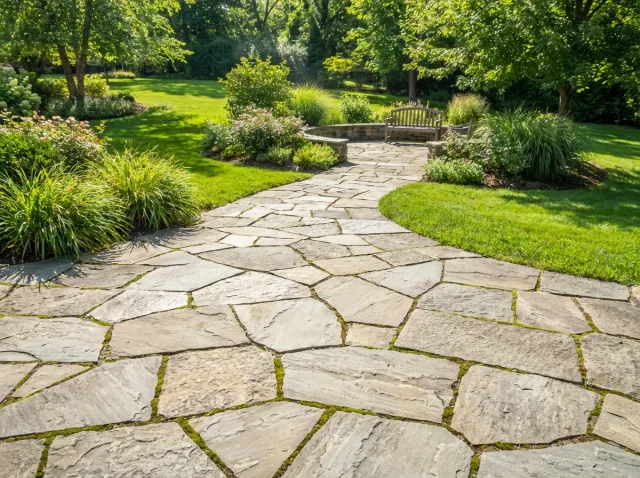
Stone Walkway Calculator
Stone walkway calculator — estimate how much flagstone, pavers, or stepping stones you need. Includes base gravel and sand estimates for proper build.
Frequently Asked Questions
What is washed sand, and what is it used for?
Washed sand is natural sand that has been processed through water to remove silt, clay, dust, and organic material. What you end up with is a clean, consistent product with a predictable grain size and very little fine content left behind. That cleanliness and consistency are exactly what make it so useful across such a wide range of projects. Homeowners and contractors reach for washed sand when they need a reliable material that performs the same way every time. You can use it to mix concrete or mortar, set a bedding layer under pavers or flagstone, fill joints between patio blocks, create a stable base beneath an above-ground pool or playground equipment, bed pipe in drainage or utility trenches, or level out areas that need clean, workable fill. Its drainage characteristics also make it a popular choice for improving soil in planting areas or around foundation drainage systems. Whether you are a homeowner laying a backyard patio or a contractor managing a larger site, washed sand is one of the most versatile aggregates you can order in bulk. If you are not sure how much you need for your specific project, the Hello Gravel online calculator can give you a solid estimate based on your dimensions.
What is the difference between washed sand and unwashed sand?
The core difference comes down to what is still mixed into the sand when it reaches you. Unwashed sand, often called bank sand or fill sand, comes out of the ground with natural fines still present. Those fines include silt, clay, and fine organic particles. Because of that, unwashed sand tends to be inconsistent from load to load, holds moisture unevenly, and can introduce contaminants that cause problems in concrete, mortar, or tightly engineered base layers. Washed sand goes through a water-based cleaning process that removes those fines. The result is a more uniform grain size, better drainage performance, and a material that behaves predictably in structural and finish applications. When you mix it into concrete, the cement bonds more cleanly to the aggregate. When you use it as a bedding layer under pavers, it compacts more evenly. When you need reliable drainage, it moves water through without clogging. That said, washed sand is not always necessary. If you are filling in a low spot in your yard, grading around a building pad, or need bulk fill that will be buried and never seen, unwashed fill sand will often do the job at a lower cost. Washed sand earns its place when performance matters, not just volume.
What does washed sand look like, and how can you tell the difference between grades?
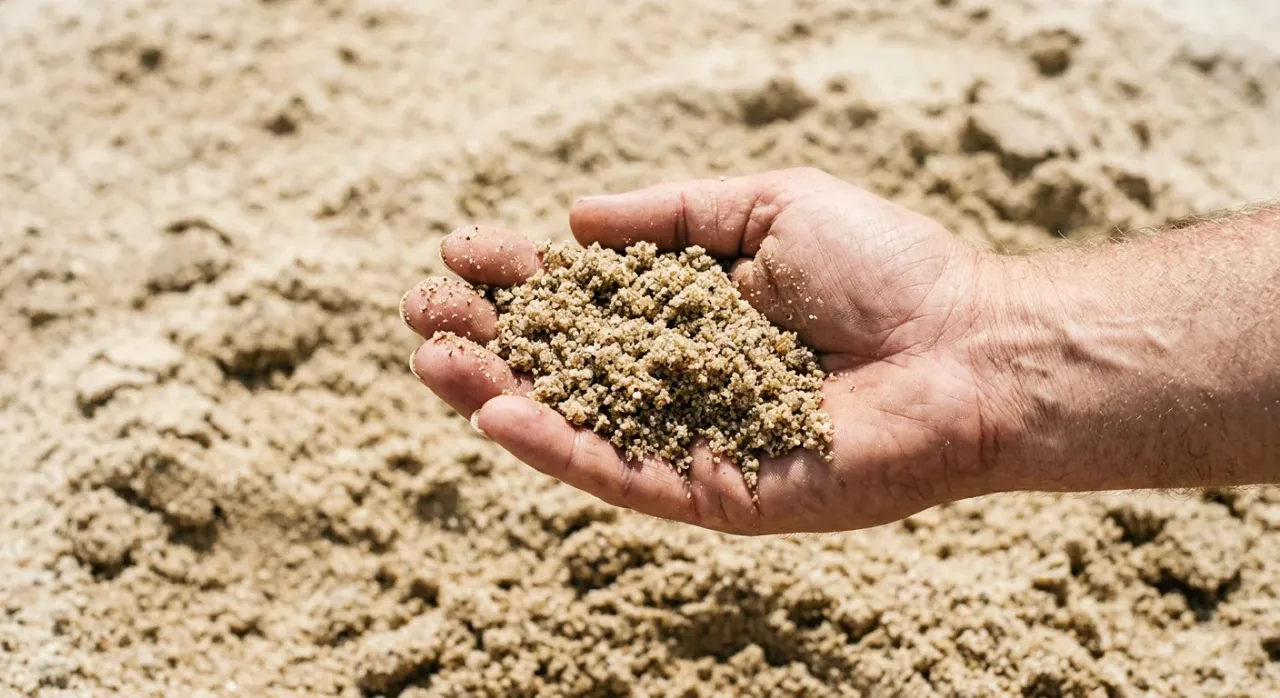
Washed sand has a noticeably clean appearance compared to unwashed material. Because the dust and clay coating has been removed, the grains tend to look bright, whether that is a pale tan, off-white, or light gray depending on the mineral composition of the local source rock. If you pick up a handful of true washed sand, it should run freely through your fingers without leaving a dusty residue or staining your palm. A brownish or muddy residue after handling is a reliable sign that fine clay particles are still present. The grain size is the main visual difference between grades. Washed concrete sand is coarser, with angular particles that almost look sharp up close. That angularity is intentional since it helps the grains interlock for strength in concrete mixes and base applications. Washed mason sand, by contrast, is noticeably finer and smoother. The grains are smaller and rounder, giving it a texture that works well for mortar, joint fill, and anywhere a smooth finish is important. Knowing which grade you are looking at matters when you are ordering. If you are not sure which grade your project calls for, the Hello Gravel team is glad to help you sort it out before you place your order.
Is washed sand a good choice for concrete and mortar?
Washed sand is a standard ingredient in both concrete and mortar, and for good reason. When you mix concrete, any excess clay or silt in your sand interferes with how the cement bonds to the aggregate. That weakens the final product and can reduce its long-term durability. Because washed sand has had those contaminants removed, it creates a cleaner, more reliable mix that cures properly and holds up over time. For concrete work, you want a coarser washed sand, typically called concrete sand or coarse washed sand, with angular particles that help the mix develop strength. The angular shape of those grains gives the cement more surface area to bond to and helps the particles lock together inside the cured material. For mortar, stucco, and masonry work, a finer grade called mason sand is the better fit. Its smaller, rounder grains make the mix smoother and easier to work with, and the finish it produces is more refined. Using coarse concrete sand in a mortar application often results in a gritty, hard-to-spread mix, so getting the grade right matters. Hello Gravel delivers both grades in bulk by the truckload. If you have questions about which one is right for your specific mix design or application, reach out to the team and they can point you in the right direction.
Can I use washed sand under pavers or for landscaping projects?
Washed sand is one of the most commonly used materials for paver installations, and it works well for a range of landscaping applications too. When you are laying a patio, walkway, or paved surface with concrete pavers or brick, the standard approach calls for a 1-inch bedding layer of sand spread over a compacted base. Washed sand performs reliably here because its consistent grain size allows it to compact evenly, giving each paver a stable, level seat. A finer washed mason sand is also commonly used to fill the joints between pavers, helping to lock them in place and reduce movement over time. Beyond paver work, washed sand shows up in a variety of outdoor and landscaping projects. It works well as a leveling layer beneath lightweight outdoor structures like play equipment and garden sheds where a smooth surface helps with level placement. It is also used to improve drainage in planting beds when incorporated into native soil, and as a leveling material for low spots in lawns. One thing worth keeping in mind: for driveways, pool bases, or any surface that needs to carry significant load, washed sand should not be used as the primary base layer. You will want a compactable crushed stone or base aggregate underneath to provide structural support, with sand used only as the thin bedding layer on top if your installation calls for it.
Other Material Calculators
Delivery Logistics & Truck Info
Know your delivery options and access requirements before scheduling your order.
Truck Capacities
- Standard Dump Truck 10–14 tons
- Tandem Axle 14–18 tons
- Semi End Dump 20–25 tons
A standard cubic yard weighs approximately 2,000–2,700 lbs depending on material and moisture.
Site Access Requirements
- Trucks require a minimum 12-ft wide, overhead-clear access path
- Soft ground or slopes over 10% may limit truck access — contact us before ordering
- Ensure no underground utilities or irrigation lines are in the drop zone
- Mark your desired drop location clearly before delivery
Important Notes
- Delivery estimates are based on available inventory and route proximity
- Minimum order quantities apply — typically 5 cubic yards or 1 truckload
- Material certification is available upon request for permitted projects
- Always confirm local grading ordinances before major material placement