
River Rock Calculator
— How Much Do You Need?
Quickly calculate cubic yards, tons, and coverage for River Rock to estimate material for beds, pathways, and driveways.
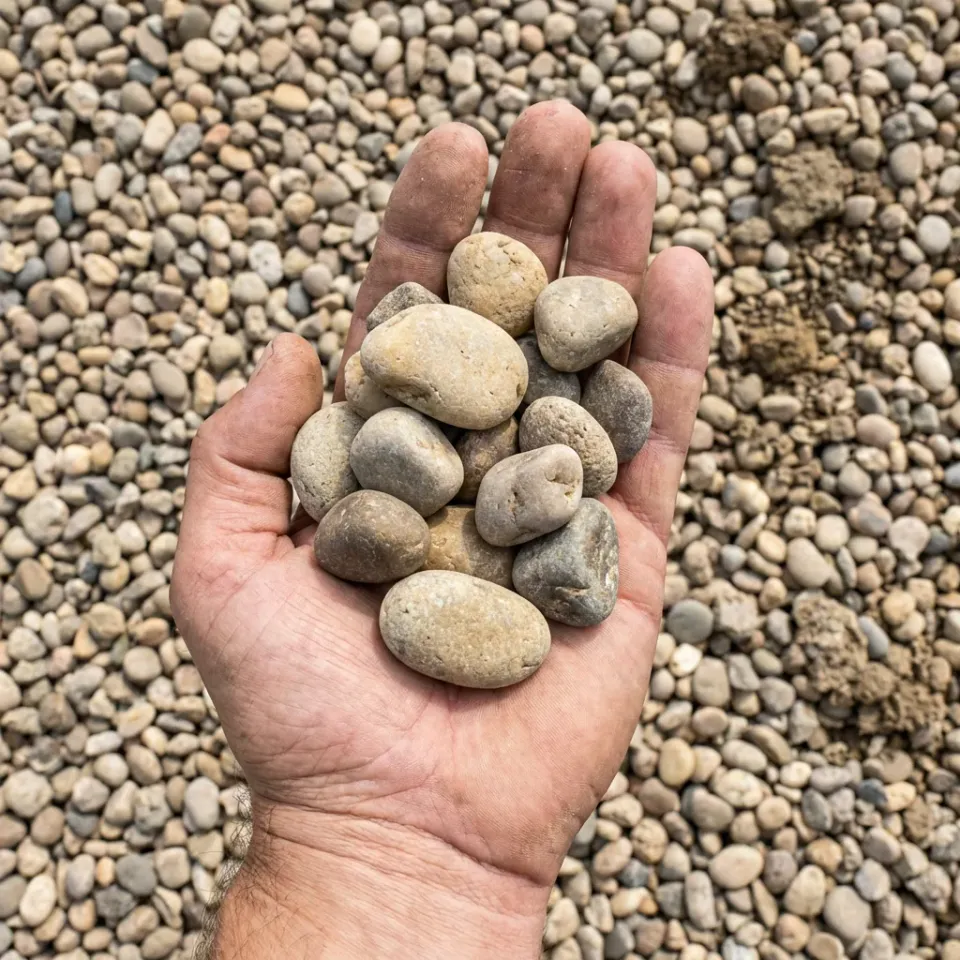
How to Use This River Rock Calculator
Planning a river rock project requires precise measurements to ensure you order enough material without overspending.
- 1 Enter Dimensions — Input the length and width of your area in feet. Round up slightly for a buffer.
- 2 Choose Depth — Select the depth in inches. For most river rock projects, 3–6 inches is standard.
- 3 Review Results — Instantly see cubic yards and tons needed to accurately plan your order.
Visual Area Guide
Use these diagrams to measure your project area correctly.
Rectangular Area
Measure length × width for square or rectangular areas. Most driveway, patio, and grading projects use this method.
Circular Area
Measure the radius (half the diameter) for round beds, drain fields, or circular landscaping. Formula: π × radius².
Material Coverage & Grading
Common river rock grades and applications based on AASHTO M43/ASTM D448 and ASTM C33 classification systems
| Grade | Application |
|---|---|
| Pea Gravel | Naturally rounded small stones nominally 3/8 inch (9.5 mm) in size, with most particles passing the 1/2-inch sieve and retained on the No. 4 sieve. Ideal for decorative landscaping, residential drainage blankets, and permeable pavement systems where a small, clean, rounded stone is required. Provides excellent permeability and an attractive finish for surface applications. |
| Class 2 | Small to medium rounded river rock suitable for drainage blankets, permeable pavement base layers, and decorative landscaping. Graded for consistent sizing with a nominal top size near 1 inch. Meets Caltrans Class II Permeable and ASTM C33 drainage aggregate standards in many regions. |
| #2 Stone | Medium river rock with a nominal size range of 1.5 to 2.5 inches, conforming to ASTM C33 gradation requirements (90–100% passing the 2.5-inch sieve, 35–70% passing the 2-inch sieve). Commonly used for drainage blankets on larger commercial projects, utility trench backfill, stormwater management systems, and erosion control. Rounded shape promotes high permeability and water flow. |
| River Run | Unscreened, naturally occurring mix of rounded stones, sand, and fines as deposited in riverbeds and banks. Contains variable particle sizes and compositions determined by regional geology. Cost-effective material used for general fill, drainage base courses, erosion control, and landscaping where size uniformity is not critical. |
| Large Rock | Larger rounded river rock exceeding 2.5 inches, overlapping with riprap specifications for heavy-duty applications. Used primarily for stream bank stabilization, erosion control along waterways, and large-scale landscaping features. Not suitable for structural load-bearing applications due to rounded particle shape and limited interlocking. |
| Riprap | Oversized river rock or naturally rounded stones used at riprap scale for high-energy erosion control, channel lining, and stream bank protection. Sized to resist displacement by water flow forces. Sourced from river deposits where stone hardness and durability are adequate for the intended hydraulic conditions. |
Plan Your Next Project
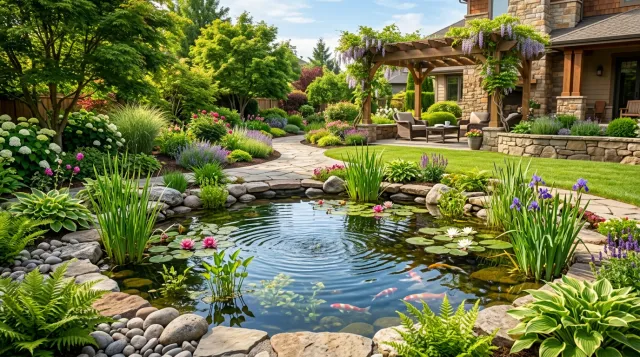
Pond Calculator
Pond calculator — estimate liner dimensions from your pond's length, width, and depth, including overlap allowance. Supports rectangular and freeform shapes.
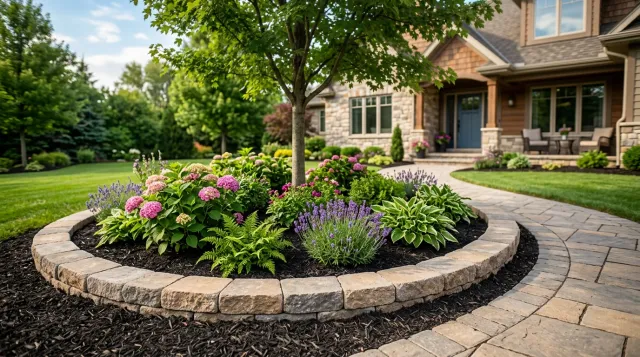
Tree Ring Calculator
Tree ring calculator — estimate mulch for circular rings in seconds. Enter inner and outer diameters plus depth for cubic yards without over-ordering.
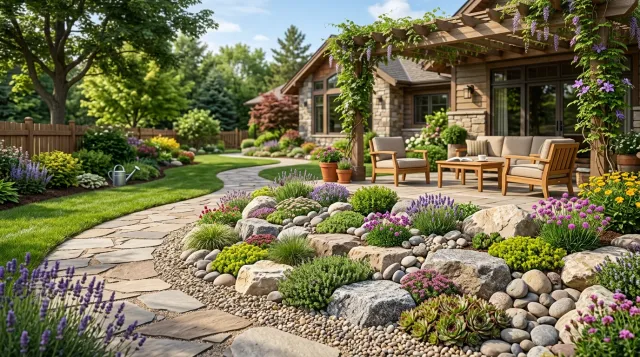
Rock Garden Calculator
Rock garden calculator — estimate how many tons of decorative rock your garden needs. Select stone type, enter bed dimensions, and get coverage totals.
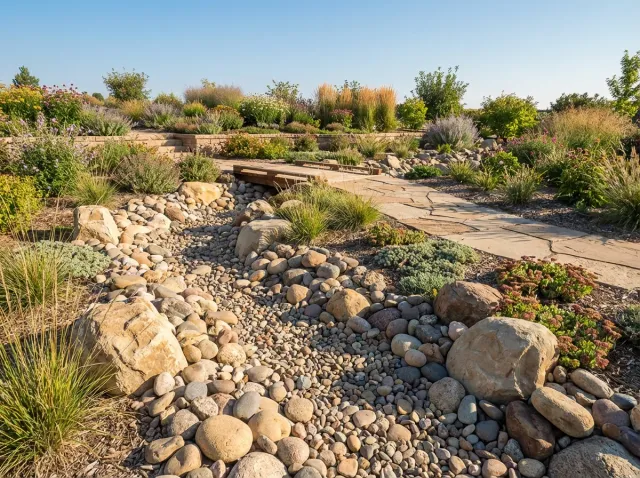
Dry Creek Bed Calculator
Dry creek bed calculator — estimate river rock, boulders, and landscape fabric needed. Input length, average width, and stone depth for tonnage results.
Frequently Asked Questions
How much river rock do I need for my project?
The amount of river rock you need depends on two things: the square footage of your project area and how deep you want to lay the material. As a general guideline, one ton of river rock covers roughly 100 square feet at a depth of 2 inches, or approximately 55 to 65 square feet at a depth of 4 inches. Keep in mind that larger river rock sizes leave more air gaps between stones, so your actual coverage may vary slightly from those estimates. Rather than doing the math by hand and second-guessing yourself, the Hello Gravel online calculator takes the guesswork out of the process. Enter your project dimensions and your target depth, and youll get a precise quantity estimate in tons. When in doubt, it's always smarter to order a little more than you think you need. Running short midway through a project means a second delivery and extra downtime.
How deep should river rock be laid?
The right depth depends on what youre trying to accomplish. For decorative landscaping beds and garden borders, 2 to 3 inches gives you solid, attractive coverage without using more material than necessary. If weed suppression is your main priority, aim for 3 to 4 inches so the layer is thick enough to block sunlight from reaching the soil below. For drainage applications like a dry creek bed or a gravel channel alongside a foundation, 4 to 6 inches is more appropriate depending on the volume of water youre managing. For foot traffic paths, 2 to 3 inches of river rock provides a walkable surface without being overly loose underfoot. Getting the depth right from the start helps you order accurately and avoid having to add material later, so keep your intended use in mind when you punch your numbers into the Hello Gravel calculator.
How much does a truckload of river rock cost?
River rock pricing depends on your location, the stone size you choose, and current material and fuel costs in your area. Because those factors shift over time, quoting a fixed number here would not give you an accurate picture of what you'd actually pay today. The most reliable way to get current pricing is to use the Hello Gravel calculator. Enter your project dimensions and it will show you upfront pricing for your area with no hidden fees. What you see is what you pay. If you want to talk through your project before placing an order, the Hello Gravel team is glad to help you figure out the right quantity and get you a clear number.
What should I lay down before river rock?
The single most important step before laying river rock is installing a landscape weed barrier fabric directly over the soil. This fabric serves two purposes. First, it blocks sunlight so weeds cannot push up through the rock layer. Second, it keeps the stones from gradually sinking into the ground over the years, which helps you maintain consistent coverage with less topping off over time. For drainage channels and dry creek beds, the approach is a little different. In those cases, youll want to grade the ground first so water flows in the intended direction before any rock goes in. For driveways or heavily used paths, a compacted base layer beneath the river rock adds stability and helps prevent the surface from shifting and spreading under repeated traffic. Taking the time to prepare the ground correctly before your delivery arrives will save you a lot of effort on the back end.
Can river rock be used for a driveway?
River rock is not recommended for driveways or parking areas. Because the stones are naturally smooth and rounded, they roll rather than lock together under vehicle tires. That means river rock shifts, scatters, and kicks out underfoot and under traffic and no amount of edging or base preparation changes that, since the problem is the rounded shape of the stone itself, not the installation. For any driveway that sees vehicle traffic, angular crushed stone is the right material because it compacts firmly and holds its position over time. River rock is far better suited to decorative uses like garden bed borders, dry creek beds, and landscaping features where appearance matters and vehicles are not a factor. If you are not sure which material is right for your specific situation, reach out to the Hello Gravel team and describe your project. They can help you choose the right material so you are not spending more time and money fixing it later.
Other Material Calculators
Delivery Logistics & Truck Info
Know your delivery options and access requirements before scheduling your order.
Truck Capacities
- Standard Dump Truck 10–14 tons
- Tandem Axle 14–18 tons
- Semi End Dump 20–25 tons
A standard cubic yard weighs approximately 2,000–2,700 lbs depending on material and moisture.
Site Access Requirements
- Trucks require a minimum 12-ft wide, overhead-clear access path
- Soft ground or slopes over 10% may limit truck access — contact us before ordering
- Ensure no underground utilities or irrigation lines are in the drop zone
- Mark your desired drop location clearly before delivery
Important Notes
- Delivery estimates are based on available inventory and route proximity
- Minimum order quantities apply — typically 5 cubic yards or 1 truckload
- Material certification is available upon request for permitted projects
- Always confirm local grading ordinances before major material placement