
Pea Stone Calculator
— How Much Do You Need?
Estimate pea stone by area and depth—cubic yards, tons, and bag counts for landscaping projects.
How to Use This Pea Stone Calculator
Planning a pea stone project requires precise measurements to ensure you order enough material without overspending.
- 1 Enter Dimensions — Input the length and width of your area in feet. Round up slightly for a buffer.
- 2 Choose Depth — Select the depth in inches. For most pea stone projects, 3–6 inches is standard.
- 3 Review Results — Instantly see cubic yards and tons needed to accurately plan your order.
Visual Area Guide
Use these diagrams to measure your project area correctly.
Rectangular Area
Measure length × width for square or rectangular areas. Most driveway, patio, and grading projects use this method.
Circular Area
Measure the radius (half the diameter) for round beds, drain fields, or circular landscaping. Formula: π × radius².
Material Coverage & Grading
Common pea stone grades per ASTM D448 / AASHTO M43 classification for drainage, landscaping, and utility applications
| Grade | Application |
|---|---|
| No. 8 | The most widely used pea stone grade per ASTM D448; uniform 1/4 to 3/8-inch rounded or sub-rounded natural pebbles with 100% passing the 1/2-inch sieve and 0–10% passing No. 4 (4.75 mm). Washed clean with minimal fines, it delivers maximum void space (30–40%) and excellent permeability. Ideal for drainage envelopes, pipe bedding (Class 2 embedment), landscaping ground cover, and permeable pavement bedding courses. |
| No. 67 | A slightly coarser pea gravel variant per ASTM D448, with nominal particle sizes ranging from 1/2 to 3/4 inch and a broader gradation than No. 8. Still open-graded and free-draining, but with larger voids suited to higher-flow drainage applications. Commonly used in subbase reservoir layers, heavy-duty French drains, and stormwater infiltration beds where volume and flow capacity are priorities. |
| No. 7 | A finer pea stone analog per ASTM D448 with nominal maximum size 3/8 to 3/4 inch (ASTM D448 No. 7 gradation), producing a smoother surface texture than No. 8. Washed and free of clay or organic fines, it provides good drainage while offering a more refined appearance. Well-suited for decorative pathways, patio bases, playground surfaces, and shallow utility trench bedding where a tighter, smoother finish is desired. |
| No. 89 | A fine-end open-graded aggregate per ASTM D448, with particles predominantly passing the 3/8-inch sieve and retained on the No. 16 sieve — smaller than standard pea stone but still clean and rounded. Used as a specialty drainage filter layer in thin-section applications, geotextile-backed erosion control, and fine-aggregate drainage blankets beneath slabs or landscape fabric. Offers tighter void structure than No. 8 for finer filtration needs. |
| Washed 3/8" | A supplier-level designation common in Western states and regional markets, equivalent in gradation to ASTM D448 No. 8 but sold under dimensional nomenclature (3/8-inch washed gravel or pea pebble). Material is river-run or pit-run, washed to remove fines and clay, and sized to a nominal 3/8-inch maximum. Used interchangeably with No. 8 for landscaping mulch alternatives, decorative ground cover, and general drainage fill where ASTM designation is not contractually required. |
| Clean #8 | A Midwest DOT and contractor field term for ASTM D448 No. 8 pea stone meeting state-agency embedment and backfill specifications, emphasizing the 'clean' (washed, fines <5%) requirement. Frequently called out in municipal utility and road construction specs for pipe zone bedding, trench backfill, and permeable interlocking concrete pavement (PICP) bedding layers. Functionally identical to standard No. 8 but with explicit quality-control documentation required by DOT job specs. |
Plan Your Next Project
Tree Ring Calculator
Tree ring calculator — estimate mulch for circular rings in seconds. Enter inner and outer diameters plus depth for cubic yards without over-ordering.
Landscape Edging Calculator
Edging calculator — estimate pieces, rolls, or linear feet for your bed perimeter. Supports metal, plastic, stone, and wood edging types.
Walkway Calculator
Walkway calculator — enter length, width, and depth to estimate the exact gravel volume in cubic yards and tons. Includes recommended depth guidance.
Garden Border Calculator
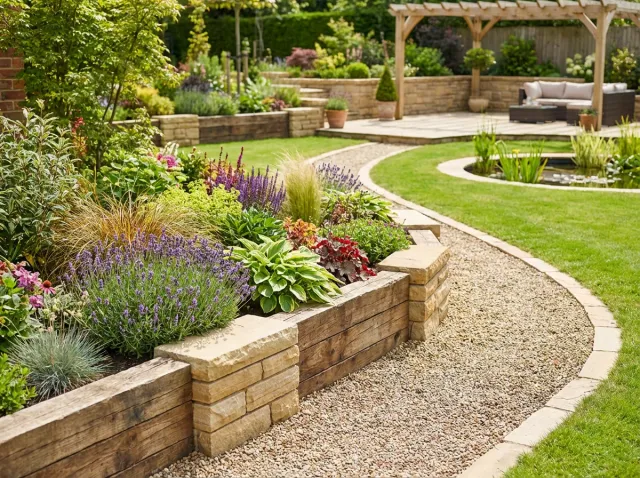
Garden border calculator — estimate how much edging material and fill your border requires. Enter perimeter length and border width for volume estimates.
Frequently Asked Questions
What is pea stone, and what is it also called?
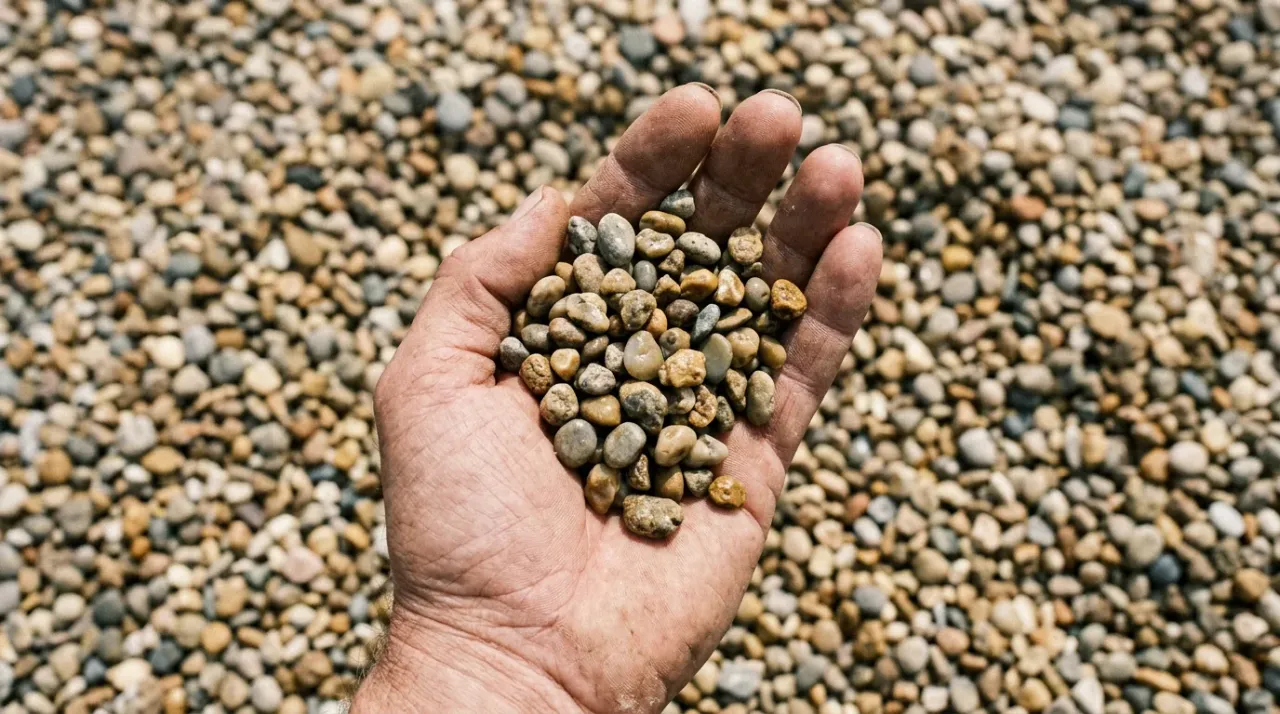
Pea stone goes by several names depending on where you live, including pea gravel, pea rock, and pea pebble. Whatever you call it, the material is the same: a naturally rounded, smooth gravel that typically measures between 3/8 and 1/2 inch in diameter. The name comes from its resemblance to a garden pea, and that small, round shape is exactly what makes it such a popular landscaping material. Unlike crushed stone, which is mechanically broken and has sharp, angular edges, pea stone is naturally water-worn over time. That process gives it a smooth, almost polished surface that feels gentle underfoot and looks clean in any landscape setting. It comes in a natural mix of earthy tones including tan, gray, white, brown, and sometimes soft hints of rose or blue, depending on the region it comes from. That blend of colors and smooth finish is a big reason so many homeowners and contractors reach for it when they want a finished, attractive look.
What is pea stone used for?
Pea stone is one of the most versatile materials you can order for a landscape or outdoor project. Its smooth texture and natural color variation make it a strong choice for any application where appearance is part of the goal.Walkways and garden paths are probably the most popular use. Pea stone creates a clean, finished look that works with almost any landscape design, and its rounded surface is generally comfortable to walk on. Garden beds are another go-to application because the gravel suppresses weeds, helps moderate soil moisture, and looks sharp around plants and shrubs. Pea stone also works well around pool decks and patios because it drains effectively and stays cooler underfoot than concrete or brick surfaces in direct sun. Dog runs and pet areas are another practical use since the smooth stone is easy on paw pads and simple to hose down. For drainage applications like French drains, pea stone allows water to flow freely through the material, making it a functional choice as well as a decorative one. Pea stone is not recommended for driveways. The rounded stones cannot compact and will scatter under vehicle tires, creating an unstable surface no matter how well it is edged. For driveways, a compactable angular material like crusher run or crushed stone is the right call.
Does pea gravel hurt to walk on?
The short answer is no, not typically. Because the stones are smooth and rounded, pea gravel is generally comfortable underfoot, even barefoot in most cases. It is considerably gentler than crushed stone, which has sharp, angular edges that can be unpleasant to walk on without shoes. That said, the experience depends a lot on how deep the material is laid. A shallower layer of about 1 to 2 inches feels more stable and easier to walk across. A deep, loose layer of 4 or more inches can feel a bit like walking through a bowl of marbles. Your feet sink slightly and the surface shifts beneath you, which some people find uncomfortable or tiring over longer distances. For a backyard path, a garden walkway, or a pool surround where people walk barefoot regularly, pea stone installed at a controlled depth is a solid choice. One practical thing to keep in mind: high heels and pea stone are not a great combination. If you are planning the surface for a front entrance, an event space, or anywhere guests in dress shoes will be walking regularly, that is worth factoring into your material decision.
What are the disadvantages of pea gravel, and when should you choose a different material?
Pea stone has a lot going for it, but it is not the right material for every project. Knowing the limitations upfront will save you time, money, and frustration down the road. The biggest drawback is that pea stone does not compact. Because the stones are round and smooth, they roll and shift rather than locking together under weight. This means foot traffic and vehicle loads will push the material around over time. If you lay pea stone on a driveway without solid edging and a firm compacted base underneath, you may find yourself raking it back into place every few months. It can scatter onto lawns, migrate into flower beds, and get tracked indoors on shoes. Pea stone is also not a great choice on slopes or inclines. Without solid containment, gravity will gradually pull the material downhill, and you will end up with bare spots at the top and a pile at the bottom. On any area with significant grade, a crushed angular gravel that can pack and grip the ground is a much better fit. Under heavy outdoor furniture or paver systems, the shifting nature of pea stone can also create instability. If you are setting a pergola, a fire pit pad, or heavy planters, a more compactable base material will serve you better. To put it plainly: if you need stability and structural holding power, crushed angular gravel is usually the stronger choice. If you want a smooth, attractive surface for a relatively flat and lower-traffic area, pea stone is hard to beat.
What should you put down before laying pea gravel?
Getting the foundation right is the most important step in any pea stone installation. Skipping this part is the number one reason people end up disappointed with how their gravel looks and performs after the first season. For garden beds, decorative areas, and pathways, start by clearing the space of grass, weeds, and organic debris. Then lay a landscape fabric or weed barrier over the prepared soil before you add your gravel. This fabric lets water drain through while blocking weeds from pushing up through your pea stone over time. Without it, you will be fighting weeds within a single growing season. Once the fabric is secured, you can spread your pea stone on top. For driveways or any area that will carry vehicle weight or heavy foot traffic, landscape fabric alone is not enough. In those cases, you will want to start with a compacted base layer of crushed angular gravel, typically 4 to 6 inches deep, before adding pea stone on top. That base layer provides the structural stability that pea stone cannot deliver on its own, since pea stone does not compact or interlock. You may have heard that sand can work as a sub-base for gravel. For pea stone, it is generally not the best choice. Sand is also a loose, non-locking material, and layering two unstable surfaces creates an even less stable result overall. Stick with compacted crushed gravel if firmness is a priority. Finally, do not underestimate edging. Borders made from plastic landscape edging, timber, brick, or stone keep your pea stone contained and prevent it from spreading into surrounding lawn or garden areas over time. It is a small step that makes a big difference in how the finished project holds up.
Other Material Calculators
Delivery Logistics & Truck Info
Know your delivery options and access requirements before scheduling your order.
Truck Capacities
- Standard Dump Truck 10–14 tons
- Tandem Axle 14–18 tons
- Semi End Dump 20–25 tons
A standard cubic yard weighs approximately 2,000–2,700 lbs depending on material and moisture.
Site Access Requirements
- Trucks require a minimum 12-ft wide, overhead-clear access path
- Soft ground or slopes over 10% may limit truck access — contact us before ordering
- Ensure no underground utilities or irrigation lines are in the drop zone
- Mark your desired drop location clearly before delivery
Important Notes
- Delivery estimates are based on available inventory and route proximity
- Minimum order quantities apply — typically 5 cubic yards or 1 truckload
- Material certification is available upon request for permitted projects
- Always confirm local grading ordinances before major material placement