
Bull Rock Calculator
— How Much Do You Need?
Estimate tons and cubic yards of Bull Rock for your project — quick, accurate calculation.
How to Use This Bull Rock Calculator
Planning a bull rock project requires precise measurements to ensure you order enough material without overspending.
- 1 Enter Dimensions — Input the length and width of your area in feet. Round up slightly for a buffer.
- 2 Choose Depth — Select the depth in inches. For most bull rock projects, 3–6 inches is standard.
- 3 Review Results — Instantly see cubic yards and tons needed to accurately plan your order.
Visual Area Guide
Use these diagrams to measure your project area correctly.
Rectangular Area
Measure length × width for square or rectangular areas. Most driveway, patio, and grading projects use this method.
Circular Area
Measure the radius (half the diameter) for round beds, drain fields, or circular landscaping. Formula: π × radius².
Material Coverage & Grading
Common bull rock applications for construction, drainage, and erosion control
| Grade | Application |
|---|---|
| 3x5 | Standard bull rock grade with nominal particle sizes of 3–5 inches, 100% retained on a 3" sieve and 100% passing a 5" sieve. Angular, washed crushed limestone or recycled concrete with low fines content. The most widely specified grade for contractor and DOT applications in roadwork and site preparation. Delivers maximum mechanical interlocking and superior drainage due to high void spaces. |
| 2x6 | Broader-range bull rock variant with nominal particle sizes of 2–6 inches, offering a wider sieve band for regional DOT fill specifications. Larger maximum pieces enhance load distribution across soft subgrades. Commonly applied in heavy-duty drainage installations, pothole repair bases, and detention area surrounds. Preferred where oversized granular fill tolerances allow greater size variability. |
| 3x5 Recycled | Bull rock produced from crushed recycled concrete rather than virgin limestone, retaining the 3–5 inch nominal size range and angular profile. Provides comparable interlocking and drainage performance to virgin material at reduced material cost. Widely accepted for non-structural site stabilization, construction entrances, and erosion control where recycled aggregate is permitted. Low fines content maintained through washing and screening during production. |
| Gabion | Coarse angular stone sized and graded specifically for use in gabion baskets and erosion-control structures, typically in the 4–8 inch range depending on basket specification. Selected for high durability, angular shape, and resistance to weathering and hydraulic forces. Commonly specified on retention pond banks, stream channel lining, and slope stabilization projects. Meets ASTM or regional DOT angular crushed stone criteria for gabion fill. |
| Erosion | Oversized crushed limestone or concrete aggregate graded for surface erosion control on slopes, drainage channels, and retention/detention basin surrounds. Angular particle geometry locks in place under sheet flow and runoff without mortar or binding agents. Frequently referenced in the southern U.S. as Erosion Stone and is suited for heavy erosion control and large-scale fill; its 3–5 inch particle size is too coarse for granular base course classification. Suitable for swales, outfall aprons, and disturbed-soil stabilization in civil and land-development projects. |
| Construction Entrance | Bull rock specified and installed as a stabilized construction entrance or exit pad per NPDES/stormwater best management practice (BMP) guidelines. Typically placed 6–12 inches deep over geotextile fabric to remove mud and debris from construction vehicle tires, reducing site tracking onto public roads. The 3–5 inch angular particle size is standard for this application, providing a self-cleaning, free-draining surface under repeated heavy traffic. Commonly required by municipal grading permits and erosion control plans. |
Plan Your Next Project
Culvert Calculator
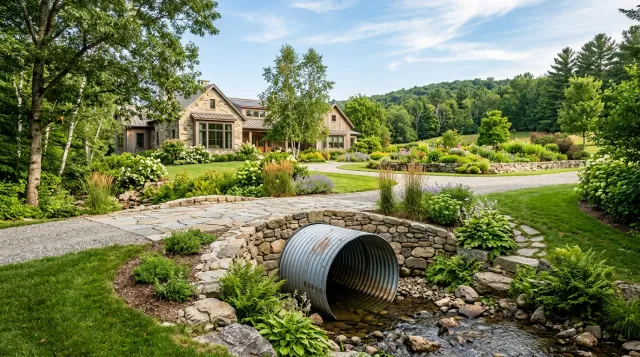
Culvert calculator — estimate pipe sizing and surrounding gravel backfill. Enter pipe diameter, trench width, and run length for volume in cubic yards.
Retaining Wall Calculator
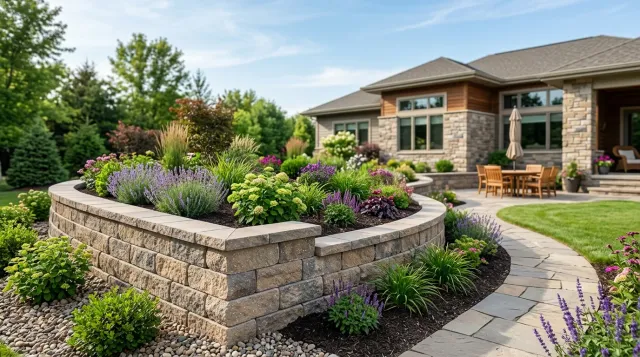
Retaining wall calculator — estimate backfill gravel, base stone, and block count for your project. Input wall height and length for a materials breakdown.
Erosion Control Calculator
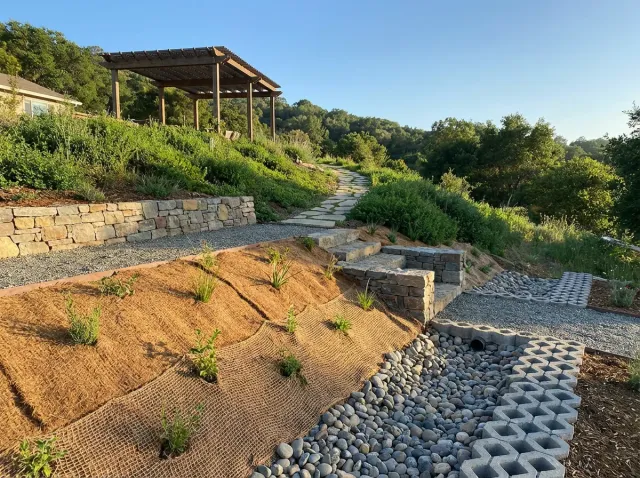
Erosion control calculator — estimate how much rock or aggregate you need for slope stabilization. Input site dimensions and soil conditions to start.
Dry Creek Bed Calculator
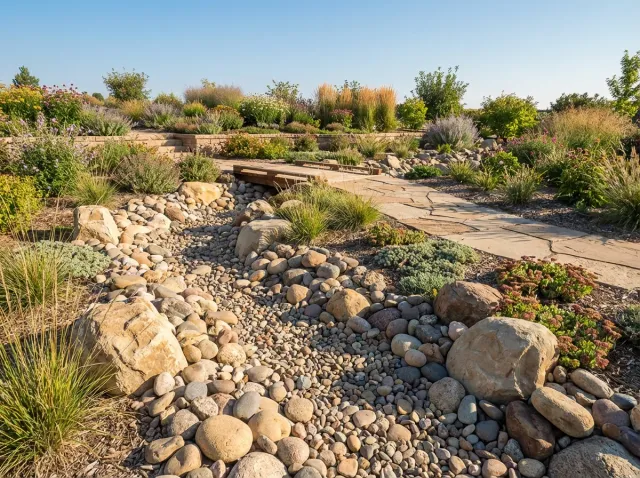
Dry creek bed calculator — estimate river rock, boulders, and landscape fabric needed. Input length, average width, and stone depth for tonnage results.
Frequently Asked Questions
What is Bull Rock?
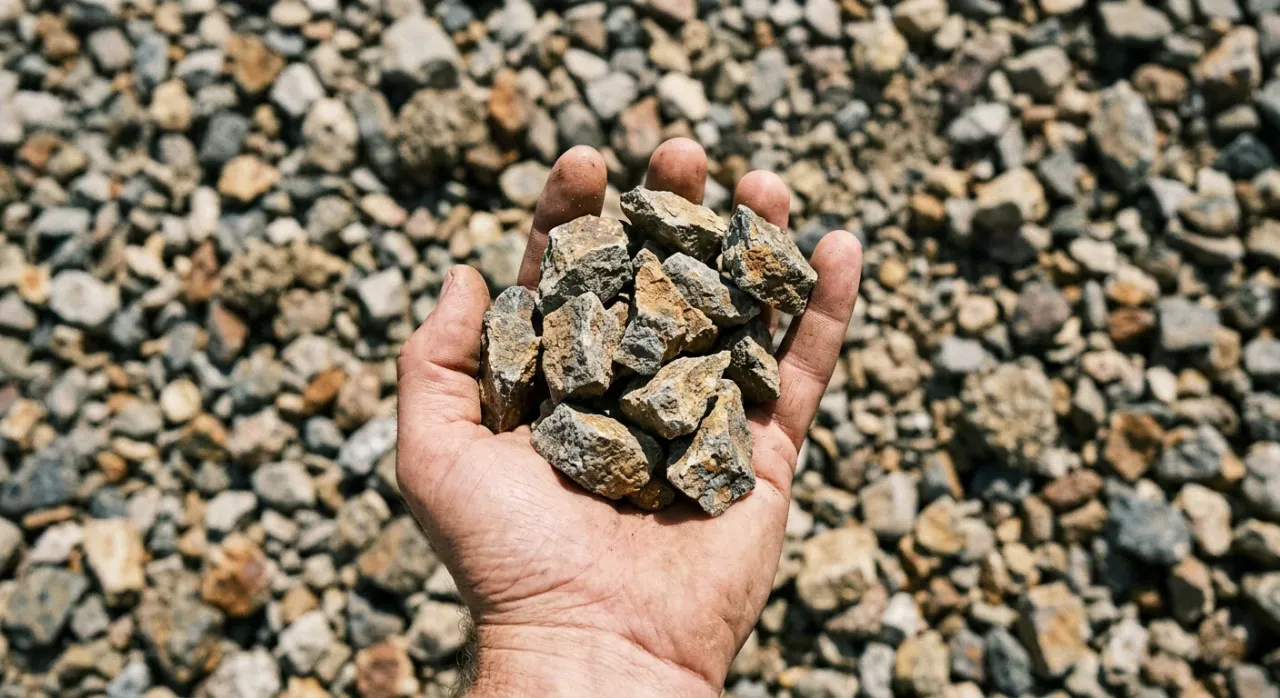
Bull Rock is a large, coarse natural stone aggregate that typically measures between 3 and 5 inches across per individual piece. Unlike the finer gravels you might use for a path or driveway surface, Bull Rock is a heavy-duty material built for projects where size and mass actually matter. Each piece is substantial enough to stay put under pressure from water flow, soil movement, or the elements. Because of its size and weight, Bull Rock sits in a different category from standard landscaping gravel. It is not a decorative pea gravel or a base layer material. Think of it as the go-to stone when you need something that will anchor itself in place and hold its ground over time. If you are working on a slope, a waterway, or any area where erosion or drainage is a real concern, Bull Rock is the kind of material that earns its keep. Hello Gravel sells Bull Rock in bulk by the truckload, delivered directly to your property by dump truck. If you want to get a sense of how much you need before you order, the Hello Gravel calculator is a great place to start.
How big are individual pieces of Bull Rock?
Most Bull Rock falls in the 3 to 5 inch range per individual stone, though you may occasionally see pieces closer to 6 inches depending on the source and region. To put that in perspective, a single piece of Bull Rock is roughly the size of a large grapefruit or a softball. That is considerably larger than common driveway gravel, which typically runs between 3/4 inch and 1.5 inches. The size is the whole point for applications like erosion control and drainage, where mass and stability matter. If you are unsure whether Bull Rock is the right size for your project, the Hello Gravel team is happy to help you decide before you order.
What are the most common uses for Bull Rock?
Bull Rock is a versatile large stone used in projects where water, weight, and stability matter. The most common use is erosion control along slopes, embankments, and the edges of streams or drainage channels. It’s also widely used for shoreline and pond edge stabilization and for improving drainage in areas that would wash out with finer material. In landscaping, Bull Rock serves as bold decorative ground cover, as border material, or as backfill behind retaining walls. It can also be used in dry creek beds and swales to manage runoff while maintaining a natural look. If you have a project in mind, the Hello Gravel team can confirm if Bull Rock is the best fit and help you plan with the calculator.
Is Bull Rock the same as rip rap?
Bull Rock and rip rap are closely related terms. Both refer to large, heavy stone used to control erosion and protect surfaces from water damage. In many regions the terms are used interchangeably, but there can be regional differences. Rip rap often refers to large, angular stone used for erosion control, while Bull Rock may be a regional name for similar large stone. The practical takeaway is to match the size and application to your site. If you are unsure, use the Hello Gravel calculator or contact the team to confirm you are getting the right material for your needs.
How much Bull Rock do I need for my project?
The amount you need depends on the area you are covering and how deep you plan to lay the material. A good rule of thumb is that one ton of Bull Rock laid at 6 inches deep covers roughly 35 to 40 square feet. If you plan to use a shallower depth, you will cover more area per ton; at 4 inches, expect about 50 to 52 square feet per ton. These are approximate real-world figures and can vary with local stone density and site conditions. For a precise quantity, use the Hello Gravel calculator or contact the team for help with your exact dimensions and depth.
Other Material Calculators
Delivery Logistics & Truck Info
Know your delivery options and access requirements before scheduling your order.
Truck Capacities
- Standard Dump Truck 10–14 tons
- Tandem Axle 14–18 tons
- Semi End Dump 20–25 tons
A standard cubic yard weighs approximately 2,000–2,700 lbs depending on material and moisture.
Site Access Requirements
- Trucks require a minimum 12-ft wide, overhead-clear access path
- Soft ground or slopes over 10% may limit truck access — contact us before ordering
- Ensure no underground utilities or irrigation lines are in the drop zone
- Mark your desired drop location clearly before delivery
Important Notes
- Delivery estimates are based on available inventory and route proximity
- Minimum order quantities apply — typically 5 cubic yards or 1 truckload
- Material certification is available upon request for permitted projects
- Always confirm local grading ordinances before major material placement