
Gravel Calculator
— How Much Do You Need?
Quick gravel calculator: estimate cubic yards or tons from area and depth for accurate planning.
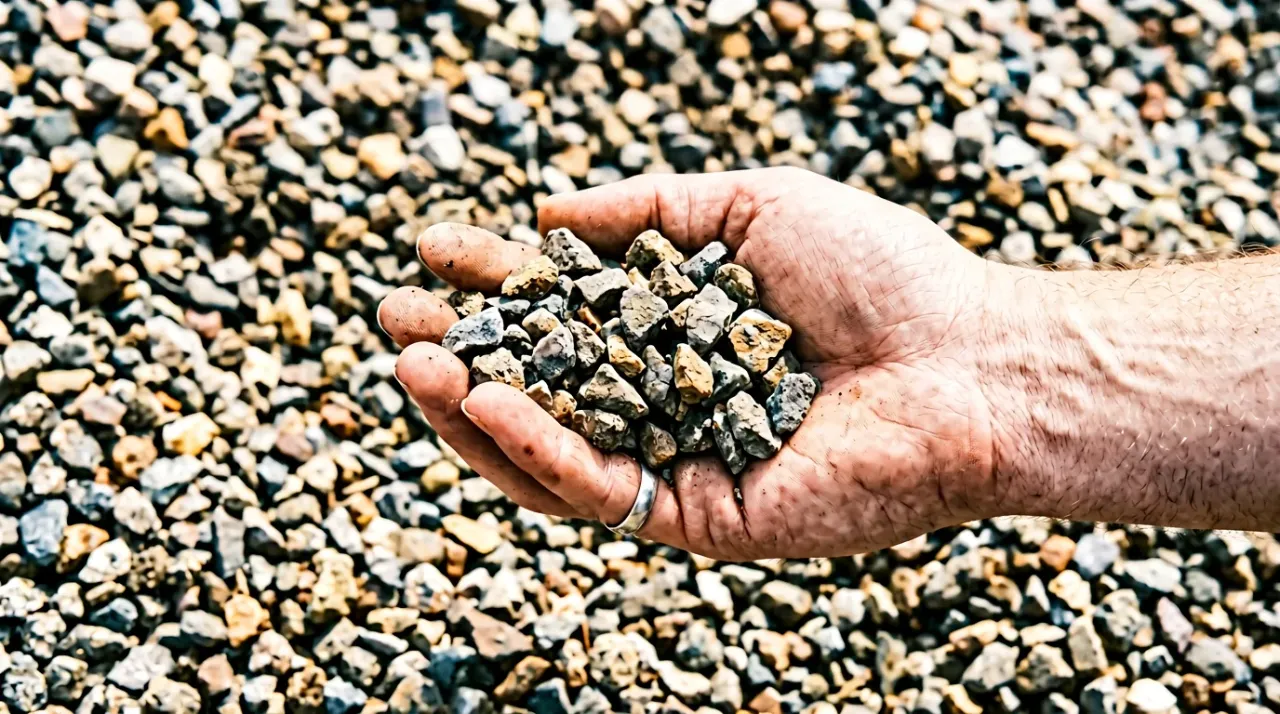
How to Use This Gravel Calculator
Planning a gravel project requires precise measurements to ensure you order enough material without overspending.
- 1 Enter Dimensions — Input the length and width of your area in feet. Round up slightly for a buffer.
- 2 Choose Depth — Select the depth in inches. For most gravel projects, 3–6 inches is standard.
- 3 Review Results — Instantly see cubic yards and tons needed to accurately plan your order.
Visual Area Guide
Use these diagrams to measure your project area correctly.
Rectangular Area
Measure length × width for square or rectangular areas. Most driveway, patio, and grading projects use this method.
Circular Area
Measure the radius (half the diameter) for round beds, drain fields, or circular landscaping. Formula: π × radius².
Material Coverage & Grading
Common gravel grades and applications based on ASTM commercial numeric classification and USCS soil designations
| Grade | Application |
|---|---|
| #1 | The largest commercial gravel grade at 2–4 inches in diameter, composed of coarse angular to subangular rock fragments. Primarily used as heavy-duty sub-base material in road and highway construction, and as erosion control along embankments. Its large particle size creates excellent void space for drainage and permeability. Best suited for large-scale fills, rip-rap applications, and foundation drainage layers. |
| #57 | A highly versatile stone with a nominal top size of 1 inch (with most particles in the ¾–1 inch range) that is the most widely specified commercial gravel grade. Composed of angular crushed aggregate with balanced drainage and compaction properties, making it suitable for a broad range of applications. Commonly used as a driveway base, concrete and asphalt aggregate, and drainage medium. Its combination of stability and permeability makes it the default specification for contractors and engineers. |
| #67 | Slightly smaller than #57 stone, with particles nominally in the ½–¾ inch range, #67 stone provides a smoother, more compact surface profile while retaining strong structural performance. Composed of angular crushed aggregate and commonly specified for slab bases, road and highway construction, and concrete mix designs. Its tighter gradation supports dense compaction and high load-bearing strength. Preferred where a more refined base surface is required compared to #57. |
| #8 | A fine-textured gravel grade at approximately 3/8 inch, composed of small angular to rounded aggregate particles. Widely used in concrete and asphalt mixes as a specified fine aggregate, and in decorative landscaping for walkways and ground cover. Its small particle size allows excellent compaction and produces a smooth, attractive finished surface. Best suited for surface dressing, pea gravel landscaping, and as a finishing layer over coarser base grades. |
| GW | ASTM D2487-17 (USCS) classification for well-graded gravel, containing a broad distribution of particle sizes from coarse to fine with minimal fines content. Well-graded gravel achieves high compaction density and superior load-bearing performance due to strong mechanical interlocking. Preferred for structural road base, sub-base, and engineered fill applications where maximum proctor density is required. Specified by engineers and DOT projects demanding measurable gradation compliance. |
| GP | ASTM D2487-17 (USCS) classification for poorly graded gravel, characterized by a narrow particle size range or a gap in gradation with minimal fines. Lower compaction density than GW material, but offers superior permeability and drainage due to high void content. Commonly used in drainage blankets, filter media, French drains, and applications where free-draining behavior is the primary requirement. Not recommended as a primary structural base without engineering review. |
| Bank Run | Natural, minimally processed gravel as it exists in its native deposit, containing an uncontrolled mixture of gravel, sand, silt, and clay particles. Typically classified as Class 2 material and sourced directly from pit or riverbed deposits with limited screening or crushing. Used as general fill, sub-base, and low-specification road base where strict gradation is not required. Cost-effective option for bulk fill applications but unsuitable where precise drainage or load-bearing specifications must be met. |
Plan Your Next Project
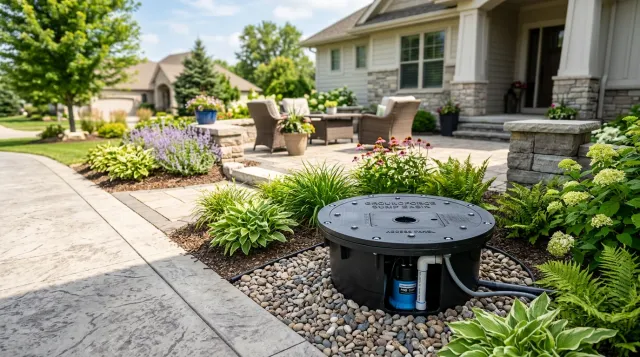
Sump Pump Calculator
Use this calculator to estimate the gravel needed around a sump pump pit. Enter pit dimensions and backfill depth for an accurate volume in cubic yards.
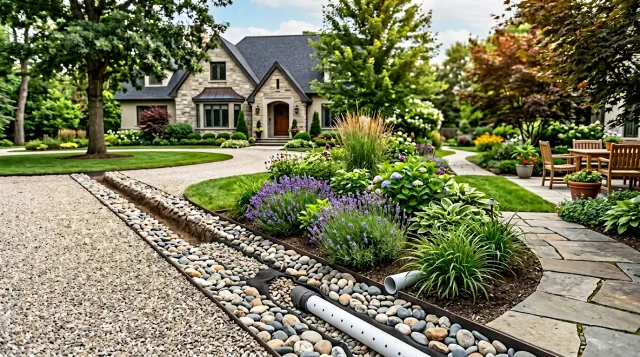
French Drain Calculator
French drain calculator — estimate gravel volume, pipe length, and fabric for any drain run. Enter trench dimensions for cubic yards and linear feet.
Driveway Calculator
Driveway calculator — estimate cubic yards and tons from your length, width, and preferred gravel depth. Covers single-layer and three-layer builds.
Concrete Slab Calculator
Concrete slab calculator — estimate concrete for slabs, footers, and steps. Enter length, width, and thickness for cubic yards, bags, and cost.
Frequently Asked Questions
What is gravel, and what types does Hello Gravel carry?
Gravel is a loose aggregate made up of rock fragments that range in size from small pebbles to larger stones. It forms naturally over time through weathering and erosion, though it can also be produced by mechanically crushing larger rock into specific sizes and shapes. The most common types you'll come across include pea gravel, which consists of small, smooth, rounded stones well suited for walkways and landscaping. Crushed stone features angular, mechanically broken rock that locks together well under compaction, making it a reliable choice for driveways and base layers. River rock offers smooth, rounded stones that work well for decorative applications and drainage beds. Base gravels, sometimes sold as #57 stone or #411 processed gravel, are workhouse materials commonly used for road base, driveway sub-base, and compacted foundation work. Hello Gravel carries a range of gravel types to match what your project actually needs. If you're unsure which type is the right fit for your job, the Hello Gravel team is happy to walk you through your options before you place your order.
What are the most common uses for gravel?
Gravel is one of the most versatile materials available for home and commercial projects. Homeowners reach for it most often when building or resurfacing a driveway, creating a parking pad, or laying a stable base under a shed, patio, or paved surface. It's also a go-to material for drainage solutions like French drains and dry creek beds, where its permeability allows water to move through freely rather than pooling on the surface. On the decorative side, gravel is widely used for garden pathways, landscaping borders, ground cover around trees and planting beds, and as a low-maintenance lawn alternative in dry climates. Smooth, rounded varieties like pea gravel and river rock are particularly popular for these applications because they're comfortable underfoot and easy on the eyes. Contractors rely on gravel for utility trench backfill, construction site access roads, erosion control, and as a compacted base layer beneath asphalt or concrete surfaces. Regardless of the scope of your project, there's a gravel type designed for the job. Use the Hello Gravel calculator to estimate what you'll need, or reach out to the team if you want a second opinion on which material fits your specific application.
How much gravel do I need, and how do I calculate coverage?
The basic formula is straightforward: multiply the length of your area (in feet) by the width (in feet), then multiply that by the depth (in feet), and divide the result by 27 to get cubic yards. Since depth is usually easier to think about in inches, just convert it first. Four inches equals 0.33 feet, three inches equals 0.25 feet, and two inches equals 0.17 feet. As a practical rule of thumb, one cubic yard of gravel covers roughly 80 square feet at 4 inches deep, or about 100 square feet at 3 inches deep. For compactable base materials like crusher run, one ton typically covers around 60 to 80 square feet at 2 inches of compacted depth. Keep in mind that a cubic yard of gravel generally weighs between 1.3 and 1.5 tons depending on the material type. Gravel delivery through Hello Gravel is by the truckload, so getting your quantity estimate right before you order matters. The Hello Gravel calculator is the fastest and most accurate way to do that. Just plug in your project dimensions and depth, and it will give you a precise quantity estimate tailored to your job.
How much gravel do I need for a 10x12 shed pad?
A standard 10x12 shed pad covers 120 square feet. Most contractors recommend laying 4 to 6 inches of compacted gravel beneath a shed to provide a stable, level, and well-draining foundation. At 4 inches of compacted depth, you're looking at roughly 1.5 to 2 cubic yards, or about 2 tons of material. If you go deeper at 6 inches, that increases to approximately 2.5 to 3 cubic yards, or closer to 3 to 4 tons. One thing worth planning for: it's good practice to extend your gravel pad at least 12 inches beyond the shed's footprint on all sides. That buffer helps manage rain runoff and keeps the base stable at the edges. For a 12x14 pad using that approach, expect roughly 2 to 2.5 cubic yards at 4 inches deep. Since Hello Gravel delivers by the truckload, a single delivery will handle a shed pad and leave you with material to spare for a nearby pathway, a driveway apron, or any other project on your list. Use the Hello Gravel calculator to get the exact tonnage for your dimensions, then pick a delivery date that works for you.
Can I lay gravel directly on soil?
Yes, in most cases you can lay gravel directly on soil, though a small amount of preparation makes a real difference in how long it lasts. For lighter applications like garden pathways or decorative ground cover, the process is simple: clear the area, remove any grass or vegetation, and spread your gravel on top. Adding a layer of landscape fabric before you pour the gravel will help keep weeds from pushing through over time. For heavier-use areas like driveways, parking pads, or shed bases, a bit more groundwork pays off. Stripping the topsoil, grading the area to promote drainage, and compacting the subgrade before laying gravel gives you a much more stable and durable result. Without that prep, gravel in high-traffic areas can shift, sink, or migrate over time. The type of soil you're working with also matters. Sandy or loamy soils drain well and tend to work as a solid base for gravel. Clay-heavy soils hold water and can cause gravel to sink or become uneven, so additional base preparation may be needed. If you have questions about what prep your specific project calls for, the Hello Gravel team can help you think through it before you order.
Other Material Calculators
Delivery Logistics & Truck Info
Know your delivery options and access requirements before scheduling your order.
Truck Capacities
- Standard Dump Truck 10–14 tons
- Tandem Axle 14–18 tons
- Semi End Dump 20–25 tons
A standard cubic yard weighs approximately 2,000–2,700 lbs depending on material and moisture.
Site Access Requirements
- Trucks require a minimum 12-ft wide, overhead-clear access path
- Soft ground or slopes over 10% may limit truck access — contact us before ordering
- Ensure no underground utilities or irrigation lines are in the drop zone
- Mark your desired drop location clearly before delivery
Important Notes
- Delivery estimates are based on available inventory and route proximity
- Minimum order quantities apply — typically 5 cubic yards or 1 truckload
- Material certification is available upon request for permitted projects
- Always confirm local grading ordinances before major material placement