
Rip Rap Calculator
— How Much Do You Need?
Estimate rip rap coverage, volume, and tons for slopes, banks, and erosion-control projects.
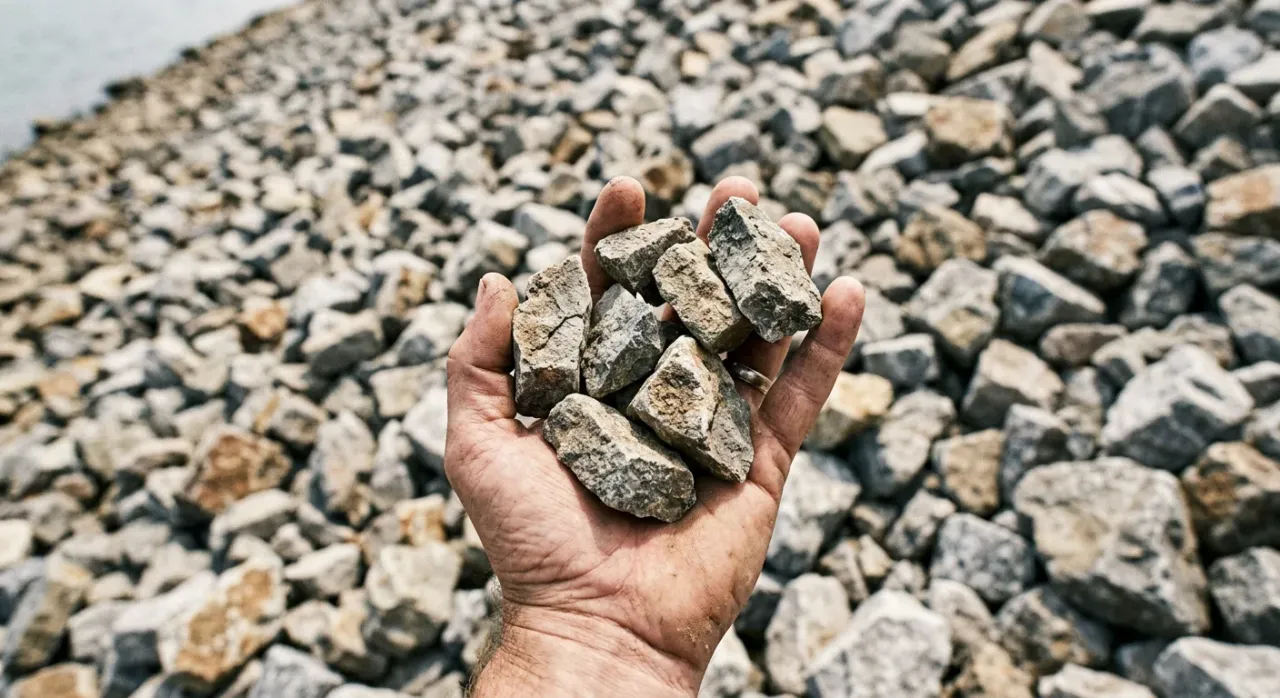
How to Use This Rip Rap Calculator
Planning a rip rap project requires precise measurements to ensure you order enough material without overspending.
- 1 Enter Dimensions — Input the length and width of your area in feet. Round up slightly for a buffer.
- 2 Choose Depth — Select the depth in inches. For most rip rap projects, 3–6 inches is standard.
- 3 Review Results — Instantly see cubic yards and tons needed to accurately plan your order.
Visual Area Guide
Use these diagrams to measure your project area correctly.
Rectangular Area
Measure length × width for square or rectangular areas. Most driveway, patio, and grading projects use this method.
Circular Area
Measure the radius (half the diameter) for round beds, drain fields, or circular landscaping. Formula: π × radius².
Material Coverage & Grading
Common rip rap grades and erosion control applications
| Grade | Application |
|---|---|
| Class 1 | Light rip rap with a d50 of 6–12 inches, composed of angular quarry or field stone in a finer gradation. Best suited for low-velocity flow conditions where moderate erosion protection is needed. Commonly applied to ditch banks, small channels, slope drains, and storm drain outfalls. |
| Class 2 | Medium rip rap with a d50 of 12–18 inches, offering a well-graded mix of angular stones for balanced shear resistance. Provides reliable interlock and void drainage for moderate hydraulic conditions. Widely used for streambank armoring, culvert outlets, retention berms, and channel banks. |
| Class 3 | Heavy rip rap with a d50 of 18–24 inches, using coarser angular stone gradations capable of resisting high-velocity flow and wave action. Stones are dense, durable, and interlocking for maximum stability on steep or high-energy slopes. Typical applications include bridge abutments, shoreline protection, and steep channel banks. |
| Class 4 | Extra-heavy rip rap with a d50 exceeding 24 inches, consisting of large angular boulders selected for extreme hydraulic and shear conditions. Reserved for the most demanding erosion control scenarios where standard grades are insufficient. Applied at large culvert inlets and outlets, high-energy channels, and areas subject to significant wave or flood forces. |
| Random | Random rip rap is a mixed-size, mechanically placed stone blend without strict gradation control, using angular quarry stone ranging from cobbles to large boulders. The varied sizing allows natural void-filling and settlement for practical, cost-effective erosion control. Commonly specified for general slope stabilization, emergency bank protection, and areas where engineered gradation is not required. |
| Hand-Placed | Hand-placed rip rap consists of carefully selected, larger angular stones positioned manually to create a tight, uniform armored surface with minimal voids. The precise placement maximizes interlock and surface density, offering superior stability compared to mechanically dumped material. Used for high-visibility or critical installations such as bridge abutments, spillways, and engineered shoreline revetments. |
Plan Your Next Project
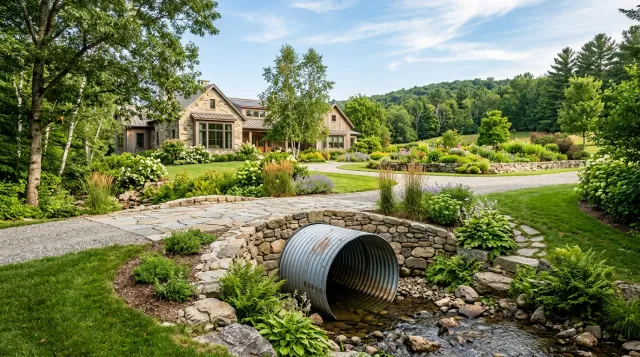
Culvert Calculator
Culvert calculator — estimate pipe sizing and surrounding gravel backfill. Enter pipe diameter, trench width, and run length for volume in cubic yards.
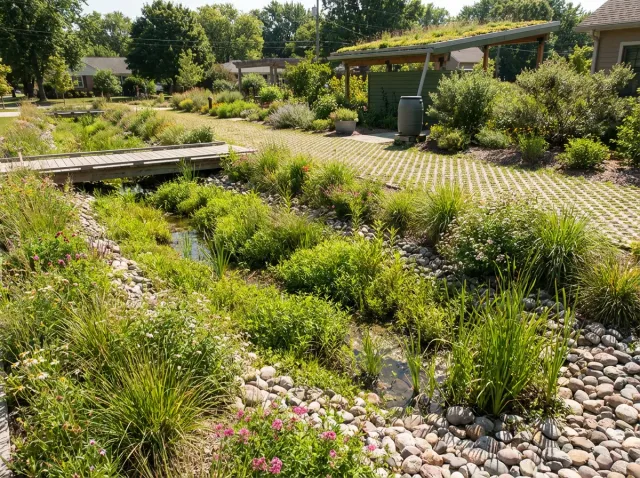
Swale Calculator
Swale calculator — estimate the right gravel fill for drainage. Enter length, top width, and depth to calculate volume and recommended stone size.
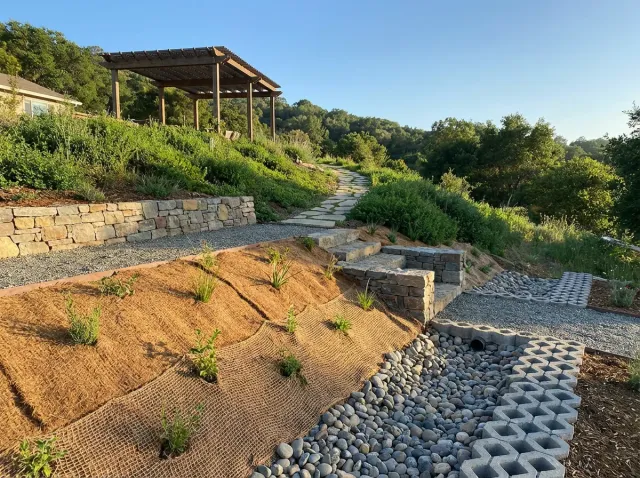
Erosion Control Calculator
Erosion control calculator — estimate how much rock or aggregate you need for slope stabilization. Input site dimensions and soil conditions to start.
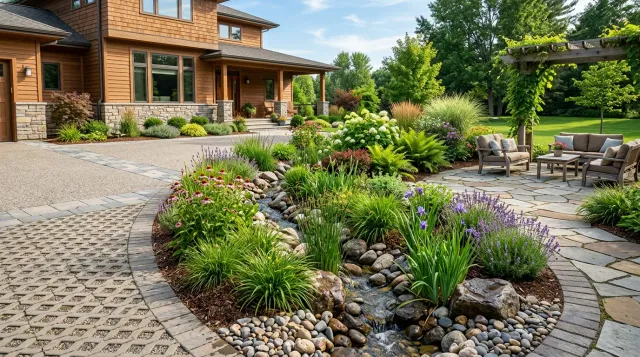
Bioswale Calculator
Bioswale calculator — estimate gravel and soil fill for your drainage project. Enter drainage area, swale dimensions, and depth for material volumes.
Frequently Asked Questions
What is rip rap and what is it used for?
Rip rap is a layer of large, angular rocks placed on slopes, shorelines, stream banks, and other surfaces where water or erosion poses a serious risk. Unlike smooth river rock or pea gravel, rip rap stones are rough and irregular in shape, which helps them interlock and resist movement when water flows over or around them. You will find rip rap used on the banks of rivers and creeks, along pond and lake edges, at the base of retaining walls, around culvert inlets and outlets, in drainage swales and ditches, and on hillsides that face heavy runoff during storms. It is one of the oldest and most proven erosion control methods available, and contractors and engineers rely on it precisely because of how well it holds up under sustained water pressure. Beyond erosion control, some homeowners use rip rap along property borders, around water features, and on steep slopes where they want a rugged, low-maintenance look. The bold, natural appearance of large angular stone works well in both functional and landscaping applications. If you are trying to solve an erosion problem, stabilize a slope, or add some structure to a waterfront edge, rip rap is almost certainly worth considering.
Why is it called rip rap?
The term "rip rap" has been in use for well over two hundred years. Most language historians trace it to an old English expression describing the rough, irregular sound of loose stones knocking and striking against one another, much like the repetitive sound suggested by "rap." Early builders and engineers used the word to describe the rough stone placed along shorelines and at the base of structures to absorb and deflect the force of moving water. Another thread of the etymology connects "rip" to the tearing action of fast-moving water on unprotected soil, making "rip rap" a fairly descriptive name for the material placed there to stop that tearing from happening. You will also see it spelled as "riprap" or "rip-rap" depending on the source, and all three spellings refer to exactly the same material. The name has stayed in use because it fits the material and the job so naturally: a rough, angular layer of rock designed to take the force of moving water and hold the ground beneath it in place.
What size rip rap do I need for my project?
Rip rap comes in a range of sizes, and choosing the right one comes down to the forces your site actually faces. The general principle is straightforward: the faster and more powerful the water, the larger the stone needs to be. For light-duty situations like calm pond edges, gentle residential slopes, or decorative uses, smaller rip rap in the 4 to 8 inch range typically performs well. For stream banks, roadside drainage channels, and areas that see moderate to strong water flow, medium-sized stone in the 8 to 12 inch range is a more dependable choice. For demanding applications like fast-moving streams, highway culvert outlets, or coastal or lakefront shorelines exposed to wave action, large rip rap in the 12 to 18 inch range or bigger is usually what engineers specify. Slope angle also matters. Steeper slopes need larger, heavier stones to resist sliding under the combined forces of gravity and water. A shallow, gently sloping pond bank is a very different situation from a steep creek bank that carries high water every spring. If you are not sure what size fits your conditions, a contractor or civil engineer familiar with your local water flows can help you determine the right specification before you order. Getting the sizing right from the start is far cheaper than dealing with a failed installation later.
How much rip rap do I need for my project?
The amount you need depends on three things: the total area you are covering, the depth of the stone layer, and the size of the stone itself. Larger stones require a deeper installation layer, which means more material per square foot compared to smaller sizes. As a general reference, smaller rip rap in the 4 to 8 inch range, placed at a 12-inch layer depth, typically covers around 25 to 35 square feet per ton. Medium rip rap in the 8 to 12 inch range, at a layer depth of 12 to 15 inches, covers roughly 18 to 28 square feet per ton. Larger stones in the 12 to 18 inch range, at a layer depth of 18 to 24 inches, will generally cover 12 to 20 square feet per ton. These are real-world estimates, and your actual coverage will vary based on stone shape, how tightly stones are placed, and the specific conditions at your site. Keep in mind that rip rap is ordered and delivered by the ton, and Hello Gravel delivers it by the truckload. To get a more precise quantity for your specific dimensions, use the Hello Gravel calculator. Enter your measurements and the stone size you are considering, and it will give you a truckload estimate built around your actual project rather than a rough rule of thumb.
How long does rip rap last?
When properly installed, rip rap is one of the most durable erosion control solutions you can use. A well-placed installation can easily last 50 years, and systems built on stable foundations with the right filter fabric underneath have remained effective for 100 years or more. The stone itself does not degrade, corrode, or rot over time, which gives it a major advantage over organic erosion control materials that break down within a few years. The factors that have the biggest impact on lifespan are correct sizing, proper installation, and a good foundation. Using stone that is too small for the water forces involved is the most common cause of early failure, because undersized stones get displaced during high-flow events and leave gaps that allow erosion to resume. Installing a geotextile filter fabric beneath the rip rap is also critical, because without it the stones can gradually sink into soft or saturated soil, compromising the whole system over time. When you size the stone correctly, prepare the site properly, and use filter fabric, rip rap is genuinely a one-time investment for most applications. In many cases, the rip rap will outlast every other component of the project it was built to protect.
Other Material Calculators
Delivery Logistics & Truck Info
Know your delivery options and access requirements before scheduling your order.
Truck Capacities
- Standard Dump Truck 10–14 tons
- Tandem Axle 14–18 tons
- Semi End Dump 20–25 tons
A standard cubic yard weighs approximately 2,000–2,700 lbs depending on material and moisture.
Site Access Requirements
- Trucks require a minimum 12-ft wide, overhead-clear access path
- Soft ground or slopes over 10% may limit truck access — contact us before ordering
- Ensure no underground utilities or irrigation lines are in the drop zone
- Mark your desired drop location clearly before delivery
Important Notes
- Delivery estimates are based on available inventory and route proximity
- Minimum order quantities apply — typically 5 cubic yards or 1 truckload
- Material certification is available upon request for permitted projects
- Always confirm local grading ordinances before major material placement