
Sand Calculator
— How Much Do You Need?
Accurate sand estimates: calculate cubic yards, tons, or bags for patios, paver bases, and level surfaces.
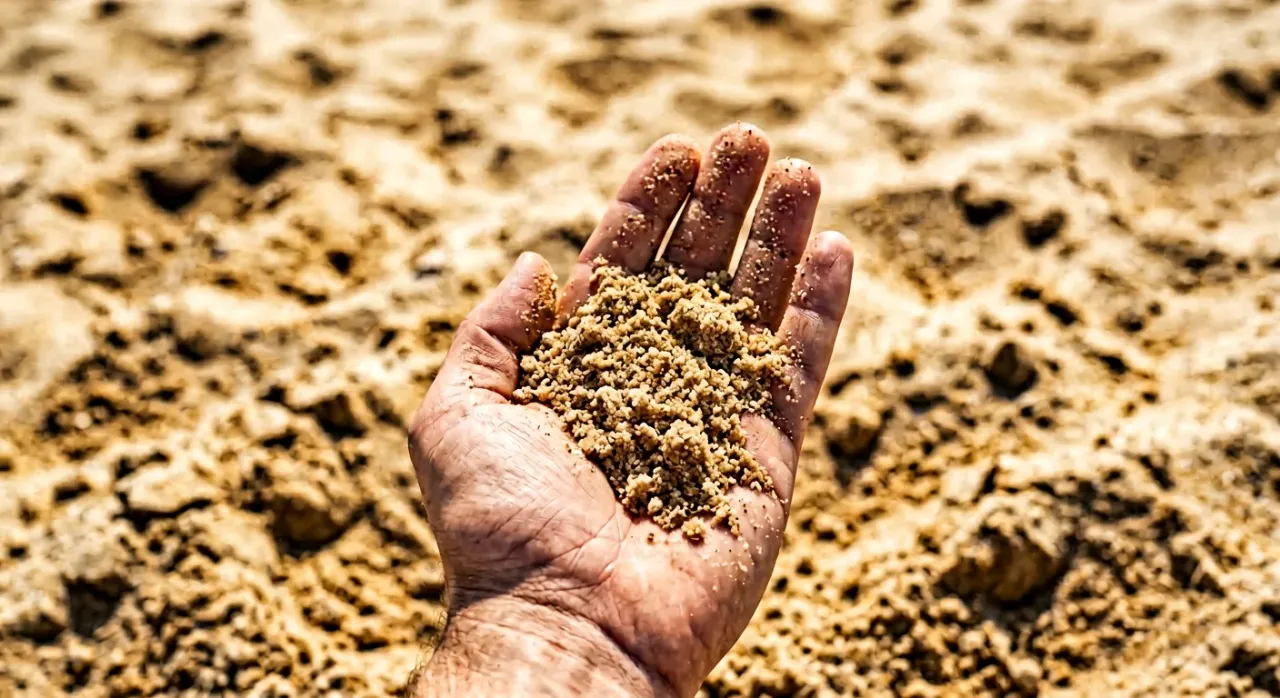
How to Use This Sand Calculator
Planning a sand project requires precise measurements to ensure you order enough material without overspending.
- 1 Enter Dimensions — Input the length and width of your area in feet. Round up slightly for a buffer.
- 2 Choose Depth — Select the depth in inches. For most sand projects, 3–6 inches is standard.
- 3 Review Results — Instantly see cubic yards and tons needed to accurately plan your order.
Visual Area Guide
Use these diagrams to measure your project area correctly.
Rectangular Area
Measure length × width for square or rectangular areas. Most driveway, patio, and grading projects use this method.
Circular Area
Measure the radius (half the diameter) for round beds, drain fields, or circular landscaping. Formula: π × radius².
Material Coverage & Grading
Common sand grades and classifications used in construction, drainage, and landscaping applications
| Grade | Application |
|---|---|
| ASTM C33 | Concrete sand conforming to ASTM C33, well or poorly graded with particle sizes ranging 0.075–4.75 mm and a sand equivalent value >75 ensuring very low clay-like fines (<3%). Provides the workability and aggregate interlock required for structural concrete mixes, asphalt, and paver bases. |
| ASTM C144 | Masonry sand conforming to ASTM C144, finer than concrete sand with most particles below 2.36 mm, rounded grains, and very low fines content. Its smooth gradation promotes plasticity and workability in Portland cement mortar, bricklaying, block-laying, and stucco applications. |
| SW | Well-graded sand per USCS (ASTM D2487) with a broad particle size distribution from fine to coarse (0.075–4.75 mm), fines content below 5% passing the No. 200 sieve, and a high compaction density approaching 90–95% Proctor. Ideal for structural fill, road sub-base, and slab-on-grade bedding where load-bearing capacity is critical. |
| SP | Poorly graded (uniformly graded) clean sand per USCS (ASTM D2487), typically 0.3–2.0 mm, with minimal fines (<5% passing No. 200) and free-draining characteristics. Best suited for pipe bedding, utility trench backfill, drainage courses, and landscaping where flowability and rapid percolation are needed. |
| SM | Silty sand per USCS (ASTM D2487) containing more than 12% fines passing the No. 200 sieve, providing moderate cohesion and reduced permeability compared to clean sands. Used in general embankment fill, leveling courses, and low-load backfill where some cohesion is acceptable and drainage is not a primary concern. |
| ASTM C33 (standard commercial supply grade; ASTM C778 is a laboratory reference standard not used for bulk ordering) | Standard graded testing sand per ASTM C33 (standard commercial supply grade; ASTM C778 is a laboratory reference standard not used for bulk ordering), composed of naturally rounded, nearly pure silica (quartz) grains sized between the No. 30 (600 µm) and No. 100 (150 µm) sieves. Primarily used as a reference material for cement strength testing, it also serves as a high-purity fine sand for playground surfaces and plaster applications. |
Plan Your Next Project
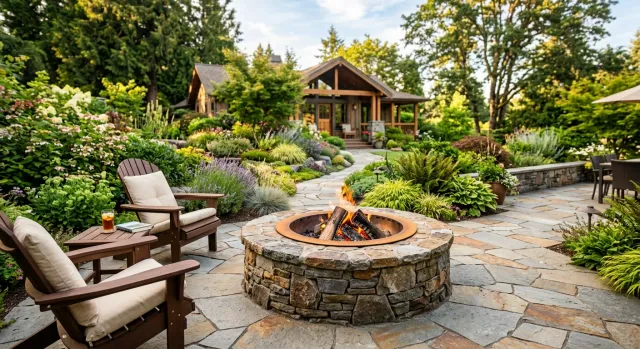
Fire Pit Calculator
Fire pit calculator — enter your pit shape and dimensions to estimate how many cubic yards of pea gravel or crushed stone the base layer needs.
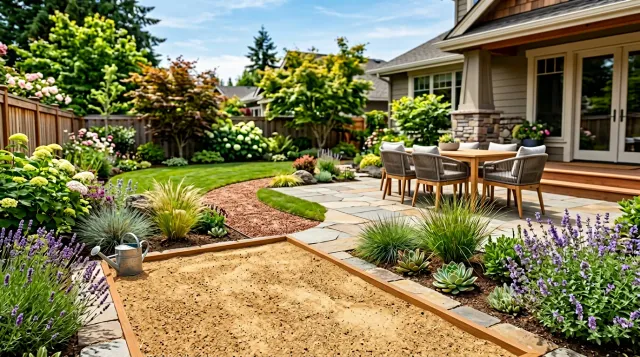
Sandbox Calculator
Sandbox calculator — enter dimensions and shape to estimate how many pounds or bags of play sand to buy. Works for rectangular, circular, and custom sizes.

Pond Calculator
Pond calculator — estimate liner dimensions from your pond's length, width, and depth, including overlap allowance. Supports rectangular and freeform shapes.
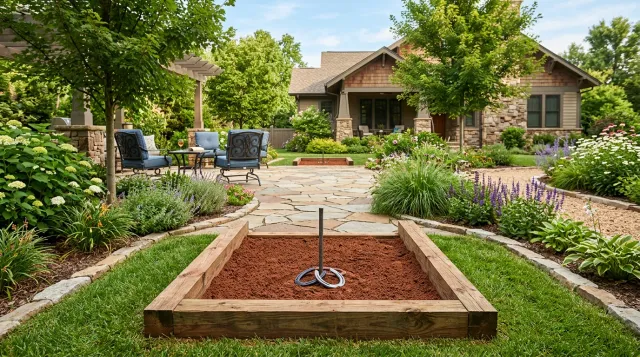
Horseshoe Pit Calculator
Horseshoe pit calculator — estimate sand, clay, and lumber for a regulation or backyard court. Covers pit dimensions from 31x43 in. up to 36x72 in.
Frequently Asked Questions
What types of sand does Hello Gravel sell, and which one is right for my project?
Hello Gravel carries several grades of bulk sand, and choosing the right one comes down to what you are building or filling. Mason sand, sometimes called mortar sand or white sand, is a fine, washed product with a smooth, consistent texture. It is the preferred choice for mortar, stucco, plaster, and tile work. It also works well as a joint-filling sand between pavers and as a sandbox fill because of its clean, refined texture. Concrete sand is coarser and more angular. The irregular particle shape gives it excellent stability under load, which makes it a reliable base layer under paving stones, concrete slabs, and driveways. It is also commonly used in concrete mixes as a fine aggregate. Fill sand is a general-purpose option that works well for backfilling around foundations, retaining walls, and drainage structures. It can also raise low spots in a yard or improve grade along a structure. It is typically less processed than washed sands, which keeps the cost down for projects where surface appearance does not matter. Play sand is a specifically screened and washed sand designed for children's sandboxes and play areas. The screening process removes coarser particles and debris, leaving a softer, cleaner material that is comfortable and manageable. Availability varies by region, so check the Hello Gravel product page or reach out to the team directly to confirm which types are in stock near you.
What can I use sand for around my home or job site?
Sand is one of the most versatile bulk materials you can order, and it shows up in projects of all sizes. At home, one of the most common uses is as a leveling bed under concrete pavers and patio stones. A 1-inch layer of sand beneath a paver gives you a smooth, adjustable surface that helps each stone sit flat and allows for minor corrections before the surface is locked in. It is also the standard bedding layer under above-ground swimming pools, where a 2-inch layer of smooth mason or play sand protects the liner from rocks and debris beneath it. Fill sand is widely used to level uneven ground, fill low spots in a yard, and backfill around basement walls and underground utilities. If you are grading a slope or building up around a retaining wall, fill sand is a cost-effective way to move volume quickly. On the construction side, concrete sand is a key ingredient in concrete mixes and serves as a bedding layer on top of a compacted gravel base not a structural base on its own. Mason sand is the material bricklayers and tile setters reach for when mixing mortar and grout. Beyond construction, sand is the standard fill for beach volleyball courts, horseshoe pits, and backyard sandboxes. If you have a specific project in mind and are not sure which type fits best, the Hello Gravel team is happy to point you in the right direction before you order.
How much sand do I need, and how do I calculate the right amount?
The amount of sand you need depends on the size of your project area and how deep you plan to apply the material. As a practical benchmark, one ton of sand covers approximately 100 to 120 square feet at a depth of 2 inches. At a depth of 4 inches, that same ton covers roughly 50 to 60 square feet. These estimates reflect real-world conditions and account for natural variation in sand density. Actual coverage can shift slightly depending on the specific type of sand and whether the ground beneath is firm and level. For a paver bedding layer, a 1-inch application is typical, so your coverage per ton will be on the higher end. For a sandbox fill, you might go 6 to 8 inches deep, which means more material for the same footprint. For a pool base, 2 to 3 inches of smooth sand is a common target. The most accurate way to size your order is to use the Hello Gravel online calculator. You enter your project dimensions and desired depth, and it returns the tonnage you need. This keeps you from running short mid-project or paying for material you do not end up using. When estimating, it is generally better to round up slightly rather than down. Sand stores well outdoors when covered, and having a little extra for leveling and touch-ups later is almost never a problem.
How much does a truckload of sand weigh, and can I haul it myself in a pickup truck?
A standard dump truck load of sand can range from 10 to 25 tons depending on the truck configuration and local weight regulations. Even on a smaller scale, a single cubic yard of dry sand weighs approximately 2,600 to 2,900 pounds. Two cubic yards weighs somewhere between 5,000 and 6,000 pounds, which puts it in the range of 2.5 to 3 tons. Most standard full-size pickup trucks have a payload rating of around 1,000 to 2,000 pounds. Even 1 cubic yard of sand can push right up against or past that limit. Overloading a pickup puts serious stress on the suspension and tires, reduces braking performance, and creates real safety risks on the road for you and everyone around you. This is exactly why bulk delivery by dump truck makes so much more practical sense. Hello Gravel handles the hauling with equipment specifically designed to carry these loads, and the material is dropped right on your property in the location you direct. You get everything you need in a single delivery without any of the trips, the wear on your vehicle, or the safety concerns that come with trying to haul sand on your own.
How much does a truckload of sand cost?
The cost of a truckload of sand depends on the type of sand you need, the quantity you are ordering, and your location. Because Hello Gravel sources material through a network of local haulers across the country, pricing reflects regional market conditions, which means it varies from one area to another. Rather than quoting a number that might not reflect your specific region or project size, the best step is to use the Hello Gravel online calculator. Enter your project dimensions and zip code, and you will get accurate, up-to-date pricing with no hidden fees built in. Delivery is always free, and the price you see at checkout is the price you pay. If you have a larger or more complex project, or you just want to talk through the options before placing your order, the Hello Gravel team is available to walk you through it and help you get the right material at the right quantity.
Other Material Calculators
Delivery Logistics & Truck Info
Know your delivery options and access requirements before scheduling your order.
Truck Capacities
- Standard Dump Truck 10–14 tons
- Tandem Axle 14–18 tons
- Semi End Dump 20–25 tons
A standard cubic yard weighs approximately 2,000–2,700 lbs depending on material and moisture.
Site Access Requirements
- Trucks require a minimum 12-ft wide, overhead-clear access path
- Soft ground or slopes over 10% may limit truck access — contact us before ordering
- Ensure no underground utilities or irrigation lines are in the drop zone
- Mark your desired drop location clearly before delivery
Important Notes
- Delivery estimates are based on available inventory and route proximity
- Minimum order quantities apply — typically 5 cubic yards or 1 truckload
- Material certification is available upon request for permitted projects
- Always confirm local grading ordinances before major material placement