
Sandbox Calculator
— How Much Do You Need?
Calculate sand and fill for your sandbox — get truckload estimates with upfront delivery pricing.
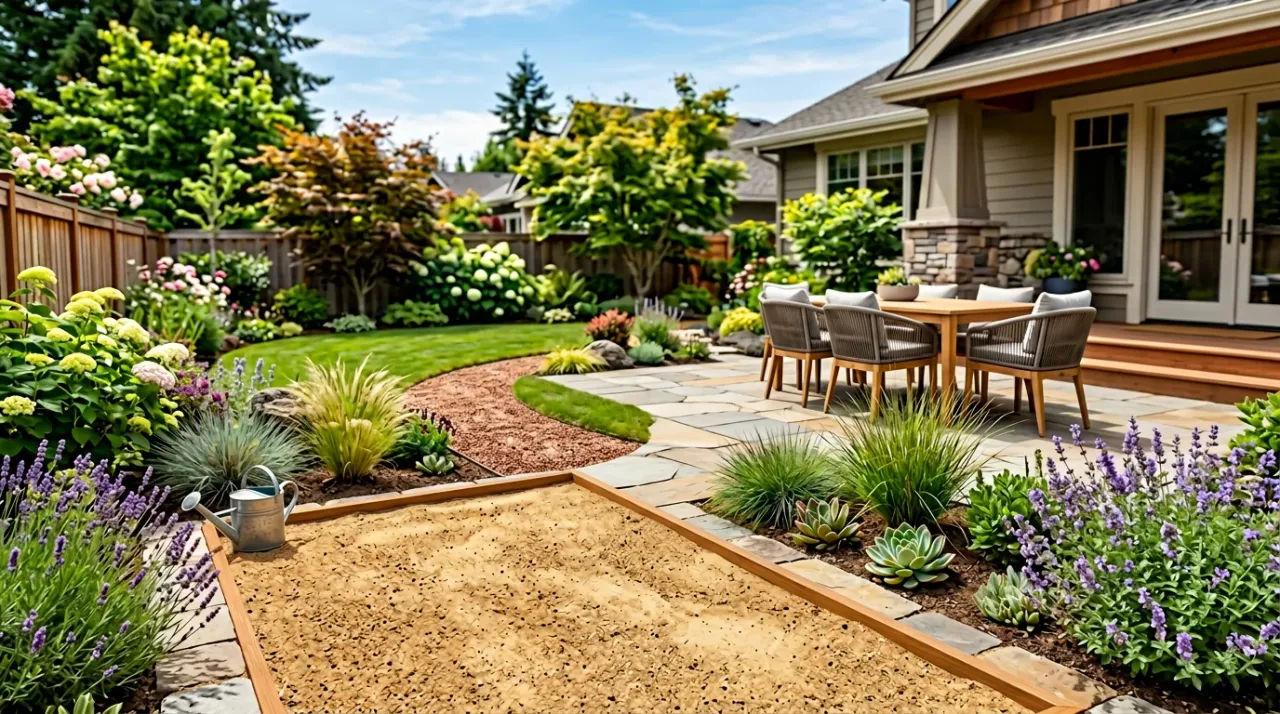
How to Use This Sandbox Calculator
Planning a sandbox requires precise measurements to ensure you order enough material without overspending.
- 1 Measure Area: Measure the length and width of your planned sandbox area in feet.
- 2 Determine Depth: For most sandbox projects, a depth of 4 to 6 inches is recommended for stability.
- 3 Review Results: The calculator provides both cubic yards (for bulk volume) and tons (for ordering weight).
Common Materials for Sandboxs
Choosing the right sand and base materials ensures a safe, clean, well-draining play environment that protects children from contaminants and prevents water pooling.
| Material | Description | Best For | Est. Cost |
|---|---|---|---|
| Play Sand | Ultra-fine, rounded, washed quartz sand with minimal dust, screened to a uniform small particle size for softness and safety. | Primary Sand Fill, Child-Safe Play Surface, Residential Sandboxes | $$ |
| Fine Washed Sand | Clean, fine-grained sand that has been washed to remove silt, clay, and organic material, with slightly coarser texture than play sand. | Sand Fill, Budget-Friendly Alternative, Larger Installations | $ |
| Pea Gravel | Small, smooth, rounded stone typically 3/8-inch in diameter, composed of naturally weathered river rock or crushed stone. | Drainage Sub-Base, Under Landscape Fabric, Not Primary Play Fill | $$ |
| #57 Crushed Stone | Angular, clean-crushed stone roughly 3/4-inch in size that compacts loosely and drains freely. | Sub-Base Drainage Layer, Soft Soil Stabilization, Limited Use | $$ |
Understanding the Cost
Several factors influence the final price of your sandbox project.
Material Volume
The dimensions of your project directly dictate the tonnage needed. Deeper bases require significantly more material.
Delivery Distance
Transport logistics play a major role. Being closer to the quarry or depot reduces delivery fees significantly.
Material Type
Decorative stones cost more than utility grades. Choose based on your project's functional and aesthetic requirements.
Recommended Products for Your Sandbox
Sand Calculator
Use this sand calculator to estimate cubic yards, tons, and bags. Covers fill, leveling, and bedding sand with weight and cost estimates included.
Fill Sand Calculator
Fill sand calculator — enter your project area to estimate cubic yards and tons. Works for backfill, leveling, and base preparation in any unit you prefer.
Play Sand Calculator
Play sand calculator — estimate exactly how many pounds or bags will fill your sandbox or sand table. Supports rectangular and circular shapes at any depth.
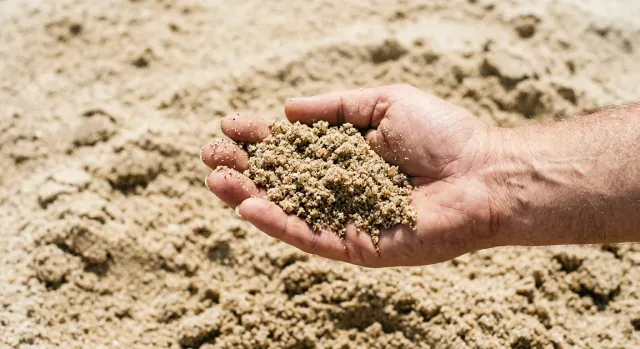
Washed Sand Calculator
This calculator estimates how much washed sand your project needs in cubic yards or tons. Accounts for material density so your estimate is accurate.
Frequently Asked Questions
What type of sand is best for a sandbox?
The best sandbox sand is fine, washed, and screened. It should feel soft to the touch, drain well after rain, and be free of rocks, oversized particles, and sharp debris. That combination makes it easy and comfortable for kids to dig, mold, and pour. Play sand is processed specifically for recreational use, which is what sets it apart from other sand types. Construction-grade options like concrete sand or fill sand are processed for entirely different applications and tend to be coarser, dustier, or less refined than what you want in a play area. When you're choosing sand for a sandbox, you want a product that has gone through a washing and screening process designed with play use in mind, not one that was processed for structural fill or concrete mixing. Hello Gravel's sandbox sand is sourced with that distinction in mind, and our team is happy to answer any specific questions about what we have available in your area.
How much sand do I need, and how deep should a sandbox be filled?
For most sandbox setups, a depth of 6 to 12 inches of sand hits the sweet spot. Less than 6 inches and kids will bottom out quickly; more than 12 inches adds material cost without adding much play value. Here is a practical way to think about quantity: at 6 inches of depth, one cubic yard of sand covers roughly 54 square feet. At 12 inches of depth, that same cubic yard covers about 27 square feet. So a 15x15 foot sandbox filled to 6 inches would need approximately 4 to 5 cubic yards of sand. A 20x20 foot play area at the same depth would need around 7 to 8 cubic yards. Keep in mind that these are real-world estimates, and your actual number will depend on your exact dimensions and how level your base is. The Hello Gravel calculator lets you plug in your specific measurements and get a precise quantity for your project. We always recommend using it before you finalize your order so you are not caught short on delivery day.
What is the difference between play sand and other types of sand?
Sand is not a one-size-fits-all material. Different types are processed for different jobs, and using the wrong one in a sandbox can make for a rough, dusty, or uncomfortable play experience. Play sand goes through a washing and screening process to produce a fine, clean, uniform grain. It is specifically intended for recreational and play applications. Concrete sand, sometimes called coarse sand, has a sharper, grittier texture suited for mixing into concrete or mortar. Mason sand is finer than concrete sand but is still processed for construction use, and it may pack too hard for comfortable digging. Fill sand is used for grading and leveling under structures, not for play. If you are filling a sandbox where children will spend time digging and building, play sand is the right call. Using a construction-grade material can leave kids with scratchy, gritty sand that does not mold well and may contain particles or dust you would rather not have in a play environment. If you are unsure which product is right for your project, reach out to the Hello Gravel team and we will point you in the right direction.
Is a truckload the right quantity for my sandbox project?
Hello Gravel delivers bulk sand by the truckload, and a standard load carries roughly 10 to 14 cubic yards of material. That volume is a great fit for larger sandbox installations where quantity actually adds up fast. Think about school playgrounds, daycare centers, community parks, or large residential backyard play areas. At 6 inches of depth, a 10-cubic-yard delivery covers approximately 540 square feet of sandbox space, which is roughly a 23x23 foot area. For those kinds of projects, bulk delivery is far more practical and cost-effective than sourcing material any other way. If your sandbox is on the smaller side, it is worth thinking about whether you have other uses for the remaining material. Fine play sand works well as a leveling layer under pavers and stepping stones, as a base for artificial turf, in a beach volleyball court, or as a drainage amendment in garden beds. Planning a secondary use for any leftover sand means nothing goes to waste. Use the Hello Gravel calculator to enter your full project dimensions, and if you want to talk through the right quantity for your situation, our team is always glad to help.
How does Hello Gravel's bulk sandbox sand delivery work?
The process is simple from start to finish. You place your order on the Hello Gravel website, choose the quantity you need, and select a delivery date that works for your schedule. Hello Gravel then connects your order with a vetted local hauler who will deliver the sand to your property by dump truck on the date you picked. Delivery is free, and pricing is clear and upfront before you confirm your order. No hidden fees, no surprises. The driver will dump the material in the spot you designate, so have your drop zone decided before delivery day. Once the truck rolls off your property, you are ready to spread and start building. Compared to hauling bags from a store or waiting on a series of small deliveries, a single bulk drop gets your project moving faster and at a better value per cubic yard.
More Project Calculators
Playground Calculator
This calculator estimates mulch, rubber, or wood fiber surfacing for playgrounds. Enter area and recommended depth to get cubic yards and tons.
Chicken Coop Calculator
Use this calculator to estimate how much gravel your coop base requires. Input dimensions and depth for volume in cubic yards and stone type guidance.
Basketball Court Calculator
Court base calculator — estimate gravel, sand, and sub-base quantities for backyard or regulation basketball courts. Input court size for material totals.
Tennis Court Calculator
Use this calculator to estimate the crushed stone base for a new or resurfaced tennis court. Enter dimensions and depth for volume and tonnage.
Delivery Logistics & Truck Info
Know your delivery options and access requirements before scheduling your order.
Truck Capacities
- Standard Dump Truck10–14 tons
- Tandem Axle14–18 tons
- Semi End Dump20–25 tons
A standard cubic yard weighs approximately 2,000–2,700 lbs depending on material and moisture.
Site Access Requirements
- Trucks require a minimum 12-ft wide, overhead-clear access path
- Soft ground or slopes over 10% may limit truck access — contact us before ordering
- Ensure no underground utilities or irrigation lines are in the drop zone
- Mark your desired drop location clearly before delivery
Important Notes
- Delivery estimates are based on available inventory and route proximity
- Minimum order quantities apply — typically 5 cubic yards or 1 truckload
- Material certification is available upon request for permitted projects
- Always confirm local ordinances before major material placement