
Fill Sand Calculator
— How Much Do You Need?
Calculate cubic yards, tons, and cost estimates for fill sand — accurate material quantities for your project.
How to Use This Fill Sand Calculator
Planning a fill sand project requires precise measurements to ensure you order enough material without overspending.
- 1 Enter Dimensions — Input the length and width of your area in feet. Round up slightly for a buffer.
- 2 Choose Depth — Select the depth in inches. For most fill sand projects, 3–6 inches is standard.
- 3 Review Results — Instantly see cubic yards and tons needed to accurately plan your order.
Visual Area Guide
Use these diagrams to measure your project area correctly.
Rectangular Area
Measure length × width for square or rectangular areas. Most driveway, patio, and grading projects use this method.
Circular Area
Measure the radius (half the diameter) for round beds, drain fields, or circular landscaping. Formula: π × radius².
Material Coverage & Grading
Common fill sand grades and applications used in construction, utility, and landscaping projects
| Grade | Application |
|---|---|
| Select Fill | A-1-A compliant clean fill sand with hard, durable particles and less than 12% fines passing the #200 sieve. Requires a minimum 50% two-fractured faces (AASHTO T335) and abrasion loss under 50% (AASHTO T96 is a coarse aggregate test; for sand, refer to ASTM C131 or omit abrasion requirement). Ideal for structural applications demanding high stability and resistance to settlement. |
| Bank Run | Unsorted, naturally occurring sand and gravel mix ranging from fine particles up to 3-inch maximum size, with up to 15% fines content. Broad gradation makes it an economical choice for non-critical filling where tight specification control is not required. Best suited for general site grading and mass fill operations. |
| Clean Screened | Washed or mechanically screened fill sand with less than 6% passing the #200 sieve, conforming to ASTM C33 fine aggregate gradation limits. Superior permeability and drainage characteristics make it the preferred choice for pipe bedding and drainage layers. Free of clay lumps, organics, and deleterious fines. |
| Class II | ASTM D2321-classified clean sand or gravel with less than 12% fines, engineered for controlled-compaction trench and utility embedment applications. Provides reliable load distribution and minimizes fines migration around buried utilities. Moisture control during placement is critical to achieving target compaction density. |
| A-1-A | AASHTO soil group A-1-A designation for well-graded, clean sands and gravels exhibiting high dry unit weight (>75 lb/ft³ per AASHTO T19) when compacted to 95% Proctor density. Widely specified by state DOTs for road shoulders, embankments, and subgrade stabilization. Limits fines to ensure both drainage performance and structural integrity. |
| Granular Fill | General-purpose granular fill sand sourced from natural deposits, typically SP or GW classification per ASTM D2487 (Unified Soil Classification), with moderate fines content up to 15%. Used broadly across landscaping base layers, low-traffic subgrades, and non-structural backfill where economy and ease of placement are prioritized over precise engineering specification. |
Plan Your Next Project
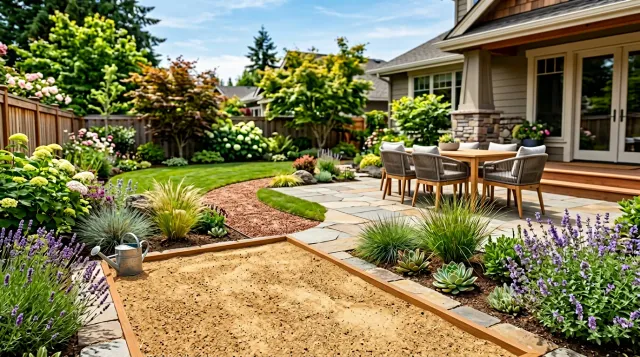
Sandbox Calculator
Sandbox calculator — enter dimensions and shape to estimate how many pounds or bags of play sand to buy. Works for rectangular, circular, and custom sizes.
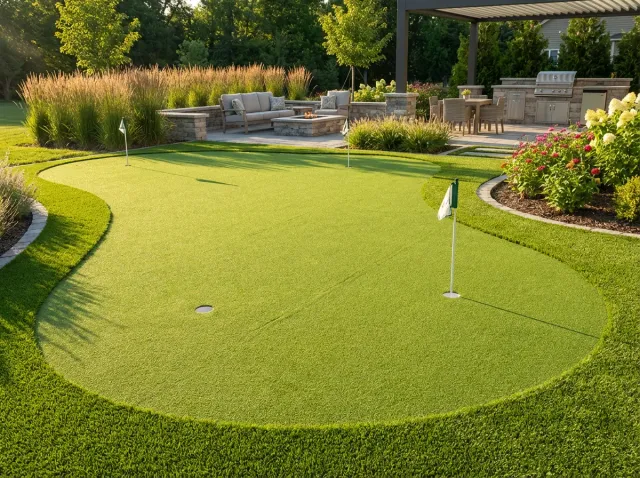
Putting Green Calculator
Putting green calculator — estimate turf, base gravel, and sand infill for your backyard green. Enter dimensions for materials and approximate cost.
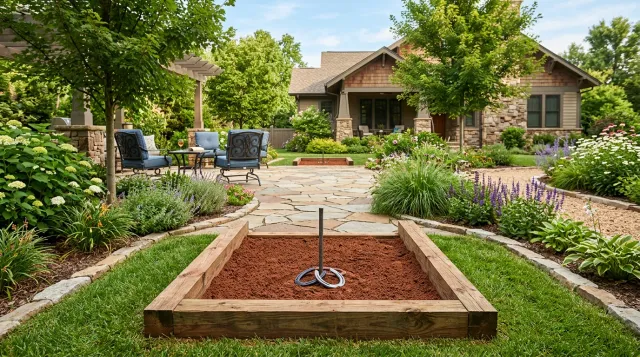
Horseshoe Pit Calculator
Horseshoe pit calculator — estimate sand, clay, and lumber for a regulation or backyard court. Covers pit dimensions from 31x43 in. up to 36x72 in.
Frequently Asked Questions
What is fill sand, and what is it used for?
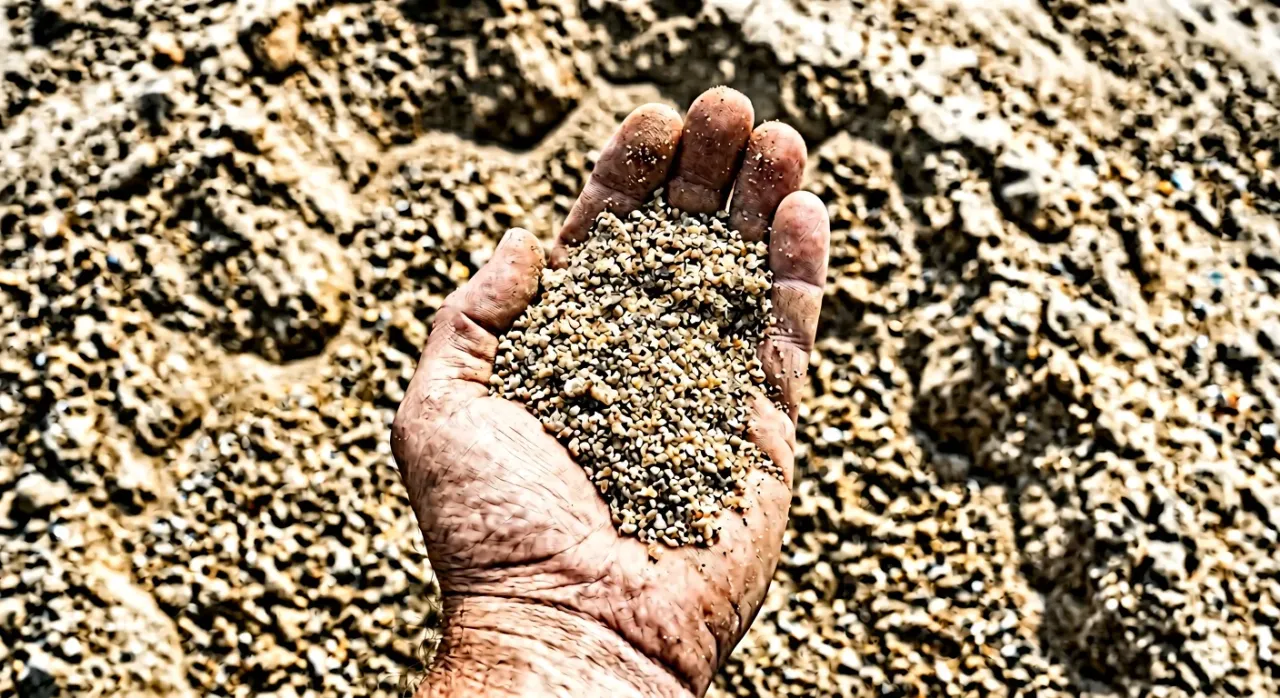
Fill sand is a coarse, granular sand material used primarily as a base, fill, or leveling material in construction and landscaping projects. You might also hear it called utility sand or builder's sand depending on the region, but the terms all point to the same basic material: a natural sand that has been screened to remove oversized debris and large particles. It is different from more specialized sands like concrete sand or mason sand, which are graded to tight specifications for mixing or finishing work. The range of applications for fill sand is broad. It is commonly used to fill and level low spots in a yard, backfill trenches after utility or pipe installation, create a stable base beneath concrete slabs and pavers, fill around pool shells and footings, level ground before placing a shed foundation, and add bulk to areas that need to be raised in grade. If you need a workable material that compacts predictably, drains well, and holds its position once placed, fill sand is one of the most versatile options available for both residential and commercial projects.
Does fill sand need to be compacted?
Yes, and getting the compaction right is one of the most important steps in any fill sand project. If you place fill sand and leave it uncompacted, it will settle over time, especially once it absorbs moisture or starts carrying weight. That gradual settling can crack a concrete slab, shift a paver base, or leave you with uneven ground months after you thought the job was finished. The standard approach is to place fill sand in lifts, meaning you add it in layers typically 4 to 6 inches thick and compact each layer thoroughly before adding the next. A plate compactor handles most residential and commercial jobs well. Lightly moistening the sand before compacting helps the particles bind together and improves the finished result. If you are placing fill sand beneath a concrete slab, a structure, or any surface that will carry significant load, compaction is not optional. It is the difference between a base that stays solid for years and one that moves on you after the first wet season.
Can I use fill sand to level my yard or lawn?
Fill sand works well for leveling low spots, raising grade, and correcting uneven ground across a yard. For projects where you are filling in a depression, raising a section of ground, or creating a level base for hardscaping, fill sand is a practical and cost-effective choice. It compacts evenly, drains freely, and gives you a stable working surface once it is properly placed. That said, if your main goal is a smooth, healthy lawn, fill sand alone is not the best top-dressing material. Pure sand does not hold nutrients, so grass trying to establish itself through a thick layer of sand will often struggle. For lawn leveling where you want grass to grow back, many homeowners get the best results by using fill sand to bring up the grade and then covering it with a layer of topsoil before seeding or sodding. For purely structural leveling under hardscaping, patios, or shed foundations, fill sand does the job on its own without the need for a topsoil layer.
Can you pour concrete over fill sand?
Yes, you can pour concrete over fill sand, but it works best as part of a properly layered base rather than the only material beneath the slab. For most concrete slab applications, the recommended approach is a compacted layer of crushed gravel or stone as the structural base, with fill sand on top to provide a smooth, level surface for the pour. Sand alone can shift and cause differential settlement over time, particularly on unstable or clay-heavy soils, which is one of the more common causes of cracked and sunken slabs. On softer ground, going deeper with the gravel base layer before the sand goes down adds meaningful drainage and structural support. What matters most is that whatever base you use is fully compacted and level before any concrete is placed. A poorly prepared base is one of the leading causes of cracked and sunken concrete over time. If you want the finished slab to hold up for the long haul, the work you put into preparing the base underneath it is just as important as the concrete itself.
Does fill sand have good drainage?
Fill sand is one of the better-draining materials you can use as a base or fill. Because sand is made up of relatively coarse, loose particles, water moves through it quickly rather than pooling or saturating the material over time. This makes fill sand especially useful in situations where drainage is a real concern, such as backfilling around drainage pipes, filling around pool shells, or building bases in areas with heavy rainfall or high water tables. That drainage advantage also means fill sand does not hold moisture the way clay soil or fill dirt does. For structural applications, this is generally a benefit. Saturated fill material can shift, heave, and settle under load, which causes all kinds of problems with surfaces built on top of it. If you are working in an area prone to drainage issues and want a fill material that will not trap water against a foundation or beneath a slab, fill sand is typically a stronger choice than clay-heavy fill dirt.
Other Material Calculators
Delivery Logistics & Truck Info
Know your delivery options and access requirements before scheduling your order.
Truck Capacities
- Standard Dump Truck 10–14 tons
- Tandem Axle 14–18 tons
- Semi End Dump 20–25 tons
A standard cubic yard weighs approximately 2,000–2,700 lbs depending on material and moisture.
Site Access Requirements
- Trucks require a minimum 12-ft wide, overhead-clear access path
- Soft ground or slopes over 10% may limit truck access — contact us before ordering
- Ensure no underground utilities or irrigation lines are in the drop zone
- Mark your desired drop location clearly before delivery
Important Notes
- Delivery estimates are based on available inventory and route proximity
- Minimum order quantities apply — typically 5 cubic yards or 1 truckload
- Material certification is available upon request for permitted projects
- Always confirm local grading ordinances before major material placement