
Putting Green Calculator
— How Much Do You Need?
Calculate sand, topsoil & gravel for your putting green and get truckload delivery quotes.
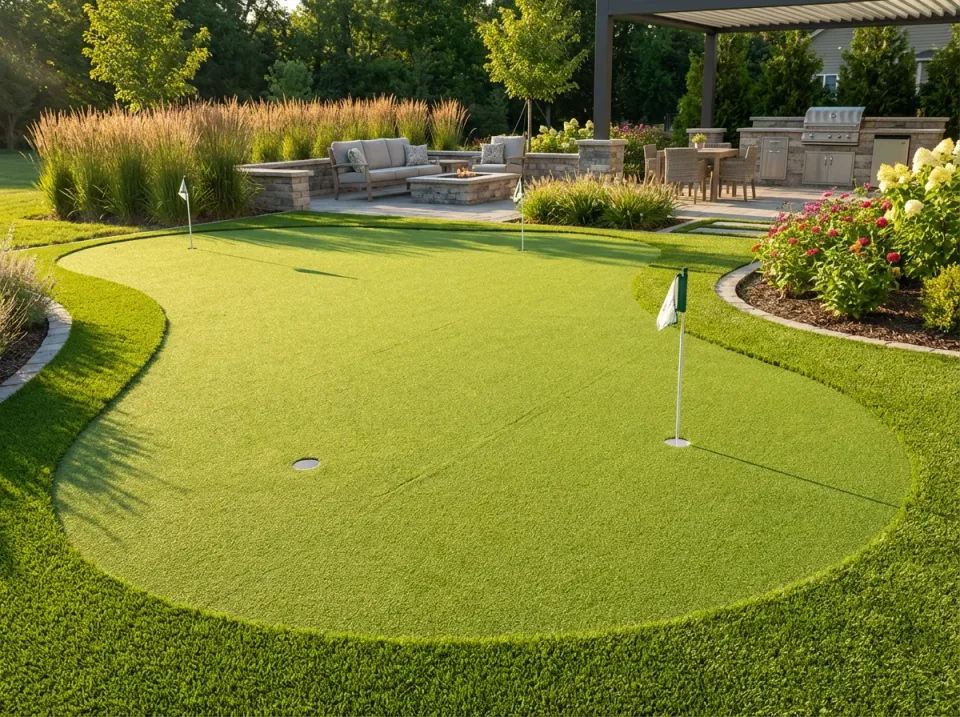
How to Use This Putting Green Calculator
Planning a putting green requires precise measurements to ensure you order enough material without overspending.
- 1 Measure Area: Measure the length and width of your planned putting green area in feet.
- 2 Determine Depth: For most putting green projects, a depth of 4 to 6 inches is recommended for stability.
- 3 Review Results: The calculator provides both cubic yards (for bulk volume) and tons (for ordering weight).
Common Materials for Putting Greens
Proper material selection—from a compacted fill subgrade up through a precisely specified root-zone mix—is critical to achieving the drainage performance, surface firmness, and smooth ball roll required for a functional putting green.
| Material | Description | Best For | Est. Cost |
|---|---|---|---|
| Sand-Based Root Zone Mix | A precisely graded blend of coarse sand and organic amendment (typically peat) engineered to a coefficient of uniformity between 1.8–3.5 for controlled drainage and turf support. | Root Zone Layer, Turf Growing Medium, USGA Green Construction, Firmness & Ball Roll | $$$ |
| Washed Gravel | Clean, crushed or rounded stone with consistent particle sizing, free of fines and debris, designed to allow rapid water movement through void spaces. | Drainage Layer, USGA Green Base, Subsurface Water Management | $$ |
| Coarse Sand | Angular to sub-rounded sand particles predominantly 1 mm or larger in diameter, providing a stable, permeable buffer layer. | Intermediate Buffer Layer, Prevents Root Zone Migration, Limited Use | $$ |
| Fill Dirt | Native or imported soil material used to build up and shape a stable compacted subgrade beneath engineered layers. | Subgrade Shaping, Base Compaction, Grade Contouring | $ |
Understanding the Cost
Several factors influence the final price of your putting green project.
Material Volume
The dimensions of your project directly dictate the tonnage needed. Deeper bases require significantly more material.
Delivery Distance
Transport logistics play a major role. Being closer to the quarry or depot reduces delivery fees significantly.
Material Type
Decorative stones cost more than utility grades. Choose based on your project's functional and aesthetic requirements.
Recommended Products for Your Putting Green
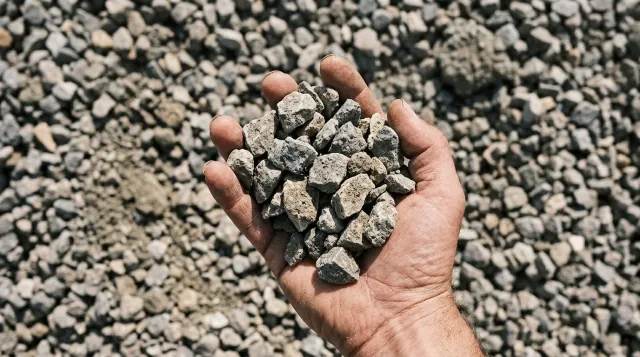
Crushed Stone Calculator
This calculator estimates crushed stone quantity and weight. Enter dimensions for results in cubic feet, cubic yards, and tons with density factored in.
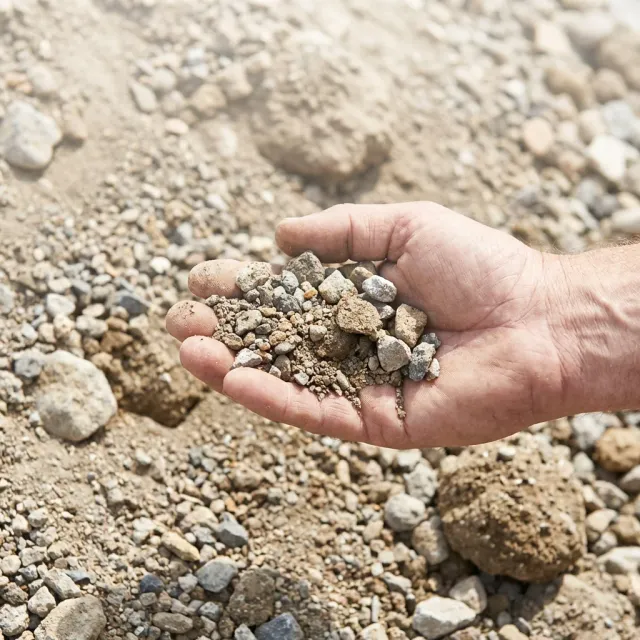
Road Base Calculator
Road base calculator — enter length, width, and depth to estimate volume and tonnage for crushed limestone, recycled concrete, and aggregate base.
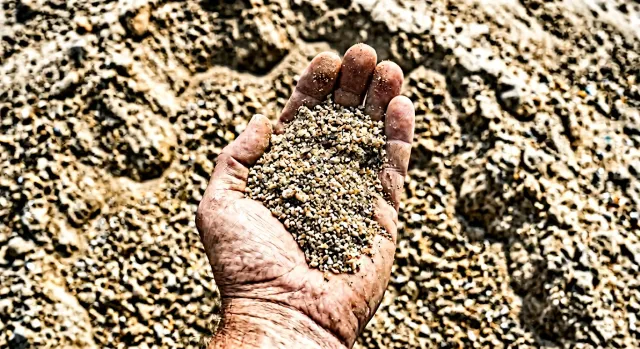
Fill Sand Calculator
Fill sand calculator — enter your project area to estimate cubic yards and tons. Works for backfill, leveling, and base preparation in any unit you prefer.
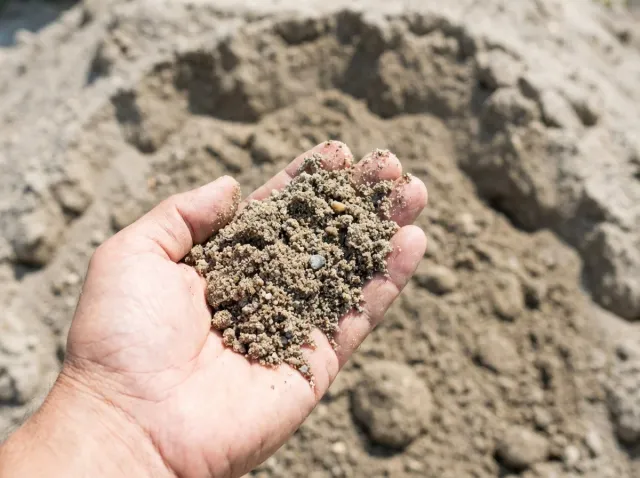
Concrete Sand Calculator
Concrete sand calculator — estimate volume and weight based on your project's length, width, and depth. Results in cubic yards and tons, ready for ordering.
Frequently Asked Questions
What base materials does a backyard putting green need?
A backyard putting green is built in layers, and the base materials are what determine whether your green drains properly, stays firm, and holds up over years of use. The foundation typically starts with a compacted native subgrade, followed by a crushed aggregate base layer, then a coarse sand layer for fine grading and drainage. The surface, whether natural grass or artificial turf, goes on top of all of that. Hello Gravel can supply the crushed aggregate base and the sand you need for your project, delivered in bulk by the truckload directly to your property. These are the most labor-intensive materials to source in large quantities, and getting them right makes a real difference in how your green performs over time. The turf or grass seed itself is sourced separately from a landscape or turf supplier. If you are building a natural grass putting green, you will also likely need a sand-heavy topsoil mix or fill material to create the proper root zone. Hello Gravel carries fill dirt and topsoil in bulk as well, so you can handle all of your base material needs in one order. The Hello Gravel team is always available to help you figure out exactly which materials suit your specific setup.
What is a good size for a backyard putting green?
The right size comes down to your available yard space and how seriously you want to practice. A modest practice green can work in as little as 200 to 300 square feet, which gives you enough room for one or two hole locations and a few putting lines. Most homeowners tend to aim for 400 to 800 square feet, which is a practical middle ground that fits comfortably in an average backyard and still gives you a solid range of practice distances. If you are a more dedicated golfer or you have a larger property, greens in the 1,000 to 2,000 square foot range become much more versatile. You can build in natural contours, multiple pin locations, and even a short chipping area around the perimeter. Keep in mind that size directly affects how much base material you will need. A larger green requires a proportionally larger order of crushed aggregate and sand. If you are still working out your dimensions, the Hello Gravel online calculator makes it easy to see how material quantities change as you adjust the size of your green. That way you can plan your order with confidence before you ever break ground.
How deep should the base layers be, and how much material will I need?
The standard approach for a well-draining putting green is to build a crushed aggregate sub-base at a compacted depth of 4 to 6 inches, topped with 1 to 2 inches of coarse sand for fine leveling and drainage. That combined depth gives you a stable, free-draining foundation that resists shifting and holds its shape through weather changes season after season. To give you a practical sense of quantities, a 20 by 20 foot putting green (400 square feet) at 4 inches of compacted crushed aggregate depth requires roughly 7 tons of base material. Add the sand leveling layer on top, and you are looking at another 1 to 2 tons depending on the exact depth. These are ballpark figures. Your actual quantities will vary depending on your specific dimensions, your existing soil conditions, and whether you are also filling or grading any low spots on the site. The Hello Gravel online calculator is the easiest way to get a precise estimate for your project. Just enter your dimensions and your target depth, and it will tell you how much material to order. If anything looks unclear or you want a second set of eyes on your numbers, the Hello Gravel team is happy to help.
How do I prepare the ground before building a putting green?
Ground preparation is what separates a putting green that plays well for years from one that develops soft spots, poor drainage, and uneven roll after the first season. The general process most installers follow goes like this. Start by clearing the area completely, removing existing grass, weeds, and roots down to bare soil. Then excavate to a depth that accounts for all your base layers plus the finished surface material. If your putting green needs any contouring, like a gentle slope or a subtle mound, this is the stage where you shape it. Fill dirt from Hello Gravel is useful here if you need to build up low areas before compacting. Once the subgrade is shaped and compacted, you add your crushed aggregate base and compact it in lifts of about 2 to 3 inches at a time. This step is what gives the green its long-term stability. After that comes your sand leveling layer, which gets smoothed and graded before the surface goes on top. Drainage slope matters too. Most installers build in a slight 1 to 2 percent grade to direct water away from the green and prevent puddles after rain. Hello Gravel can deliver the fill dirt, crushed aggregate, and sand you need for each stage of this process, and you can schedule delivery for whenever your project is ready for materials.
What type of gravel or sand works best as a base for a putting green?
For the sub-base layer, a crushed stone aggregate is the right call. Crusher run, also known as road base or crush and run, is a popular choice because it compacts tightly and creates a stable, interlocked base that resists movement over time. Crushed number 57 stone is another option that provides excellent drainage and is commonly used under synthetic turf installations. Both are available through Hello Gravel in bulk truckload quantities. For the leveling layer on top, a coarse washed sand is what you want. You need something with enough particle size to drain freely but fine enough to create a smooth, consistent surface for the turf or grass to root into. Concrete sand and coarse leveling sand are the most commonly used options for this application. Hello Gravel carries coarse sand in bulk, and you can order it alongside your aggregate base if needed. One thing to avoid is using fine play sand or standard topsoil as your drainage layer. Fine sand tends to compact unevenly and can shift over time, which leads to inconsistent putting surfaces. Getting the right material for each layer is one of the most impactful decisions you will make for the long-term performance of your green.
More Project Calculators
Playground Calculator
This calculator estimates mulch, rubber, or wood fiber surfacing for playgrounds. Enter area and recommended depth to get cubic yards and tons.
Chicken Coop Calculator
Use this calculator to estimate how much gravel your coop base requires. Input dimensions and depth for volume in cubic yards and stone type guidance.
Basketball Court Calculator
Court base calculator — estimate gravel, sand, and sub-base quantities for backyard or regulation basketball courts. Input court size for material totals.
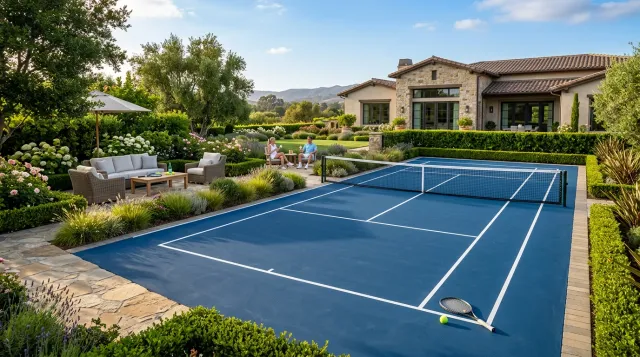
Tennis Court Calculator
Use this calculator to estimate the crushed stone base for a new or resurfaced tennis court. Enter dimensions and depth for volume and tonnage.
Delivery Logistics & Truck Info
Know your delivery options and access requirements before scheduling your order.
Truck Capacities
- Standard Dump Truck10–14 tons
- Tandem Axle14–18 tons
- Semi End Dump20–25 tons
A standard cubic yard weighs approximately 2,000–2,700 lbs depending on material and moisture.
Site Access Requirements
- Trucks require a minimum 12-ft wide, overhead-clear access path
- Soft ground or slopes over 10% may limit truck access — contact us before ordering
- Ensure no underground utilities or irrigation lines are in the drop zone
- Mark your desired drop location clearly before delivery
Important Notes
- Delivery estimates are based on available inventory and route proximity
- Minimum order quantities apply — typically 5 cubic yards or 1 truckload
- Material certification is available upon request for permitted projects
- Always confirm local ordinances before major material placement