
Crushed Stone Calculator
— How Much Do You Need?
Crushed stone calculator: estimate tons, cubic yards, coverage, and material cost quickly and accurately.
How to Use This Crushed Stone Calculator
Planning a crushed stone project requires precise measurements to ensure you order enough material without overspending.
- 1 Enter Dimensions — Input the length and width of your area in feet. Round up slightly for a buffer.
- 2 Choose Depth — Select the depth in inches. For most crushed stone projects, 3–6 inches is standard.
- 3 Review Results — Instantly see cubic yards and tons needed to accurately plan your order.
Visual Area Guide
Use these diagrams to measure your project area correctly.
Rectangular Area
Measure length × width for square or rectangular areas. Most driveway, patio, and grading projects use this method.
Circular Area
Measure the radius (half the diameter) for round beds, drain fields, or circular landscaping. Formula: π × radius².
Material Coverage & Grading
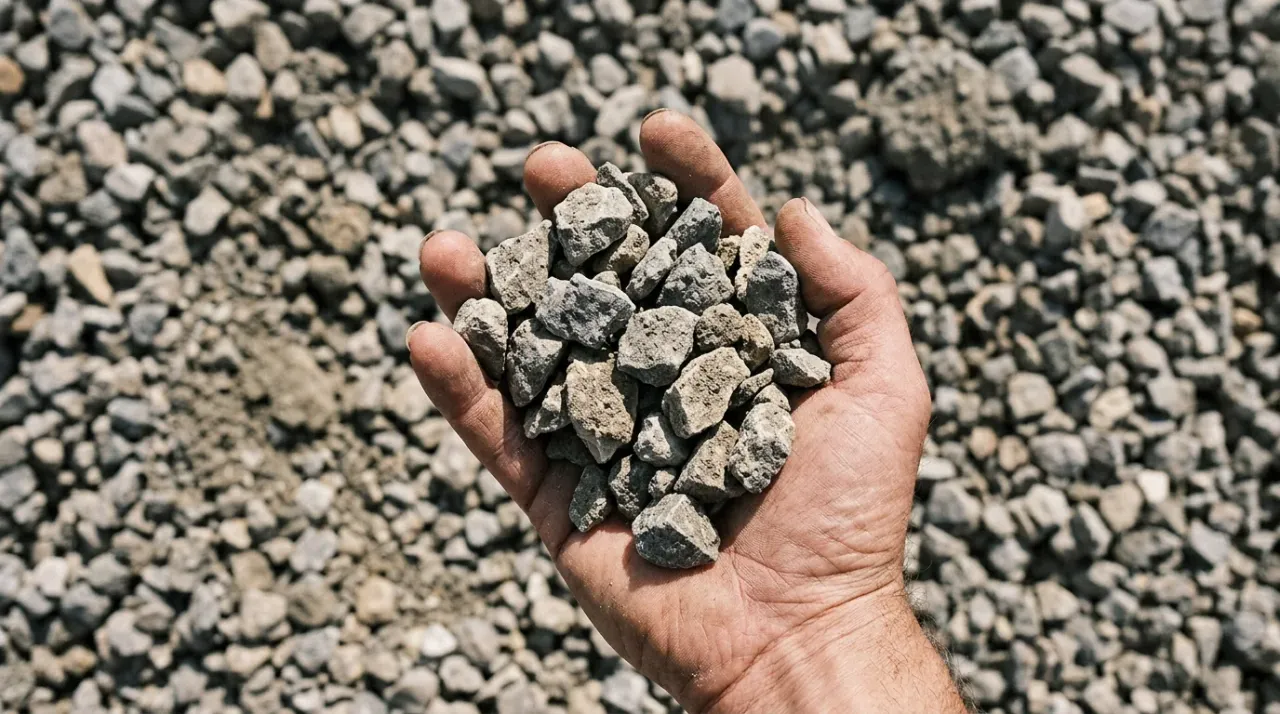
Common crushed stone grades per ASTM D448; classified by particle size for construction and landscaping applications
| Grade | Application |
|---|---|
| #1 | The largest standard crushed stone grade, with particles ranging from 2–4 inches. Primarily used for heavy-duty sub-base construction, large-scale fill projects, and erosion control. Its oversized, angular particles create substantial void spaces, making it ideal for drainage-critical applications and foundational layers under heavy structural loads. |
| #57 | One of the most widely specified crushed stone grades, with a nominal top size of 1 inch (most particles in the ¾–1 inch range). Balances excellent drainage with sufficient compaction, making it suitable for driveways, drainage layers, and base courses beneath concrete slabs and asphalt. Its versatility makes it the standard choice for both residential and commercial construction projects. |
| #67 | A slightly finer variant of #57 stone, also approximately ¾ inch but with a tighter gradation that yields a denser, more stable surface. Commonly used as a base for concrete slabs, road base courses, and highway construction. Provides a smoother finished layer compared to #57 while retaining good drainage properties. |
| #8 | A fine crushed stone grade with particles approximately 3/8 inch in size. Frequently incorporated into concrete and asphalt mixes as a coarse aggregate component, and used as a finishing layer on driveways and paths. Its small particle size allows dense compaction, producing smooth, stable wearing surfaces suitable for decorative and structural applications. |
Plan Your Next Project
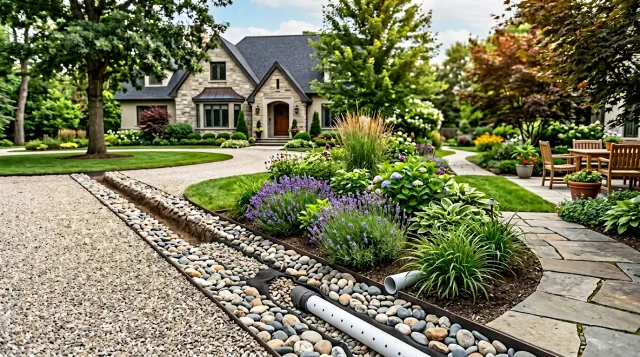
French Drain Calculator
French drain calculator — estimate gravel volume, pipe length, and fabric for any drain run. Enter trench dimensions for cubic yards and linear feet.
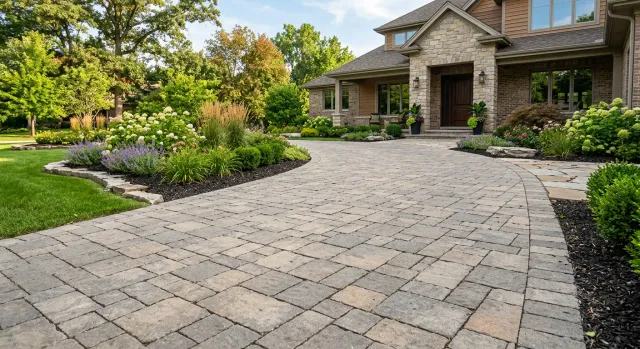
Driveway Calculator
Driveway calculator — estimate cubic yards and tons from your length, width, and preferred gravel depth. Covers single-layer and three-layer builds.
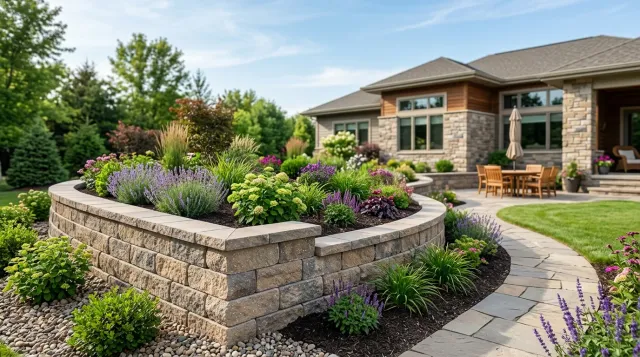
Retaining Wall Calculator
Retaining wall calculator — estimate backfill gravel, base stone, and block count for your project. Input wall height and length for a materials breakdown.
Concrete Slab Calculator
Concrete slab calculator — estimate concrete for slabs, footers, and steps. Enter length, width, and thickness for cubic yards, bags, and cost.
Frequently Asked Questions
What is crushed stone, and how is it different from gravel?
Crushed stone is quarried rock, typically limestone, granite, or trap rock, that gets mechanically crushed and screened down to a specific size. The process creates angular pieces with sharp, jagged edges. Gravel, by contrast, is naturally occurring. It forms as rocks are tumbled and worn smooth over time by water and weather, which gives gravel its rounded shape. That difference in shape matters a lot for how each material performs. The angular edges of crushed stone allow the pieces to interlock and compact tightly under pressure. This makes it the preferred choice for driveways, structural bases, and any application where you need the material to stay put under load. Rounded gravel tends to shift and roll more easily, which makes it a better fit for decorative purposes or loose-fill applications where compaction is less critical. Both materials are sold by the ton and delivered in bulk by the truckload. If you are deciding between crushed stone and gravel for your project, the Hello Gravel team is happy to help you think through which material is the better match for what you are building.
What is crushed stone used for?
Crushed stone is one of the most versatile materials you can buy for a home or construction project. It handles weight, drains well, and compacts into a firm, stable surface, which is why it shows up in so many different applications. For driveways and parking areas, crushed stone is a top choice both as a base layer and as a finished surface. For patios, shed pads, and building foundations, a properly compacted layer of crushed stone creates a stable base that resists shifting and settling over time. For drainage projects like French drains, trench drains, and dry creek beds, clean crushed stone allows water to flow freely while holding soil in place. For walkways and garden paths, finer crushed stone provides a firm, comfortable surface underfoot. Beyond residential use, crushed stone is a standard material in commercial construction for road base, utility trench backfill, septic system beds, and pipe bedding. It is also used as the aggregate layer beneath concrete slabs and under interlocking pavers. If you are not sure whether crushed stone is the right fit for your specific project, reach out to the Hello Gravel team. We can point you in the right direction.
What size crushed stone do I need for my project?
Crushed stone comes in a range of sizes, and choosing the right one makes a real difference in how well the material performs for your specific application. For driveways and parking areas, #57 crushed stone at roughly 3/4 inch is the most widely used option. It compacts well, drains effectively, and handles vehicle weight without migrating too much. For a deeper base layer under a heavy driveway or commercial pad, larger stone such as #2 or #3, ranging from about 1.5 to 3 inches, is sometimes used to add structural support before a finer layer goes on top. For paver and concrete slab bases, #57 or a blended material like #411, which combines crushed stone with finer stone dust, compacts tightly and creates the firm foundation that pavers need to stay level. For French drains and pipe bedding, clean #57 stone is the standard choice because its open structure lets water move through freely without clogging. For walkways and foot-traffic areas, smaller sizes like 3/8-inch stone or stone screenings create a smooth, compactable surface. If you are weighing options and want a recommendation based on your specific project, the Hello Gravel team can help you find the right size before you order.
How much crushed stone do I need for my project?
The quantity you need comes down to two things: the area you are covering and the depth you are installing. Depth has a bigger impact on your total tonnage than most people expect, so it helps to have a clear target depth before you start calculating. As a general benchmark, one ton of crushed stone covers approximately 80 to 100 square feet at 2 inches deep. At 4 inches of compacted depth, which is the typical minimum for a driveway or structural base, that same ton covers roughly 50 to 60 square feet. If you are going 6 inches deep for a heavy-duty pad or high-traffic driveway, you can expect around 35 to 40 square feet per ton. To put that in practical terms, a 100-foot by 12-foot driveway at 4 inches deep works out to 1,200 square feet. At roughly 55 square feet per ton, you are looking at somewhere around 20 to 22 tons. A standard dump truck typically carries 14 to 20 tons depending on the truck configuration and material weight, so it is worth confirming load size when you order. These figures are estimates based on typical compaction rates. Your actual quantity will depend on your exact dimensions and local soil conditions. The Hello Gravel calculator lets you enter your measurements and get a more precise number before you commit to an order.
What goes under crushed stone, and does it need to be compacted?
What you put under crushed stone depends on the project, but the foundation principle is the same across most applications: the surface beneath the stone should be stable, level, and free of loose organic material like grass, roots, or topsoil. For driveways, parking pads, and any structural base, start by grading the native soil so it is firm and well-drained. In soft or clay-heavy soils, many contractors lay a layer of geotextile landscape fabric before adding stone. The fabric acts as a separator, preventing the stone from sinking into soft ground over time while still allowing water to drain through. For walkways and lighter applications, fabric is optional, but the ground should still be leveled and cleared. Compaction is critical any time you want crushed stone to function as a base material. Loose, uncompacted stone will shift under load and will not give you the firm surface you are counting on. A plate compactor is the right tool for the job. For deeper installs, compact the stone in layers of no more than 4 inches at a time. This ensures the entire depth is solid, not just the surface. Skipping compaction is one of the most common reasons driveways and paver bases fail early. Taking the time to do it right at installation saves you from rework down the road.
Other Material Calculators
Delivery Logistics & Truck Info
Know your delivery options and access requirements before scheduling your order.
Truck Capacities
- Standard Dump Truck 10–14 tons
- Tandem Axle 14–18 tons
- Semi End Dump 20–25 tons
A standard cubic yard weighs approximately 2,000–2,700 lbs depending on material and moisture.
Site Access Requirements
- Trucks require a minimum 12-ft wide, overhead-clear access path
- Soft ground or slopes over 10% may limit truck access — contact us before ordering
- Ensure no underground utilities or irrigation lines are in the drop zone
- Mark your desired drop location clearly before delivery
Important Notes
- Delivery estimates are based on available inventory and route proximity
- Minimum order quantities apply — typically 5 cubic yards or 1 truckload
- Material certification is available upon request for permitted projects
- Always confirm local grading ordinances before major material placement