
How Much Does a Concrete Slab Cost?
— How Much Do You Need?
Calculate volume, material amounts, and truckload delivery for your concrete slab in minutes.
How to Use This Concrete Slab Calculator
Planning a concrete slab requires precise measurements to ensure you order enough material without overspending.
- 1 Measure Area: Measure the length and width of your planned concrete slab area in feet.
- 2 Determine Depth: For most concrete slab projects, a depth of 4 to 6 inches is recommended for stability.
- 3 Review Results: The calculator provides both cubic yards (for bulk volume) and tons (for ordering weight).
Common Materials for Concrete Slabs
Selecting properly graded, compactable subbase materials and structurally sound concrete aggregates is critical to preventing slab settlement, cracking, and premature failure under load.
| Material | Description | Best For | Est. Cost |
|---|---|---|---|
| #57 Crushed Stone | Angular, 3/4-inch crushed limestone or granite particles that compact firmly and drain well. | Subbase Layer, Load Distribution, Drainage, Compacted Base | $$ |
| Concrete Sand (ASTM C33) | Washed, fine-grained silica sand with particles ranging from fine (No. 200 sieve, ~0.003 in) to approximately 3/16 inch (No. 4 sieve, 4.75mm), meeting ASTM C33 gradation standards, meeting ASTM C33 gradation standards. | Concrete Mix Fine Aggregate, Void Fill, Workability | $ |
| #4 Crushed Stone (1.5" Coarse Aggregate) | Angular crushed stone with a nominal maximum size of 1 to 1.5 inches, providing high compressive strength in concrete mixes. | Concrete Mix Coarse Aggregate, Structural Strength, Commercial Slabs | $$ |
| Crusher Run (QP) | A blend of crushed stone particles and stone dust ranging from 3/4 inch down to fines, compacting into a dense, stable layer. | Subgrade Stabilization, Rough Grading Fill, Limited Use Under Slab | $ |
Understanding the Cost
Several factors influence the final price of your concrete slab project.
Material Volume
The dimensions of your project directly dictate the tonnage needed. Deeper bases require significantly more material.
Delivery Distance
Transport logistics play a major role. Being closer to the quarry or depot reduces delivery fees significantly.
Material Type
Decorative stones cost more than utility grades. Choose based on your project's functional and aesthetic requirements.
Recommended Products for Your Concrete Slab
Gravel Calculator
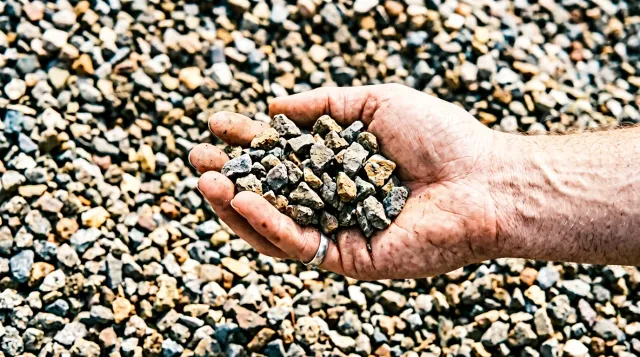
This gravel calculator estimates cubic yards, tons, and coverage for any area. Enter dimensions and depth for driveways, patios, paths, and landscaping.
Crushed Stone Calculator
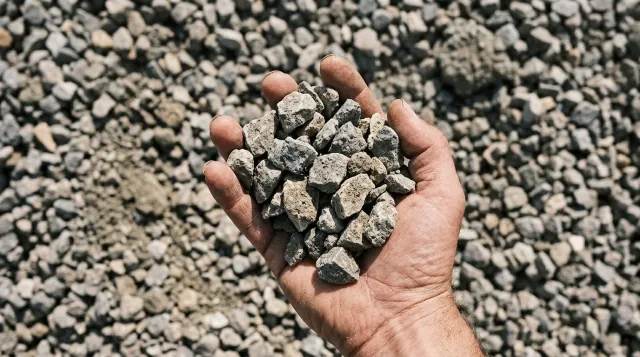
This calculator estimates crushed stone quantity and weight. Enter dimensions for results in cubic feet, cubic yards, and tons with density factored in.
Road Base Calculator
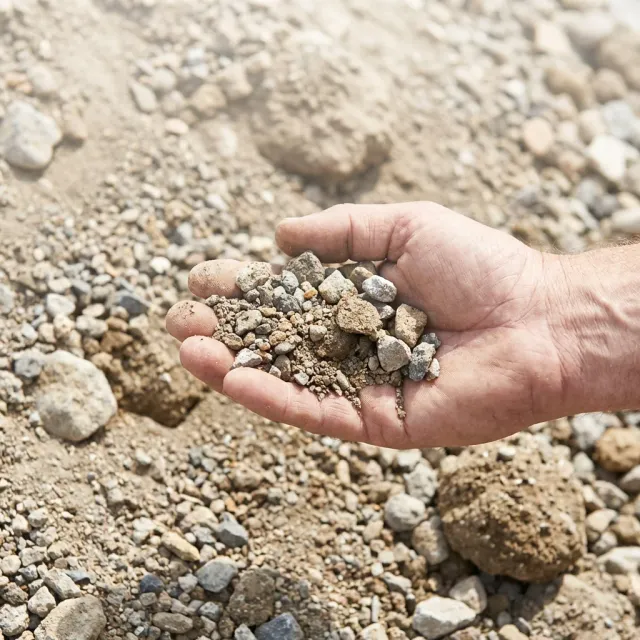
Road base calculator — enter length, width, and depth to estimate volume and tonnage for crushed limestone, recycled concrete, and aggregate base.
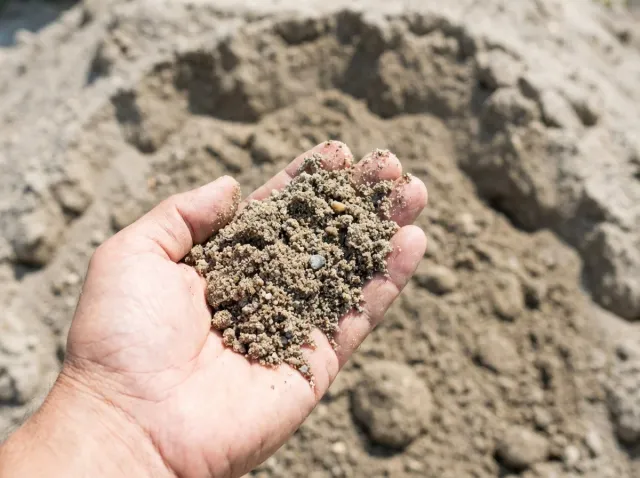
Concrete Sand Calculator
Concrete sand calculator — estimate volume and weight based on your project's length, width, and depth. Results in cubic yards and tons, ready for ordering.
Frequently Asked Questions
What base materials does Hello Gravel supply for a concrete slab project?
Hello Gravel does not pour concrete, but we handle the critical layer that goes underneath it. Every concrete slab needs a properly prepared base to prevent cracking, settling, and drainage problems down the road. That base is exactly where Hello Gravel comes in. We deliver bulk aggregate materials including crushed stone, road base (also called crusher run), crushed concrete, sand, and fill dirt. These are the materials that contractors and DIYers use to build a solid, compacted foundation before any concrete is poured. If your ground needs to be raised or leveled first, fill dirt is typically your starting point. Once the grade is set, a layer of compacted crushed stone or road base gives the slab a stable, well-draining platform to sit on. If you are not sure which material fits your project best, our team is happy to help you figure that out. You can also use the Hello Gravel calculator to get a quantity estimate and move straight to ordering.
How much base material do I need under a concrete slab?
The amount of base material you need depends on the size of your slab and how deep you build your sub-base layer. The standard recommendation for residential slabs is 4 to 6 inches of compacted gravel. If you are working on soft or unstable soil, going 6 inches or deeper is a smart move. To give you a practical starting point, here are some rough estimates based on a 4-inch compacted sub-base depth. For a 12x12 slab, you are looking at roughly 1.5 to 2 tons of crushed stone or road base. A 20x20 slab at the same 4-inch depth would require approximately 5 to 6 tons. A larger project like a 30x40 slab, also at 4 inches of compacted sub-base, takes roughly 18 to 20 tons. If you increase your depth to 6 inches, your tonnage increases proportionally across all those sizes. These are ballpark figures. Actual needs can vary based on soil conditions, the compaction rate of the material you choose, and whether you need any fill to level the grade first. The Hello Gravel calculator will give you a more precise estimate based on your exact dimensions. Plug in your numbers before you order so you do not come up short on pour day.
What type of gravel or crushed stone works best as a sub-base under a concrete slab?
The best sub-base materials for a concrete slab are angular crushed stones that compact tightly and drain well. Road base, crusher run, crushed limestone, and recycled crushed concrete are all strong choices. These materials contain a blend of particle sizes, which means the pieces lock together under compaction and form a dense, stable layer. You want to avoid smooth, rounded stones like pea gravel for a sub-base. Round particles do not interlock the same way. They shift under load and give your slab an unstable platform, which can contribute to cracking over time. If you are working with soft or clay-heavy soil, a layer of clean crushed stone improves drainage before you add your compacted base layer on top. If the ground needs significant grading first, fill dirt is the right starting material before any crushed stone goes down. Not sure which material is right for your specific conditions? Reach out to the Hello Gravel team and we will help you make the right call before you order.
What are the most common mistakes people make when preparing a base for a concrete slab?
Skipping or shortcutting the sub-base is the most common mistake, and it tends to show up as cracking, settling, and water damage years later when it is expensive to fix. Pouring concrete directly on native soil without any gravel layer underneath is a major problem. Even if the ground looks firm and dry, soil shifts seasonally with moisture changes and freeze-thaw cycles. A properly compacted gravel layer buffers those movements and protects the slab from underneath. Not compacting the sub-base is just as damaging as skipping it entirely. Loose gravel under a slab settles unevenly over time. A plate compactor is essential for achieving proper density, and if you are building up a thicker base, compacting in lifts rather than all at once gives you a much more stable result. Getting the grade wrong before the pour is another mistake that costs people later. Your sub-base should slope slightly away from any structure so water drains away rather than pooling beneath the slab and causing long-term moisture issues. Finally, underestimating material needs and ordering too little is a very common and avoidable problem. Running short mid-project delays your pour and can leave you with an uneven base. The Hello Gravel calculator is built to solve exactly this problem. Enter your slab dimensions and sub-base depth, and you will get a reliable quantity estimate so you can order the right amount the first time.
Does a concrete slab need rebar, and how thick should it be?
The answer depends on what the slab is for and how much weight it needs to carry. For light-duty residential projects like a backyard patio or a garden shed foundation, a 4-inch slab with wire mesh reinforcement is usually sufficient. The mesh helps control cracking without the added cost of a full rebar grid. For a driveway or any surface that needs to support vehicle traffic, a 4 to 6-inch slab with rebar is a better choice. Vehicles create concentrated loads that wire mesh alone may not handle reliably over time. For structural applications like garage floors, shop floors, or anything carrying heavy equipment, rebar is strongly recommended and is often required by local building codes. A 6-inch depth with a proper rebar grid is standard for these projects. Your local concrete contractor or building inspector can confirm what is required for your specific project and jurisdiction. What Hello Gravel handles is the foundation work before any concrete is placed, so your slab has a stable, properly compacted base to rest on from the very beginning.
More Project Calculators

Playground Calculator
This calculator estimates mulch, rubber, or wood fiber surfacing for playgrounds. Enter area and recommended depth to get cubic yards and tons.

Chicken Coop Calculator
Use this calculator to estimate how much gravel your coop base requires. Input dimensions and depth for volume in cubic yards and stone type guidance.
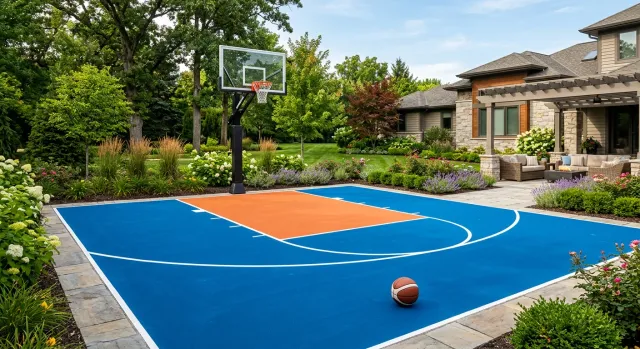
Basketball Court Calculator
Court base calculator — estimate gravel, sand, and sub-base quantities for backyard or regulation basketball courts. Input court size for material totals.

Tennis Court Calculator
Use this calculator to estimate the crushed stone base for a new or resurfaced tennis court. Enter dimensions and depth for volume and tonnage.
Delivery Logistics & Truck Info
Know your delivery options and access requirements before scheduling your order.
Truck Capacities
- Standard Dump Truck10–14 tons
- Tandem Axle14–18 tons
- Semi End Dump20–25 tons
A standard cubic yard weighs approximately 2,000–2,700 lbs depending on material and moisture.
Site Access Requirements
- Trucks require a minimum 12-ft wide, overhead-clear access path
- Soft ground or slopes over 10% may limit truck access — contact us before ordering
- Ensure no underground utilities or irrigation lines are in the drop zone
- Mark your desired drop location clearly before delivery
Important Notes
- Delivery estimates are based on available inventory and route proximity
- Minimum order quantities apply — typically 5 cubic yards or 1 truckload
- Material certification is available upon request for permitted projects
- Always confirm local ordinances before major material placement