
Basketball Court Calculator
— How Much Do You Need?
Quickly calculate cubic yards and truckloads for a full or half basketball court with delivery.
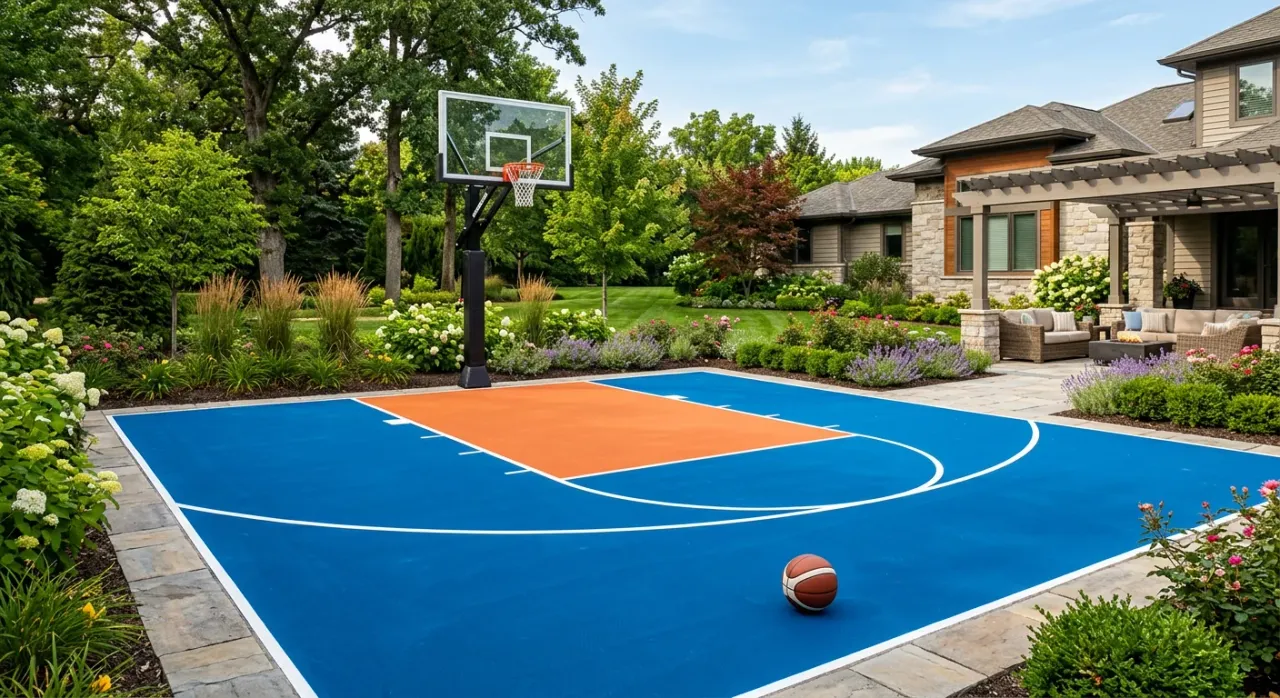
How to Use This Basketball Court Calculator
Planning a basketball court requires precise measurements to ensure you order enough material without overspending.
- 1 Measure Area: Measure the length and width of your planned basketball court area in feet.
- 2 Determine Depth: For most basketball court projects, a depth of 4 to 6 inches is recommended for stability.
- 3 Review Results: The calculator provides both cubic yards (for bulk volume) and tons (for ordering weight).
Common Materials for Basketball Courts
Proper aggregate base selection is critical for a basketball court's long-term stability, drainage, and resistance to surface cracking under dynamic player loads.
| Material | Description | Best For | Est. Cost |
|---|---|---|---|
| Crusher Run (QP) | Angular, 3/4-inch minus crushed stone blended with fines that compacts tightly into a dense, interlocked base layer. | Primary Base Layer, Subbase Compaction, Load-Bearing Foundation, Full & Half Courts | $ |
| #57 Crushed Stone | Clean, uniformly graded 3/4-inch crushed angular stone with minimal fines that provides excellent drainage and load distribution. | Subbase Drainage Layer, Soft Soil Stabilization, Under Crusher Run Base, Full Courts | $$ |
| Masonry Sand | Fine, washed angular sand with consistent particle sizing used as a thin leveling course beneath pavement surfaces. | Leveling Course, Surface Smoothing Before Paving, Minor Grade Correction, Limited Use | $ |
| Engineered Fill | Screened, compactable soil or granular material with controlled gradation used to bring subgrade to design elevation before aggregate base installation. | Rough Grading, Subgrade Correction, Large Excavation Backfill, Pre-Base Layer | $ |
Understanding the Cost
Several factors influence the final price of your basketball court project.
Material Volume
The dimensions of your project directly dictate the tonnage needed. Deeper bases require significantly more material.
Delivery Distance
Transport logistics play a major role. Being closer to the quarry or depot reduces delivery fees significantly.
Material Type
Decorative stones cost more than utility grades. Choose based on your project's functional and aesthetic requirements.
Recommended Products for Your Basketball Court
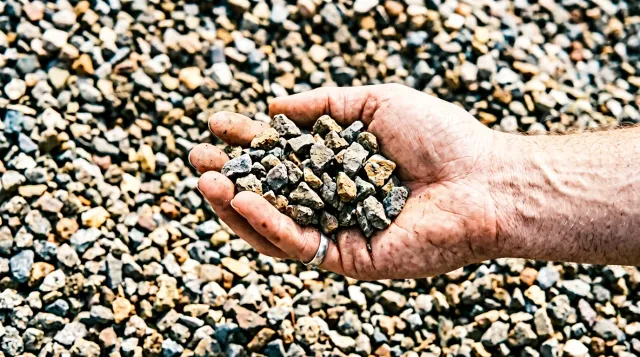
Gravel Calculator
This gravel calculator estimates cubic yards, tons, and coverage for any area. Enter dimensions and depth for driveways, patios, paths, and landscaping.
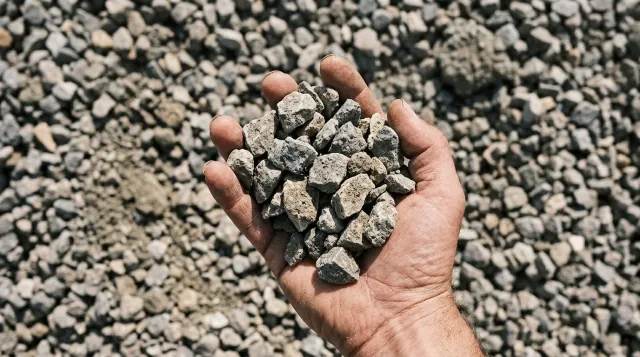
Crushed Stone Calculator
This calculator estimates crushed stone quantity and weight. Enter dimensions for results in cubic feet, cubic yards, and tons with density factored in.
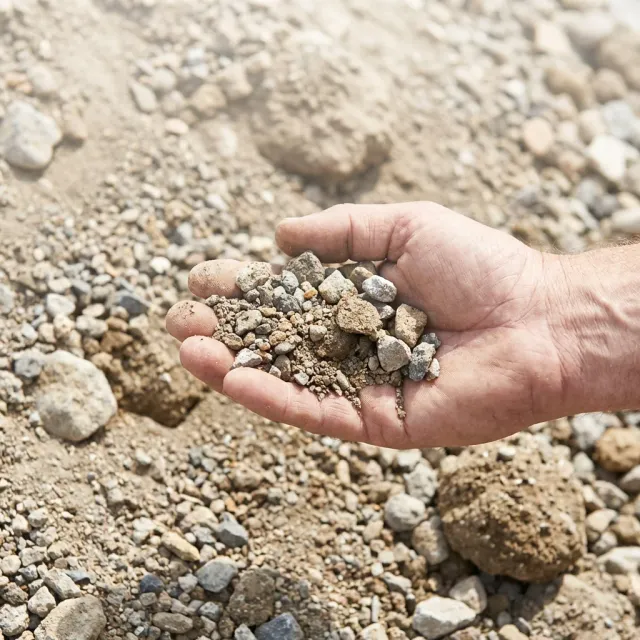
Road Base Calculator
Road base calculator — enter length, width, and depth to estimate volume and tonnage for crushed limestone, recycled concrete, and aggregate base.
Concrete Sand Calculator
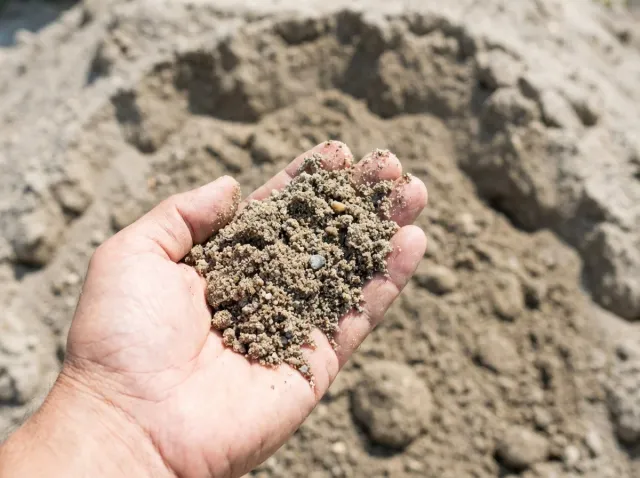
Concrete sand calculator — estimate volume and weight based on your project's length, width, and depth. Results in cubic yards and tons, ready for ordering.
Frequently Asked Questions
What base materials do I need to build a basketball court?
A basketball court is only as good as what's underneath it, and Hello Gravel supplies the foundation that makes the whole thing work. Most court builds call for two types of aggregate: a sub-base layer for drainage and a compacted base layer for structural stability. The sub-base is typically coarse crushed stone, such as #57 stone, laid at a depth of 4 to 6 inches. This layer lets water filter through rather than pool underneath your court. On top of that, a base course of crusher run or dense-graded gravel is compacted to 2 to 4 inches of finished depth. This upper layer binds tightly when compacted, giving you a firm, load-bearing platform that your finished court surface can be installed on. Hello Gravel can deliver both materials in bulk so you have everything on site and ready to go.
What type of aggregate works best as a basketball court base?
For the base course layer, crusher run is the most widely recommended aggregate for a basketball court. Depending on your region, you may also hear it called dense-graded aggregate, road base, or processed gravel. It is a blend of crushed stone and stone dust, and when it is compacted, the finer particles fill in the voids between the larger pieces and lock everything together. The result is a dense, stable layer that resists shifting, supports weight evenly, and holds its shape over time. For the sub-base layer beneath the crusher run, #57 crushed stone is a strong choice. Its open, angular structure allows water to drain through freely, which protects your base from frost heave and erosion during wet or cold seasons. Using the right material in each layer is what separates a court that stays flat for years from one that cracks or settles prematurely. If you are not sure which grade makes the most sense for your specific region or soil conditions, the Hello Gravel team can help point you in the right direction before you order.
Does a basketball court need more than one layer of aggregate, and why does it matter?
Yes, and the reason comes down to the fact that each layer does a completely different job. The sub-base at the bottom is built for drainage. Water that works its way under your court needs somewhere to go. Coarse, open-graded stone like #57 gives it a clear path to drain away rather than sitting trapped beneath the surface. In colder climates, trapped moisture freezes, expands, and can heave or crack your court surface from below. Proper drainage at the sub-base level prevents this. The base course on top of the sub-base is built for load-bearing and stability. Materials like crusher run compact into a dense, rigid layer that distributes weight evenly across the surface and gives your paving or court tile contractor a flat, consistent platform to work on. Skipping either layer is a common shortcut that tends to show up as drainage problems, uneven settling, or surface cracking within a few seasons. Building the base right the first time is almost always less expensive than fixing it after the surface is installed.
How much aggregate do I need for a standard basketball court?
The right quantity depends on your court's dimensions and the depth of each base layer. To give you a sense of scale, a regulation high school court measures 84 by 50 feet, which is 4,200 square feet. A common residential half court runs about 30 by 50 feet, or 1,500 square feet. For a combined base of 4 inches of sub-base and 4 inches of base course, you would be working with roughly 8 inches of total material depth across both layers. At that depth, a 30 by 50 foot half court would require approximately 37 to 40 tons of aggregate across both layers. A full 84 by 50 foot high school court at the same depth would require approximately 105 to 115 tons. These are real-world estimates based on standard compaction rates, but your actual number will vary depending on your soil conditions, how much grading your site needs, and whether you are compacting in stages. The Hello Gravel online calculator is the best tool to get a precise figure for your specific court dimensions and target depth. It only takes a few minutes and takes the guesswork out of ordering.
How should I prepare my site before the aggregate is delivered?
Site preparation is where the success of your basketball court is actually decided, and it all happens before your first ton of aggregate arrives. Start by staking out the full footprint of your court, plus a few extra feet around the perimeter to give yourself clean edges to work with. Then excavate the area to a depth that accommodates your sub-base, base course, and intended surface combined. For most builds, that means digging down 8 to 12 inches below the final finished grade. Once the area is excavated, compact the native soil at the bottom of the excavation using a plate compactor or vibratory roller. Any soft, wet, or unstable spots in the subgrade need to be addressed at this stage before you start building up. If your site has significant low areas that need to be built up before the stone layers go down, Hello Gravel carries fill dirt that can help you establish a consistent grade across the footprint. Getting this foundation step right before the aggregate arrives makes everything that follows faster and more predictable.
More Project Calculators
Playground Calculator
This calculator estimates mulch, rubber, or wood fiber surfacing for playgrounds. Enter area and recommended depth to get cubic yards and tons.
Chicken Coop Calculator
Use this calculator to estimate how much gravel your coop base requires. Input dimensions and depth for volume in cubic yards and stone type guidance.
Tennis Court Calculator
Use this calculator to estimate the crushed stone base for a new or resurfaced tennis court. Enter dimensions and depth for volume and tonnage.
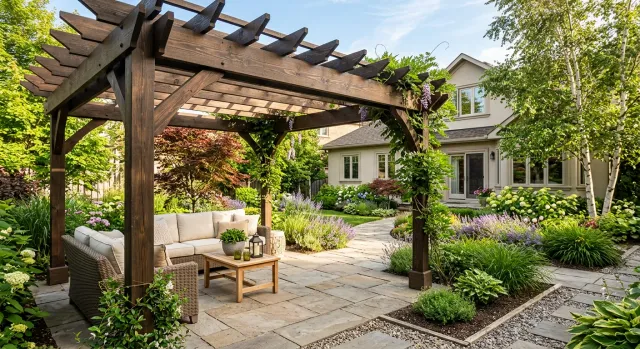
Pergola Calculator
Pergola calculator — estimate how much gravel or crushed stone you need under footings and pad. Input dimensions for cubic yards, tons, and cost.
Delivery Logistics & Truck Info
Know your delivery options and access requirements before scheduling your order.
Truck Capacities
- Standard Dump Truck10–14 tons
- Tandem Axle14–18 tons
- Semi End Dump20–25 tons
A standard cubic yard weighs approximately 2,000–2,700 lbs depending on material and moisture.
Site Access Requirements
- Trucks require a minimum 12-ft wide, overhead-clear access path
- Soft ground or slopes over 10% may limit truck access — contact us before ordering
- Ensure no underground utilities or irrigation lines are in the drop zone
- Mark your desired drop location clearly before delivery
Important Notes
- Delivery estimates are based on available inventory and route proximity
- Minimum order quantities apply — typically 5 cubic yards or 1 truckload
- Material certification is available upon request for permitted projects
- Always confirm local ordinances before major material placement