
Road Base Calculator
— How Much Do You Need?
Enter area and depth to calculate road base: get cubic yards, tons, and truckload estimates instantly.
How to Use This Road Base Calculator
Planning a road base project requires precise measurements to ensure you order enough material without overspending.
- 1 Enter Dimensions — Input the length and width of your area in feet. Round up slightly for a buffer.
- 2 Choose Depth — Select the depth in inches. For most road base projects, 3–6 inches is standard.
- 3 Review Results — Instantly see cubic yards and tons needed to accurately plan your order.
Visual Area Guide
Use these diagrams to measure your project area correctly.
Rectangular Area
Measure length × width for square or rectangular areas. Most driveway, patio, and grading projects use this method.
Circular Area
Measure the radius (half the diameter) for round beds, drain fields, or circular landscaping. Formula: π × radius².
Material Coverage & Grading
Common road base applications classified by gradation, fines content, and load-bearing use per AASHTO M 147 and DOT specifications
| Grade | Application |
|---|---|
| Class 1 | Finest dense-graded aggregate base with 100% passing 1-inch sieve and less than 7% passing the No. 200 sieve. Features low plasticity index and high angular particle interlock, making it ideal for heavy-load pavements, airport runways, and high-traffic highway base courses requiring maximum density and stability. |
| Class 2 | Medium-to-coarse aggregate base with 100% passing 1.5–2-inch sieve and 3–12% fines content, conforming to AASHTO M 147 Class 2 gradation. Balances compaction performance with adequate drainage, making it the standard choice for highway shoulders, rural roads, driveways, and parking lot subgrades. |
| Class 3 | Coarsest classification, typically pit-run or bank-run material with maximum particle size up to 3 inches and minimal processing. Best suited for low-volume roads, temporary construction access routes, and subgrade stabilization where structural demands and ESAL counts are low. |
| RAP Base | Reclaimed Asphalt Pavement processed to a Class 2-equivalent gradation, consisting of 100% crushed recycled asphalt material. Offers a cost-effective and sustainable alternative for base course applications on driveways, rural roads, and parking areas where virgin aggregate is not required. |
| A-1-a | AASHTO soil-aggregate classification designating a well-graded gravel-sand mixture with low plasticity binder fines, exhibiting excellent load-bearing and subbase performance. Commonly specified by highway DOTs for primary subbase layers beneath asphalt or concrete pavement on high-traffic corridors. |
| A-1-b | AASHTO soil-aggregate classification for coarser gravel-sand mixtures with slightly higher sand content than A-1-a, still maintaining low plasticity and strong compaction characteristics. Frequently used in highway subbase and shoulder construction where granular stability and drainage must be balanced. |
Plan Your Next Project
Basketball Court Calculator
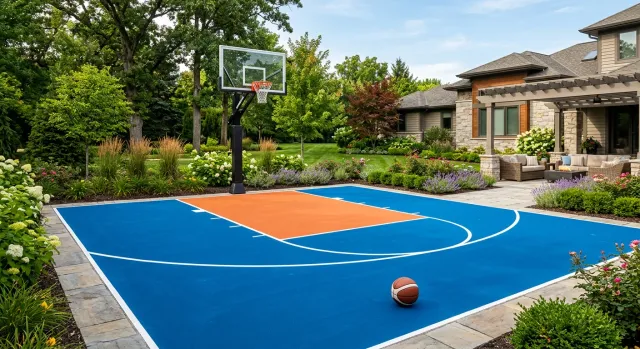
Court base calculator — estimate gravel, sand, and sub-base quantities for backyard or regulation basketball courts. Input court size for material totals.

Tennis Court Calculator
Use this calculator to estimate the crushed stone base for a new or resurfaced tennis court. Enter dimensions and depth for volume and tonnage.
Driveway Calculator
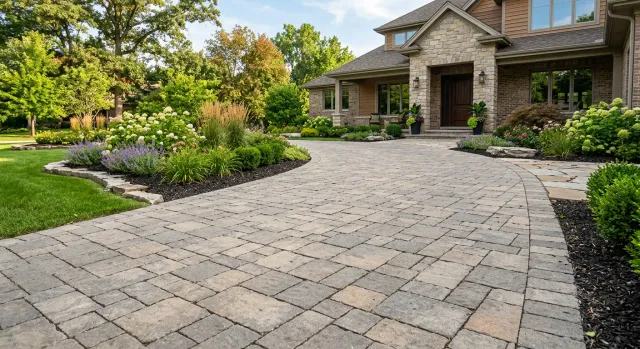
Driveway calculator — estimate cubic yards and tons from your length, width, and preferred gravel depth. Covers single-layer and three-layer builds.
Patio Pavers Calculator
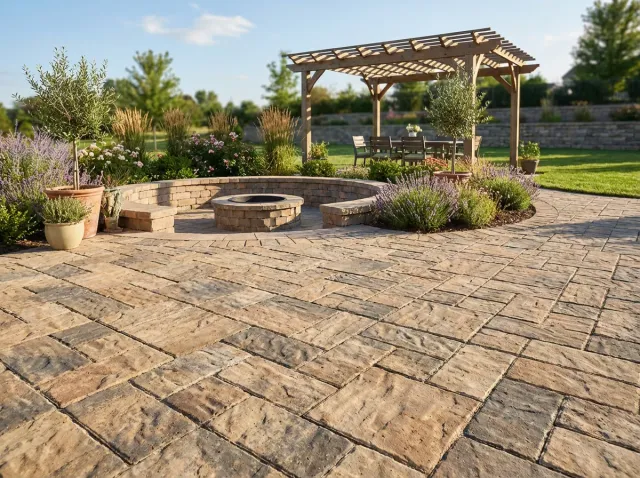
Paver calculator — estimate an accurate paver count plus base material for your patio. Enter dimensions, paver size, and joint spacing to plan your layout.
Frequently Asked Questions
What is road base, and what makes it different from regular gravel?
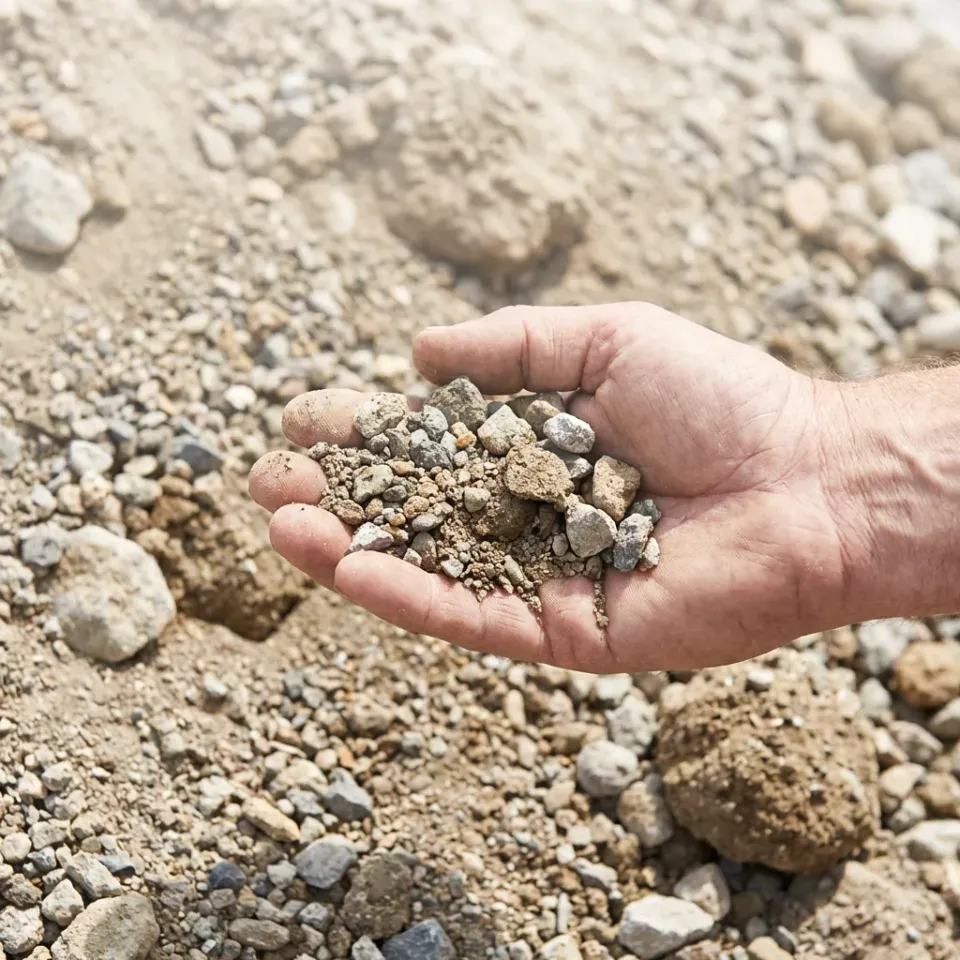
Road base is a blend of crushed stone and fine particles, including stone dust, sand, and small aggregate, all mixed together in a way that compacts tightly into a solid, load-bearing surface. You might also hear it called crusher run, base course, road base gravel, or crushed aggregate base, depending on your region. The name changes, but the material is essentially the same idea: angular crushed rock combined with fines that lock together under pressure and weight. What sets road base apart from plain gravel is that combination of particle sizes. Regular gravel, like pea gravel or river rock, is made up of smooth, rounded stones that tend to shift and scatter under traffic. Road base uses angular, irregularly shaped pieces that interlock when compacted, along with enough fine material to fill the voids between them. The result is a dense, stable layer that does not move around the way loose gravel does. If you need a foundation that will hold up under vehicle traffic, heavy equipment, or a concrete or asphalt surface laid on top, road base is the material built for that job.
Does road base get hard after it is compacted?
Yes, and that hardening quality is one of the main reasons road base is so widely used. When road base is spread and compacted with moisture present, the fine particles in the mix begin to bind together, filling the gaps between the larger crushed stone pieces. Over time, especially after repeated wetting and drying cycles and continued traffic, the surface firms up considerably. This is why road base is sometimes called "poor man's concrete." It will not set as rigid as poured concrete, but a properly compacted road base layer can get surprisingly hard and stable. The more it is driven over and exposed to the elements, the tighter it tends to pack. Many homeowners and contractors are genuinely surprised by how firm a well-installed road base surface feels after just a few weeks. That said, the hardening effect depends on getting the right amount of moisture and proper compaction during installation. Simply dumping and spreading road base without compacting it will not give you the same results. Using a plate compactor or roller, and working in lifts if you are applying several inches, makes a significant difference in how solid and durable the finished surface turns out.
Is road base the right choice for a driveway or parking area?
For most driveway and parking area projects, road base is one of the best materials you can use. It was essentially designed for this kind of application. The angular particles and fines compact into a dense, stable layer that handles regular vehicle traffic without rutting or washing away the way loose gravel can. A road base driveway is a practical, durable option that holds up well over time. Many homeowners use it as the finished surface and are happy with the results. Others use it as a base layer under asphalt or concrete. In either case, starting with a solid road base foundation is the right move. One important limitation: road base must never be used in French drains, drainage trenches, or any application where water needs to pass through the material. The fines that make it compact so effectively will clog a drainage system entirely. For drainage projects, always use a clean washed gravel or open-graded crushed stone instead. But if you are building something that needs to carry weight and stay put, road base is hard to beat.
What projects is road base commonly used for?
Road base is one of the most versatile materials in construction. Residential buyers most often use it for driveways, parking pads, and private roads. It is the go-to base layer under asphalt and concrete surfaces, where a stable, well-compacted foundation is critical to the longevity of whatever gets poured or paved on top. Beyond driveways, contractors reach for road base when preparing subgrades for buildings, outbuildings, sheds, and retaining walls. It works well for stabilizing muddy or soft ground on job sites, filling low spots on rural roads, and building up access paths for heavy equipment. Many agricultural operations use it for farm road maintenance and around barn entrances where wet, soft ground becomes a problem. If you are managing a commercial project, road base is a standard component in parking lot construction, road building, and site preparation work. The material is consistent, widely available, and performs predictably when installed correctly. Whatever your project is, if the goal is a stable, compacted surface that can handle load and traffic, road base is almost certainly the right starting point.
How much road base do I need, and how deep should it be applied?
The right depth depends on what you are building and the kind of traffic it will see. For a residential driveway used by everyday passenger vehicles, 4 inches of compacted road base is a common baseline. If you are building a parking area for trucks, trailers, or heavy equipment, planning for 6 to 8 inches is smarter. Commercial road construction or heavily loaded sites may call for even more, depending on the soil conditions underneath. As a rough planning estimate, one ton of road base covers approximately 50 to 55 square feet at 4 inches of compacted depth. To put that in practical terms, a driveway that is 12 feet wide and 50 feet long comes out to 600 square feet. At 4 inches deep, that project would require somewhere in the range of 11 to 12 tons of road base as a starting estimate. Keep in mind that soft or unstable subgrade conditions may mean you need to go deeper, which increases the total tonnage. These are ballpark figures, and your actual needs can vary based on your local material density, soil conditions, and the final depth you are targeting. The most reliable way to get an accurate number is to use the Hello Gravel calculator. Plug in your length, width, and intended depth, and it will give you a precise tonnage figure so you are not guessing or over-ordering.
Other Material Calculators
Delivery Logistics & Truck Info
Know your delivery options and access requirements before scheduling your order.
Truck Capacities
- Standard Dump Truck 10–14 tons
- Tandem Axle 14–18 tons
- Semi End Dump 20–25 tons
A standard cubic yard weighs approximately 2,000–2,700 lbs depending on material and moisture.
Site Access Requirements
- Trucks require a minimum 12-ft wide, overhead-clear access path
- Soft ground or slopes over 10% may limit truck access — contact us before ordering
- Ensure no underground utilities or irrigation lines are in the drop zone
- Mark your desired drop location clearly before delivery
Important Notes
- Delivery estimates are based on available inventory and route proximity
- Minimum order quantities apply — typically 5 cubic yards or 1 truckload
- Material certification is available upon request for permitted projects
- Always confirm local grading ordinances before major material placement