
Topsoil Calculator
— How Much Do You Need?
Calculate topsoil needed: get cubic yards or tons for lawns, garden beds, and raised planters using simple dimensions.
How to Use This Topsoil Calculator
Planning a topsoil project requires precise measurements to ensure you order enough material without overspending.
- 1 Enter Dimensions — Input the length and width of your area in feet. Round up slightly for a buffer.
- 2 Choose Depth — Select the depth in inches. For most topsoil projects, 3–6 inches is standard.
- 3 Review Results — Instantly see cubic yards and tons needed to accurately plan your order.
Visual Area Guide
Use these diagrams to measure your project area correctly.
Rectangular Area
Measure length × width for square or rectangular areas. Most driveway, patio, and grading projects use this method.
Circular Area
Measure the radius (half the diameter) for round beds, drain fields, or circular landscaping. Formula: π × radius².
Material Coverage & Grading
Common topsoil grades and applications per ASTM D5268 and standard contractor/supplier practice
| Grade | Application |
|---|---|
| Standard | Meets minimum ASTM D5268 composition ranges for organic matter, sand-silt-clay proportions, pH, and deleterious material limits. Suitable for general landscape establishment where native soil has been disturbed or removed. Typically native or minimally processed material used for bulk fill in lawn and ground cover applications. |
| Screened | Topsoil processed through mechanical screening to remove rocks, roots, clods, and other deleterious materials larger than a specified size, while meeting ASTM D5268 composition ranges. Provides a cleaner, more uniform product than standard topsoil. Preferred for finish grade applications, seeding beds, and areas requiring consistent texture. |
| Premium | Higher-organic-content topsoil meeting or exceeding ASTM D5268 ranges, often with enhanced loam texture (balanced sand-silt-clay ratio). Supports superior vegetative establishment, moisture retention, and root development. Best suited for high-performance turf, ornamental plantings, athletic fields, and demanding horticultural projects. |
| Blended | Manufactured topsoil combining native soil with added organic amendments (compost, peat, or biosolids) to achieve target ASTM D5268 organic matter and texture specifications. Offers consistent, engineered composition independent of local native soil variability. Commonly specified for site remediation, vegetative stabilization, and projects requiring uniform nutrient and pH profiles. |
| Sandy Loam | Topsoil with a sand-dominant inorganic fraction balanced by silt, clay, and organic matter, classified by USDA agricultural texture as sandy loam per ASTM D5268 evaluation methods. Provides excellent drainage and aeration while retaining adequate moisture and nutrients for plant growth. Well-suited for lawn establishment, sports turf, and sloped sites prone to waterlogging. |
| Clay Loam | Topsoil with elevated clay content relative to sand and silt fractions, classified as clay loam per USDA agricultural texture criteria and evaluated under ASTM D5268. Offers high nutrient and moisture retention but requires management to prevent compaction and poor aeration. Recommended for erosion control, heavy-demand planting beds, and sites where moisture retention is a priority. |
Plan Your Next Project
Raised Garden Bed Calculator
Raised bed calculator — estimate how much soil, compost, and amendments to buy for any bed shape. Enter dimensions for results in cubic feet and bags.
Berm Calculator
Berm calculator — estimate fill dirt or soil volume for a landscape berm. Enter base width, height, and length for cubic yards and proper grading.

Flower Bed Calculator
Flower bed calculator — estimate how much soil or mulch your bed requires. Enter length, width, and depth for results in cubic feet, yards, and bags.
Erosion Control Calculator
Erosion control calculator — estimate how much rock or aggregate you need for slope stabilization. Input site dimensions and soil conditions to start.
Frequently Asked Questions
What is topsoil, and how is it different from fill dirt or regular garden soil?
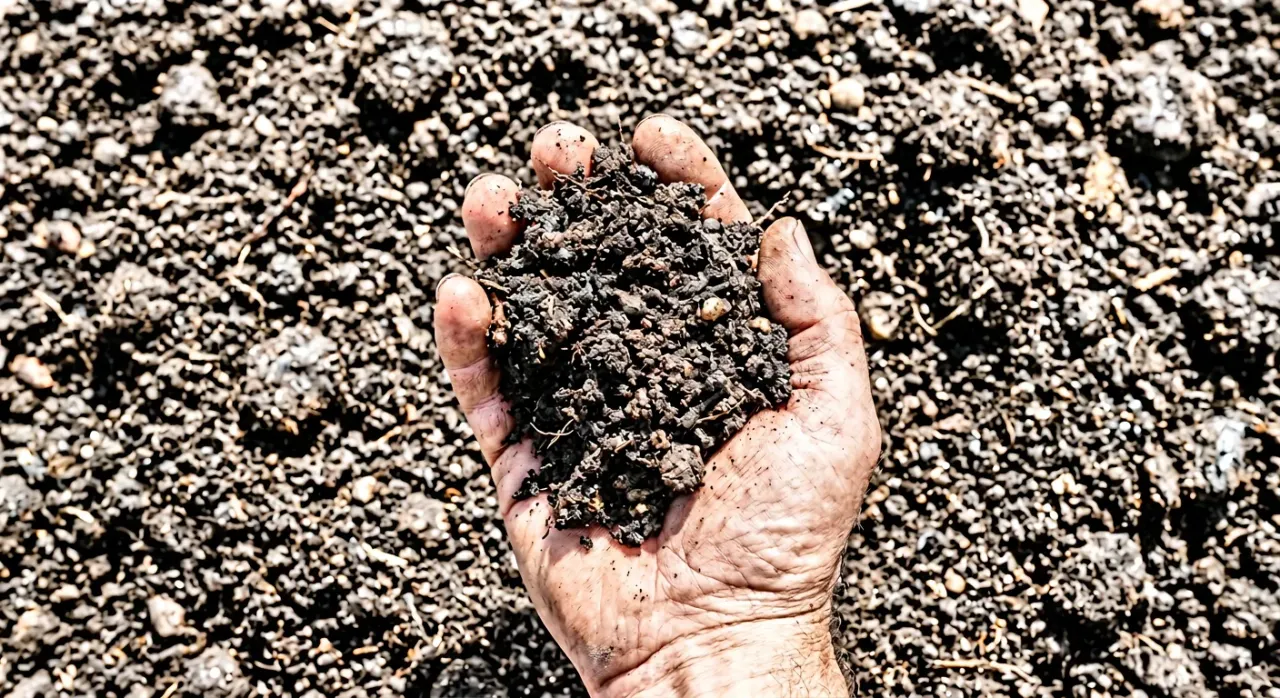
Topsoil is the uppermost layer of the earth, typically the top 2 to 8 inches of the ground. It is naturally rich in organic matter, nutrients, and the microorganisms that plants depend on to grow. That dark, rich appearance you see in a healthy garden bed or a well-established lawn? That is topsoil doing its job. You may also hear topsoil called "black dirt," and in most cases they refer to the same thing. The dark color comes from the organic content in the soil. The richer and darker the topsoil, the more beneficial it tends to be for growing grass, plants, and vegetables. Fill dirt is a different material entirely. It comes from deeper in the ground, below the topsoil layer, and it has little to no organic content. That makes fill dirt reliable for structural work like raising grade, filling voids, or building up elevation under a hardscape, but it will not support plant growth the way topsoil does. A common approach for larger projects is to use fill dirt to establish the bulk of your grade change and then cap it with several inches of topsoil as the finished growing surface. That combination gives you structural stability underneath and a productive growing layer on top.
What can you use bulk topsoil for?
Bulk topsoil handles a wide range of projects, and it is one of the most frequently ordered materials for homeowners, landscapers, and contractors alike. Lawn installation and repair is probably the most common use. Whether you are seeding a new lawn from scratch, repairing bare or patchy areas, or filling in low spots that collect water, a fresh layer of topsoil gives grass seed a nutrient-rich base to root into. Garden beds are another natural fit. Topsoil is ideal for building up new planting areas, filling raised beds, or refreshing depleted soil that has lost its organic content after years of use. Beyond growing, topsoil works well for general landscaping and grading work. If you are leveling out a yard after construction disturbance, grading around a foundation for proper drainage, or filling in trenches left by utility work, bulk topsoil is a practical choice. Planting trees and shrubs is another good application. Backfilling around the root ball with quality topsoil gives your plantings a strong start compared to returning rocky or clay-heavy native soil to the hole. If your project involves a significant change in elevation before the topsoil goes down, fill dirt is the more cost-effective base material. You can reach out to the Hello Gravel team if you are unsure which material fits each stage of your project.
How much topsoil do you need, and what does a cubic yard actually look like?
One cubic yard of topsoil forms a cube that is 3 feet wide, 3 feet tall, and 3 feet deep. It is a meaningful amount of material, and it covers more ground than most people expect when they first see it. Here is how coverage breaks down depending on how deep you spread it. At 2 inches of depth, one cubic yard covers roughly 162 square feet. At 3 inches deep, that same yard covers about 108 square feet. At 4 inches deep, you are looking at around 81 square feet of coverage per cubic yard. For a new lawn installation or a significant turf repair, a depth of 2 to 4 inches is a reasonable target. Garden beds and raised planting areas often benefit from 6 inches or more, especially if the native soil below is poor. That adds up to more material than it sounds like for anything larger than a small patch, which is why bulk delivery by the truckload is the practical option for most real projects. Rather than working through all the math on your own, use the Hello Gravel calculator on this page. Enter your project dimensions and the depth you are working toward, and it will tell you how many cubic yards you need and how many truckloads that translates to for your location.
What should you do to prepare your yard before laying topsoil?
A little preparation before your topsoil arrives makes a noticeable difference in how well the project turns out. Start by clearing the area of large rocks, debris, and any aggressive weeds or unwanted vegetation. Weeds buried under a fresh layer of topsoil can push back through, so it is worth removing or killing them beforehand rather than dealing with the problem after the fact. For large-scale lawn renovations, killing off the existing grass before you spread new topsoil gives you a clean slate. If your project involves a significant change in grade, handle the bulk of that elevation change with fill dirt first. Topsoil is more expensive than fill dirt because of its organic content, and using it as a structural filler is not the best use of the material. Fill to within a few inches of your target grade with fill dirt, then finish with your topsoil layer. Before the topsoil goes down, lightly till or rake the surface of the existing ground. This roughens the interface between the old soil and the new topsoil, which helps the two layers bond together and prevents a hard barrier from forming that could block root growth and trap water. Once your topsoil is spread and graded to the depth you need, you are ready to seed, sod, or plant.
Can you apply topsoil directly over existing grass?
Yes, and this technique is widely used for lawn maintenance and repair. It is commonly called topdressing, and it is a practical way to smooth out bumpy or uneven turf, improve thin or struggling grass, and introduce fresh organic material without tearing out what is already there. The key to topdressing is keeping the layer thin, typically no more than a quarter to half an inch at a time. At that depth, topsoil settles down through the thatch layer and around the existing grass blades, improving soil structure and nutrition without smothering the turf. Your existing grass continues growing through it. If your lawn has deeper low spots that need more fill, you can apply a thicker layer in those areas, but understand that the grass underneath a thicker application is unlikely to survive. Plan on overseeding those spots after the topsoil goes down. For a full lawn renovation where you want consistent coverage across the whole area, spreading 2 to 4 inches of topsoil and seeding from scratch typically gives the most uniform result. If you are unsure how much topsoil your project calls for, the Hello Gravel calculator can help you estimate based on your square footage and the depth you are working with.
Other Material Calculators
Delivery Logistics & Truck Info
Know your delivery options and access requirements before scheduling your order.
Truck Capacities
- Standard Dump Truck 10–14 tons
- Tandem Axle 14–18 tons
- Semi End Dump 20–25 tons
A standard cubic yard weighs approximately 2,000–2,700 lbs depending on material and moisture.
Site Access Requirements
- Trucks require a minimum 12-ft wide, overhead-clear access path
- Soft ground or slopes over 10% may limit truck access — contact us before ordering
- Ensure no underground utilities or irrigation lines are in the drop zone
- Mark your desired drop location clearly before delivery
Important Notes
- Delivery estimates are based on available inventory and route proximity
- Minimum order quantities apply — typically 5 cubic yards or 1 truckload
- Material certification is available upon request for permitted projects
- Always confirm local grading ordinances before major material placement