
Pea Gravel Calculator
— How Much Do You Need?
Calculate pea gravel volume and weight — get precise cubic yard and ton estimates for any landscaping project.
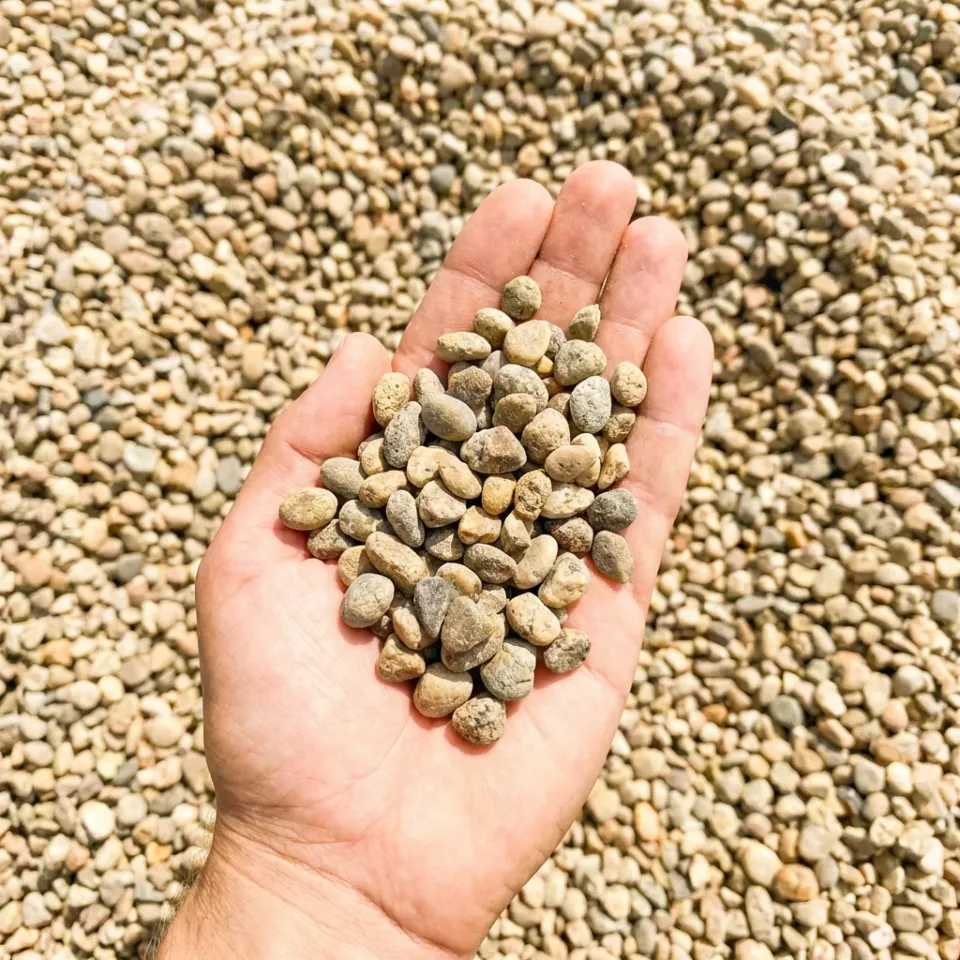
How to Use This Pea Gravel Calculator
Planning a pea gravel project requires precise measurements to ensure you order enough material without overspending.
- 1 Enter Dimensions — Input the length and width of your area in feet. Round up slightly for a buffer.
- 2 Choose Depth — Select the depth in inches. For most pea gravel projects, 3–6 inches is standard.
- 3 Review Results — Instantly see cubic yards and tons needed to accurately plan your order.
Visual Area Guide
Use these diagrams to measure your project area correctly.
Rectangular Area
Measure length × width for square or rectangular areas. Most driveway, patio, and grading projects use this method.
Circular Area
Measure the radius (half the diameter) for round beds, drain fields, or circular landscaping. Formula: π × radius².
Material Coverage & Grading
Common pea gravel grades and applications per AASHTO M43/ASTM D448 and industry practice
| Grade | Application |
|---|---|
| #8 | Standard 3/8-inch (9.5 mm) nominal pea gravel; 100% passing 1/2-inch sieve and retained on No. 4 sieve (4.75 mm). Rounded, clean, silica-based particles with less than 5% fines, classified as USCS GP (poorly graded gravel). Most widely specified grade for French drains, pipe bedding, and utility trench embedment due to consistent particle size and high permeability. |
| #8 Washed | Pressure-washed variant of #8 pea gravel with fines reduced below 2%, ensuring maximum void space and drainage performance. Preferred for DOT-specified Class 2 open-graded aggregate backfill and stormwater management systems. Commonly called 'washed pea' or 'clean #8' by contractors in the Midwest and Western states. |
| #67 | Angular crushed aggregate nominally sized 3/4 inch down to No. 4 sieve (4.75 mm), per ASTM D448 #67. Angular to sub-angular particles (note: #67 is a crushed stone grade, not a true pea gravel variant) with high void ratio, suitable where greater void space is needed for drainage capacity. Used in foundation drain systems, underdrain aggregate layers, and creek rock simulation in erosion control applications. |
| #89 | Fine pea gravel grade nominally sized between 3/8 inch and No. 16 sieve, per ASTM D448 #89; finer than standard #8 with tighter particle gradation. Provides uniform filter media properties with very high permeability and minimal segregation. Preferred for filter blankets, infiltration trenches, and fine-drainage pipe embedment where small void uniformity is critical. |
| Chat Pea | Regional fine-grade pea gravel (1/4 to 3/8 inch nominal) common in Southern states, derived from chat or fine stream deposits. Slightly finer than standard #8 with similar rounded morphology and low fines content. Used in decorative landscaping, garden paths, mulching beds, and light-duty non-structural ground cover applications. |
| River Pea | Naturally rounded river-sourced pea gravel, typically 3/8 to 1/2 inch nominal, with smooth, water-worn surfaces and mixed quartz/granite composition. Less uniformly graded than screened #8 but widely used for decorative ground cover, playground surfacing, and non-load-bearing landscape fill. Sold regionally as 'river pea' or 'creek rock' across Midwest and Western markets. |
Plan Your Next Project
Playground Calculator
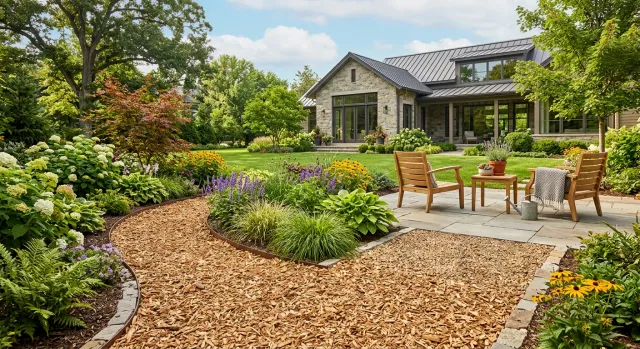
This calculator estimates mulch, rubber, or wood fiber surfacing for playgrounds. Enter area and recommended depth to get cubic yards and tons.
Fire Pit Calculator
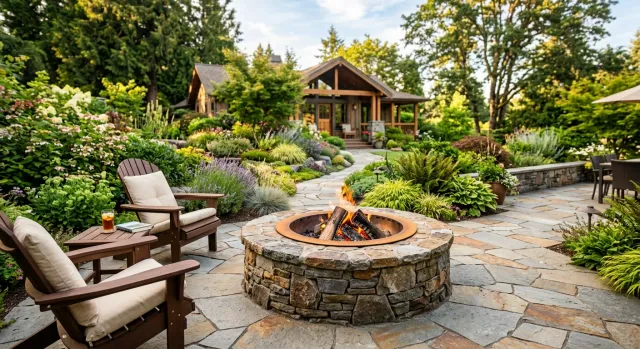
Fire pit calculator — enter your pit shape and dimensions to estimate how many cubic yards of pea gravel or crushed stone the base layer needs.
French Drain Calculator
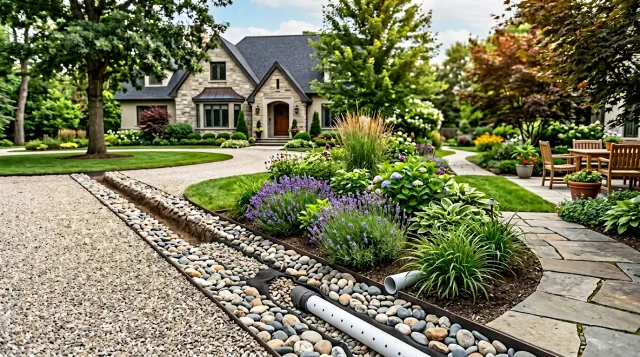
French drain calculator — estimate gravel volume, pipe length, and fabric for any drain run. Enter trench dimensions for cubic yards and linear feet.
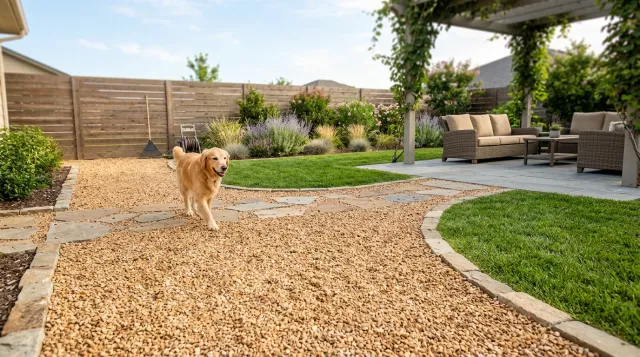
Dog Run Calculator
Dog run calculator — enter dimensions to estimate gravel volume in cubic yards and tons. Covers pea gravel depth, drainage layers, and material weight.
Frequently Asked Questions
What exactly is pea gravel, and how is it different from other types of gravel?
Pea gravel is a small, naturally rounded stone that typically measures around 3/8 of an inch in diameter, roughly the size of a garden pea. It forms over thousands of years as water smooths the rough edges off larger stones, which is why each piece has that soft, polished look and feel. The key difference between pea gravel and other gravel types comes down to shape. Crushed gravel and crushed stone are processed by machines, which gives each piece sharp, angular edges. Those sharp edges lock together and compact over time, creating a firm, stable surface. Pea gravel, on the other hand, stays round and loose. The stones roll against each other rather than locking together, which gives pea gravel its soft, comfortable feel underfoot but also means it will not compact into a hard surface the way crushed stone does. That distinction matters a lot when you are choosing the right material for a project. Pea gravel is a great fit for decorative and comfort-driven applications like garden paths, playgrounds, and landscape beds. If you need a firm, driveable surface that holds its shape under heavy loads, a compactable material like crushed stone or crusher run would serve you better. Not sure which material fits your project? The Hello Gravel team is happy to help you choose.
What are the most popular uses for pea gravel?
Pea gravel is one of the most versatile landscaping materials available, and homeowners and contractors reach for it across a wide range of projects. Walkways and garden paths are probably the most common use. The smooth, rounded stones are gentle on bare feet and provide a clean, natural look that works with almost any landscaping style. Because pea gravel allows water to drain straight through, it also eliminates the puddles and runoff problems you might get with solid paving materials. Playground surfaces and dog runs are another popular application. The cushioned feel of pea gravel makes it a forgiving surface for kids and pets, and unlike wood chips or mulch, it does not decompose, harbor mold, or break down into a soggy mess over time. Landscapers also use pea gravel extensively in garden beds and around shrubs and trees. It suppresses weeds, retains some moisture in the soil, and gives a tidy, polished appearance that holds up season after season without needing to be replaced. Around pool decks, fire pits, and outdoor seating areas, pea gravel creates a comfortable, low-maintenance surface that drains well and stays cool underfoot in the summer. On a larger scale, contractors use pea gravel in dry creek beds and decorative drainage swales where managing water flow and maintaining a natural appearance both matter. If you have a project in mind and want to make sure pea gravel is the right fit, use the Hello Gravel calculator to estimate your quantities, or reach out to the team directly.
What are the main drawbacks of pea gravel, and when should I choose a different material?
Pea gravel is a fantastic material, but it is not the right choice for every situation. Knowing its limitations upfront will save you time and money. The biggest drawback is that pea gravel migrates. Because the stones are round and loose, they roll and spread underfoot. On flat surfaces with proper edging, this is manageable. On slopes or inclines, it becomes a real problem. Gravity will pull the stones downhill over time, and you will constantly be raking material back into place. If your project area has any significant slope, a crushed stone or angular gravel is a much better fit. High-traffic driveways are another situation where pea gravel falls short. It shifts under vehicle tires, can be thrown by spinning wheels, and creates an uneven, unstable surface over time. If you want a gravel driveway that stays firm and in place, crushed stone or crusher run that compacts into a solid base is the smarter choice. Pea gravel also does not harden or set like a compacted aggregate does. If someone asks you what gravel hardens like concrete, the answer is a compactable crushed stone product, not pea gravel. Pea gravel will always remain loose, which is part of its charm for the right applications but a drawback for surfaces that need to bear weight. Finally, if your goal is to improve soil nutrition or organic matter, pea gravel cannot do that. In those situations, mulch or compost would serve your plants better. If you are uncertain whether pea gravel or another aggregate is right for your project, the Hello Gravel team can point you in the right direction.
How much pea gravel do I need for my project?
Estimating pea gravel quantities comes down to the square footage you need to cover and how deep you want to go. The depth you choose makes a significant difference in how much material you will need, so it is worth thinking through before you order. For most landscaping applications like garden beds and decorative paths, a depth of 2 to 3 inches is standard. At 2 inches of depth, one ton of pea gravel covers roughly 100 to 120 square feet. At 3 inches of depth, that same ton covers closer to 70 to 80 square feet. If you are filling a playground area or dog run where you want a thicker, more cushioned layer, a 4-inch depth is common, and one ton will cover approximately 55 to 65 square feet at that depth. So as a practical example, if you are covering a 500-square-foot backyard patio area at 3 inches deep, you are looking at somewhere in the range of 6 to 7 tons of pea gravel. These are conservative, real-world estimates, and your actual number will depend on the exact dimensions of your space and whether the ground is perfectly flat. The best way to get an accurate number for your specific project is to use the Hello Gravel online calculator. Plug in your dimensions and your desired depth, and it will give you a precise tonnage estimate so you order the right amount and avoid waste.
What should I put down before installing pea gravel?
Getting your base right before you lay pea gravel is just as important as the gravel itself. A few simple preparation steps will make your finished project look better and last longer. Start by clearing and leveling the area. Remove any existing grass, weeds, or debris, and take a few minutes to grade the surface so water will drain away from structures like your home's foundation or retaining walls. Next, compact the soil base. Loose soil underneath pea gravel will allow the stones to sink unevenly over time, especially in high-traffic areas. A plate compactor or hand tamper will firm up the ground and give your gravel a stable foundation to sit on. Landscape fabric is your best friend here. Laying a quality woven weed barrier over the compacted soil before you spread the gravel will block weed growth from below without stopping water from draining through. This single step saves you hours of weeding later. Avoid plastic sheeting, which blocks drainage and can cause water to pool. On the question of sand: you generally do not want to use a sand layer under pea gravel. While it seems like it might add stability, a sand base actually creates an unstable, shifting foundation, especially when the pea gravel above it is already loose. If your ground is very uneven and you need something to help level the surface, a thin layer of compacted fines or a graded soil base works better than sand. Finally, install edging around the perimeter. Plastic, metal, or stone edging keeps pea gravel from migrating into adjacent lawn or garden areas and gives your project a clean, finished look that holds up over time.
Other Material Calculators
Delivery Logistics & Truck Info
Know your delivery options and access requirements before scheduling your order.
Truck Capacities
- Standard Dump Truck 10–14 tons
- Tandem Axle 14–18 tons
- Semi End Dump 20–25 tons
A standard cubic yard weighs approximately 2,000–2,700 lbs depending on material and moisture.
Site Access Requirements
- Trucks require a minimum 12-ft wide, overhead-clear access path
- Soft ground or slopes over 10% may limit truck access — contact us before ordering
- Ensure no underground utilities or irrigation lines are in the drop zone
- Mark your desired drop location clearly before delivery
Important Notes
- Delivery estimates are based on available inventory and route proximity
- Minimum order quantities apply — typically 5 cubic yards or 1 truckload
- Material certification is available upon request for permitted projects
- Always confirm local grading ordinances before major material placement