
Fire Pit Calculator
— How Much Do You Need?
Estimate gravel, sand, and stone for your fire pit with fast truckload delivery and clear pricing.
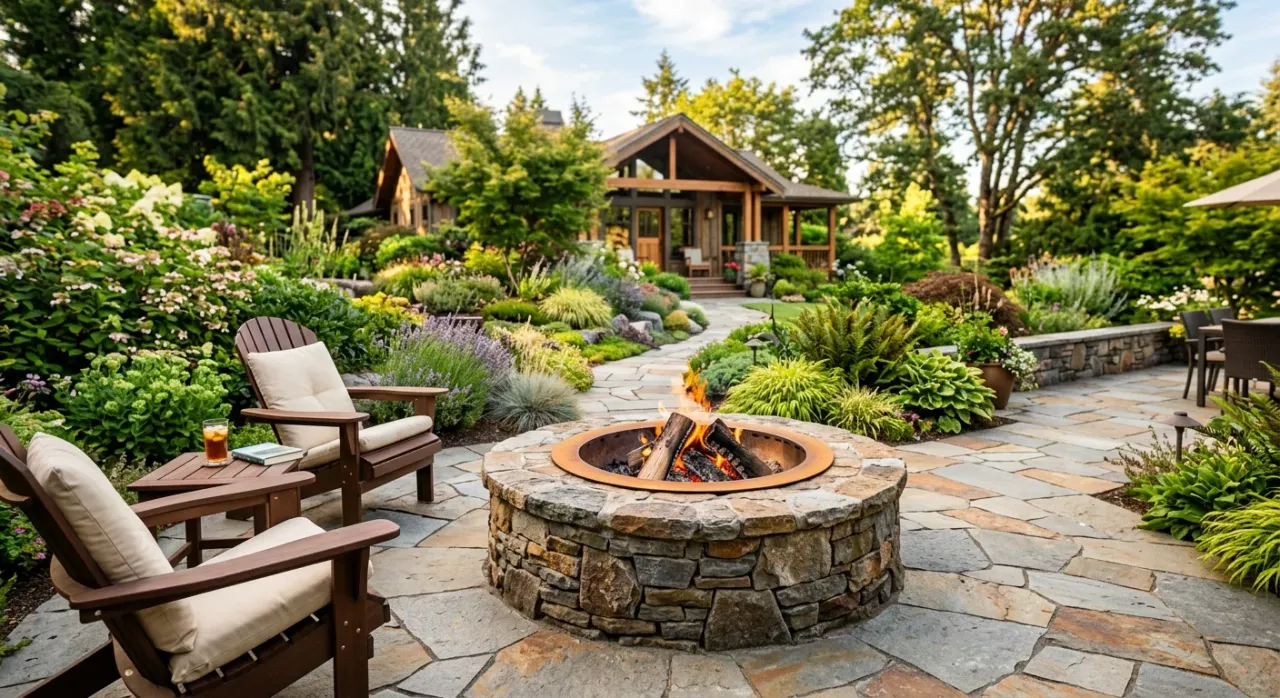
How to Use This Fire Pit Calculator
Planning a fire pit requires precise measurements to ensure you order enough material without overspending.
- 1 Measure Area: Measure the length and width of your planned fire pit area in feet.
- 2 Determine Depth: For most fire pit projects, a depth of 4 to 6 inches is recommended for stability.
- 3 Review Results: The calculator provides both cubic yards (for bulk volume) and tons (for ordering weight).
Common Materials for Fire Pits
Choosing the right aggregate ensures proper drainage, compaction, and heat resistance beneath and around your fire pit to prevent settling, water pooling, and fire hazards.
| Material | Description | Best For | Est. Cost |
|---|---|---|---|
| #10 Crushed Limestone | Finely crushed, angular limestone particles typically 3/8 inch and smaller that compact tightly to form a stable, interlocking surface. | Base Layer, Sub-Base Compaction, Drainage, Perimeter Trench Fill | $ |
| Mason Sand | Fine, washed, uniformly graded sand with particle sizes typically under 1/8 inch, used to create smooth, level bedding surfaces. | Leveling Layer, Block Bedding, Top Dressing Over Base | $ |
| Lava Rock | Commercially processed, kiln-dried volcanic rock typically sized 1/2 inch to 1 inch. Heat-tolerant when fully dry. Do not use field-collected or damp lava rock in fire pits, as moisture retained in porous surfaces can cause cracking or spalling under rapid heating. | Pit Interior Lining, Ash Containment, Heat-Resistant Floor Layer | $$ |
| #57 Crushed Stone | Clean, angular crushed stone graded at approximately 3/4 inch that drains freely and resists compaction under load. | Deep Base Layer, Soft Soil Sub-Base, Drainage Layer | $ |
Understanding the Cost
Several factors influence the final price of your fire pit project.
Material Volume
The dimensions of your project directly dictate the tonnage needed. Deeper bases require significantly more material.
Delivery Distance
Transport logistics play a major role. Being closer to the quarry or depot reduces delivery fees significantly.
Material Type
Decorative stones cost more than utility grades. Choose based on your project's functional and aesthetic requirements.
Recommended Products for Your Fire Pit
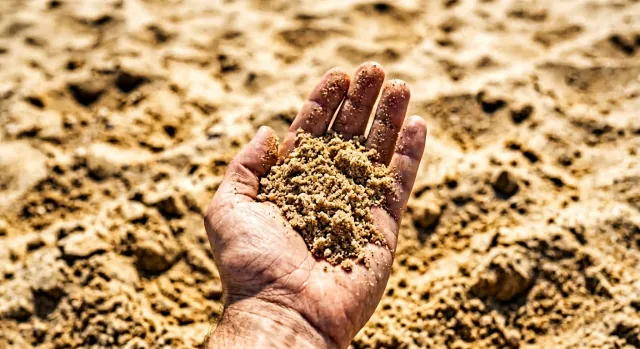
Sand Calculator
Use this sand calculator to estimate cubic yards, tons, and bags. Covers fill, leveling, and bedding sand with weight and cost estimates included.
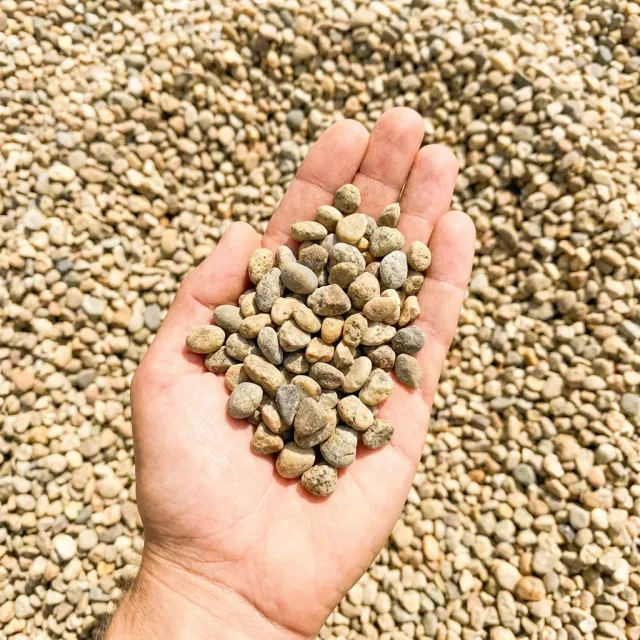
Pea Gravel Calculator
Pea gravel calculator — enter your project dimensions to estimate volume in cubic yards, tons, and bags. Ideal for pathways, patios, and ground cover.
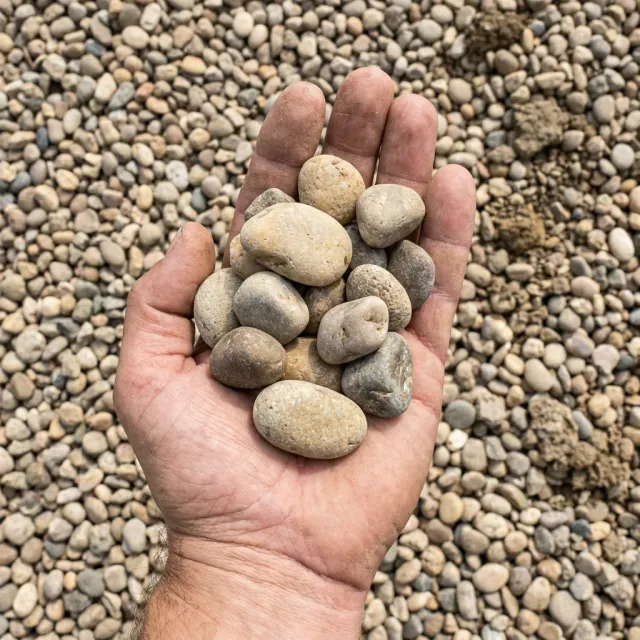
River Rock Calculator
This calculator estimates river rock by the ton for flowerbeds, dry creek beds, and borders. Adjusts for rock size — larger stones cover less per ton.
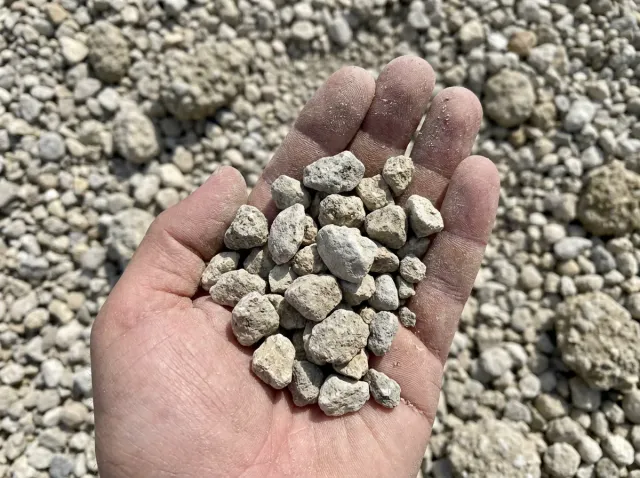
Limestone Calculator
Estimate crushed limestone with this calculator for driveways, walkways, or drainage. Enter dimensions, get results in cubic yards and tons.
Frequently Asked Questions
What stones should you never put inside a fire pit?
This is one of the most important safety questions you can ask before building a fire pit, and the answer could save you from a serious injury. The stones you need to avoid are any that are porous, water-worn, or have been exposed to moisture over time. River rocks and creek stones are the most common culprits. Because they form in or near water, they can trap moisture deep inside their structure. When you heat that trapped water rapidly, it turns to steam and expands, which can cause the stone to crack, pop, or even shatter violently. The same risk applies to sandstone, shale, and soft limestone. These materials are simply not built to handle the intense, repeated thermal stress of an open fire. The safest material to use as a base layer inside a fire pit ring is coarse sand. It is non-flammable, absorbs heat without cracking, and helps drain any water that collects at the bottom. Hello Gravel sells bulk sand that works well for exactly this purpose. A 4-inch base of coarse sand inside your fire pit ring gives you a clean, stable, fire-safe foundation. If you are building a permanent in-ground fire pit, pairing that sand base with fire brick or firebrick lining for the walls is a smart choice. The key rule to remember is this: if a stone came from a river, a stream, or a beach, keep it out of your fire pit.
What gravel or stone works best for the area surrounding a fire pit?
The area around your fire pit is where Hello Gravel can really help you. A gravel or crushed stone surround is one of the smartest choices you can make, both for safety and for long-term maintenance. Unlike grass or mulch, gravel is non-flammable. It will not ignite from stray sparks or embers, it will not become a muddy mess after rain, and it provides a clean, defined space for chairs and foot traffic. Pea gravel is one of the most popular choices for fire pit surrounds. It is smooth underfoot, drains extremely well, and has a natural, attractive look that fits almost any backyard style. Crushed stone is a step up in durability and stability. Because the edges are angular, the pieces lock together better under pressure, which means it holds its shape under chairs and foot traffic over time. Decomposed granite is another strong option, giving a more naturalistic, earthy appearance while staying compact and low-maintenance. Any of these materials from Hello Gravel will create a clean, fire-safe buffer zone around your pit. If you are unsure which one fits your project best, the Hello Gravel team is happy to talk through the options with you before you order.
How big should a fire pit and its surrounding gravel area be for 6 to 10 people?
A good fire pit for 6 to 10 people should have an interior diameter of roughly 44 to 60 inches. That size throws enough heat to warm the whole group without making anyone feel like they are sitting too close to the action. Smaller pits, in the 30 to 36-inch range, work well for 4 people or fewer but will feel cramped for a larger gathering. From there, the surrounding gravel area needs to be large enough to accommodate seating comfortably. A general guideline is to extend your gravel surface at least 7 to 10 feet from the outer edge of the fire pit in all directions. That gives people room to pull their chairs back, move around, and stay well clear of direct heat. For a group of 6 to 10, you are typically looking at a finished gravel circle that is 20 to 25 feet in total diameter. That is a meaningful amount of square footage, and the depth of your gravel layer will determine how much material you need. A 20-foot diameter circle covered with 4 inches of gravel, for example, requires roughly 5 to 6 tons of material. A 25-foot circle at the same depth pushes closer to 8 to 9 tons. These are real-world estimates, and your actual number will depend on the exact shape, any grade changes in your yard, and how much existing material is already in place. Use the Hello Gravel calculator to plug in your specific dimensions and get a more precise figure before you order.
How deep should the gravel base be for a fire pit surround?
Depth matters more than most people realize. Too shallow and you end up with a thin layer that shifts quickly, exposes the ground underneath, and looks patchy within a season. A depth of 3 to 4 inches is the sweet spot for most fire pit surround projects. At that depth, you get solid coverage, good drainage, and a surface that stays put even with regular foot traffic and the occasional chair scraping across it. If your ground underneath has any tendency to shift, heave, or hold water, going to 4 to 6 inches gives you a more stable foundation. In those cases, it is also worth considering a layer of compacted gravel base material beneath your finish layer. Starting with a compacted base and topping it with your decorative gravel gives you the stability of a proper hardscape without the cost of pavers or concrete. For the sand base layer inside the fire pit ring itself, aim for at least 4 inches as well. That gives the sand enough mass to absorb heat, protect the ground beneath, and collect ash and embers without getting disturbed every time you tend the fire. If you are unsure how to layer your materials or how much of each you will need at a given depth, the Hello Gravel calculator can walk you through it. Just enter your dimensions and depth and you will get a tonnage estimate you can order from.
How much gravel do I need for a fire pit project?
The honest answer is that it depends on three things: the size of your surround area, the depth of gravel you want, and the shape of the space. But here are some real-world numbers to give you a starting point. A simple fire pit surround that is 15 feet in diameter, covered with pea gravel or crushed stone at 3 inches of depth, typically requires around 3 tons of material. Bump that up to a 20-foot diameter at 4 inches of depth and you are looking at closer to 5 to 6 tons. A larger entertaining area, say 25 feet in diameter at 4 inches deep, can require 8 tons or more. Those figures assume a round or roughly circular layout. If you are doing a rectangular patio area that extends out from the fire pit, or if you have irregular ground that needs additional fill to level out, your number will be higher. The best way to get a number you can actually order from is to use the Hello Gravel calculator. Plug in the dimensions of your space and your target depth, and it will give you a tonnage figure based on the material you choose. From there, ordering is straightforward and you can pick your own delivery date. If your project is more complex or you want a second set of eyes on your estimate, the Hello Gravel team is glad to help.
More Project Calculators
Playground Calculator
This calculator estimates mulch, rubber, or wood fiber surfacing for playgrounds. Enter area and recommended depth to get cubic yards and tons.
Chicken Coop Calculator
Use this calculator to estimate how much gravel your coop base requires. Input dimensions and depth for volume in cubic yards and stone type guidance.
Basketball Court Calculator
Court base calculator — estimate gravel, sand, and sub-base quantities for backyard or regulation basketball courts. Input court size for material totals.
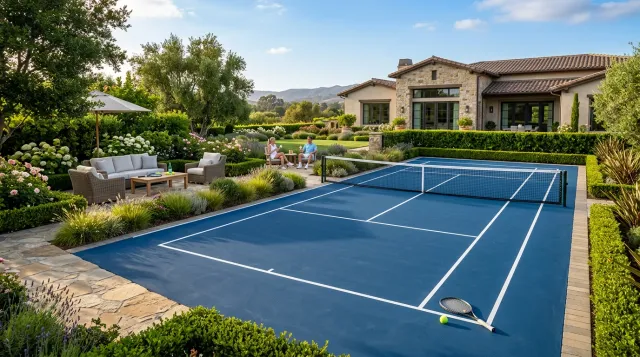
Tennis Court Calculator
Use this calculator to estimate the crushed stone base for a new or resurfaced tennis court. Enter dimensions and depth for volume and tonnage.
Delivery Logistics & Truck Info
Know your delivery options and access requirements before scheduling your order.
Truck Capacities
- Standard Dump Truck10–14 tons
- Tandem Axle14–18 tons
- Semi End Dump20–25 tons
A standard cubic yard weighs approximately 2,000–2,700 lbs depending on material and moisture.
Site Access Requirements
- Trucks require a minimum 12-ft wide, overhead-clear access path
- Soft ground or slopes over 10% may limit truck access — contact us before ordering
- Ensure no underground utilities or irrigation lines are in the drop zone
- Mark your desired drop location clearly before delivery
Important Notes
- Delivery estimates are based on available inventory and route proximity
- Minimum order quantities apply — typically 5 cubic yards or 1 truckload
- Material certification is available upon request for permitted projects
- Always confirm local ordinances before major material placement