
Limestone Calculator
— How Much Do You Need?
Estimate limestone volume & weight. Instant, accurate calculations in tons or cubic yards for your project.
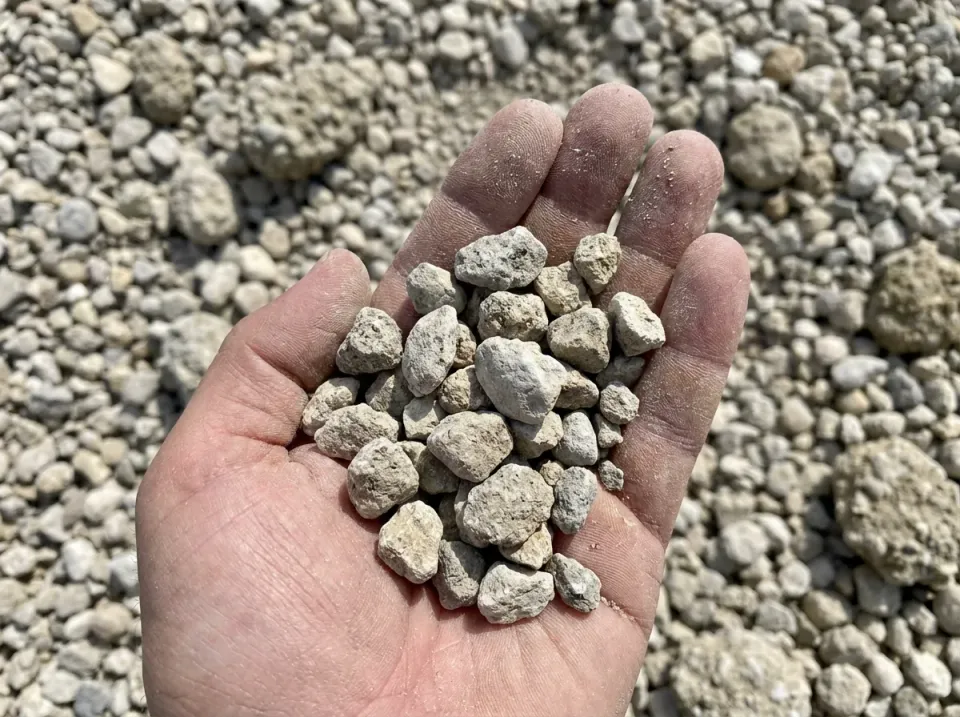
How to Use This Limestone Calculator
Planning a limestone project requires precise measurements to ensure you order enough material without overspending.
- 1 Enter Dimensions — Input the length and width of your area in feet. Round up slightly for a buffer.
- 2 Choose Depth — Select the depth in inches. For most limestone projects, 3–6 inches is standard.
- 3 Review Results — Instantly see cubic yards and tons needed to accurately plan your order.
Visual Area Guide
Use these diagrams to measure your project area correctly.
Rectangular Area
Measure length × width for square or rectangular areas. Most driveway, patio, and grading projects use this method.
Circular Area
Measure the radius (half the diameter) for round beds, drain fields, or circular landscaping. Formula: π × radius².
Material Coverage & Grading
Common crushed limestone grades per ASTM C33 / AASHTO M43 gradation standards
| Grade | Application |
|---|---|
| #8 | Clean, uniformly graded crushed limestone with particles approximately ⅜–½ inch in size. Angular shape promotes interlock and stability. Widely used as a concrete aggregate and pea-gravel substitute where fine drainage and workability are needed. |
| #57 | One of the most common crushed limestone grades, with particles ranging from ¾ to 1 inch and less than 1–3% fines passing the #200 sieve. Angular, open-graded structure provides 20–40% void space for excellent drainage. Preferred for concrete aggregate, French drains, drainage beds, and base layers under pavers or slabs. |
| #2 | Coarser crushed limestone with particles ranging from 1½ to 2½ inches, 90–100% passing the 2½-inch sieve. Clean, angular, and free-draining with large void spaces. Suited for heavy drainage fills, pipe bedding, retaining wall backfill, and road shoulder or embankment fill. |
| #4 | Crushed limestone with particles approximately 1½–2 inches, providing a balance between drainage capacity and structural stability. Angular particles compact well while maintaining adequate void space. Used in road base layers, drainage blankets, and structural fill beneath foundations. |
| Crusher Run | Also called 21A or Dense Grade Aggregate (DGA), this grade blends all particle sizes from 1–1½ inches down to fines (up to 10–15% passing #200 sieve). The wide gradation enables tight compaction reaching 95–100% Proctor density. Ideal for driveways, road subbases, parking lots, and compacted subgrade applications where load-bearing is the priority. |
| Screenings | Fine crushed limestone dust and chips passing the #4 sieve, also known as stone dust or limestone fines. Particles are very fine and angular, filling voids effectively when compacted. Used for leveling beds under pavers, joint fill between flagstone or brick, pipe bedding, and as a base amendment mixed with coarser aggregates. |
| Riprap | Oversized, angular limestone pieces ranging from 6 to 24+ inches, selected for mass and durability. The large, interlocking angular fragments resist displacement from water flow and soil movement. Primarily used for slope protection, streambank and shoreline erosion control, channel lining, and retaining wall face armor. |
Plan Your Next Project

Fire Pit Calculator
Fire pit calculator — enter your pit shape and dimensions to estimate how many cubic yards of pea gravel or crushed stone the base layer needs.

Retaining Wall Calculator
Retaining wall calculator — estimate backfill gravel, base stone, and block count for your project. Input wall height and length for a materials breakdown.

Outdoor Fireplace Calculator
Outdoor fireplace calculator — enter dimensions to estimate how much base gravel and fill material you need. Results in cubic yards, tons, and bags.
Walkway Calculator
Walkway calculator — enter length, width, and depth to estimate the exact gravel volume in cubic yards and tons. Includes recommended depth guidance.
Frequently Asked Questions
What is limestone used for?
Limestone is one of the most versatile aggregate materials you can buy, and it shows up in a wide range of residential, commercial, and infrastructure projects. The most common use is as a base or sub-base layer for driveways, parking pads, and road construction. Its angular, crushed shape locks together under load and creates a firm, stable surface that holds up to vehicle traffic for years. You can also use crushed limestone as a drainage aggregate in French drains, dry creek beds, and around foundation footings where you need water to move freely while the ground stays stable. Many homeowners choose it for pathways and walkways as well, since it provides a clean, light-colored surface that blends naturally into most landscapes. For larger construction projects, limestone is commonly used as the base material under concrete slabs, patios, and retaining walls. It gives you a compactable, load-bearing foundation that helps prevent settling and cracking over time. Contractors also rely on it for erosion control on slopes and embankments, where its weight and angular profile help hold soil in place. If you need a material that compacts well, drains efficiently, and stands up to heavy use, limestone is a strong choice for almost any project.
What sizes of limestone are available, and how do I choose the right one for my project?
Crushed limestone comes in several size categories, and the right one depends on what you are trying to build. Understanding the two main types will help you make the right call before you order. The first is crusher run limestone, sometimes called dense-graded aggregate or road base. This is a blend of crushed stone and fine particles that pack tightly together when compacted. The mix of sizes fills in gaps and binds the material into a dense, stable layer. This is what you want for driveways, parking areas, building pads, and any project where you need a firm, compactable base. If you are laying the groundwork under a concrete slab or a retaining wall, crusher run is typically the right call. The second type is clean crushed limestone, where the fines have been screened out so you are left with a uniform stone size. Because there are no fine particles to fill the gaps, water passes through quickly. This makes it well suited for drainage applications like French drains, pipe bedding, and anywhere you need fast water movement combined with structural stability. For specific sizing options available in your area, check the product listings on the Hello Gravel website or reach out to the team directly. Availability can vary by region depending on local quarries and haulers, and the team can point you toward the right product for your specific project.
How much limestone do I need, and how do I calculate the right quantity?
The amount of limestone you need depends on the area you are covering and the depth you are laying it. Crushed limestone weighs approximately 1.4 tons per cubic yard, which is a helpful number to keep in mind as you plan. At 4 inches of depth, one ton of crushed limestone will cover roughly 55 to 60 square feet. If you are spreading it at 2 inches deep for a surface dressing or a light pathway, that same ton covers about 110 to 120 square feet. For a driveway base, most contractors recommend a minimum of 4 inches of compacted depth, and 6 inches or more if the ground is soft or the area will see heavy vehicle traffic. As a practical example, a 500-square-foot driveway at 4 inches of compacted depth would require roughly 8 to 9 tons of limestone. That is a starting estimate, so your actual number may shift depending on soil conditions and whether you are starting from bare ground. The best way to get an accurate figure for your specific project is to use the Hello Gravel calculator on the product page. Enter your length, width, and intended depth and it will give you a tonnage estimate built around your real dimensions. When in doubt, ordering a small amount extra is almost always easier than coming up short in the middle of a job.
Does limestone compact well, and is it a good base material?
Crushed limestone compacts exceptionally well, and that is one of the main reasons it is so widely used as a base material. When limestone is crushed at the quarry, it breaks into angular pieces with rough, jagged edges. Those edges interlock when the material is compressed, creating a dense, load-bearing layer that resists shifting and settling under weight. This is different from rounded gravel, where smooth surfaces allow stones to roll past each other under pressure. Crushed limestone, especially crusher run grades that include fines and dust along with the larger stones, virtually locks in place once compacted. That is why it is the standard material for driveways, road bases, building pads, and sub-base layers under concrete throughout the construction industry. For best results, compact limestone in layers rather than all at once. If you are installing a 6-inch base, lay down 3 inches, compact it thoroughly, then add the next 3 inches and compact again. This staged approach produces a far denser and more stable result than trying to compact the full depth in a single pass. A plate compactor or vibratory roller is the right tool for most residential and light commercial projects. If you are not sure how deep your base should be for your specific application, the Hello Gravel team is happy to help you think through it before you order.
How does limestone hold up in wet conditions and over time?
Limestone is a durable material that holds up well in most climates, including regions that see significant rainfall and repeated freeze-thaw cycles. A properly installed and graded crushed limestone driveway or base layer, where water drains away from the surface rather than pooling, can last for decades with minimal maintenance. When limestone gets wet, it does not soften or lose its structural integrity the way fill dirt or clay-based materials do. The particles stay in place, and once the surface dries, it returns to its normal condition. Wet crusher run limestone can become temporarily soft or muddy on the very surface if there is heavy traffic right after a hard rain. This is normal and does not mean the base has failed. A day or two of dry weather is usually all it takes for the surface to firm back up. Limestone is made primarily of calcium carbonate, which dissolves slowly when exposed to acidic water. For driveways and base layers this is rarely a practical issue, but in regions with acidic soil or significant acid rain, limestone in French drains or foundation drainage can degrade more noticeably over the long term. If drainage longevity in a high-acidity region matters for your project, a granite-based aggregate is worth considering. For most drainage uses, limestone performs well in wet conditions. Water channels freely through the open spaces while the stones hold their position firmly.
Other Material Calculators
Delivery Logistics & Truck Info
Know your delivery options and access requirements before scheduling your order.
Truck Capacities
- Standard Dump Truck 10–14 tons
- Tandem Axle 14–18 tons
- Semi End Dump 20–25 tons
A standard cubic yard weighs approximately 2,000–2,700 lbs depending on material and moisture.
Site Access Requirements
- Trucks require a minimum 12-ft wide, overhead-clear access path
- Soft ground or slopes over 10% may limit truck access — contact us before ordering
- Ensure no underground utilities or irrigation lines are in the drop zone
- Mark your desired drop location clearly before delivery
Important Notes
- Delivery estimates are based on available inventory and route proximity
- Minimum order quantities apply — typically 5 cubic yards or 1 truckload
- Material certification is available upon request for permitted projects
- Always confirm local grading ordinances before major material placement