
Base Rock Calculator
— How Much Do You Need?
Quickly estimate tons or cubic yards of base rock needed and calculate total material for any area.
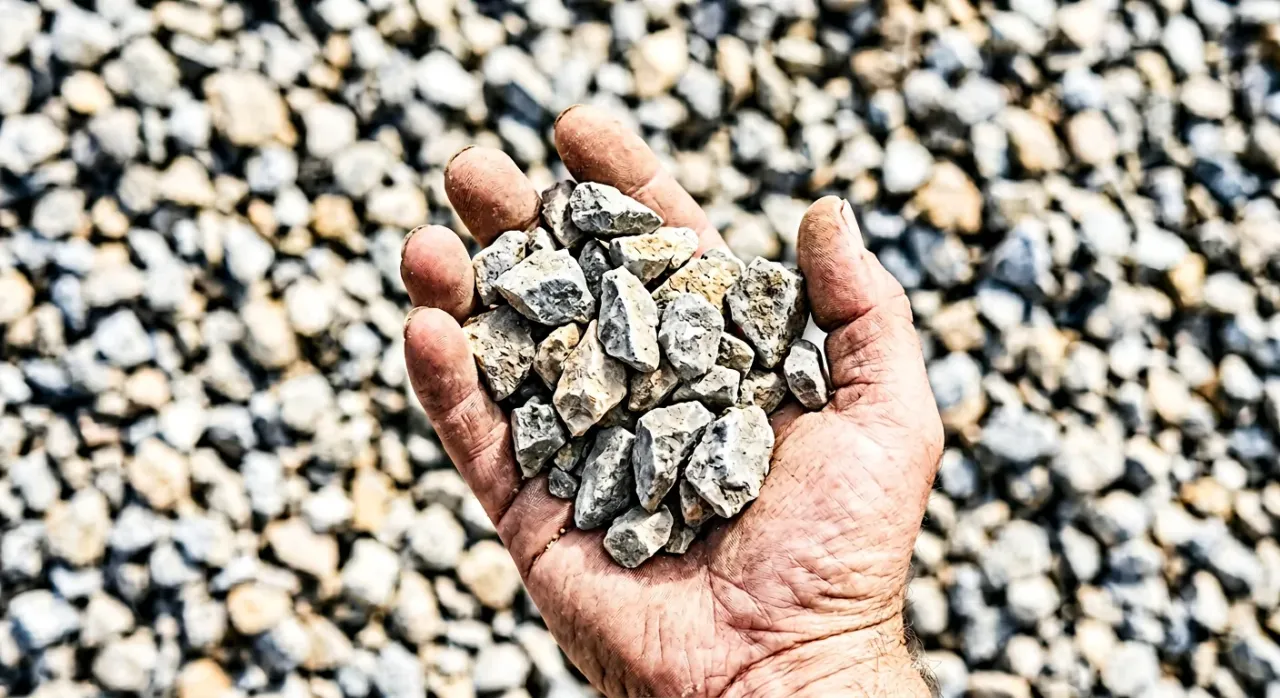
How to Use This Base Rock Calculator
Planning a base rock project requires precise measurements to ensure you order enough material without overspending.
- 1 Enter Dimensions — Input the length and width of your area in feet. Round up slightly for a buffer.
- 2 Choose Depth — Select the depth in inches. For most base rock projects, 3–6 inches is standard.
- 3 Review Results — Instantly see cubic yards and tons needed to accurately plan your order.
Visual Area Guide
Use these diagrams to measure your project area correctly.
Rectangular Area
Measure length × width for square or rectangular areas. Most driveway, patio, and grading projects use this method.
Circular Area
Measure the radius (half the diameter) for round beds, drain fields, or circular landscaping. Formula: π × radius².
Material Coverage & Grading
Common base rock applications
| Grade | Application |
|---|---|
| Class 2 | The most widely used base rock grade; well-graded crushed aggregate with fines (1–7% passing No. 200 sieve) and maximum particle size of 1.5 inches. Angular particles interlock tightly upon compaction, achieving 95%+ relative compaction density. Ideal for structural road bases, driveways, parking lots, and under concrete slabs where maximum load-bearing capacity is required. |
| Class 1 | A cleaner version of aggregate base with reduced fines content (less than 3% passing No. 200 sieve) and maximum particle size of 1 inch. Offers improved drainage while maintaining structural stability compared to Class 2. Best suited for permeable base applications, slab shoulders, and areas requiring moisture control beneath pavements. |
| Class II Recycled | Recycled aggregate base produced from crushed concrete and/or asphalt, graded to match Class 2 specifications. A cost-effective and sustainable alternative for non-critical base applications. Commonly used for pathways, low-traffic driveways, trench backfill, and general site stabilization where virgin material is not required. |
| Road Base | A dense-graded crushed aggregate conforming to DOT road base specifications (commonly referenced as Type 1 or 6F2 in highway contexts), with a continuous gradation from 1.5 inches down to fines. Engineered for high-traffic road subbases and highway construction requiring rigorous compaction standards. Provides excellent load distribution and rut resistance under heavy vehicle loads. |
| 3/4" Minus | A compactable crushed aggregate with a 3/4-inch maximum particle size and well-graded fines for tight compaction. Commonly used for residential driveways, walkways, paver bases, and shallow structural pads where a finer, more workable base layer is preferred. Angular crushed particles ensure strong interlock and a stable finished surface. |
Plan Your Next Project
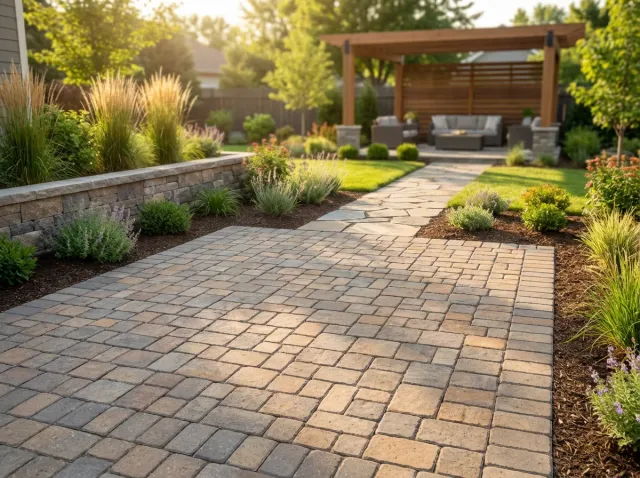
Patio Pavers Calculator
Paver calculator — estimate an accurate paver count plus base material for your patio. Enter dimensions, paver size, and joint spacing to plan your layout.
Concrete Slab Calculator
Concrete slab calculator — estimate concrete for slabs, footers, and steps. Enter length, width, and thickness for cubic yards, bags, and cost.
Shed Base Calculator
Shed base calculator — enter your footprint and preferred gravel depth to estimate cubic yards and tons. Includes recommended depths for different shed types.
Parking Pad Calculator
Parking pad calculator — estimate crushed stone or gravel for a residential pad. Enter area and depth for cubic yards, tons, and approximate cost.
Frequently Asked Questions
What is base rock and what is it made of?
Base rock is a crushed stone material engineered specifically for compaction. It's typically produced from hard rock such as granite or limestone and processed into a blend of particle sizes ranging from about 3/4 inch down to very fine dust particles, often called "fines" or "crusher dust." That combination of coarse and fine particles is what makes base rock unique. When you compact it with a plate compactor or roller, the larger pieces interlock while the fines fill in the voids, creating a dense, stable mass that resists shifting under load. You'll hear base rock go by a few different names depending on your region. Road base, crushed aggregate base, Class II base, and DG base are all terms that refer to the same general category of compactable crushed stone. Whatever it's called locally, the defining characteristic is the same: a graded mix of sizes that binds together when compacted rather than staying loose like decorative gravel.
What projects is base rock best suited for?
Base rock is one of the most widely used construction materials for good reason. It performs well in almost any situation where you need a stable, load-bearing foundation layer. The most common applications include driveways, parking pads, walkways, patio sub-bases, concrete slab foundations, shed pads, retaining wall backfill, and as a compacted sub-base beneath asphalt paving. Think of base rock as the workhorse that everything else sits on. If you're pouring a concrete patio, base rock goes down first to give the slab a firm, uniform surface and prevent cracking from settling. If you're building a gravel driveway, base rock is often used as the structural layer that holds everything together. If a contractor is prepping a parking lot for asphalt, base rock is what they compact beneath it. Essentially, if your project involves building something that needs to carry weight or stay put over time, base rock belongs in your planning.
How thick should your base rock layer be?
The right depth depends on what you're building and how much load the finished surface will carry. Here are the general guidelines most contractors work from. For a residential driveway or gravel parking pad, 4 to 6 inches of compacted base rock is the standard starting point. If your soil is soft or unstable, going to 6 inches or deeper gives you meaningful added support. For a sub-base beneath asphalt paving, you'll typically want 6 to 8 inches of well-compacted base rock, especially if the area will see regular vehicle traffic. Under concrete slabs, such as a garage floor, patio, or walkway, 4 inches of compacted base rock is a widely accepted minimum. For shed pads and paver patios, 4 to 6 inches provides a solid platform that resists frost heave and settling over time. One thing worth noting: these are compacted depth targets. Base rock compacts down by roughly 15 to 20 percent after grading and rolling, so you need to order slightly more material than your finished depth suggests. When you enter your project dimensions into the Hello Gravel calculator, it accounts for this so you're not left short on delivery day.
How much does one yard of base rock cover, and how do I calculate how much I need?
One cubic yard of base rock covers approximately 81 square feet at a 4-inch depth, around 54 square feet at 6 inches, and about 162 square feet at just 2 inches. These are pre-compaction estimates, which is important to keep in mind. Once base rock is graded and compacted, it settles noticeably, so a good rule of thumb is to add 10 to 15 percent to your calculated quantity to cover that compaction loss. Hello Gravel sells base rock by the ton rather than by the cubic yard. A cubic yard of base rock typically weighs about 1.4 to 1.5 tons depending on rock type and moisture content, so your square footage and depth translate directly into a tonnage figure. Rather than doing all of that math by hand, the easiest move is to use the Hello Gravel calculator. You enter your project dimensions and desired depth, and it gives you a tonnage recommendation specific to your job. If you want a second set of eyes on your estimate before you order, the Hello Gravel team is always available to help you work through it.
Does base rock drain well?
Base rock has moderate drainage. The fine particles that make it compact so effectively also reduce how freely water moves through it. It is not a highly permeable material the way washed gravel or open-graded crushed stone is. Water does percolate through base rock slowly, but it won't drain as fast as a material that has been washed clean of fines. For most driveway and foundation applications, that is actually a feature, not a drawback. The fact that base rock holds its shape and doesn't wash away under heavy rain is part of what makes it so durable. However, if your primary goal is drainage, such as filling a French drain, a dry creek bed, or a perforated pipe trench, you would want a cleaner, open-graded material better suited to that purpose. For building solid, stable surfaces that hold up to traffic and weather, base rock's drainage characteristics are exactly what you need.
Other Material Calculators
Delivery Logistics & Truck Info
Know your delivery options and access requirements before scheduling your order.
Truck Capacities
- Standard Dump Truck 10–14 tons
- Tandem Axle 14–18 tons
- Semi End Dump 20–25 tons
A standard cubic yard weighs approximately 2,000–2,700 lbs depending on material and moisture.
Site Access Requirements
- Trucks require a minimum 12-ft wide, overhead-clear access path
- Soft ground or slopes over 10% may limit truck access — contact us before ordering
- Ensure no underground utilities or irrigation lines are in the drop zone
- Mark your desired drop location clearly before delivery
Important Notes
- Delivery estimates are based on available inventory and route proximity
- Minimum order quantities apply — typically 5 cubic yards or 1 truckload
- Material certification is available upon request for permitted projects
- Always confirm local grading ordinances before major material placement