
French Drain Calculator
— How Much Do You Need?
Quickly calculate gravel, pipe, and fabric needed for your French drain with clear pricing and truckload delivery.
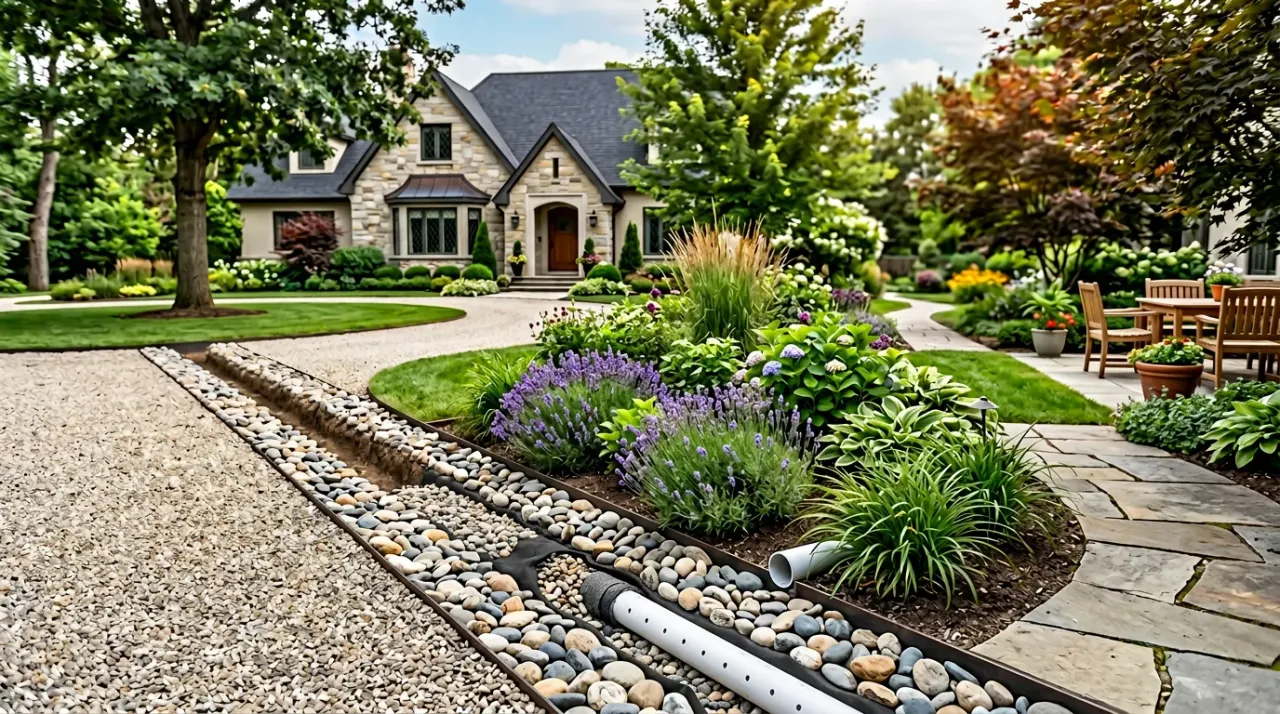
How to Use This French Drain Calculator
Planning a french drain requires precise measurements to ensure you order enough material without overspending.
- 1 Measure Area: Measure the length and width of your planned french drain area in feet.
- 2 Determine Depth: For most french drain projects, a depth of 4 to 6 inches is recommended for stability.
- 3 Review Results: The calculator provides both cubic yards (for bulk volume) and tons (for ordering weight).
Common Materials for French Drains
Choosing the right aggregate ensures adequate water flow through the gravel envelope while preventing sediment migration into the pipe.
| Material | Description | Best For | Est. Cost |
|---|---|---|---|
| #57 Crushed Stone | Angular, 3/4-inch crushed stone with consistent sizing and minimal fines. | Gravel Envelope Around Pipe, Trench Fill, Foundation Drainage | $$ |
| Washed Gravel (Clean 3/4") | Rounded, washed 3/4-inch gravel free of fines and sediment that allows high water permeability. | Gravel Envelope Around Pipe, High-Flow Drainage, Trench Fill | $$ |
| #4 Crushed Stone | Angular crushed stone ranging from 3/4 inch to 1.5 inches in diameter (ASTM D448 Size #4 gradation) with high void space and no fine particles. | High-Volume Drainage, Deep Foundation Drains, Under-Driveway Installs | $$ |
| Coarse Sand | Granular, coarse-grained sand particles typically ranging from 0.5 to 2 millimeters in diameter. | Base Layer in Clay Soils, Limited Use, Not Primary Fill | $ |
Understanding the Cost
Several factors influence the final price of your french drain project.
Material Volume
The dimensions of your project directly dictate the tonnage needed. Deeper bases require significantly more material.
Delivery Distance
Transport logistics play a major role. Being closer to the quarry or depot reduces delivery fees significantly.
Material Type
Decorative stones cost more than utility grades. Choose based on your project's functional and aesthetic requirements.
Recommended Products for Your French Drain
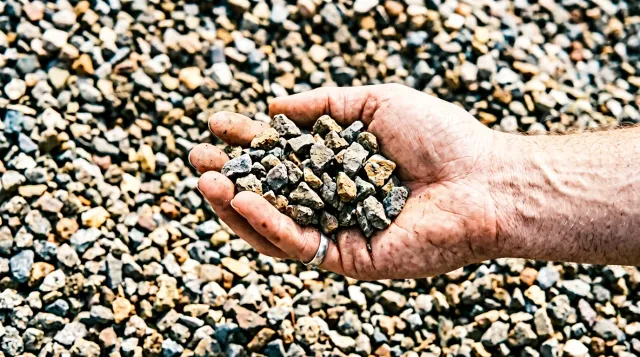
Gravel Calculator
This gravel calculator estimates cubic yards, tons, and coverage for any area. Enter dimensions and depth for driveways, patios, paths, and landscaping.
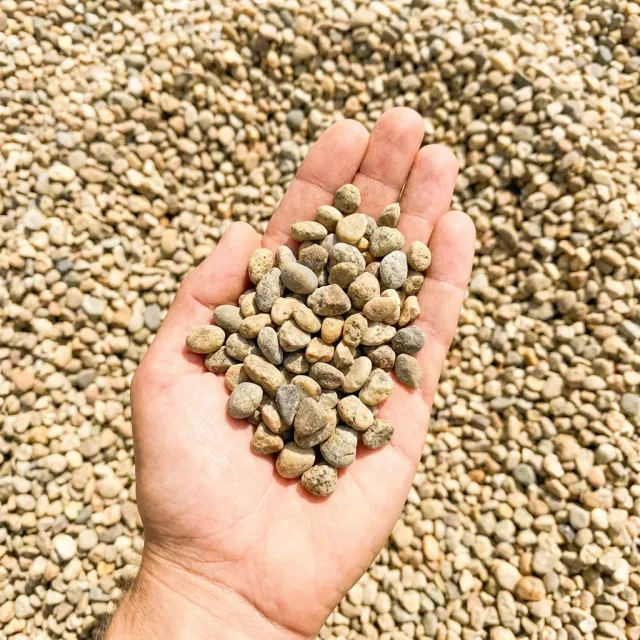
Pea Gravel Calculator
Pea gravel calculator — enter your project dimensions to estimate volume in cubic yards, tons, and bags. Ideal for pathways, patios, and ground cover.
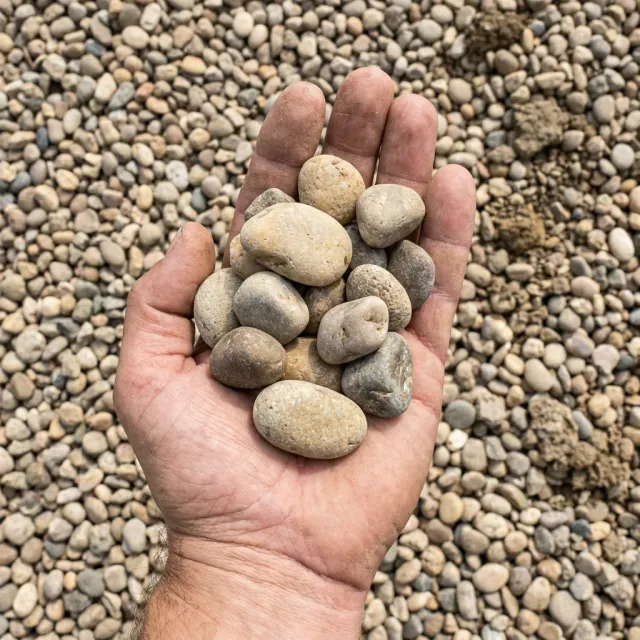
River Rock Calculator
This calculator estimates river rock by the ton for flowerbeds, dry creek beds, and borders. Adjusts for rock size — larger stones cover less per ton.
Drainage Rock Calculator
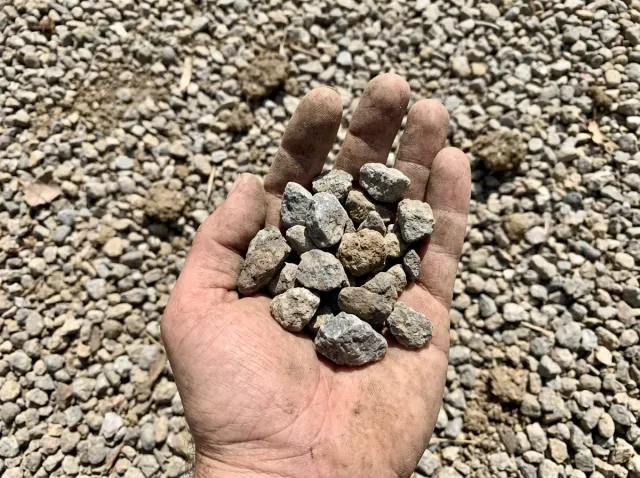
This calculator estimates drainage gravel for French drains, yard drainage, and erosion control. Factors in the 4-6 inch depth most systems need.
Frequently Asked Questions
What is a French drain and how does it work?
A French drain is a gravel-filled trench with a perforated pipe that captures and redirects groundwater or surface water away from an area where it is causing problems. Water seeps through the gravel, enters the pipe through its holes, and flows toward a safe discharge point such as a storm drain, dry well, or a lower area of your property. The gravel is not just filler. It is the functional core of the system. It creates open, porous space around the pipe so that water can move freely rather than pooling or saturating the surrounding soil. Without the right gravel, the system slows down, clogs, and eventually fails. That is why the material you choose matters as much as the installation itself. French drains are used in a wide range of applications, including foundation drainage around homes, yard drainage in low spots that pond after rain, retaining wall drainage, and slope interception to redirect sheet flow before it reaches a structure. When built correctly with clean gravel and a proper discharge point, a French drain is one of the most durable and low-maintenance drainage solutions available.
What type of gravel works best for a French drain?
Clean, washed crushed stone is the right choice for a French drain. The most widely used option is a 3/4-inch to 1-inch angular crushed stone, commonly known as #57 stone. The angular shape of the particles helps the stones lock together while still leaving plenty of open void space for water to move through quickly. The single most important quality to look for is cleanliness. The stone must be washed and free of clay, silt, dust, and fine particles. When fine material coats the stones or fills the voids between them, drainage slows dramatically and the system can fail long before it should. Pea gravel is sometimes used and can work in lighter applications, but clean crushed stone is generally preferred because its angular edges create more stable, consistent void space. Round, dirty, or mixed-gradation stone is what you want to avoid. If the material looks dusty or leaves residue on your hands, it is not clean enough for a French drain. Hello Gravel delivers bulk drainage gravel by the truckload so you get the right material in the right quantity delivered directly to your job site. If you are not sure which stone to select for your specific project, the Hello Gravel team can help you choose before you place your order.
What goes at the bottom of a French drain trench, and which way should the pipe holes face?
Before you place the perforated pipe, lay a bed of clean crushed stone at the bottom of your trench. A 2 to 4-inch gravel layer is standard. This lifts the pipe slightly off the soil, protects it from direct contact with fine-grained ground material, and gives water a path to enter the pipe from below. From there, gravel continues to fill in around the sides and over the top of the pipe before you finish the trench with landscape fabric and topsoil. As for the pipe itself, the holes should face down, not up. This is one of the most common installation mistakes homeowners make. When the perforations point downward, water that collects in the gravel bed beneath the pipe enters through the bottom, and fine sediment is far less likely to work its way into the pipe over time. When holes face up, the pipe is more exposed to soil migration and silting, which shortens the life of the drain considerably. Using landscape fabric to line the trench walls before filling with gravel is also a good practice. It keeps the surrounding soil from migrating into the gravel bed over time without blocking water flow, which extends the working life of the entire system.
How much gravel do you need for a French drain?
The amount of gravel you need depends on three main factors: the length of your drain, the width of your trench, and how deep you dig. A standard residential French drain trench is typically 8 to 12 inches wide and 18 to 24 inches deep. At those dimensions, a 100-foot run generally requires somewhere in the range of 5 to 10 tons of clean crushed stone. Wider or deeper trenches, or longer total runs, push that number higher. To give you a more concrete sense of the math, a trench that is 12 inches wide and 24 inches deep running 100 linear feet holds roughly 200 cubic feet of material. Accounting for the pipe itself and some variation in fill, you are still looking at close to 7 cubic yards of gravel, which comes out to approximately 10 tons depending on the stone. Because trench dimensions vary so much from project to project, we strongly recommend using the Hello Gravel calculator to get an estimate based on your actual measurements. It only takes a minute, and it gives you a much more precise number than a general rule of thumb. When you do place your order, rounding up slightly is always a smart move since running short partway through a trench installation is a frustrating situation to be in.
Are French drains a good idea, and what are the main downsides?
For most persistent drainage problems, a French drain is one of the most effective and lasting solutions you can install. They handle a wide range of issues well, including waterlogged yards, foundation moisture, surface runoff from slopes, and water that builds up along driveways or retaining walls. A properly built French drain with the right gravel can function reliably for 30 years or more with minimal maintenance. That kind of performance makes them hard to beat for the cost. The downsides are real but mostly manageable with good planning. Installing a French drain requires digging a trench, which means disrupting your yard, landscaping, or any paved surface in the drain's path. It also requires a valid discharge point. If your property is very flat or your local zoning limits where you can direct the water, finding a workable outlet can be a challenge. The other common failure point is material quality. If the gravel used was dirty or had fine particles mixed in, those particles migrate into the void spaces over time and gradually shut down drainage. Skipping landscape fabric along the trench walls can cause the same problem. These are installation decisions, not flaws in the French drain concept itself, and they are entirely avoidable when you start with clean, properly graded stone. If a French drain is not the right fit for your specific situation, alternatives like surface swales, dry wells, or regrading the terrain can address drainage in different ways. But for most residential and light commercial drainage problems, a French drain remains the go-to solution for good reason.
More Project Calculators

Playground Calculator
This calculator estimates mulch, rubber, or wood fiber surfacing for playgrounds. Enter area and recommended depth to get cubic yards and tons.

Chicken Coop Calculator
Use this calculator to estimate how much gravel your coop base requires. Input dimensions and depth for volume in cubic yards and stone type guidance.
Basketball Court Calculator
Court base calculator — estimate gravel, sand, and sub-base quantities for backyard or regulation basketball courts. Input court size for material totals.

Tennis Court Calculator
Use this calculator to estimate the crushed stone base for a new or resurfaced tennis court. Enter dimensions and depth for volume and tonnage.
Delivery Logistics & Truck Info
Know your delivery options and access requirements before scheduling your order.
Truck Capacities
- Standard Dump Truck10–14 tons
- Tandem Axle14–18 tons
- Semi End Dump20–25 tons
A standard cubic yard weighs approximately 2,000–2,700 lbs depending on material and moisture.
Site Access Requirements
- Trucks require a minimum 12-ft wide, overhead-clear access path
- Soft ground or slopes over 10% may limit truck access — contact us before ordering
- Ensure no underground utilities or irrigation lines are in the drop zone
- Mark your desired drop location clearly before delivery
Important Notes
- Delivery estimates are based on available inventory and route proximity
- Minimum order quantities apply — typically 5 cubic yards or 1 truckload
- Material certification is available upon request for permitted projects
- Always confirm local ordinances before major material placement