
How Much Does a Retaining Wall Cost?
— How Much Do You Need?
Quickly estimate gravel, drainage rock, and backfill for your retaining wall with instant truckload pricing.
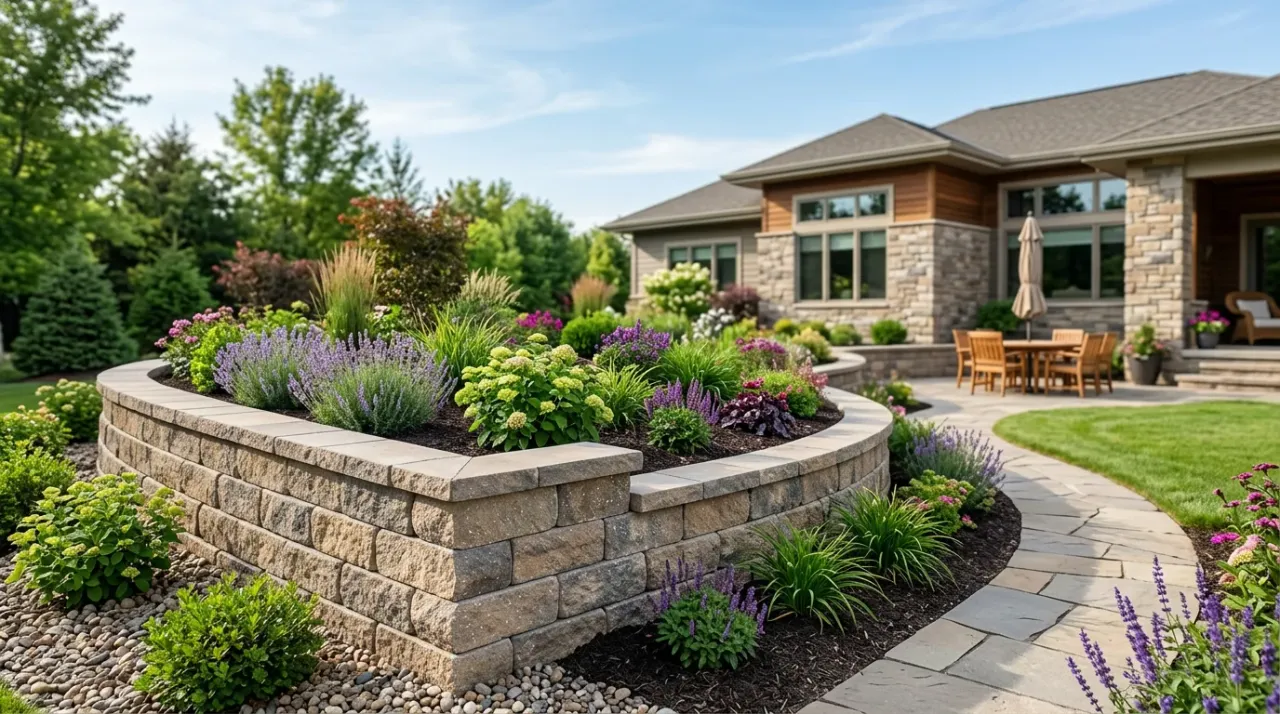
How to Use This Retaining Wall Calculator
Planning a retaining wall requires precise measurements to ensure you order enough material without overspending.
- 1 Measure Area: Measure the length and width of your planned retaining wall area in feet.
- 2 Determine Depth: For most retaining wall projects, a depth of 4 to 6 inches is recommended for stability.
- 3 Review Results: The calculator provides both cubic yards (for bulk volume) and tons (for ordering weight).
Common Materials for Retaining Walls
Choosing the right aggregate for base, backfill, and drainage zones is critical to wall stability, longevity, and proper water management behind the wall face.
| Material | Description | Best For | Est. Cost |
|---|---|---|---|
| Crusher Run (QP) | Crushed stone and stone dust blend with angular particles ranging from 3/4-inch down to fines, providing a self-compacting, interlocking base. | Footing Base, Compacted Base Layer, Structural Backfill | $ |
| #57 Crushed Stone | Clean, washed angular crushed stone approximately 3/4-inch in size with minimal fines, allowing excellent water drainage. | Drain Rock Backfill, Perforated Pipe Surround, Behind-Wall Drainage Zone | $$ |
| Engineered Fill (Compactable Fill) | Graded granular material, typically sandy loam or crushed aggregate fines, selected for controlled compaction to a specified density. | Non-Draining Backfill Zones, Tiered Wall Backfill, High-Load Surcharge Areas | $ |
| Riprap (Class A/B) | Large, angular quarried stone ranging from 6 to 12 inches, used to armor surfaces against erosion and scour. | Toe Protection, High-Flow Erosion Control, limited use | $$$ |
Understanding the Cost
Several factors influence the final price of your retaining wall project.
Material Volume
The dimensions of your project directly dictate the tonnage needed. Deeper bases require significantly more material.
Delivery Distance
Transport logistics play a major role. Being closer to the quarry or depot reduces delivery fees significantly.
Material Type
Decorative stones cost more than utility grades. Choose based on your project's functional and aesthetic requirements.
Recommended Products for Your Retaining Wall
Gravel Calculator
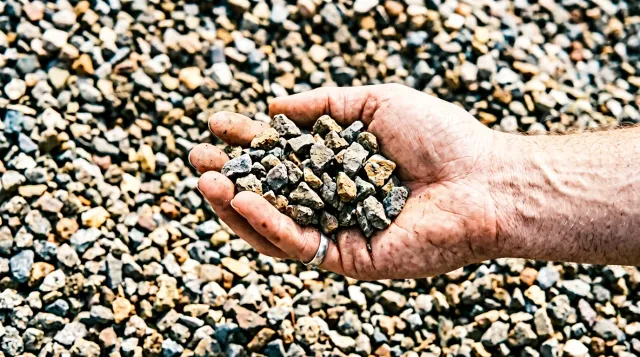
This gravel calculator estimates cubic yards, tons, and coverage for any area. Enter dimensions and depth for driveways, patios, paths, and landscaping.
Fill Dirt Calculator
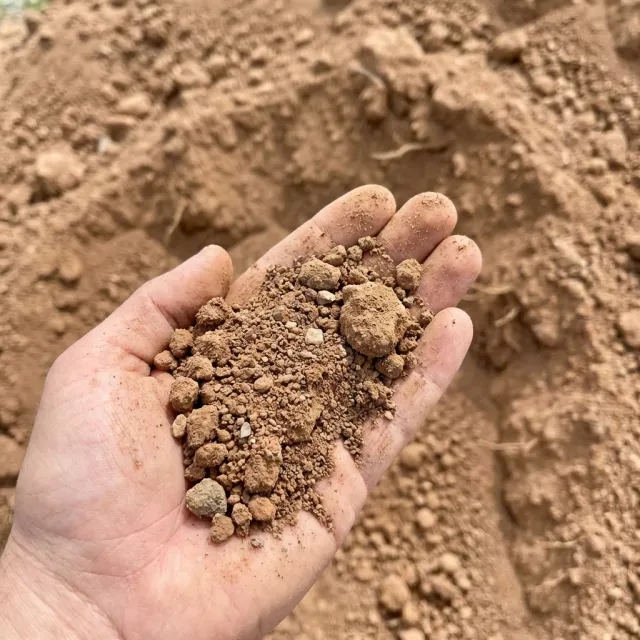
This calculator estimates fill dirt volume with a built-in compaction factor so you order enough. Works for grading, foundations, and backfill projects.
Crushed Stone Calculator
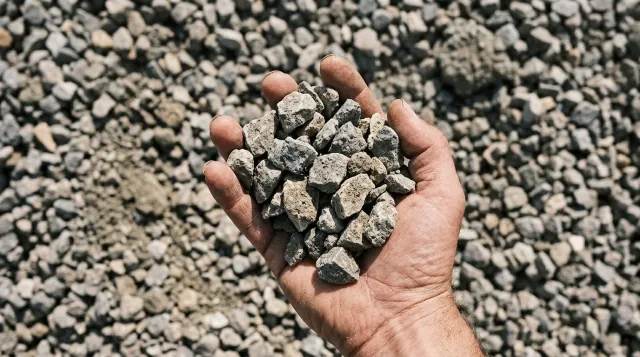
This calculator estimates crushed stone quantity and weight. Enter dimensions for results in cubic feet, cubic yards, and tons with density factored in.
Road Base Calculator
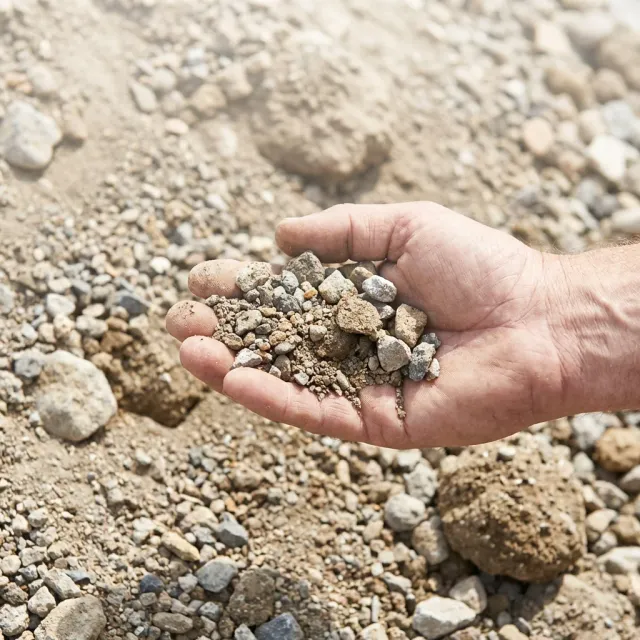
Road base calculator — enter length, width, and depth to estimate volume and tonnage for crushed limestone, recycled concrete, and aggregate base.
Frequently Asked Questions
What is a retaining wall, and what aggregate materials does building one actually require?
A retaining wall is a structure built to hold back soil on a slope or hillside, or to create a level surface in a yard where the ground would otherwise erode, shift, or slide. You'll find them everywhere from backyard landscaping projects to highway embankments and commercial construction sites. What most people don't realize until they're mid-project is that the wall itself is only part of the story. Building one that holds up over time requires two distinct types of aggregate working together beneath and behind the structure. The first is a base or footing material, which is compacted crushed stone that creates a firm, level foundation for the bottom course of your wall. Without a solid base, the wall starts uneven and only gets worse as height is added. The second is drainage backfill, which is clean crushed stone placed directly behind the wall to let water flow through freely rather than pool and build up pressure. This drainage column is often what separates a retaining wall that lasts decades from one that leans or cracks after a few wet seasons. Hello Gravel supplies both types of aggregate in bulk, delivered by the truckload to your project site. Use the calculator on our site to get a quantity estimate for your specific wall dimensions, or reach out to our team if you want help thinking through what your project needs.
Should I put gravel or soil as backfill directly behind a retaining wall?
Gravel, without question. This is one of the most important decisions you'll make for the longevity of your wall, and it's worth understanding why. When soil gets saturated with water, it becomes dense and heavy. That weight pushes directly against the back of your wall, creating what engineers call hydrostatic pressure. Over time, that force can cause even a structurally well-built wall to tilt forward, crack at the base, or fail outright. Clay soils are especially problematic because they hold onto water for a long time and expand significantly when wet. Clean crushed stone works completely differently. Water moves through the gaps between the stones and drains away quickly rather than pooling against the wall face. A drainage column of gravel about 12 inches wide, running the full height behind your wall, dramatically reduces the pressure your wall has to fight against. At the base of that drainage column, a 4-inch perforated drain pipe wrapped in filter fabric helps carry water away from the wall footing entirely. Your gravel backfill funnels water down to that pipe, and the pipe routes it away from the structure. The difference in material cost between using proper drainage gravel and using excavated soil is relatively small. The difference in how long your wall lasts is enormous. Hello Gravel carries clean crushed drainage stone by the truckload. Use the calculator on our site to figure out how much your wall requires, or contact our team and we'll walk through the numbers with you.
Why do retaining walls fail, and how does the right drainage gravel prevent it?
Poor drainage is the single most common reason retaining walls fail. It is not a glamorous answer, but it accounts for the vast majority of leaning, cracking, and collapsed walls. Here is what happens when drainage is neglected: rain soaks into the soil behind the wall. That soil becomes saturated and starts to weigh significantly more than dry soil. The lateral pressure pushing against the back of the wall increases beyond what the structure was designed to handle. The wall begins leaning forward, the base shifts, and eventually the whole thing gives way. An inadequate footing is the second major failure point. If the base gravel was not compacted firmly, or if the trench was not dug deep enough to anchor the wall properly, the structure has no stable platform to work from. Every course of blocks above it amplifies the problem. Using the wrong backfill material is the third culprit. Fill dirt, clay, and organic-rich soil all retain water and settle unevenly over time. Neither is something you want packed against a wall you're counting on to hold a hillside in place for years. Addressing all three of these failure points comes down to using the right aggregate in the right places. A properly compacted base material gives the wall a firm, level foundation. A clean drainage stone backfill column lets water escape freely. Together, they are the foundation of a retaining wall that actually holds. If your wall project is coming up, Hello Gravel can get you the base material and drainage stone you need, delivered on the date you choose.
What type of gravel works best for the drainage backfill behind a retaining wall?
You want clean, angular crushed stone for the drainage column behind your wall. Both of those words matter. "Clean" means the stone contains no fine material, dust, or soil mixed in. Fines are tiny particles that settle into the spaces between stones over time, clog the drainage voids, and eventually slow or stop water movement. Once the drainage column stops draining freely, you lose the main benefit of having it. "Angular" refers to the shape of the stone. Angular crushed aggregate has rough, jagged edges from the crushing process. Those edges interlock under pressure and resist shifting, which adds a degree of structural stability to the drainage column. Round stones like natural river gravel can migrate and shift under load, which is less ideal. Common sizes that work well for retaining wall drainage include 3/4-inch crushed stone and other similar clean angular aggregates available through Hello Gravel. What you want to avoid for the drainage backfill is crusher run or any blended base material that includes fines. These products compact tightly, which makes them excellent for road bases and wall footings, but that same tightness prevents them from draining. Using a compactable base material in your drainage column because it was cheaper or easier to get is a trade-off that can cost you the entire wall later on. For the footing itself, a compactable dense-grade crushed stone is exactly what you want. It is the one place in your retaining wall build where tight compaction is the goal. The Hello Gravel team can help you identify the right materials for both parts of your build. Reach out or start with the calculator on our site.
What is the 1/3 rule for retaining walls, and how does it affect how much base material you need to order?
The 1/3 rule is a widely used construction guideline that says roughly one-third of your retaining wall's total height should be buried below the finished grade. So if you want a wall that rises 3 feet above ground level when the project is complete, the total wall height including the buried anchor section should be around 4.5 feet, with about 1.5 feet below the surface. Think of that buried section as the wall's anchor. It resists the lateral pressure of the soil pushing against the back of the wall and keeps the base from sliding forward. Leave it out, and the wall is essentially sitting on top of the ground with nothing holding it in place. The practical impact on your material order is real. Every foot of wall that goes underground requires a properly prepared trench filled with compacted crushed stone to create a firm, level footing for the first course. That base layer is typically 4 to 6 inches of compacted aggregate, and the trench is usually a bit wider than the wall itself to give you room to work. For a 60-foot-long wall where the buried section is 1.5 feet deep, you are digging a trench along that entire length. A 4-inch compacted base layer in a 2-foot-wide trench over 60 feet comes out to roughly 1.5 to 2 cubic yards of footing material. Your actual numbers will vary based on wall length, footing depth, and trench width, so plug your dimensions into the Hello Gravel calculator for a more precise estimate before you order.
More Project Calculators
Playground Calculator
This calculator estimates mulch, rubber, or wood fiber surfacing for playgrounds. Enter area and recommended depth to get cubic yards and tons.
Chicken Coop Calculator
Use this calculator to estimate how much gravel your coop base requires. Input dimensions and depth for volume in cubic yards and stone type guidance.
Basketball Court Calculator
Court base calculator — estimate gravel, sand, and sub-base quantities for backyard or regulation basketball courts. Input court size for material totals.
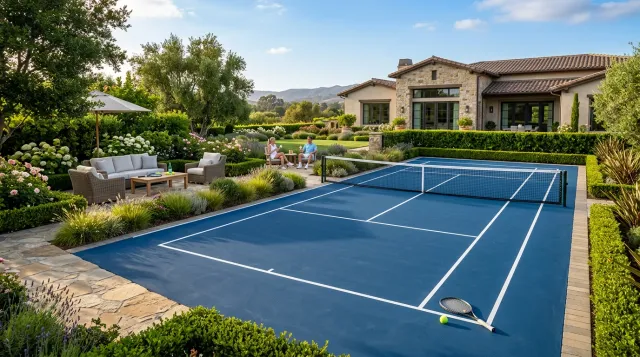
Tennis Court Calculator
Use this calculator to estimate the crushed stone base for a new or resurfaced tennis court. Enter dimensions and depth for volume and tonnage.
Delivery Logistics & Truck Info
Know your delivery options and access requirements before scheduling your order.
Truck Capacities
- Standard Dump Truck10–14 tons
- Tandem Axle14–18 tons
- Semi End Dump20–25 tons
A standard cubic yard weighs approximately 2,000–2,700 lbs depending on material and moisture.
Site Access Requirements
- Trucks require a minimum 12-ft wide, overhead-clear access path
- Soft ground or slopes over 10% may limit truck access — contact us before ordering
- Ensure no underground utilities or irrigation lines are in the drop zone
- Mark your desired drop location clearly before delivery
Important Notes
- Delivery estimates are based on available inventory and route proximity
- Minimum order quantities apply — typically 5 cubic yards or 1 truckload
- Material certification is available upon request for permitted projects
- Always confirm local ordinances before major material placement