
Horseshoe Pit Calculator
— How Much Do You Need?
Estimate gravel, sand, and base for your horseshoe pit - truckload delivery with clear pricing.
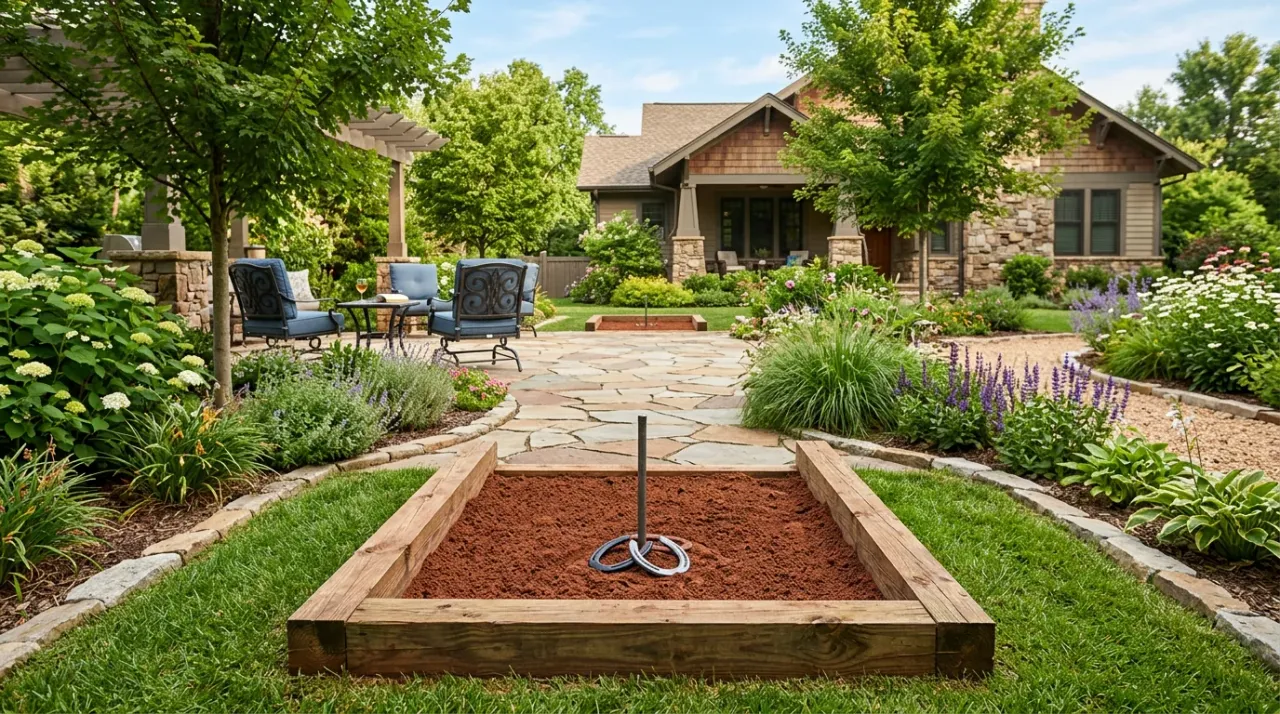
How to Use This Horseshoe Pit Calculator
Planning a horseshoe pit requires precise measurements to ensure you order enough material without overspending.
- 1 Measure Area: Measure the length and width of your planned horseshoe pit area in feet.
- 2 Determine Depth: For most horseshoe pit projects, a depth of 4 to 6 inches is recommended for stability.
- 3 Review Results: The calculator provides both cubic yards (for bulk volume) and tons (for ordering weight).
Common Materials for Horseshoe Pits
Choosing the right pit fill material directly impacts shoe retention, cushioning, and maintenance requirements for a playable horseshoe pit.
| Material | Description | Best For | Est. Cost |
|---|---|---|---|
| Blue Clay | Dense, fine-grained moist clay with a blue-gray color that maintains a soft, putty-like consistency when properly hydrated. | Pit Fill (Preferred), Shoe Retention, Competitive Play, NHPA-Standard Pits | $$ |
| Play Sand | Fine, rounded, washed sand particles with a uniform grain size, free of debris and large aggregates. | Pit Fill (Alternative), Low-Maintenance Pits, High-Drainage Areas | $ |
| Fill Dirt | Unscreened native soil material composed of clay, silt, and sand with variable composition depending on source. | Budget Pit Fill, Informal Residential Pits, rarely recommended | $ |
Understanding the Cost
Several factors influence the final price of your horseshoe pit project.
Material Volume
The dimensions of your project directly dictate the tonnage needed. Deeper bases require significantly more material.
Delivery Distance
Transport logistics play a major role. Being closer to the quarry or depot reduces delivery fees significantly.
Material Type
Decorative stones cost more than utility grades. Choose based on your project's functional and aesthetic requirements.
Recommended Products for Your Horseshoe Pit
Sand Calculator
Use this sand calculator to estimate cubic yards, tons, and bags. Covers fill, leveling, and bedding sand with weight and cost estimates included.
Fill Sand Calculator
Fill sand calculator — enter your project area to estimate cubic yards and tons. Works for backfill, leveling, and base preparation in any unit you prefer.
Play Sand Calculator
Play sand calculator — estimate exactly how many pounds or bags will fill your sandbox or sand table. Supports rectangular and circular shapes at any depth.
Masonry Sand Calculator
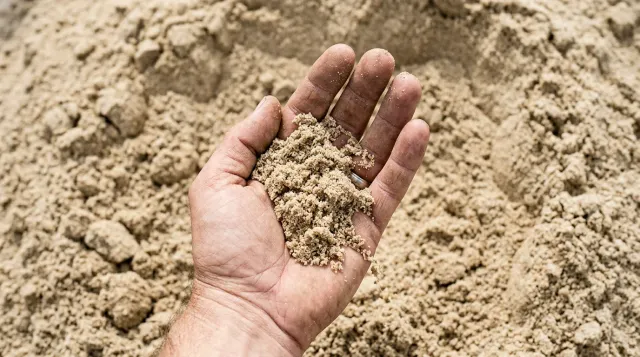
Use this calculator to estimate masonry sand in cubic yards and tons. Enter project dimensions for mortar mixes, paver bedding, and fine sand applications.
Frequently Asked Questions
What is a horseshoe pit?
A horseshoe pit is the target area in the game of horseshoes, one of the most popular backyard and recreational yard games in the United States. Each pit is a rectangular box filled with sand or clay, centered around a metal stake that players aim for when throwing horseshoes. The soft fill material does more than just mark the target. It cushions the impact when a horseshoe lands, keeps it from bouncing away, and makes it easy to retrieve between throws. A standard game is played between two pits set at a fixed distance apart, with players alternating throws from one end toward the stake at the other. Building a proper pit with the right fill material is the foundation of a good horseshoe setup, whether you are putting together a casual backyard game or a more dedicated playing area for regular use.
What are the official dimensions of a horseshoe pit, and how far apart should the stakes be?
According to the National Horseshoe Pitchers Association (NHPA), an official horseshoe pit measures 36 inches (3 feet) wide by 72 inches (6 feet) long. The metal stake is positioned in the center of the pit and stands about 14 to 15 inches above the surface, with a slight forward lean of roughly 3 inches toward the opposing pit. For stake-to-stake distance, the official pitching distance is 40 feet for adult men and 30 feet for women, juniors, and senior players. This is measured from stake to stake, not from the edge of one pit to the edge of the other, so keep that in mind when you are laying out your playing area. If you are building a backyard pit for casual play, you do not have to match official dimensions exactly. Many homeowners build pits that are a bit smaller, such as 3 feet wide by 6 feet long, to save space without giving up the feel of the game. The most important thing is to keep your stakes at a consistent distance so every throw is fair.
What is the best fill material for a horseshoe pit?
Sand is the most popular fill material for backyard horseshoe pits, and it earns that reputation for good reason. It cushions horseshoe landings, reduces bouncing, and holds its position well after a throw so you can judge close calls more easily. Coarse sand, sometimes called builder's sand or concrete sand, is a common choice because it settles firmly while still absorbing impact. Play sand, which is a finer washed variety, also works well and is smooth and comfortable to handle when retrieving horseshoes. Blue clay is the traditional fill used in professional and tournament play. Some competitive players prefer it because it grips the horseshoe tightly on landing. The tradeoff is that clay requires more upkeep, needs to be kept consistently moist to stay workable, and can dry out and harden in hot weather. For most homeowners and recreational players, sand is the better call. It is low maintenance, holds up well through changing seasons, and performs great at the backyard level. Hello Gravel carries bulk sand that is well suited for horseshoe pit projects, delivered right to your home by the truckload.
How much sand do you need to fill a horseshoe pit?
The amount of sand you need depends on the size of your pits and how deep you fill them. A depth of 4 to 6 inches is the standard range, with 4 inches being the NHPA minimum and 6 inches providing a bit more cushion and a more forgiving playing surface. For a standard 6-foot by 6-foot pit filled to 4 inches deep, you are looking at about 12 cubic feet of sand per pit, which is just under half a cubic yard. At 6 inches deep, that goes up to about 18 cubic feet, or roughly two-thirds of a cubic yard per pit. If you are building two pits for a full playing setup, plan on somewhere between 24 and 36 cubic feet of sand in total, depending on your depth target. That works out to roughly 1 to 1.3 cubic yards for both pits combined. Because Hello Gravel delivers sand by the truckload, most customers use this as an opportunity to tackle other yard projects at the same time. Extra sand is easy to put to work in a sandbox, under pavers, or anywhere drainage or leveling could use some help. Use the Hello Gravel calculator to enter your pit dimensions and any other areas you want to fill, and you will get a clear quantity estimate. If you want a hand sizing your order, the Hello Gravel team is glad to help.
Does sand depth in a horseshoe pit affect how the game plays?
Depth makes a bigger difference than most people expect. If the sand in your pit is too shallow, horseshoes will hit the bottom of the box on landing and bounce in unpredictable directions. That makes the game harder to judge and less enjoyable overall. If the sand is too deep, horseshoes may sink further than expected and become tricky to pull out cleanly between throws. The NHPA recommends a minimum depth of 4 inches, and most players find that 4 to 6 inches of sand strikes the right balance. There is enough material to absorb the impact and stop the horseshoe on landing, but not so much that it swallows the shoe. When you fill your pit, aim for a level surface and avoid compacting the sand too firmly. You want it solid enough to hold shape after a throw, but still loose enough to absorb the landing. Keep in mind that over time, the sand will naturally shift and compact from regular use and weather. Plan to check the depth periodically and top it off to keep your pit playing at its best.
More Project Calculators

Playground Calculator
This calculator estimates mulch, rubber, or wood fiber surfacing for playgrounds. Enter area and recommended depth to get cubic yards and tons.
Chicken Coop Calculator
Use this calculator to estimate how much gravel your coop base requires. Input dimensions and depth for volume in cubic yards and stone type guidance.
Basketball Court Calculator
Court base calculator — estimate gravel, sand, and sub-base quantities for backyard or regulation basketball courts. Input court size for material totals.
Tennis Court Calculator
Use this calculator to estimate the crushed stone base for a new or resurfaced tennis court. Enter dimensions and depth for volume and tonnage.
Delivery Logistics & Truck Info
Know your delivery options and access requirements before scheduling your order.
Truck Capacities
- Standard Dump Truck10–14 tons
- Tandem Axle14–18 tons
- Semi End Dump20–25 tons
A standard cubic yard weighs approximately 2,000–2,700 lbs depending on material and moisture.
Site Access Requirements
- Trucks require a minimum 12-ft wide, overhead-clear access path
- Soft ground or slopes over 10% may limit truck access — contact us before ordering
- Ensure no underground utilities or irrigation lines are in the drop zone
- Mark your desired drop location clearly before delivery
Important Notes
- Delivery estimates are based on available inventory and route proximity
- Minimum order quantities apply — typically 5 cubic yards or 1 truckload
- Material certification is available upon request for permitted projects
- Always confirm local ordinances before major material placement