
Masonry Sand Calculator
— How Much Do You Need?
Calculate masonry sand needs: cubic yards, tons, or bags for mortar, brick, and block projects.
How to Use This Masonry Sand Calculator
Planning a masonry sand project requires precise measurements to ensure you order enough material without overspending.
- 1 Enter Dimensions — Input the length and width of your area in feet. Round up slightly for a buffer.
- 2 Choose Depth — Select the depth in inches. For most masonry sand projects, 3–6 inches is standard.
- 3 Review Results — Instantly see cubic yards and tons needed to accurately plan your order.
Visual Area Guide
Use these diagrams to measure your project area correctly.
Rectangular Area
Measure length × width for square or rectangular areas. Most driveway, patio, and grading projects use this method.
Circular Area
Measure the radius (half the diameter) for round beds, drain fields, or circular landscaping. Formula: π × radius².
Material Coverage & Grading
Common masonry sand grades and applications per ASTM C144 and related industry standards
| Grade | Application |
|---|---|
| ASTM C144 | The primary industry-standard grade for masonry mortar aggregate, meeting ASTM C144 specifications for particle size gradation. Washed and properly graded natural or manufactured sand composed of silica and quartz particles with sharp, angular shape for optimal compaction and bond. Suitable for all mortar types (M, S, N) in brick and CMU installation above and below grade. Provides superior water retention, extended board life, and excellent workability with mortar cement or lime. |
| Type M | Masonry sand blended and used in ASTM C270 Type M mortar, the highest-strength mortar classification. Designed for heavy load-bearing applications and below-grade installations such as foundations, retaining walls, and pavement. Requires ASTM C144-compliant sand to achieve maximum compressive strength and durability. Best suited for exterior and below-grade masonry exposed to severe conditions or freeze-thaw cycles. |
| Type S | Masonry sand used in ASTM C270 Type S mortar, a general-purpose moderate-strength classification. Appropriate for above- and below-grade exterior applications including brick veneer, block walls, and structural masonry. ASTM C144-compliant sand ensures proper bond and workability for a wide range of unit masonry projects. Commonly specified where lateral load resistance and flexibility are balanced requirements. |
| Type N | Masonry sand used in ASTM C270 Type N mortar, a lower-strength classification intended for non-load-bearing and interior masonry applications. Ideal for above-grade partitions, interior brick, and soft-unit masonry such as limestone or historic brick where high compressive strength would be detrimental. ASTM C144-compliant sand provides the workability and water retention needed for finish and detail work. Not recommended for below-grade or high-stress structural applications. |
| ASTM C33 | Concrete-grade sand meeting ASTM C33 specifications, occasionally used as an alternative aggregate in masonry mortar only when combined with lime at proper ratios. Coarser gradation than ASTM C144 results in poor workability and reduced bond strength when used with Portland cement masonry mortars alone. Considered a secondary or substitute option and is not the preferred grade for masonry mortar applications. Laboratory testing is recommended before use to verify suitability and gradation compliance. |
| Washed Mason | A commercially marketed form of ASTM C144-compliant masonry sand that has been processed, washed, and screened to remove deleterious materials and ensure consistent gradation. Composed of sharp, angular silica and quartz particles exhibiting a bell-curve particle size distribution for tight packing and minimal void content. Widely available from suppliers in bulk or 50 lb bags (approx. 0.5 cu ft yield) and used across all standard mortar type applications. Preferred for projects requiring consistent quality control and verified ASTM C144 compliance. |
Plan Your Next Project

Stepping Stones Calculator
Stepping stone calculator — estimate how many stones and how much base gravel your walkway needs. Enter path length, stone size, and spacing.
Patio Pavers Calculator
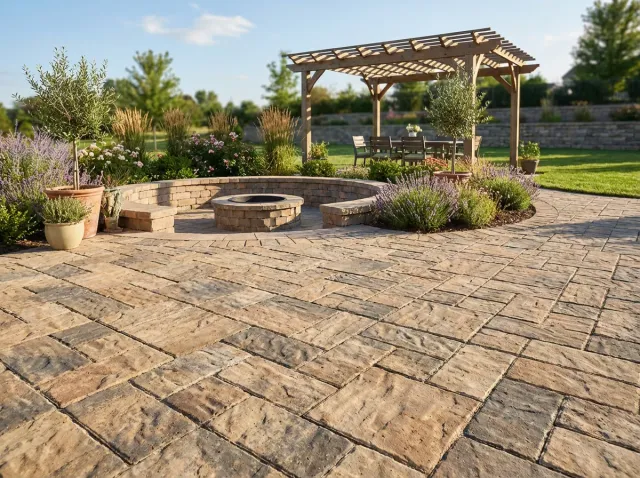
Paver calculator — estimate an accurate paver count plus base material for your patio. Enter dimensions, paver size, and joint spacing to plan your layout.
Flagstone Patio Calculator
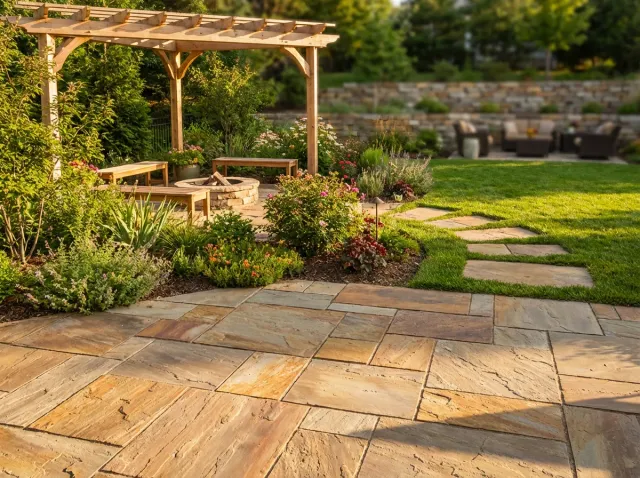
Flagstone calculator — estimate tonnage and base material for your patio. Enter area dimensions and stone thickness for weight and coverage per ton.
Horseshoe Pit Calculator
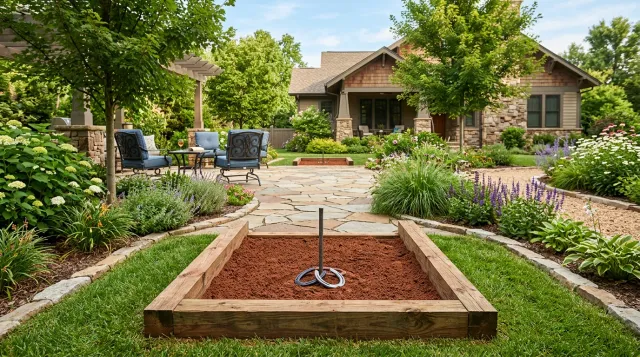
Horseshoe pit calculator — estimate sand, clay, and lumber for a regulation or backyard court. Covers pit dimensions from 31x43 in. up to 36x72 in.
Frequently Asked Questions
What is masonry sand?
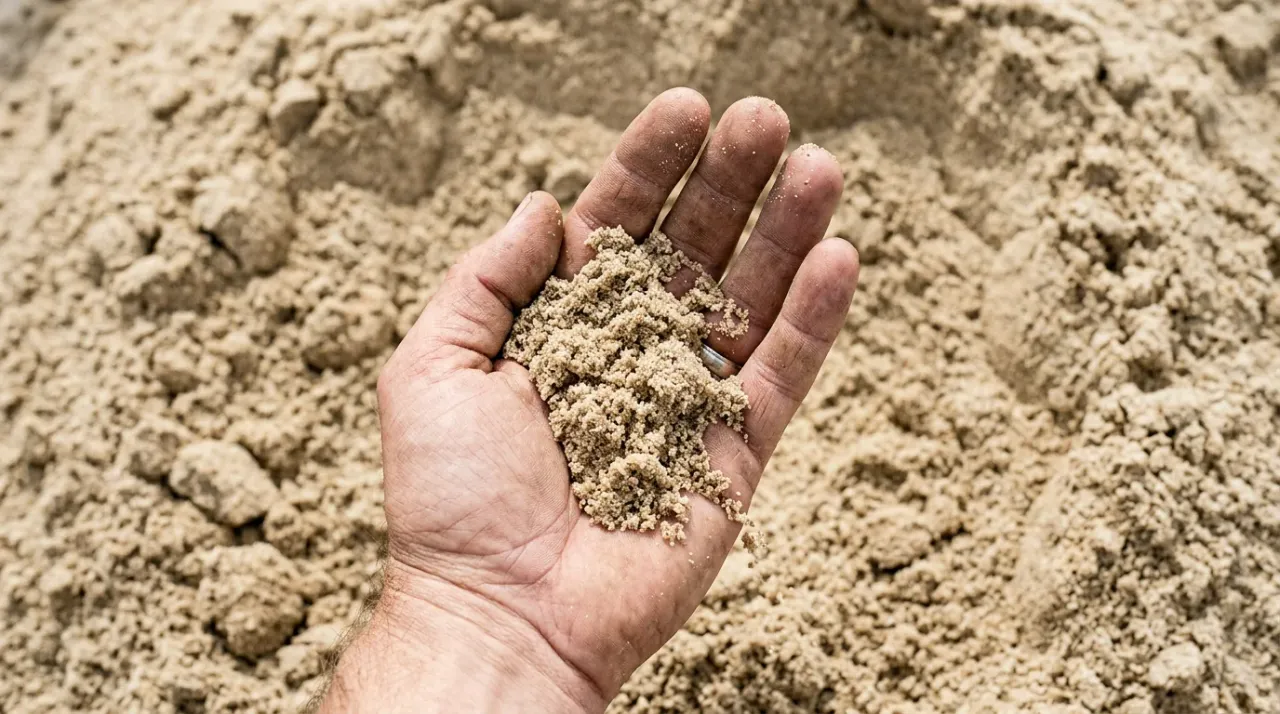
Masonry sand is a fine-grained, washed sand that has been screened and processed to produce a clean, consistent particle size. The grains are finer than concrete sand and have a slightly angular shape, which helps them bind well with cement and other materials in mortar mixes. Because it is washed during processing, masonry sand is free of most clay, silt, and organic material, making it a dependable material for construction and landscaping projects alike. You may also hear masonry sand referred to as brick sand or mortar sand. These names all point to the same general product. Whether you are mixing mortar for a brick wall or laying a smooth bedding layer for pavers, masonry sand is the material most professionals reach for when they need a fine, workable, and clean sand.
What is the difference between masonry sand and concrete sand?
The main difference comes down to particle size and what each material is designed to do. Concrete sand has a coarser, more varied gradation with larger particles that provide the structural strength needed in concrete pours and thick base layers. Masonry sand is finer and more uniform, which makes it easier to work with when mixing mortar or creating a smooth, level bedding surface. If you are laying brick, building a block wall, setting pavers, or mixing stucco or plaster, masonry sand is the right choice. If you need to reinforce a base layer or mix structural concrete, concrete sand is typically the better fit. When in doubt about which material suits your specific project, the Hello Gravel team is happy to point you in the right direction before you order.
What is the difference between masonry sand and all-purpose sand?
All-purpose sand is a general-purpose product with a broader range of particle sizes. It is designed to handle many basic tasks, like filling low spots in a yard or mixing light-duty mortar. Masonry sand is more specifically processed and graded for masonry work. It has a more consistent, finer gradation and a cleaner composition, which matters when you need a reliable mortar mix or a precise, level bedding layer under pavers or flagstone. For most masonry and paving projects, masonry sand will give you better workability and more predictable results than all-purpose sand. If your project requires clean joints, tight-fitting pavers, or a smooth mortar consistency, masonry sand is worth specifying from the start rather than settling for a less refined alternative.
What projects is masonry sand best used for?
Masonry sand is a versatile material that shows up in both construction and outdoor recreational projects. Its fine, clean texture makes it a go-to choice for mixing mortar for brick, block, and stone walls, as well as for stucco and plaster applications where a smooth, workable consistency is important. On the landscaping and hardscape side, masonry sand is widely used as a bedding layer for pavers and flagstone because it compacts firmly and screeds easily into a flat, even surface. Many homeowners also use masonry sand for sandbox fills, volleyball courts, horseshoe pits, and other outdoor recreational areas where a clean, fine sand is desirable. If your project falls into any of these categories, masonry sand is a strong choice and is available for bulk truckload delivery through Hello Gravel.
Can masonry sand be used as a bedding layer for pavers?
Yes, and it is one of the most common uses for masonry sand in residential and commercial landscaping. Its fine, consistent particle size allows you to screed it into a flat, even layer before setting your pavers, and it compacts well enough to hold everything securely in place once the job is done. For most paver installations, a bedding layer of about 1 inch of masonry sand is recommended over a compacted gravel base. At 1 inch of depth, one ton of masonry sand covers approximately 200 to 240 square feet, though your actual coverage will vary slightly depending on how tightly you compact the layer and the condition of the surface below. To get a precise tonnage estimate based on your actual project dimensions, use the Hello Gravel calculator on this page before you order.
Other Material Calculators
Delivery Logistics & Truck Info
Know your delivery options and access requirements before scheduling your order.
Truck Capacities
- Standard Dump Truck 10–14 tons
- Tandem Axle 14–18 tons
- Semi End Dump 20–25 tons
A standard cubic yard weighs approximately 2,000–2,700 lbs depending on material and moisture.
Site Access Requirements
- Trucks require a minimum 12-ft wide, overhead-clear access path
- Soft ground or slopes over 10% may limit truck access — contact us before ordering
- Ensure no underground utilities or irrigation lines are in the drop zone
- Mark your desired drop location clearly before delivery
Important Notes
- Delivery estimates are based on available inventory and route proximity
- Minimum order quantities apply — typically 5 cubic yards or 1 truckload
- Material certification is available upon request for permitted projects
- Always confirm local grading ordinances before major material placement