
Flagstone Patio Cost Calculator
— How Much Do You Need?
Quickly calculate flagstone, sand, base gravel, and edging quantities with truckload delivery estimates.
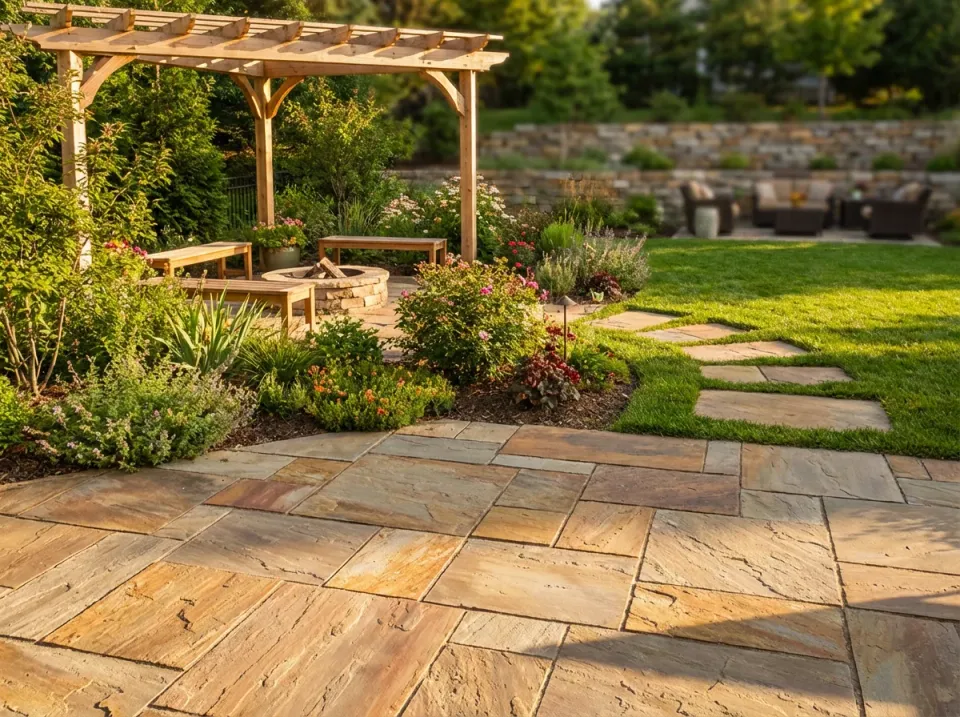
How to Use This Flagstone Patio Calculator
Planning a flagstone patio requires precise measurements to ensure you order enough material without overspending.
- 1 Measure Area: Measure the length and width of your planned flagstone patio area in feet.
- 2 Determine Depth: For most flagstone patio projects, a depth of 4 to 6 inches is recommended for stability.
- 3 Review Results: The calculator provides both cubic yards (for bulk volume) and tons (for ordering weight).
Common Materials for Flagstone Patios
Selecting the right base, bedding, and surface materials ensures proper compaction, drainage, and long-term stability for a flagstone patio.
| Material | Description | Best For | Est. Cost |
|---|---|---|---|
| Crusher Run (QP) | Crushed stone and fines blend, typically 3/4-inch minus, that compacts tightly to form a dense, load-bearing surface. | Base Layer, Load-Bearing Support, Compaction Base, Sub-base Leveling | $ |
| #57 Crushed Stone | Clean, angular 3/4-inch crushed limestone or granite with no fines, providing excellent drainage and interlock. | Drainage Sub-base, Open-Graded Base, Under Geotextile Fabric | $ |
| Coarse Concrete Sand | Washed, coarse-grained sand with angular particles sized between 1/16 and 3/16 inch for stable screeding. | Bedding Layer, Dry-Laid Flagstone Setting, Final Screed Bed | $ |
| Polymeric Sand | Fine kiln-dried sand blended with polymer binders that harden when activated with water to lock paving joints. | Joint Filling, Weed Suppression, Finished Surface Joints | $$ |
Understanding the Cost
Several factors influence the final price of your flagstone patio project.
Material Volume
The dimensions of your project directly dictate the tonnage needed. Deeper bases require significantly more material.
Delivery Distance
Transport logistics play a major role. Being closer to the quarry or depot reduces delivery fees significantly.
Material Type
Decorative stones cost more than utility grades. Choose based on your project's functional and aesthetic requirements.
Recommended Products for Your Flagstone Patio
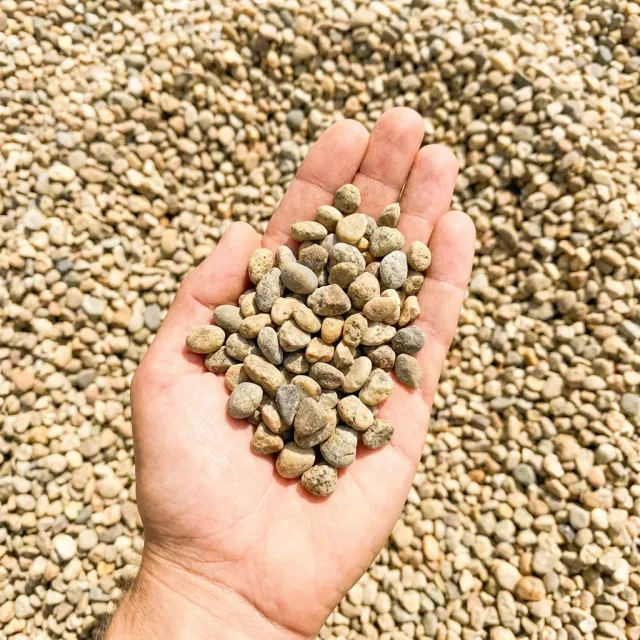
Pea Gravel Calculator
Pea gravel calculator — enter your project dimensions to estimate volume in cubic yards, tons, and bags. Ideal for pathways, patios, and ground cover.
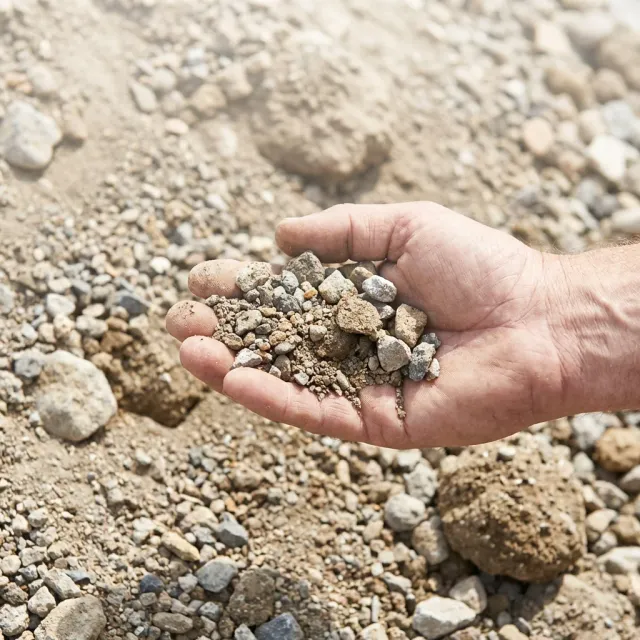
Road Base Calculator
Road base calculator — enter length, width, and depth to estimate volume and tonnage for crushed limestone, recycled concrete, and aggregate base.
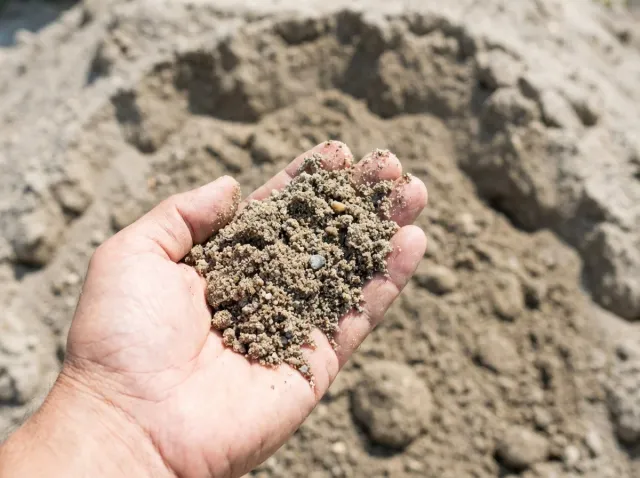
Concrete Sand Calculator
Concrete sand calculator — estimate volume and weight based on your project's length, width, and depth. Results in cubic yards and tons, ready for ordering.
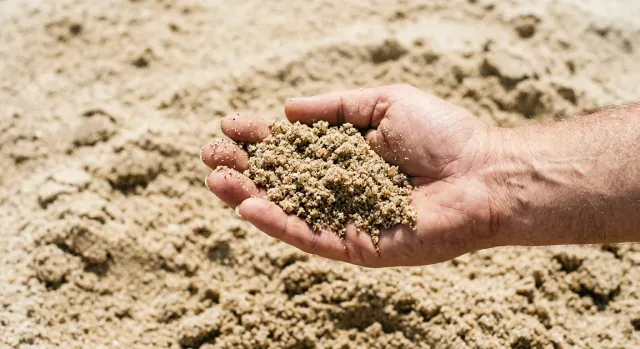
Washed Sand Calculator
This calculator estimates how much washed sand your project needs in cubic yards or tons. Accounts for material density so your estimate is accurate.
Frequently Asked Questions
Can you lay flagstone directly on soil, or do you need a gravel base?
Technically, you can place flagstone directly on soil, but it is one of the most common mistakes homeowners make when building a patio. When flagstone sits on bare soil, the ground beneath it shifts constantly. Rain saturates the soil and softens it. Freeze and thaw cycles push individual stones up and out of level. Over time, you end up with a surface that rocks underfoot, drains poorly, and creates real tripping hazards. A properly built flagstone patio needs a compacted crushed stone base, typically 4 to 6 inches deep, beneath a 1 to 2 inch setting bed of coarse sand or stone dust that the flagstone actually rests on. That gravel layer is what gives your patio its stability and long term drainage. Without it, even beautiful, thick flagstone will start to shift within a season or two. Hello Gravel delivers the crushed stone for your base and the sand or stone dust for your setting bed in bulk by truckload, so you can get everything you need without multiple trips to a supply yard.
What is the best material to put under a flagstone patio?
The best base for a flagstone patio is a layer of compacted crushed stone. Three-quarter inch crushed gravel or a crusher run blend (which combines crushed stone and finer stone particles) are both excellent choices. These materials compact firmly, lock together under load, and allow water to drain away from beneath your stones rather than pooling and destabilizing the ground. On top of that crushed stone base, you will want a 1 to 2 inch setting bed of coarse sand or stone dust. This layer lets you adjust the level of each individual stone before it is placed, which is especially useful when working with irregular flagstone shapes and sizes. Together, these two layers do different jobs. The crushed stone base handles the structural load and water management. The sand or stone dust handles the fine tuning and leveling. Both are available through Hello Gravel for bulk delivery directly to your project site, so you are not making multiple orders from different suppliers to get one patio built.
How much base gravel and sand do I need for a flagstone patio project?
The quantity you need depends on the size of your patio and the depth of your base layer. A good starting point is 4 to 6 inches of compacted crushed stone for the structural base. At 4 inches of depth, a 200 square foot patio requires roughly 4 tons of base gravel. A 400 square foot patio, which is the footprint of a 20 by 20 foot space, calls for approximately 7 to 8 tons at that same depth. For your sand or stone dust setting bed at 1 to 2 inches, add another 1 to 2 tons for a 200 square foot patio, or closer to 2 to 3 tons for a 400 square foot patio. These figures are based on typical crushed stone weight of around 1.4 to 1.5 tons per cubic yard at a flat, even surface. Your actual site may vary depending on whether any grading or filling is needed before the base goes down. The most accurate way to figure out your order is to use the Hello Gravel online calculator. Just enter your patio dimensions and desired base depth, and it will calculate a precise quantity for you. That way you order what you actually need without running short or significantly over.
How does flagstone compare in cost to pavers or stamped concrete?
Each of these three options comes in at a different price point, and the right choice depends on what you value most over the life of the patio. Stamped concrete is generally the lowest cost option upfront. It goes down quickly and can be designed to mimic the look of natural stone. The limitation is that concrete cracks over time, and when a section of stamped concrete cracks, repairing it without leaving a visible patch is difficult and expensive. You often end up replacing a larger section than the damage actually requires. Concrete pavers sit in the middle of the range. They are durable, consistent in shape, and straightforward to install. Many homeowners choose them for their reliability, though they have a more uniform, manufactured appearance compared to natural stone. Flagstone tends to cost more per square foot than either option, largely because it is natural stone with real variation in shape, thickness, and color. However, when you weigh the repair story, flagstone competes well over the long run. A shifted stone can be lifted, releveled, and set back in place without touching the rest of the patio. That kind of targeted repair is simply not possible with poured or stamped concrete. The total cost of your project will depend on the type of stone you choose, the size of the area, your base material depths, and whether you are handling installation yourself or hiring out the labor. For current material pricing on base gravel and sand, use the Hello Gravel calculator or contact the team directly for a quote based on your project size.
How long will a flagstone patio last?
A properly installed flagstone patio can last 50 years or more. Many well built flagstone patios last a lifetime. Natural stone does not rot, rust, warp, or break down the way wood and synthetic materials do. It holds up through weather, seasonal temperature swings, heavy outdoor furniture, and years of foot traffic without losing its character. The phrase “properly installed” carries real weight here. The longevity of any flagstone patio depends almost entirely on what is underneath it. A solid, compacted gravel base with good drainage is what prevents stones from shifting, heaving, and sinking over time. Flagstone placed on a weak or poorly draining base will start to fail within a few seasons, not because the stone is inferior, but because there is nothing stable beneath it to maintain the surface. When you start with the right base materials and get them to the right compacted depth, you are building something that can genuinely last decades. That is one of the real arguments for flagstone over less durable alternatives. The upfront investment in materials pays off over a long period of time.
More Project Calculators
Playground Calculator
This calculator estimates mulch, rubber, or wood fiber surfacing for playgrounds. Enter area and recommended depth to get cubic yards and tons.
Chicken Coop Calculator
Use this calculator to estimate how much gravel your coop base requires. Input dimensions and depth for volume in cubic yards and stone type guidance.
Basketball Court Calculator
Court base calculator — estimate gravel, sand, and sub-base quantities for backyard or regulation basketball courts. Input court size for material totals.
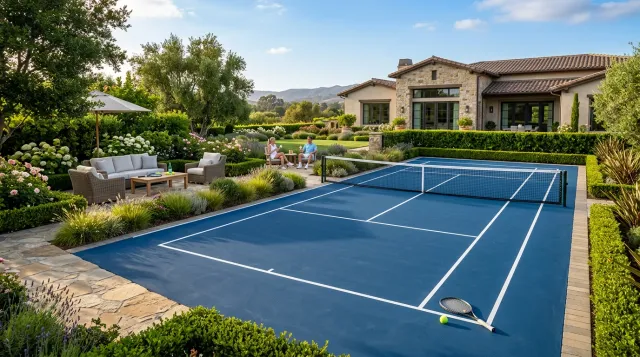
Tennis Court Calculator
Use this calculator to estimate the crushed stone base for a new or resurfaced tennis court. Enter dimensions and depth for volume and tonnage.
Delivery Logistics & Truck Info
Know your delivery options and access requirements before scheduling your order.
Truck Capacities
- Standard Dump Truck10–14 tons
- Tandem Axle14–18 tons
- Semi End Dump20–25 tons
A standard cubic yard weighs approximately 2,000–2,700 lbs depending on material and moisture.
Site Access Requirements
- Trucks require a minimum 12-ft wide, overhead-clear access path
- Soft ground or slopes over 10% may limit truck access — contact us before ordering
- Ensure no underground utilities or irrigation lines are in the drop zone
- Mark your desired drop location clearly before delivery
Important Notes
- Delivery estimates are based on available inventory and route proximity
- Minimum order quantities apply — typically 5 cubic yards or 1 truckload
- Material certification is available upon request for permitted projects
- Always confirm local ordinances before major material placement