
Play Sand Calculator
— How Much Do You Need?
Quickly calculate Play Sand in cubic yards, tons, or bags for sandboxes, playgrounds, and gardens.
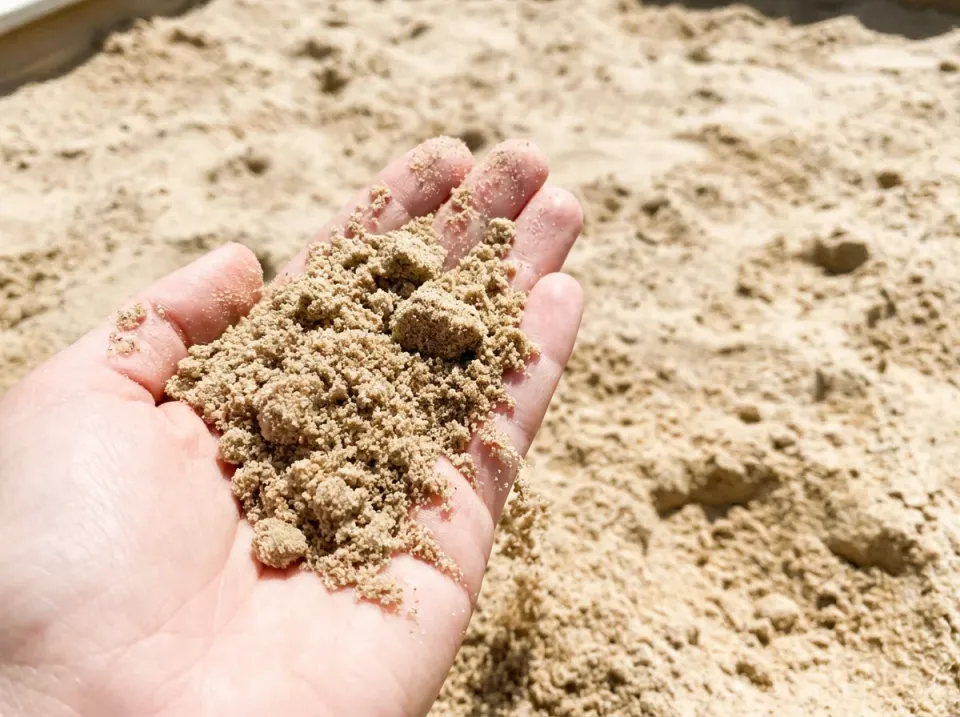
How to Use This Play Sand Calculator
Planning a play sand project requires precise measurements to ensure you order enough material without overspending.
- 1 Enter Dimensions — Input the length and width of your area in feet. Round up slightly for a buffer.
- 2 Choose Depth — Select the depth in inches. For most play sand projects, 3–6 inches is standard.
- 3 Review Results — Instantly see cubic yards and tons needed to accurately plan your order.
Visual Area Guide
Use these diagrams to measure your project area correctly.
Rectangular Area
Measure length × width for square or rectangular areas. Most driveway, patio, and grading projects use this method.
Circular Area
Measure the radius (half the diameter) for round beds, drain fields, or circular landscaping. Formula: π × radius².
Material Coverage & Grading
Common play sand grades and applications per ASTM F1292, F1487, and C778 standards
| Grade | Application |
|---|---|
| Very Coarse | Coarsest play sand grade with particle sizes ranging 1.00–2.00 mm, offering superior drainage and minimal grain migration. Best suited for high-traffic playground installations in wet or humid climates where water retention and compaction are concerns. Provides effective impact attenuation at greater critical fall heights per ASTM F1292. |
| Coarse | Coarse-grade play sand with dominant particle sizes of 0.50–1.00 mm, delivering excellent drainage performance and reduced fines migration under equipment. Recommended for outdoor playground underlays and safety surfacing beneath high-traffic play structures. Larger grain size reduces compaction locking and maintains HIC compliance at elevated drop heights. |
| Medium | The most widely used play sand grade, with dominant particle sizes of 0.25–0.50 mm and approximately 33% retention in that sieve range. Offers a balanced combination of impact absorption, play value, and stability for sandboxes and general playground surfacing. Meets ASTM F1292 impact attenuation requirements (HIC <1000, g-max <200) for standard critical fall heights. |
| Fine | Fine-grade play sand with dominant particle sizes of 0.125–0.25 mm, yielding a smooth, soft texture suitable for sandboxes and decorative landscape fills. Higher percentage of finer grains (~59%) provides excellent packing for low-fall-height play areas and sensory play applications. Best applied where tactile quality is prioritized over maximum drainage or high-impact attenuation. |
| Very Fine | Finest standard play sand grade with particle sizes of 0.063–0.125 mm, comprising approximately 5.8% of a well-graded play sand blend. Used primarily in specialty sensory play installations, artistic sandboxes, or as a blending component to adjust texture in mixed-grade safety surfacing. Not recommended as a standalone structural or high-traffic surfacing material due to higher compaction tendency. |
Plan Your Next Project
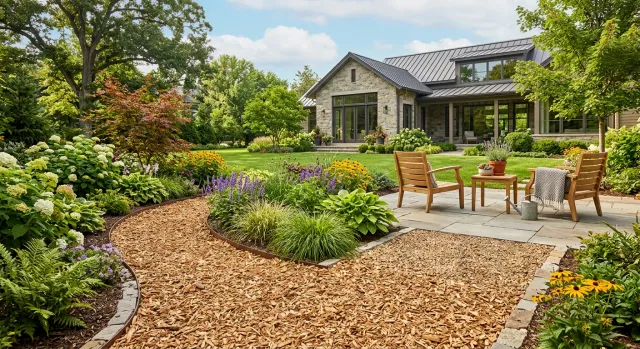
Playground Calculator
This calculator estimates mulch, rubber, or wood fiber surfacing for playgrounds. Enter area and recommended depth to get cubic yards and tons.
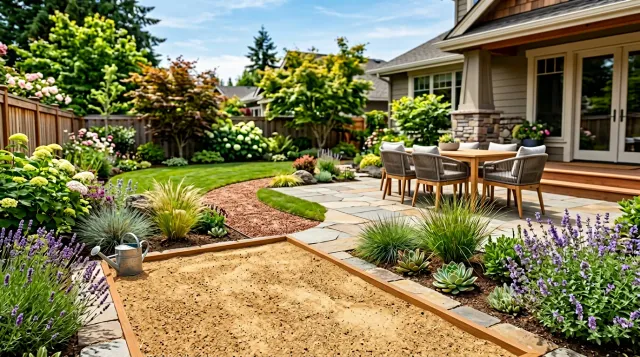
Sandbox Calculator
Sandbox calculator — enter dimensions and shape to estimate how many pounds or bags of play sand to buy. Works for rectangular, circular, and custom sizes.
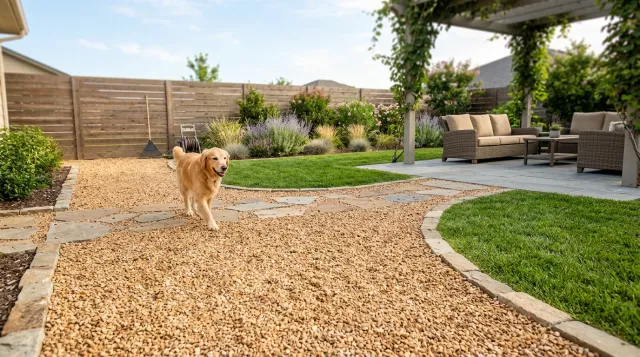
Dog Run Calculator
Dog run calculator — enter dimensions to estimate gravel volume in cubic yards and tons. Covers pea gravel depth, drainage layers, and material weight.
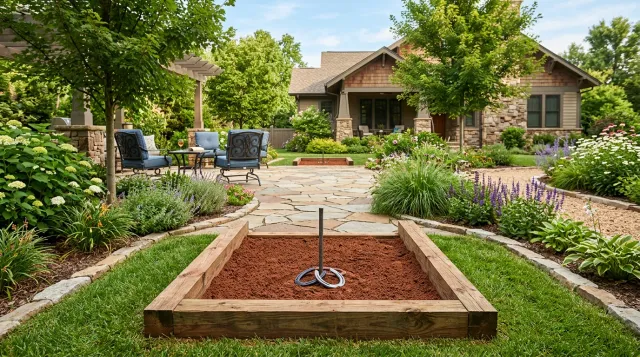
Horseshoe Pit Calculator
Horseshoe pit calculator — estimate sand, clay, and lumber for a regulation or backyard court. Covers pit dimensions from 31x43 in. up to 36x72 in.
Frequently Asked Questions
What is the difference between play sand and regular sand?
Play sand is washed and screened to remove dust and sharp edges, giving a soft, smooth texture that is gentle on skin. Regular construction sand, like concrete sand, is processed for building and often has sharper grains and more fine dust. For a sandbox or playground, choose play sand. For base layers in construction projects, construction grade sand may be more appropriate. Hello Gravel offers both, and the team can help you pick the right one.
Is play sand safe for children, and how do I keep it that way?
Yes, quality play sand is safe for children when it is properly sourced and maintained. It is washed and screened to remove sharp particles and dust. To keep it safe, cover the sandbox when not in use to deter animals. Regularly rake the sand and check for debris. If you notice discoloration, an odor, or contamination, refresh or replace the sand. Hello Gravel makes it easy to order bulk play sand when you need a refresh.
Is it okay for play sand to get wet?
Yes, play sand can get wet. It will drain and dry with sun and air. Avoid letting it stay damp for long, as mold or bacteria can develop. After heavy rain, rake the sand to help it dry faster, and consider letting it fully dry before covering the sandbox.
How much play sand do I need for a sandbox or play area?
How much sand you need depends on the area size and your desired depth. For a typical 8 by 8 foot sandbox at 6 inches deep, you’ll need about 32 cubic feet of sand, roughly 1.5 to 2 tons. A 10 by 10 foot sandbox at 6 inches deep needs about 50 cubic feet, about 2.5 tons. Larger areas, like a backyard volleyball court, require more. To get an exact number for your project, use the Hello Gravel calculator and confirm with our team if you have a special layout.
How often should I replace or refresh play sand?
Most people replace sandbox sand every one to two years with regular use. Heavy rain, shade, or limited sun can shorten that window. Signs you should replace include packed texture, a noticeable odor, discoloration, or visible contamination. You can also top off a worn area with fresh bulk sand instead of replacing the entire sandbox. Hello Gravel can deliver exactly what you need on the date you choose.
Other Material Calculators
Delivery Logistics & Truck Info
Know your delivery options and access requirements before scheduling your order.
Truck Capacities
- Standard Dump Truck 10–14 tons
- Tandem Axle 14–18 tons
- Semi End Dump 20–25 tons
A standard cubic yard weighs approximately 2,000–2,700 lbs depending on material and moisture.
Site Access Requirements
- Trucks require a minimum 12-ft wide, overhead-clear access path
- Soft ground or slopes over 10% may limit truck access — contact us before ordering
- Ensure no underground utilities or irrigation lines are in the drop zone
- Mark your desired drop location clearly before delivery
Important Notes
- Delivery estimates are based on available inventory and route proximity
- Minimum order quantities apply — typically 5 cubic yards or 1 truckload
- Material certification is available upon request for permitted projects
- Always confirm local grading ordinances before major material placement