
Swale Calculator
— How Much Do You Need?
Calculate swale materials — gravel, sand, topsoil or fill; get truckload quantities and delivery.
How to Use This Swale Calculator
Planning a swale requires precise measurements to ensure you order enough material without overspending.
- 1 Measure Area: Measure the length and width of your planned swale area in feet.
- 2 Determine Depth: For most swale projects, a depth of 4 to 6 inches is recommended for stability.
- 3 Review Results: The calculator provides both cubic yards (for bulk volume) and tons (for ordering weight).
Common Materials for Swales
Choosing the right material ensures proper stormwater infiltration, erosion control, and long-term channel stability in swale installations.
| Material | Description | Best For | Est. Cost |
|---|---|---|---|
| #57 Crushed Stone | Clean, angular 3/4-inch crushed stone with good void space and drainage characteristics. | Check Dams, High-Flow Stabilization, Gravel Outlets, Steep Sections | $$ |
| Crusher Run (QP) | Crushed stone and stone dust blend ranging from 3/4-inch down to fines, compacts to a dense, stable base. | Base Layer Compaction, Berm Stabilization, Channel Subbase | $ |
| Fill Dirt | Unscreened native or imported soil used for grading, shaping, and building earthen berms and channel profiles. | Channel Shaping, Berm Construction, Grade Establishment | $ |
| Coarse Sand | Granular, loose sand with particle sizes typically between 0.5 mm and 2 mm that promotes drainage and permeability. | Underdrain Bedding, Permeable Base Layer, Clay Soil Amendment | $ |
Understanding the Cost
Several factors influence the final price of your swale project.
Material Volume
The dimensions of your project directly dictate the tonnage needed. Deeper bases require significantly more material.
Delivery Distance
Transport logistics play a major role. Being closer to the quarry or depot reduces delivery fees significantly.
Material Type
Decorative stones cost more than utility grades. Choose based on your project's functional and aesthetic requirements.
Recommended Products for Your Swale
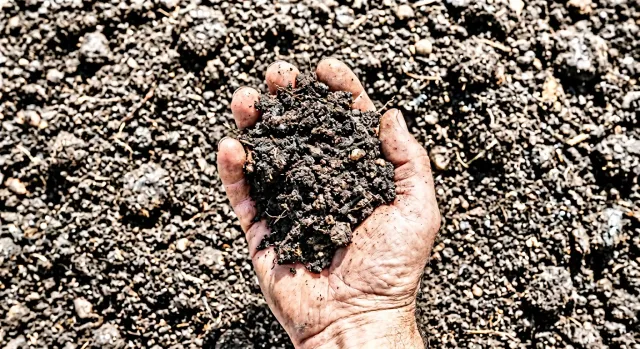
Topsoil Calculator
Topsoil calculator that estimates cubic yards and tons from your area and depth. Supports raised beds, gardens, new lawns, and grading projects.
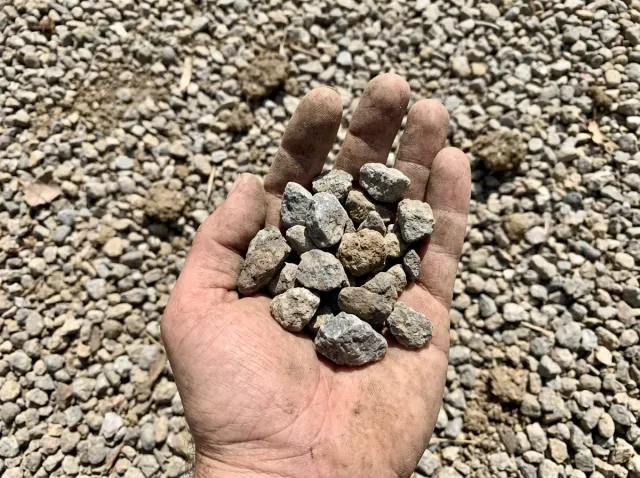
Drainage Rock Calculator
This calculator estimates drainage gravel for French drains, yard drainage, and erosion control. Factors in the 4-6 inch depth most systems need.
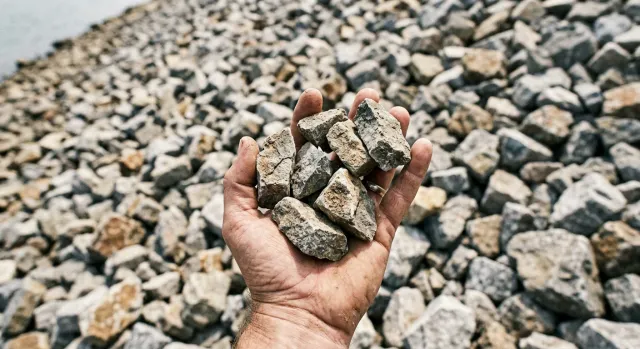
Rip Rap Calculator
Rip rap calculator — estimate tonnage based on your slope or shoreline dimensions. Converts between cubic yards, cubic feet, and tons for erosion control.
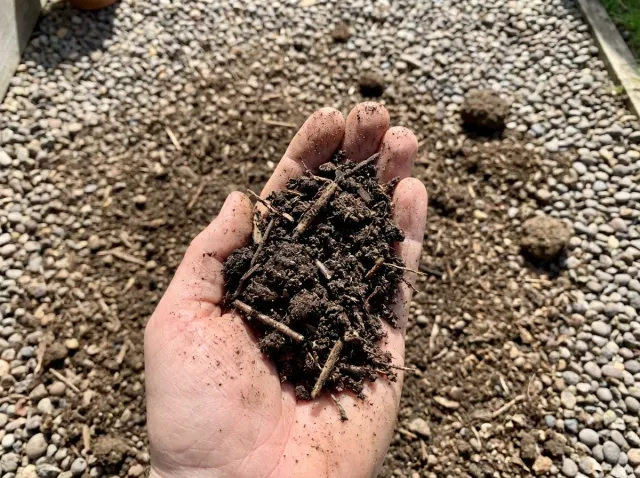
Compost Calculator
Estimate compost volume with this calculator for top-dressing, soil amendment, or new beds. Enter your square footage and desired depth for cubic yards.
Frequently Asked Questions
What is a swale and how does it help with drainage?
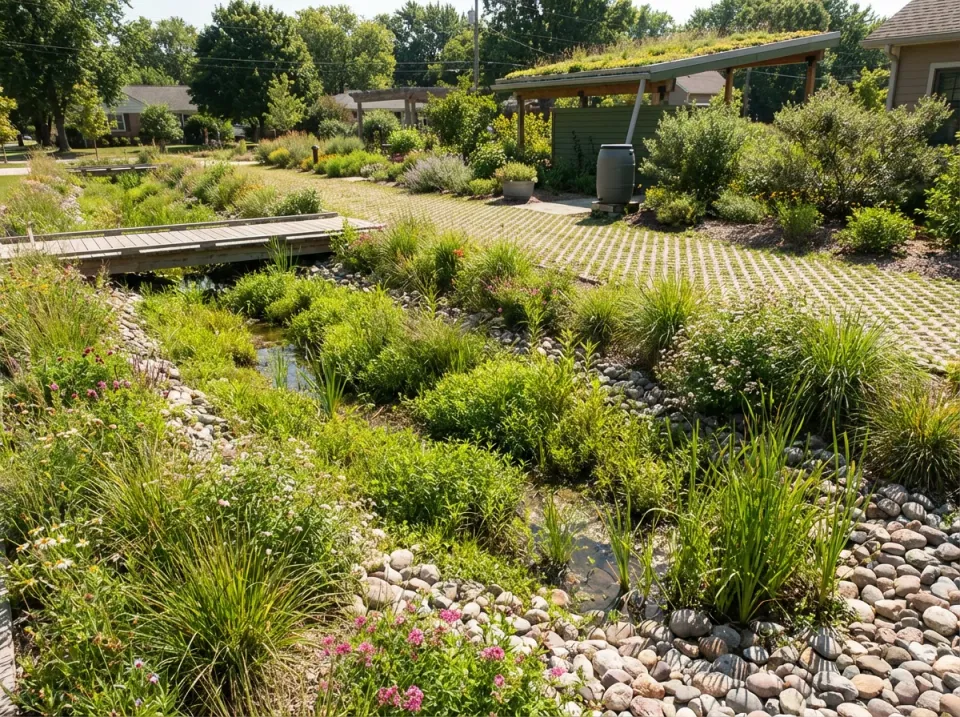
A swale is a shallow, wide channel built into the landscape to collect and redirect stormwater runoff. Unlike a steep drainage ditch that rushes water away as fast as possible, a swale is designed with gentle slopes that slow the flow of water down, giving it time to seep into the ground or travel safely toward a lower point on your property. You'll find swales along roadsides, at the edges of driveways, between adjacent yards, and around the perimeters of commercial properties. They're one of the most practical and cost-effective drainage solutions available for managing water that would otherwise pool around your foundation, flood low-lying areas, or wash out your landscaping. Lining a swale with the right gravel makes it drain faster, last longer, and perform reliably through heavy rain events.
What's the difference between a swale, a ditch, and a French drain?
These three terms get mixed up often, and it's worth understanding how they differ before you decide which solution fits your property. A swale is a broad, shallow, above-ground channel with gently sloped sides. Its job is to slow water down, spread it out, and encourage it to infiltrate the soil rather than rush away. A ditch is typically narrower and steeper, designed to move large volumes of water quickly rather than let it soak in. Ditches are common along roads and agricultural land where moving water fast is the priority. A French drain is a completely different system. It works underground using a perforated pipe wrapped in filter fabric and surrounded by gravel to intercept subsurface water before it saturates the soil or reaches your foundation. A swale manages water on the surface. A French drain manages water that has already entered the ground. Each one solves a different drainage problem. If you have surface runoff flooding your yard or washing across your driveway, a gravel-lined swale is usually the right starting point.
Should you put rocks or gravel in a swale, and what type works best?
Yes, lining a swale with gravel is one of the best upgrades you can make for its long-term performance. A gravel-lined swale drains faster than a bare earth or grass swale, resists erosion during heavy rain events, and eliminates the regular mowing and vegetation maintenance that a vegetated swale requires. It also clears standing water more quickly, which reduces the conditions that attract mosquitoes. The best materials for lining a swale are clean, washed stone in the 1.5 to 3 inch range, such as river rock or clean crushed stone. These sizes are large enough to stay in place under flowing water but still allow water to pass through efficiently. Smaller pea gravel or fine sand can wash out or compact over time, reducing drainage and requiring frequent replacement. A heavier, open-graded stone gives you the best combination of stability and drainage performance. If you are unsure which stone size makes the most sense for your specific swale size and flow rate, the Hello Gravel team is happy to help you choose the right material before you place your order.
How much gravel do I need to line a swale?
The amount of gravel you need depends on the length of your swale, its width, and how deep you plan to place the stone. A standard approach is to line the bottom and lower sides of the swale to a depth of about 6 inches of compacted stone. As a practical example, a 50-foot swale that is 3 feet wide lined at 6 inches deep would require roughly 2.5 to 3 cubic yards of stone, which translates to approximately 3 to 4 tons depending on the stone type. For longer or wider swales, that number climbs quickly. A 100-foot swale at the same width and depth would put you closer to 6 to 8 tons. These are starting estimates only. Your actual quantity will depend on the exact shape of your channel and how deeply the sides are sloped. The most reliable way to get an accurate number is to use the Hello Gravel calculator. Plug in your dimensions and it will give you a project-specific estimate so you are not left short or sitting on a pile of extra material.
How long should a swale hold water after a rainstorm?
A properly functioning swale should drain completely within 24 to 48 hours after a rain event. If water is still sitting in your swale 3 or more days later, something is not working the way it should. The most common causes of slow drainage are an insufficient slope, a blockage from accumulated sediment or debris, or soil with poor natural infiltration. Standing water that persists beyond 48 to 72 hours also becomes a breeding environment for mosquitoes, so it is worth addressing the problem rather than waiting it out. A gravel-lined swale with a consistent downward slope of at least 1 to 2 percent will typically drain well within that 24 to 48 hour window. If yours is not meeting that standard, adding or refreshing the gravel layer and checking the grade of the channel floor are the first two places to start.
More Project Calculators
Playground Calculator
This calculator estimates mulch, rubber, or wood fiber surfacing for playgrounds. Enter area and recommended depth to get cubic yards and tons.
Chicken Coop Calculator
Use this calculator to estimate how much gravel your coop base requires. Input dimensions and depth for volume in cubic yards and stone type guidance.
Basketball Court Calculator
Court base calculator — estimate gravel, sand, and sub-base quantities for backyard or regulation basketball courts. Input court size for material totals.
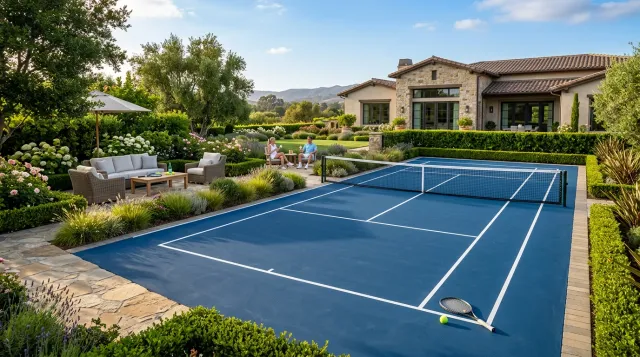
Tennis Court Calculator
Use this calculator to estimate the crushed stone base for a new or resurfaced tennis court. Enter dimensions and depth for volume and tonnage.
Delivery Logistics & Truck Info
Know your delivery options and access requirements before scheduling your order.
Truck Capacities
- Standard Dump Truck10–14 tons
- Tandem Axle14–18 tons
- Semi End Dump20–25 tons
A standard cubic yard weighs approximately 2,000–2,700 lbs depending on material and moisture.
Site Access Requirements
- Trucks require a minimum 12-ft wide, overhead-clear access path
- Soft ground or slopes over 10% may limit truck access — contact us before ordering
- Ensure no underground utilities or irrigation lines are in the drop zone
- Mark your desired drop location clearly before delivery
Important Notes
- Delivery estimates are based on available inventory and route proximity
- Minimum order quantities apply — typically 5 cubic yards or 1 truckload
- Material certification is available upon request for permitted projects
- Always confirm local ordinances before major material placement