
Compost Calculator
— How Much Do You Need?
Quickly calculate compost needed — enter area, depth, and mix to get cubic yards, tons, and bag counts.
How to Use This Compost Calculator
Planning a compost project requires precise measurements to ensure you order enough material without overspending.
- 1 Enter Dimensions — Input the length and width of your area in feet. Round up slightly for a buffer.
- 2 Choose Depth — Select the depth in inches. For most compost projects, 3–6 inches is standard.
- 3 Review Results — Instantly see cubic yards and tons needed to accurately plan your order.
Visual Area Guide
Use these diagrams to measure your project area correctly.
Rectangular Area
Measure length × width for square or rectangular areas. Most driveway, patio, and grading projects use this method.
Circular Area
Measure the radius (half the diameter) for round beds, drain fields, or circular landscaping. Formula: π × radius².
Material Coverage & Grading
Common compost grades per USCC TMECC and STA certification standards for construction and landscaping applications
| Grade | Application |
|---|---|
| Type I | Fine screened compost (0–9.5mm, STA-certified) with high stability (germination index >90%), low contaminants, and a well-balanced C:N ratio of 15:1–20:1. Rapidly integrates into soil matrices, making it ideal for precision seedbed preparation and turf establishment. Best suited for topsoil blending, erosion control blankets, and highway median topdressing. |
| Type II | Medium screened compost (9.5–19mm, STA-certified) with a balanced mix of fine and coarse particles and moderate C:N ratio, offering improved aeration over fine grades. Provides effective drainage amendment and organic matter enrichment for landscape beds and slope stabilization. Commonly applied in landscaping mulch layers, stormwater bioretention cells, and vegetative slope stabilization. |
| Coarse | Coarse unsifted compost (>19mm, mulch-grade) with high organic fiber content, bulky structure, and slower decomposition rate relative to screened grades. Least stable under load but effective for surface organic coverage and moisture retention. Used for rough fill cover, weed suppression, low-traffic park pathways, and landfill cap vegetative layers. |
| STA Fine | USCC Seal of Testing Assurance-certified fine compost passing the #4 sieve (<9.5mm), verified for maturity via seed germination index >80% and physical contaminants <1% by weight. Consistent particle uniformity ensures compatibility with precision blending and spray-applied erosion control systems. Primary uses include erosion control blanket fill, golf course topdressing, and residential seedbed amendment. |
| Biofilter Mix | Engineered compost blend optimized for high permeability (infiltration >1 in/hr) and pollutant sorption, typically blended with coarse wood chips or sand to maintain hydraulic conductivity. Meets DOT stormwater manual specifications for biofiltration and bioretention applications. Applied in stormwater filter strips, rain gardens, bioswales, and permeable pavement base layers. |
| EPA Class A | Biosolid-derived compost meeting EPA 40 CFR Part 503 Class A pathogen reduction standards, often blended with yard waste; common in Midwest markets as a 'biosolid blend.' Verified low heavy metals and pathogen levels make it suitable for use in proximity to food-producing landscapes and public green spaces. Used in landfill caps, roadside revegetation, reclaimed mine site restoration, and public park soil improvement. |
Plan Your Next Project
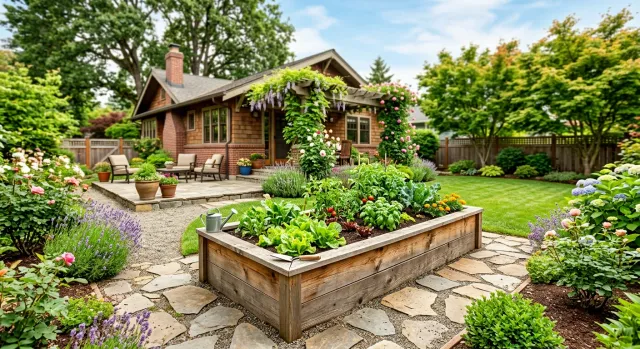
Raised Garden Bed Calculator
Raised bed calculator — estimate how much soil, compost, and amendments to buy for any bed shape. Enter dimensions for results in cubic feet and bags.
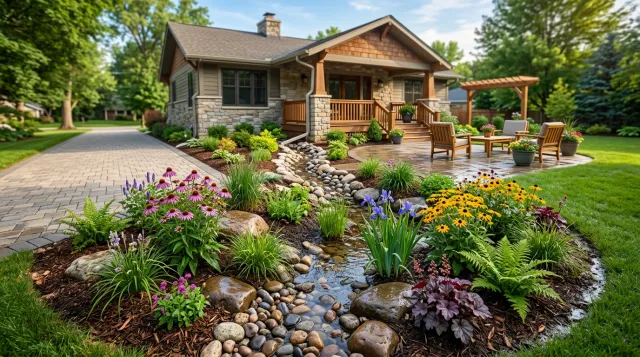
Rain Garden Calculator
Rain garden calculator — estimate the right soil mix volume for your basin. Enter dimensions and depth to calculate cubic yards of sand, topsoil, and compost.
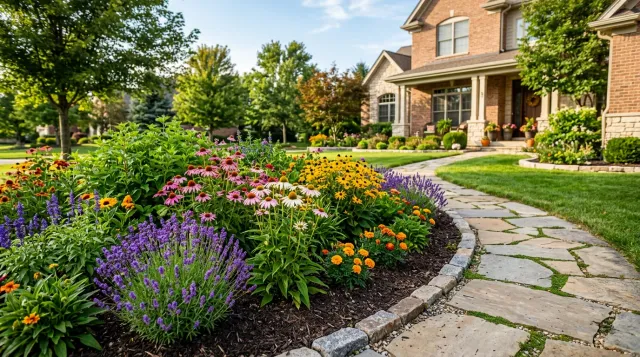
Flower Bed Calculator
Flower bed calculator — estimate how much soil or mulch your bed requires. Enter length, width, and depth for results in cubic feet, yards, and bags.
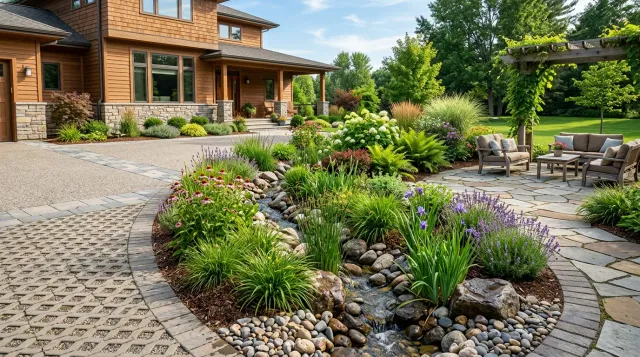
Bioswale Calculator
Bioswale calculator — estimate gravel and soil fill for your drainage project. Enter drainage area, swale dimensions, and depth for material volumes.
Frequently Asked Questions
What is compost, and what is it made of?
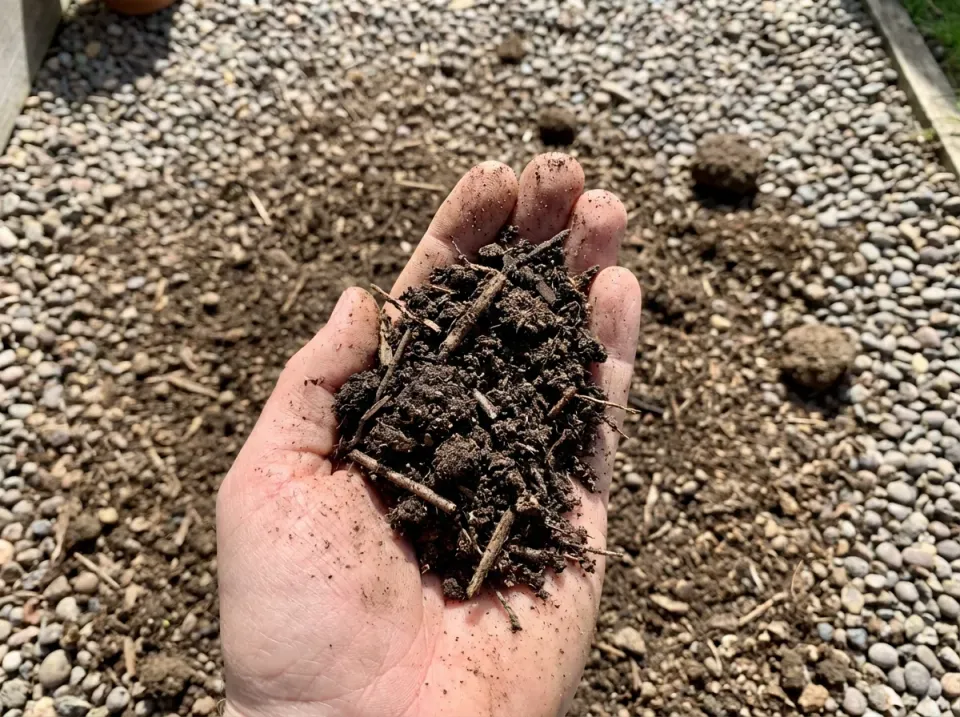
Compost is fully decomposed organic material that forms when plant matter, yard waste, food scraps, and other natural materials break down over time. The result is a dark, crumbly, nutrient-rich substance with a clean, earthy smell that gardeners and farmers have relied on for centuries to build healthier soil. The basic building blocks are carbon-rich "brown" materials like dried leaves, straw, and wood chips, combined with nitrogen-rich "green" materials like grass clippings, vegetable scraps, and manure. When these ingredients are layered together with moisture and oxygen, microbes go to work breaking everything down into a stable, humus-rich product. When you order bulk compost through Hello Gravel, you are getting finished compost that has already completed the full decomposition process. It is ready to spread, mix, or till directly into your soil with no waiting required.
What types of compost are available, and which one is right for my project?
The most common types of bulk compost you will encounter are green waste compost, manure-based compost, and blended compost. Green waste compost is made primarily from yard trimmings, leaves, and grass clippings, and it works well for nearly any landscape application, including lawn topdressing, flower beds, and general soil improvement. Manure-based compost, derived from composted cow, horse, or chicken waste, tends to be richer in nitrogen and is a popular choice for vegetable gardens and areas where you want to give plant growth an extra push. Blended compost combines both sources for a balanced all-purpose amendment. For most residential and commercial landscaping projects, green waste or blended compost is a strong, versatile starting point. If you are specifically building out vegetable gardens or raised planting beds, a manure-based option may give you more of the fertility boost you are looking for. Availability varies by region, so check with the Hello Gravel team or browse the product page for your delivery area to see what is currently stocked near you.
What are the most common uses for bulk compost?
Bulk compost is one of the most versatile materials you can bring to your property, and the list of applications is wide. Lawn topdressing is among the most popular uses. Spreading a thin layer of compost over an existing lawn feeds the soil, encourages deeper root growth, and improves turf density over time, especially on yards that have thinned out or been stressed by heat and drought. For garden beds and vegetable gardens, compost is typically tilled into the existing soil or piled on as a thick top layer before planting. It adds nutrients, improves soil texture, and creates a more hospitable environment for root development. Many gardeners treat it as an annual investment in their growing space. New construction and freshly graded properties benefit from compost as well. When topsoil has been stripped away or heavily compacted, working compost into the ground helps rebuild the organic layer that plants depend on before you seed or sod. Compost is also widely used in raised beds, tree and shrub planting holes, slope seeding projects where you need to establish vegetation quickly, and as a blending material to improve the quality of fill or native soil before laying out a new landscape.
Does compost actually help break up clay soil?
Yes, and it is one of the most effective treatments available for clay. Clay particles are extremely fine and pack tightly together, which makes water drain slowly, soil become compacted, and plant roots struggle to push through. When you work compost into clay, the organic matter physically separates those dense particles and creates pore space for air, water, and roots to move through more freely. For meaningful, lasting improvement, most soil professionals recommend incorporating 2 to 4 inches of compost into the top 6 to 8 inches of clay soil. At those depths, you will typically see noticeably better drainage and a looser, more workable texture within a single growing season. Repeated annual applications build on each other, so the results keep improving year after year. Compost also helps at the opposite extreme. Sandy soils drain too fast and struggle to hold moisture and nutrients long enough for plants to absorb them. In that situation, compost acts more like a sponge, slowing drainage and giving plants a better chance to take up water and minerals before they are gone. Whether your soil is too tight or too loose, bulk compost is one of the most practical ways to move it toward a healthy middle ground.
How much compost do I need, and how much area does a truckload cover?
Coverage depends primarily on how deep you plan to apply the compost. As a general guide, one cubic yard of compost covers roughly 324 square feet at a 1-inch depth, around 162 square feet at 2 inches, and about 108 square feet at 3 inches. If you are doing a deeper soil amendment or filling raised beds at 4 inches, one cubic yard covers approximately 80 square feet. Most lawn topdressing projects call for a light application in the half-inch to 1-inch range. Garden bed amendments typically run 2 to 3 inches. Heavy clay remediation or new lawn establishment over compacted or stripped soil may call for 4 inches or deeper worked into the ground. It is worth knowing that bulk compost is considerably lighter than stone or gravel. Depending on moisture content, it typically weighs somewhere between 400 and 800 pounds per cubic yard. That means a standard truckload carries a significant volume of material without hitting the weight limits you would encounter with denser aggregates. For a precise quantity estimate based on your actual project dimensions and chosen application depth, use the Hello Gravel calculator. It will give you a more reliable number than rough math, and you can adjust the depth to see exactly how the volume changes before you place your order.
Other Material Calculators
Delivery Logistics & Truck Info
Know your delivery options and access requirements before scheduling your order.
Truck Capacities
- Standard Dump Truck 10–14 tons
- Tandem Axle 14–18 tons
- Semi End Dump 20–25 tons
A standard cubic yard weighs approximately 2,000–2,700 lbs depending on material and moisture.
Site Access Requirements
- Trucks require a minimum 12-ft wide, overhead-clear access path
- Soft ground or slopes over 10% may limit truck access — contact us before ordering
- Ensure no underground utilities or irrigation lines are in the drop zone
- Mark your desired drop location clearly before delivery
Important Notes
- Delivery estimates are based on available inventory and route proximity
- Minimum order quantities apply — typically 5 cubic yards or 1 truckload
- Material certification is available upon request for permitted projects
- Always confirm local grading ordinances before major material placement