
Dry Creek Bed Calculator
— How Much Do You Need?
Instantly estimate gravel, river rock, sand, and truckload needs for your dry creek bed project.
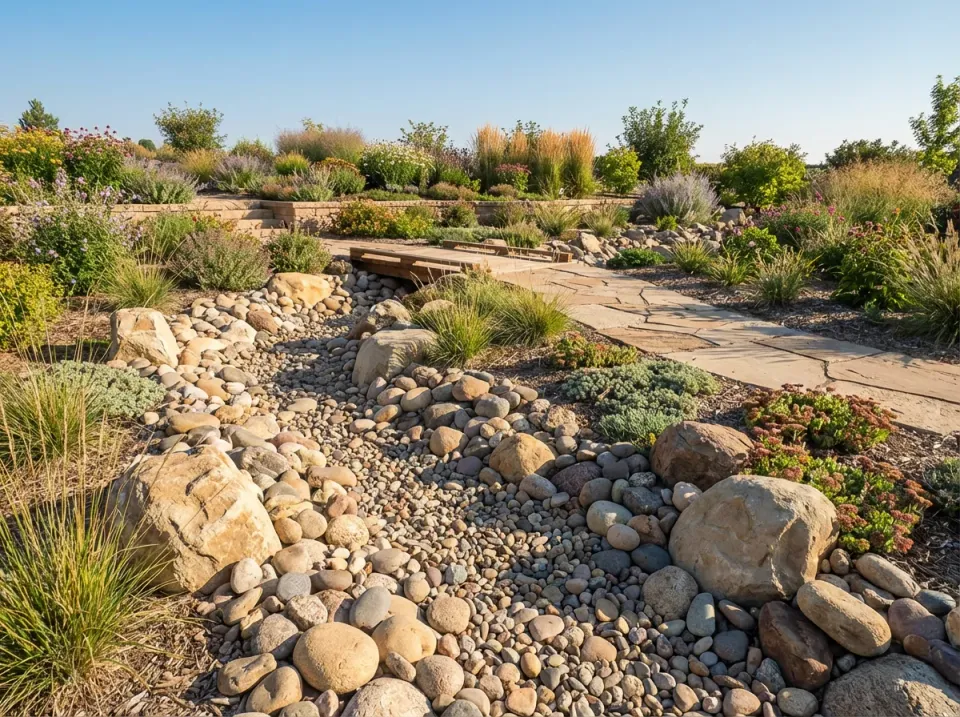
How to Use This Dry Creek Bed Calculator
Planning a dry creek bed requires precise measurements to ensure you order enough material without overspending.
- 1 Measure Area: Measure the length and width of your planned dry creek bed area in feet.
- 2 Determine Depth: For most dry creek bed projects, a depth of 4 to 6 inches is recommended for stability.
- 3 Review Results: The calculator provides both cubic yards (for bulk volume) and tons (for ordering weight).
Common Materials for Dry Creek Beds
Choosing the right stone size and shape directly impacts water flow velocity, erosion resistance, and the natural appearance of a dry creek bed.
| Material | Description | Best For | Est. Cost |
|---|---|---|---|
| River Rock | Smooth, rounded stones typically ranging from 1 to 6 inches in diameter, naturally worn by water erosion. | Main Channel Fill, Edge Lining, Erosion Control, Natural Aesthetics | $$ |
| #57 Crushed Stone | Angular, 3/4-inch crushed limestone or granite fragments with moderate void space for drainage. | Center Fill Layer, High-Flow Drainage, Base Layer | $ |
| Landscape Boulders | Large, irregularly shaped stones typically exceeding 6 inches in diameter, available in granite, fieldstone, or river-worn varieties. | Edge Stabilization, Channel Definition, Accent Placement | $$$ |
| Pea Gravel | Small, smooth, rounded stones typically 3/8 inch in diameter, composed of naturally weathered rock. | Fine Fill Accent, Shallow Channels, Limited Use | $ |
Understanding the Cost
Several factors influence the final price of your dry creek bed project.
Material Volume
The dimensions of your project directly dictate the tonnage needed. Deeper bases require significantly more material.
Delivery Distance
Transport logistics play a major role. Being closer to the quarry or depot reduces delivery fees significantly.
Material Type
Decorative stones cost more than utility grades. Choose based on your project's functional and aesthetic requirements.
Recommended Products for Your Dry Creek Bed
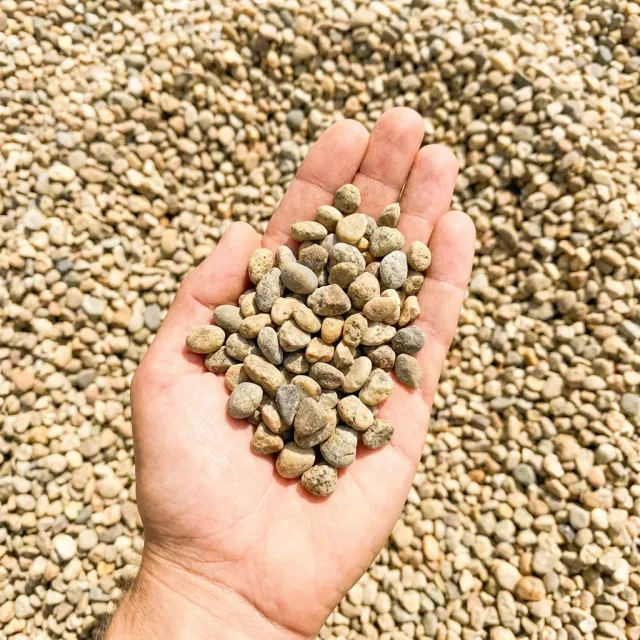
Pea Gravel Calculator
Pea gravel calculator — enter your project dimensions to estimate volume in cubic yards, tons, and bags. Ideal for pathways, patios, and ground cover.
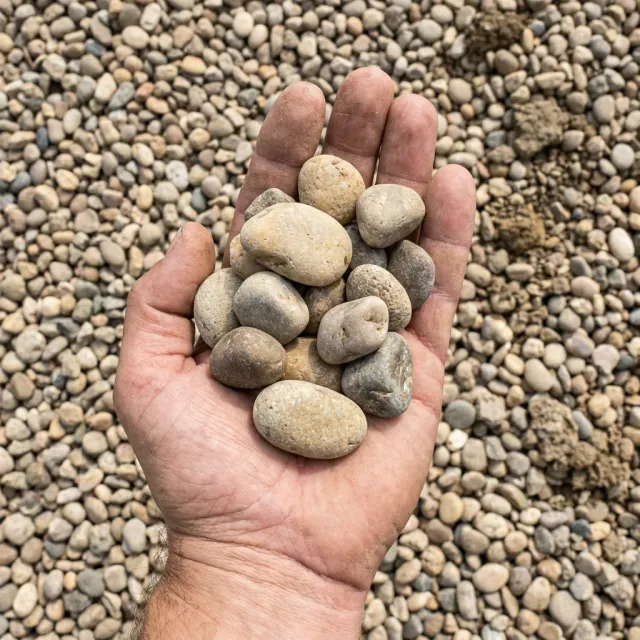
River Rock Calculator
This calculator estimates river rock by the ton for flowerbeds, dry creek beds, and borders. Adjusts for rock size — larger stones cover less per ton.
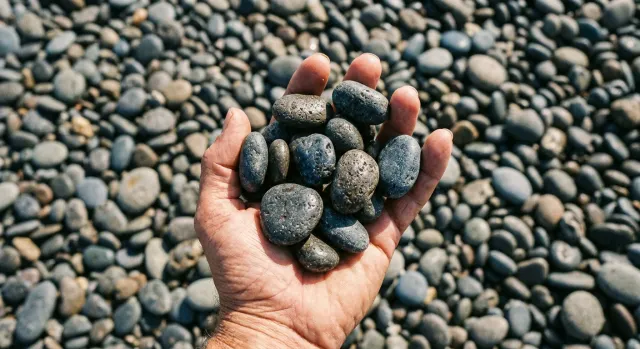
Mexican Beach Pebbles Calculator
Coverage varies with pebble size. This calculator estimates accurate tonnage from your area and depth for pools, water features, and accent landscaping.
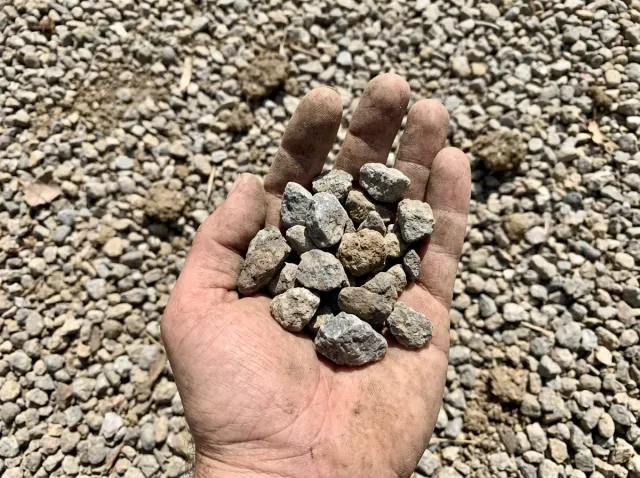
Drainage Rock Calculator
This calculator estimates drainage gravel for French drains, yard drainage, and erosion control. Factors in the 4-6 inch depth most systems need.
Frequently Asked Questions
What is a dry creek bed and what can it do for my yard?
A dry creek bed is a landscaping channel built to look like a natural stream, using river rock, cobble, or other decorative stones to line a shallow trench through your yard. When it rains, the channel carries surface water safely away from your home, garden beds, or low spots in the yard. When the weather is dry, it looks like a natural stream feature and adds real visual interest to your outdoor space. That dual purpose is what makes dry creek beds so popular with homeowners. You get a practical drainage solution that also improves how your yard looks. They work especially well along slopes, near downspouts, in swales, and in areas where water tends to pool after a heavy rain. Because they use rock instead of pipe or concrete, they blend naturally into the landscape and require almost no mechanical maintenance over time. If you have been dealing with soggy patches, erosion along a slope, or runoff that keeps pooling near your foundation, a dry creek bed is worth a serious look.
What type of rock works best for a dry creek bed?
The most popular choice for a dry creek bed is river rock. River rock is smooth and rounded from years of natural water movement, which gives your finished channel a realistic, natural appearance. It comes in a range of sizes. Smaller 1 to 2 inch rock works well for detail areas and transitional zones along the sides, while 2 to 4 inch or 4 to 8 inch river rock is ideal for the main channel where water actually flows. Using a mix of sizes adds visual depth and makes the feature look like something nature put there rather than something poured out of a truck. Cobble is another solid option, especially for wider channels or areas that handle heavier water flow. Cobble stones sit firmly in place and hold up well when water moves through quickly after a hard rain. For the areas surrounding the creek bed where it transitions into your lawn or garden, a finer decorative gravel can help create a gradual, natural-looking edge. When you are choosing your rock, think about how much water your channel needs to handle, how the material will look against your existing landscaping, and how large your project area is. If you want a hand sorting through the options, the Hello Gravel team can help you figure out which material fits your project best.
How much rock do I need for a dry creek bed?
The amount of rock you need depends on the length, width, and depth of your channel. A good starting point is to calculate the square footage of your creek bed by multiplying the length by the average width, then factor in how deep you plan to fill it with rock. Here is a practical example to give you a sense of scale. A dry creek bed that is 50 feet long and 3 feet wide, filled with river rock at a 4-inch depth, covers roughly 150 square feet. At that depth, you would typically need approximately 2.5 to 3 tons of material, depending on the size of the rock. Larger stones leave more air gaps, which can reduce the weight needed per square foot. Smaller, tighter-packing rock will require more tonnage for the same area. If your project runs 100 feet long and 4 feet wide at the same 4-inch depth, you are looking at closer to 3 to 4 tons. A wider or deeper channel adds up quickly, so it pays to measure carefully before you order. These are working estimates. Your exact channel dimensions, the size of rock you choose, and how tightly the stones settle into place will all affect your final number. The Hello Gravel calculator is the fastest way to get a precise estimate for your specific project. Plug in your dimensions and it will give you a reliable truckload quantity to order with confidence.
How deep and wide should my dry creek bed be?
For most residential dry creek beds, a width of 2 to 4 feet works well for decorative channels that handle moderate runoff from downspouts or garden drainage. If you are managing heavier flow, such as runoff from a large roof area or a slope that drains a wide section of yard, going 4 to 6 feet wide gives water more room to move without eroding the channel edges. The trench itself is typically excavated 6 to 12 inches deep. The rock layer inside that trench usually sits 3 to 6 inches thick, which allows water to flow through and around the stones while keeping them from shifting too easily. A deeper rock layer at 6 inches will feel more substantial, hold its shape better over multiple seasons, and look more finished. It does mean ordering more material, but the result is worth it for a channel that sees regular water flow. One thing to keep in mind as you plan: the channel needs a consistent downward slope from start to finish so water actually moves through it rather than pooling inside it. Even a gentle grade works well. If your yard is relatively flat, you may need to do some minor grading work before you lay the rock. Getting the slope right before you order your materials will save you a lot of rework later.
Is a dry creek bed the right drainage solution for my yard, or should I consider something else?
A dry creek bed works best when you need to move surface water across an open, visible area of your yard. If water pools after rain, flows across a patio, runs along your foundation, or streams down a slope, a dry creek bed can redirect that flow in a way that is both functional and good looking. It is a surface drainage solution, which means water flows along the top of the rock and travels toward a lower point or outlet somewhere on your property. A French drain works differently. It uses perforated pipe buried underground to collect and carry away water that is saturating the soil or coming up from below grade. A French drain is the better choice when the problem is in the ground itself rather than on the surface, or when you want the drainage system to be completely hidden. The two approaches are not mutually exclusive. Some homeowners install a dry creek bed to collect surface runoff and channel it toward a French drain that carries it away underground. Combining both gives you a complete above-and-below-ground drainage system. If your situation involves significant water intrusion near a foundation, standing water that persists for days after rain stops, or a low spot that feels consistently saturated, it is worth talking to a drainage contractor before you order materials. For typical surface runoff moving across the yard or down a slope, a well-designed dry creek bed with the right rock is a durable and low-maintenance solution that most homeowners can install themselves.
More Project Calculators
Playground Calculator
This calculator estimates mulch, rubber, or wood fiber surfacing for playgrounds. Enter area and recommended depth to get cubic yards and tons.
Chicken Coop Calculator
Use this calculator to estimate how much gravel your coop base requires. Input dimensions and depth for volume in cubic yards and stone type guidance.
Basketball Court Calculator
Court base calculator — estimate gravel, sand, and sub-base quantities for backyard or regulation basketball courts. Input court size for material totals.
Tennis Court Calculator
Use this calculator to estimate the crushed stone base for a new or resurfaced tennis court. Enter dimensions and depth for volume and tonnage.
Delivery Logistics & Truck Info
Know your delivery options and access requirements before scheduling your order.
Truck Capacities
- Standard Dump Truck10–14 tons
- Tandem Axle14–18 tons
- Semi End Dump20–25 tons
A standard cubic yard weighs approximately 2,000–2,700 lbs depending on material and moisture.
Site Access Requirements
- Trucks require a minimum 12-ft wide, overhead-clear access path
- Soft ground or slopes over 10% may limit truck access — contact us before ordering
- Ensure no underground utilities or irrigation lines are in the drop zone
- Mark your desired drop location clearly before delivery
Important Notes
- Delivery estimates are based on available inventory and route proximity
- Minimum order quantities apply — typically 5 cubic yards or 1 truckload
- Material certification is available upon request for permitted projects
- Always confirm local ordinances before major material placement