
Paver Patio Cost Calculator
— How Much Do You Need?
Calculate paver patio materials and truckload delivery — sand, base, gravel, and edging quantities fast.
How to Use This Paver Patio Calculator
Planning a paver patio requires precise measurements to ensure you order enough material without overspending.
- 1 Measure Area: Measure the length and width of your planned paver patio area in feet.
- 2 Determine Depth: For most paver patio projects, a depth of 4 to 6 inches is recommended for stability.
- 3 Review Results: The calculator provides both cubic yards (for bulk volume) and tons (for ordering weight).
Common Materials for Paver Patios
Selecting the correct base aggregate and bedding sand is critical for paver patio longevity, as improper material choice leads to settlement, poor drainage, and surface lippage.
| Material | Description | Best For | Est. Cost |
|---|---|---|---|
| Crusher Run (QP) | A dense-graded blend of crushed stone and stone dust (typically 3/4-inch minus) that compacts into a firm, interlocked mass. | Base Layer, Compaction, Load-Bearing Support | $ |
| #57 Crushed Stone | Clean, uniformly-graded angular crushed stone with particles approximately 3/4-inch in diameter and no fines. | Base Layer, Sub-Base Drainage, High-Drainage Soils | $$ |
| Bedding Sand (Masonry Sand) | Fine, washed, sharp-grained sand meeting ASTM C144 specifications used as a thin screeding layer. | Paver Bedding, Screeding, Surface Leveling | $ |
| Polymeric Sand | A manufactured blend of fine sand and polymer binders that hardens when activated with water to lock paver joints. | Joint Filling, Weed Suppression, Ant & Erosion Resistance | $$$ |
Understanding the Cost
Several factors influence the final price of your paver patio project.
Material Volume
The dimensions of your project directly dictate the tonnage needed. Deeper bases require significantly more material.
Delivery Distance
Transport logistics play a major role. Being closer to the quarry or depot reduces delivery fees significantly.
Material Type
Decorative stones cost more than utility grades. Choose based on your project's functional and aesthetic requirements.
Recommended Products for Your Paver Patio
Crushed Stone Calculator
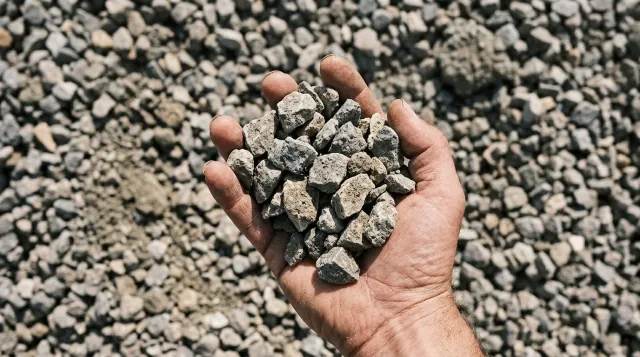
This calculator estimates crushed stone quantity and weight. Enter dimensions for results in cubic feet, cubic yards, and tons with density factored in.
Road Base Calculator
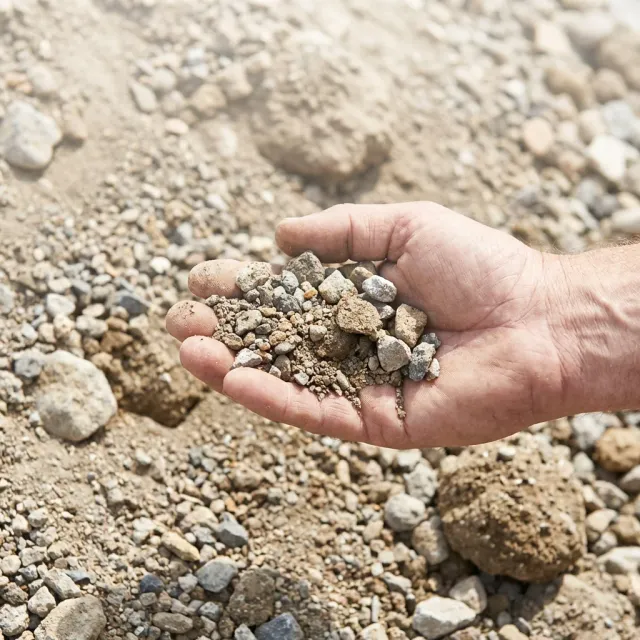
Road base calculator — enter length, width, and depth to estimate volume and tonnage for crushed limestone, recycled concrete, and aggregate base.
Concrete Sand Calculator
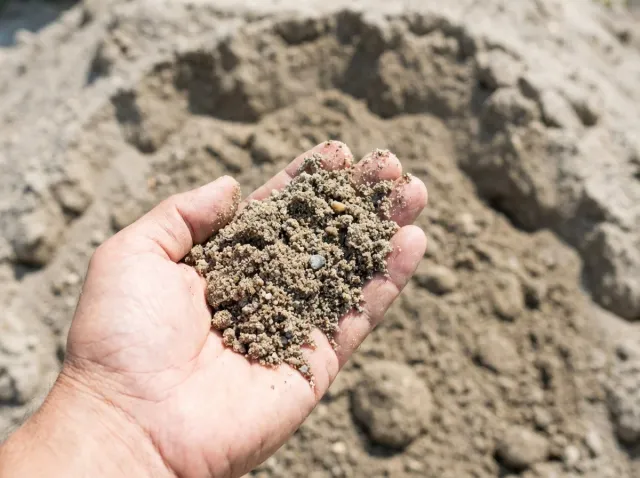
Concrete sand calculator — estimate volume and weight based on your project's length, width, and depth. Results in cubic yards and tons, ready for ordering.
Washed Sand Calculator
This calculator estimates how much washed sand your project needs in cubic yards or tons. Accounts for material density so your estimate is accurate.
Frequently Asked Questions
What is a paver patio?
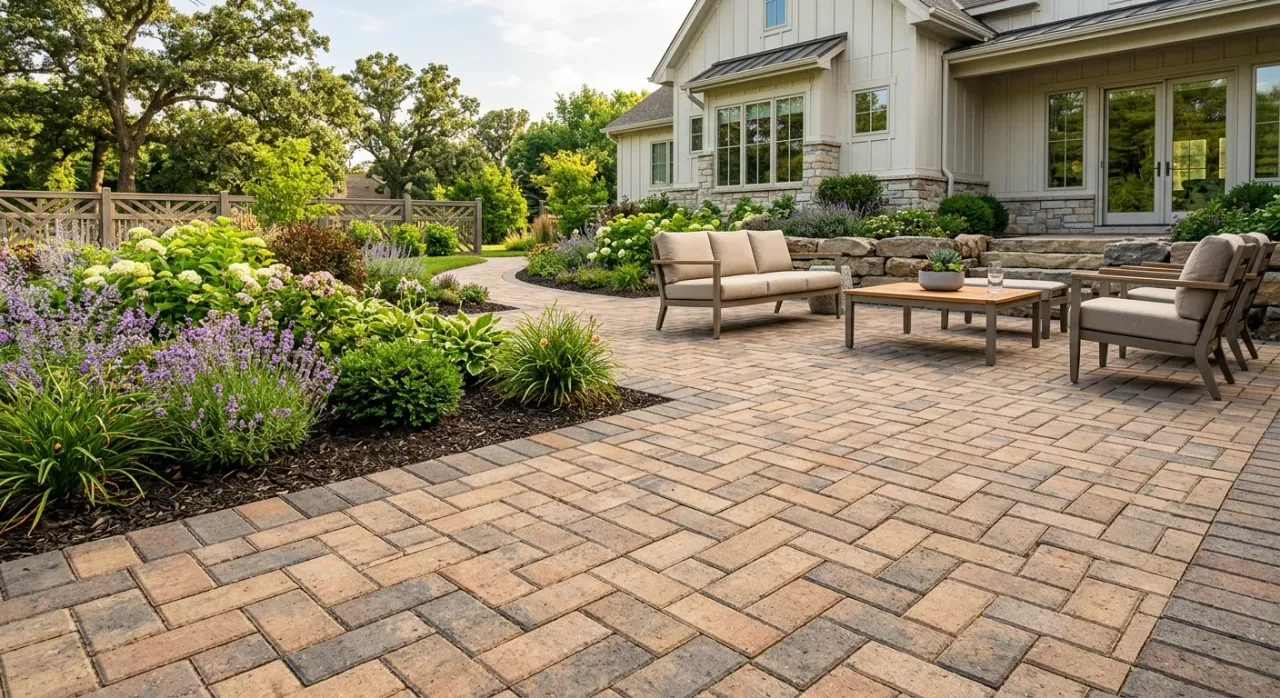
A paver patio is an outdoor living surface built from individual paving units laid over a prepared aggregate base. The pavers themselves can be made from concrete, natural stone, brick, or porcelain, and they come in a wide range of shapes, sizes, and colors. What makes a paver patio different from a poured concrete slab is that it is modular. Each piece is independent, so if one shifts, settles, or cracks over time, you can lift and replace just that one piece without tearing out the whole surface. The foundation beneath the pavers is just as important as the surface you see. A properly built paver patio rests on a compacted layer of crushed stone or gravel base, topped with a thin layer of coarse bedding sand. That layered system is what keeps the surface stable, level, and well-drained over the long term. Hello Gravel supplies the bulk aggregate materials, the gravel base and the sand, that make that foundation possible.
What base materials does a paver patio need?
A paver patio depends on two layers of aggregate to function correctly. The first is a compacted gravel base, usually crushed stone or a dense-graded crusher run, that sits beneath everything and gives the surface its structural strength and drainage. Without a solid base, pavers will shift, sink, and become uneven no matter how carefully they are laid on top. The second layer is a bed of coarse sand, typically about one inch thick, that sits directly below the pavers. This sand layer lets you fine-tune the level of each paver during installation and cushions them slightly as they settle. Together, these two layers form the working foundation of any paver patio that holds up over time. Hello Gravel delivers both the crushed stone base material and the bedding sand by the truckload, so you can get everything you need for the foundation through one order.
How deep should the gravel base be for a paver patio?
For a standard residential paver patio that will see foot traffic, a compacted gravel base of four to six inches is the most common recommendation. Four inches is generally adequate for a well-drained site with firm native soil. If your yard has soft, clay-heavy, or poorly draining soil, six inches gives you more stability and better long-term results. If you are building in a colder climate where the ground freezes and thaws repeatedly through the winter, going to six inches or slightly deeper helps reduce frost heaving, which is the phenomenon where ground movement pushes pavers out of alignment over time. On top of the compacted gravel base, plan for about one inch of coarse bedding sand. That brings your total excavation depth to roughly five to seven inches before the pavers go in, depending on which base depth you choose. When you use the Hello Gravel calculator, enter your patio dimensions and your target base depth to get an accurate material estimate for your specific project.
How much gravel and sand do I need for a 20x20 paver patio?
A 20x20 paver patio covers 400 square feet, and here is a practical way to think about the quantities at common base depths. At a four-inch compacted gravel base depth, a 400 square foot patio requires roughly six to eight tons of crushed stone. At a six-inch depth, that estimate climbs to around nine to twelve tons. These are real-world working figures that account for compaction, which reduces the loose volume of the material as it is packed down into place. For the bedding sand layer at one inch deep across 400 square feet, plan on approximately two tons of coarse sand. Keep in mind that these figures are starting points. The exact amount you need depends on your soil conditions, how much excavation you do, and how well the material compacts in your specific situation. For a precise number tailored to your own dimensions, use the Hello Gravel online calculator. It takes the guesswork out of ordering so you get what you need without running short or over-ordering.
What type of gravel works best as a paver patio base?
The two most widely used options for a paver patio base are crusher run and clean crushed stone, and both have real strengths depending on your situation. Crusher run, sometimes called road base or dense-graded aggregate, is a mix of crushed stone pieces and fine stone dust. Because of those fines, it binds tightly when compacted and creates a very firm, locked-in surface. Many professional paver installers prefer it for the base layer because it is so stable and resistant to shifting. Clean crushed stone, such as 3/4 inch crushed stone, is another strong option. It drains extremely well because water passes freely through the angular gaps between the pieces. Some builders favor it in areas where drainage is a primary concern or where a more permeable base system is desired. Either material can work well for a residential paver patio. If you are not sure which one suits your soil type, drainage situation, or local climate, reach out to the Hello Gravel team before you order. Describing your project takes only a few minutes, and the team can help you choose the right material with confidence.
More Project Calculators
Playground Calculator
This calculator estimates mulch, rubber, or wood fiber surfacing for playgrounds. Enter area and recommended depth to get cubic yards and tons.
Chicken Coop Calculator
Use this calculator to estimate how much gravel your coop base requires. Input dimensions and depth for volume in cubic yards and stone type guidance.
Basketball Court Calculator
Court base calculator — estimate gravel, sand, and sub-base quantities for backyard or regulation basketball courts. Input court size for material totals.
Tennis Court Calculator
Use this calculator to estimate the crushed stone base for a new or resurfaced tennis court. Enter dimensions and depth for volume and tonnage.
Delivery Logistics & Truck Info
Know your delivery options and access requirements before scheduling your order.
Truck Capacities
- Standard Dump Truck10–14 tons
- Tandem Axle14–18 tons
- Semi End Dump20–25 tons
A standard cubic yard weighs approximately 2,000–2,700 lbs depending on material and moisture.
Site Access Requirements
- Trucks require a minimum 12-ft wide, overhead-clear access path
- Soft ground or slopes over 10% may limit truck access — contact us before ordering
- Ensure no underground utilities or irrigation lines are in the drop zone
- Mark your desired drop location clearly before delivery
Important Notes
- Delivery estimates are based on available inventory and route proximity
- Minimum order quantities apply — typically 5 cubic yards or 1 truckload
- Material certification is available upon request for permitted projects
- Always confirm local ordinances before major material placement