
Stone Walkway Calculator
— How Much Do You Need?
Quickly calculate stone, base, and edging for your walkway — truckload delivery with clear pricing.
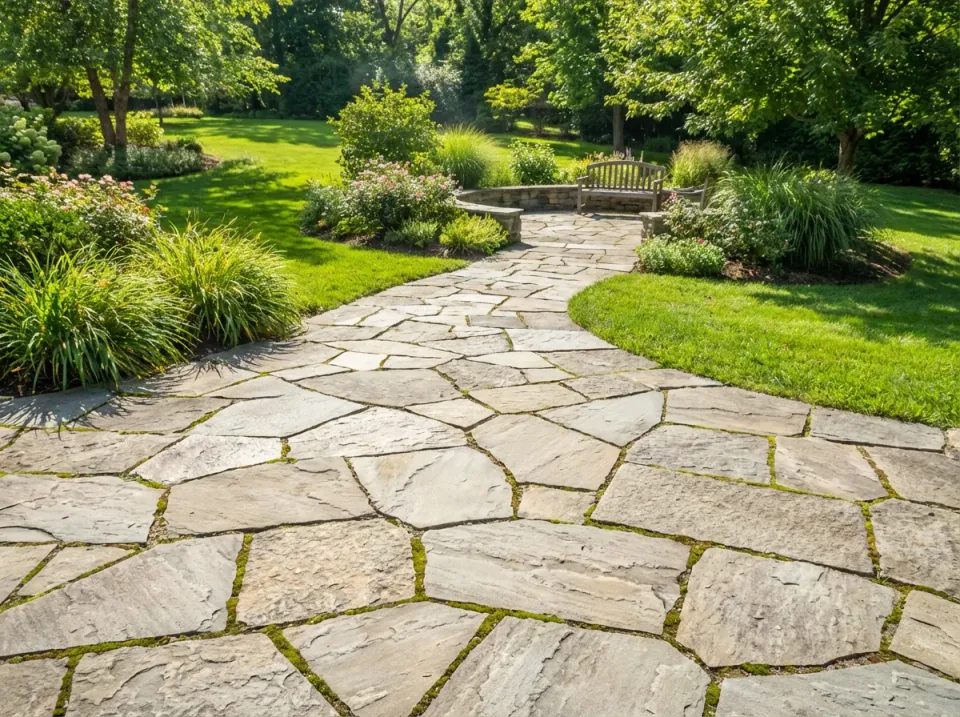
How to Use This Stone Walkway Calculator
Planning a stone walkway requires precise measurements to ensure you order enough material without overspending.
- 1 Measure Area: Measure the length and width of your planned stone walkway area in feet.
- 2 Determine Depth: For most stone walkway projects, a depth of 4 to 6 inches is recommended for stability.
- 3 Review Results: The calculator provides both cubic yards (for bulk volume) and tons (for ordering weight).
Common Materials for Stone Walkways
Choosing the right base and bedding materials ensures proper drainage, compaction, and long-term stability for a stone walkway.
| Material | Description | Best For | Est. Cost |
|---|---|---|---|
| #57 Crushed Stone | Angular, 3/4-inch crushed limestone or granite fragments that compact firmly while allowing drainage. | Sub-base Layer, Drainage, Structural Support, All Walkway Types | $ |
| Fill Sand | Coarse, washed sand with minimal fines, typically 0–3/8-inch particle size, used as a screeding medium. | Bedding Layer, Flexible Stone Setting, Joint Filling | $ |
| Decomposed Granite (DG) | Naturally weathered granite broken down to 1/4-inch minus particles that compact into a firm, stable surface. | Bedding Layer, Joint Filling, Informal Walkways | $$ |
| Crusher Run (QP) | A blend of crushed stone and stone dust ranging from 3/4-inch down to fines that binds tightly under compaction. | Sub-base Layer, Soft Subgrade Stabilization, High-Stability Paths | $ |
Understanding the Cost
Several factors influence the final price of your stone walkway project.
Material Volume
The dimensions of your project directly dictate the tonnage needed. Deeper bases require significantly more material.
Delivery Distance
Transport logistics play a major role. Being closer to the quarry or depot reduces delivery fees significantly.
Material Type
Decorative stones cost more than utility grades. Choose based on your project's functional and aesthetic requirements.
Recommended Products for Your Stone Walkway
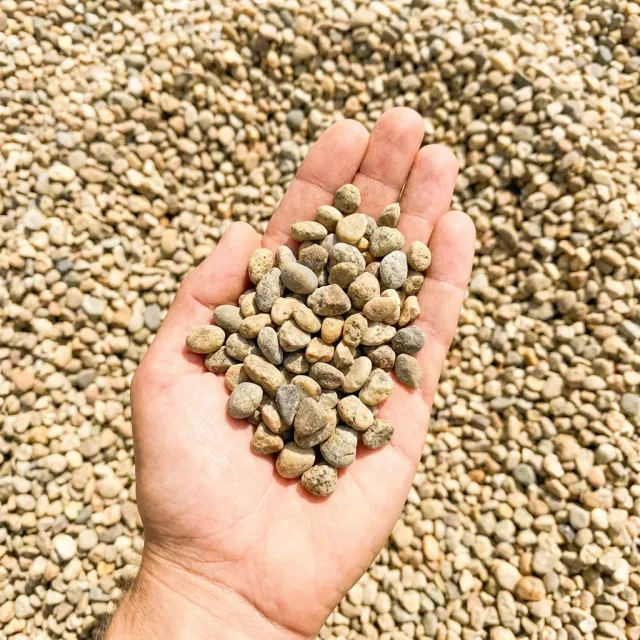
Pea Gravel Calculator
Pea gravel calculator — enter your project dimensions to estimate volume in cubic yards, tons, and bags. Ideal for pathways, patios, and ground cover.
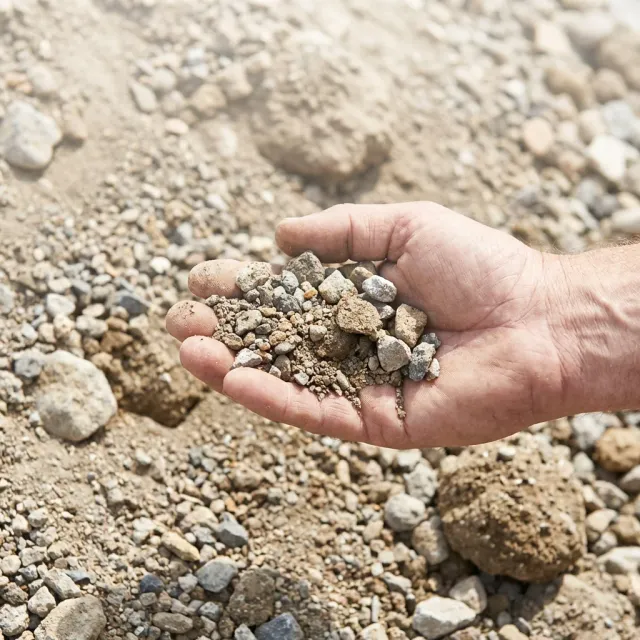
Road Base Calculator
Road base calculator — enter length, width, and depth to estimate volume and tonnage for crushed limestone, recycled concrete, and aggregate base.
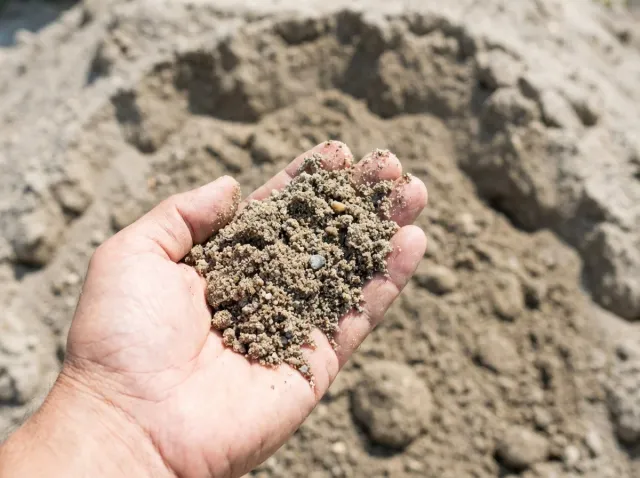
Concrete Sand Calculator
Concrete sand calculator — estimate volume and weight based on your project's length, width, and depth. Results in cubic yards and tons, ready for ordering.
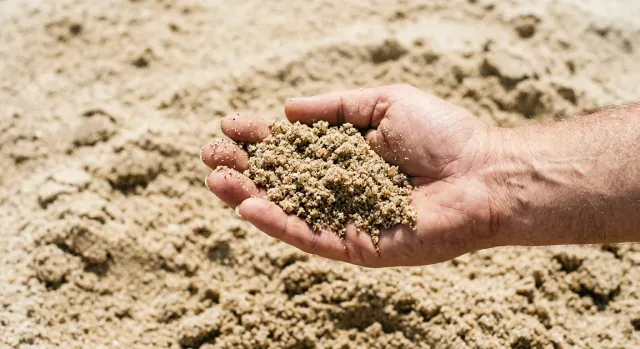
Washed Sand Calculator
This calculator estimates how much washed sand your project needs in cubic yards or tons. Accounts for material density so your estimate is accurate.
Frequently Asked Questions
What aggregate materials does Hello Gravel supply for a stone walkway project?
Hello Gravel supplies the bulk aggregate materials that form the foundation and surface of a stone walkway. That includes crusher run, road base, crushed stone, pea gravel, decomposed granite, sand, and fill dirt — delivered by the truckload directly to your property. Most walkway projects use at least two types of material. A compacted base layer of crusher run or road base goes down first to create a stable, level surface. Then a surface layer of crushed stone, pea gravel, or decomposed granite goes on top to create the finished look and feel of the path. It is worth knowing that Hello Gravel does not supply flagstone slabs, concrete pavers, or poured concrete. Those are finished hardscape products handled by separate trades. What Hello Gravel does supply is everything that needs to go underneath or around those surfaces, as well as the bulk aggregate materials for fully gravel-style walkways. If you are not sure which material is right for your specific project, the Hello Gravel team is happy to help you figure it out.
What type of gravel or crushed stone works best as a walkway surface?
The right surface material depends on your priorities — comfort underfoot, stability, drainage, or aesthetics — and each option has real strengths. Pea gravel is one of the most popular choices for walkway surfaces. The small, rounded stones are smooth and comfortable to walk on, drain well, and give a clean, natural look. The downside is that rounded stones do not lock together, so they can shift and scatter over time, especially on sloped paths. Crushed stone with angular edges behaves very differently. Because the jagged surfaces interlock when compressed, angular crushed stone stays in place much better than pea gravel. It also compacts firmly underfoot, making it a great choice for high-traffic paths or areas where you want a more stable surface. Decomposed granite is another strong option. It compacts almost like a solid surface, drains well, and has a natural, earthy appearance that works well in garden and landscape settings. It can get tracked into the house more easily than larger gravel, so it is worth considering if the walkway leads directly to a door. If you are prioritizing low maintenance and long-term stability, angular crushed stone or a well-compacted decomposed granite path is usually the better bet. If the look and feel of the path is the priority and you do not mind occasional top-dressing, pea gravel is a great choice. Use the Hello Gravel calculator or reach out to the team to get a recommendation based on your specific project.
What should you put under a stone walkway, and do you really need a base layer?
Yes, a proper base layer makes a significant difference, and skipping it is one of the most common mistakes people make when building a walkway. Without a stable base, surface stones shift, sink, and become uneven over time. Weeds push through more easily, drainage becomes a problem, and the entire path can start to look rough within a season or two. A well-built base prevents all of that. The standard approach is to excavate the path area to a depth of about 6 to 8 inches. From there, you lay down 4 inches of compacted crusher run or road base as the structural foundation. Crusher run is ideal for this because it contains a blend of crushed stone and stone dust that packs tightly together and resists shifting. On top of that compacted base, you add 2 to 3 inches of your chosen surface material, whether that is pea gravel, crushed stone, or decomposed granite. If you are setting flagstone or pavers on top of a gravel path rather than using loose stone, a layer of coarse sand or stone dust between the compacted base and the surface material is common practice. That layer helps you level individual stones as you place them. Hello Gravel supplies crusher run, road base, sand, and surface stone — all the materials that belong in those layers. Whether you are building a simple garden path or a wider front-entry walkway, the Hello Gravel calculator can help you estimate how much of each material you will need.
How much material will I need for my stone walkway project?
The amount of material you need depends on three things: the length of your walkway, its width, and how deep each layer will be. It is not complicated to estimate, but depth matters more than most people expect. Here is a practical example to give you a starting point. Say your walkway is 3 feet wide and 30 feet long — that is 90 square feet of surface area. At a 4-inch compacted depth for the base layer, you would need roughly 1 to 1.5 tons of crusher run for that base. At a 2-inch depth for the surface layer, you would need approximately 0.5 to 0.75 tons of your chosen surface stone. That is a relatively small project, but it still illustrates that even a modest walkway adds up in material weight quickly. For a longer or wider path — say, a 4-foot-wide, 50-foot front walkway at the same depths — you are looking at roughly 2 to 3 tons total across both layers. These are estimates based on typical material densities, and real-world results vary depending on your specific materials, soil conditions, and how tightly you compact everything. The best way to get a precise number for your project is to use the Hello Gravel online calculator, which lets you enter your exact dimensions and desired depth to get a material estimate you can actually order from. If your project has unusual dimensions or involves multiple material types, the Hello Gravel team can help you sort it out before you place your order.
Is a gravel or crushed stone walkway cheaper than pavers or poured concrete?
In most cases, yes — a gravel or crushed stone walkway is one of the most affordable walkway options available. The cost difference compared to pavers or poured concrete can be substantial. Poured concrete requires forming, reinforcement, a finishing crew, and curing time. Flagstone and concrete pavers require a significant material cost per square foot on top of the labor needed to set each piece individually. Both approaches tend to involve skilled tradespeople and more equipment. A gravel walkway, by contrast, mainly requires excavation, a compacted base layer, and a surface stone. All of those materials are straightforward bulk aggregates that you can order from Hello Gravel and have delivered to your property. The installation process is also DIY-friendly, which keeps labor costs low if you are willing to put in the work yourself. It is worth noting that Hello Gravel does not supply pavers, flagstone slabs, or poured concrete. Those materials are handled by separate suppliers and contractors. What Hello Gravel supplies is the base and surface aggregate that makes a gravel walkway possible at a fraction of the cost. For a current price on the materials you need, use the Hello Gravel calculator or reach out to the team directly. Pricing varies based on your location, the specific materials, and the quantity you need, so a quick check will give you the most accurate picture.
More Project Calculators
Playground Calculator
This calculator estimates mulch, rubber, or wood fiber surfacing for playgrounds. Enter area and recommended depth to get cubic yards and tons.
Chicken Coop Calculator
Use this calculator to estimate how much gravel your coop base requires. Input dimensions and depth for volume in cubic yards and stone type guidance.
Basketball Court Calculator
Court base calculator — estimate gravel, sand, and sub-base quantities for backyard or regulation basketball courts. Input court size for material totals.
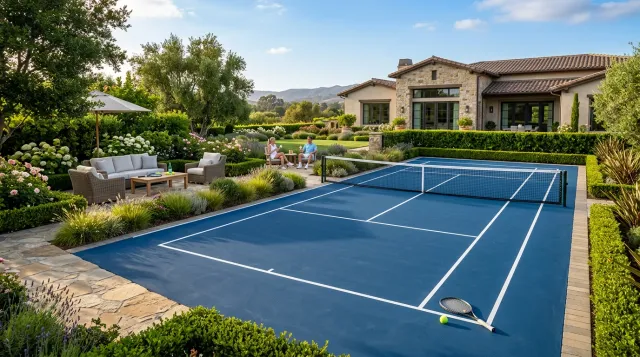
Tennis Court Calculator
Use this calculator to estimate the crushed stone base for a new or resurfaced tennis court. Enter dimensions and depth for volume and tonnage.
Delivery Logistics & Truck Info
Know your delivery options and access requirements before scheduling your order.
Truck Capacities
- Standard Dump Truck10–14 tons
- Tandem Axle14–18 tons
- Semi End Dump20–25 tons
A standard cubic yard weighs approximately 2,000–2,700 lbs depending on material and moisture.
Site Access Requirements
- Trucks require a minimum 12-ft wide, overhead-clear access path
- Soft ground or slopes over 10% may limit truck access — contact us before ordering
- Ensure no underground utilities or irrigation lines are in the drop zone
- Mark your desired drop location clearly before delivery
Important Notes
- Delivery estimates are based on available inventory and route proximity
- Minimum order quantities apply — typically 5 cubic yards or 1 truckload
- Material certification is available upon request for permitted projects
- Always confirm local ordinances before major material placement