
Mulch Calculator
— How Much Do You Need?
Calculate mulch quantities by area and depth for precise coverage estimates on beds, trees, and borders.
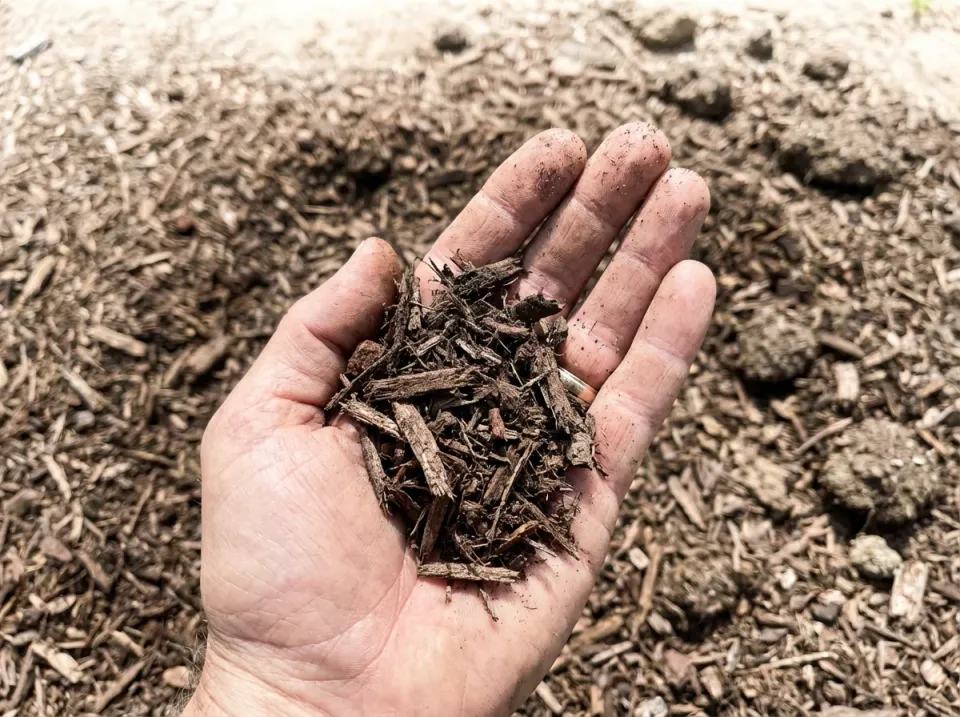
How to Use This Mulch Calculator
Planning a mulch project requires precise measurements to ensure you order enough material without overspending.
- 1 Enter Dimensions — Input the length and width of your area in feet. Round up slightly for a buffer.
- 2 Choose Depth — Select the depth in inches. For most mulch projects, 3–6 inches is standard.
- 3 Review Results — Instantly see cubic yards and tons needed to accurately plan your order.
Visual Area Guide
Use these diagrams to measure your project area correctly.
Rectangular Area
Measure length × width for square or rectangular areas. Most driveway, patio, and grading projects use this method.
Circular Area
Measure the radius (half the diameter) for round beds, drain fields, or circular landscaping. Formula: π × radius².
Material Coverage & Grading
Common mulch grades classified by application duration and use case per industry and ASTM standards
| Grade | Application |
|---|---|
| Long-Term | Highest-performance erosion control mulch designed for 12+ month stabilization or until permanent vegetation is fully established. Composed of 90% minimum organic matter (wood cellulose fiber, excelsior, or similar) with a minimum water holding capacity of 420% per ASTM D7367. Requires independent third-party test documentation and strict contaminant limits. Best suited for highway embankments, critical slopes, and permanent site stabilization. |
| Moderate-Term | Intermediate-duration erosion control mulch rated for 3–12 month performance, covering the initial vegetation establishment period. Maintains 400% minimum water holding capacity and 90% minimum organic matter content. Widely specified in DOT and NRCS applications for standard grading, land development, and temporary slope protection. Must meet documented ASTM D7367 test results. |
| Short-Term | Temporary erosion control mulch for applications requiring less than 3 months of surface protection during active construction phases. Minimum water holding capacity of 200% per ASTM D7367 with reduced documentation requirements relative to longer-term grades. Suitable for rapid deployment on disturbed soils where final stabilization or construction completion is imminent. |
| EWF | Engineered Wood Fiber (EWF) is a playground-specific safety surface material providing certified impact attenuation under and around play equipment. Classified by critical fall height performance per ASTM F1292 rather than duration or erosion metrics. Must meet strict tramp metal and hazardous metal content limits per ASTM F2075, and maintain drainability and firmness for wheelchair accessibility per ASTM F1951. |
Plan Your Next Project
Tree Ring Calculator
Tree ring calculator — estimate mulch for circular rings in seconds. Enter inner and outer diameters plus depth for cubic yards without over-ordering.
Flower Bed Calculator
Flower bed calculator — estimate how much soil or mulch your bed requires. Enter length, width, and depth for results in cubic feet, yards, and bags.
Garden Border Calculator
Garden border calculator — estimate how much edging material and fill your border requires. Enter perimeter length and border width for volume estimates.
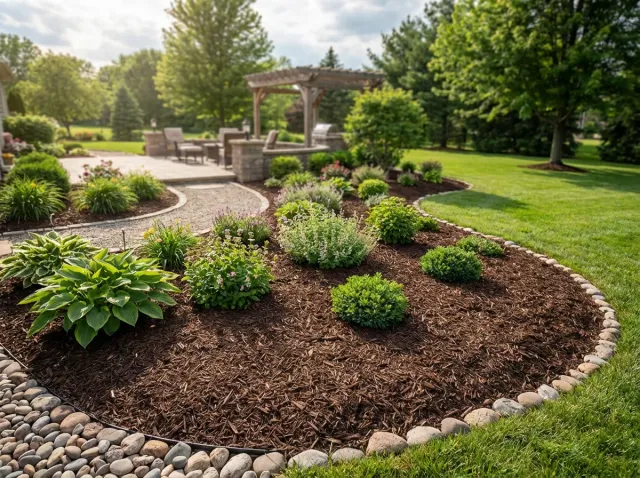
Mulch Bed Calculator
Mulch bed calculator — enter dimensions and depth to estimate how many cubic yards or bags you need. Covers wood mulch, rubber mulch, and stone cover.
Frequently Asked Questions
What is mulch and what are the main benefits of using it?
Mulch is a layer of material spread over soil to protect and improve it. The most common types are organic, meaning they come from natural sources like shredded hardwood, bark chips, or wood fiber. When you apply mulch to garden beds, tree rings, or landscaping areas, it does several important things at once. It holds moisture in the soil so you water less often. It regulates soil temperature, keeping roots cooler in summer and warmer in winter. It also suppresses weed growth by blocking sunlight from reaching the soil surface. It also reduces erosion and runoff when it rains. Over time, organic mulch breaks down and adds organic matter back into the soil, which improves its structure and supports healthy plant growth. For any homeowner or contractor working on landscaping, mulch is one of the most practical materials you can use to keep outdoor spaces looking good and functioning well.
How much mulch do I need for my project?
The amount of mulch you need comes down to two things: the total square footage you are covering and how deep you want to apply it. Most landscapers recommend 2 to 3 inches deep for garden beds and around shrubs, and 3 to 4 inches deep in tree rings and larger planting areas. To give you a practical frame of reference, one cubic yard of mulch covers roughly 162 square feet at 2 inches deep, about 108 square feet at 3 inches deep, and approximately 81 square feet at 4 inches deep. These figures assume you are starting with bare soil. If you already have existing mulch in place, your coverage will go further since you are only topping up rather than starting from scratch. For a more precise estimate based on your specific dimensions, the Hello Gravel calculator does the math for you in seconds. If your project spans multiple areas with different shapes and sizes, our team is happy to help you work through the numbers before you place your order.
What is the 3-3-3 rule for mulch?
The 3-3-3 rule is a simple, easy-to-remember guideline that helps you apply mulch correctly every time. It breaks down like this: apply no more than 3 inches of mulch at once, keep mulch at least 3 inches away from plant and shrub stems, and maintain a ring at least 3 feet in diameter around trees. Each part of this rule protects against a specific and common mistake. Applying more than 3 inches can block water and air from reaching the soil and essentially starve the root system. Letting mulch contact plant stems creates a moist environment that invites rot, fungal disease, and insects. For trees specifically, the ISA recommends pulling mulch back a minimum of 6 inches from the trunk — more than the standard 3 inches for smaller plants — because bark rot and pest damage are a greater risk when mulch contacts a tree trunk directly. The volcano-shaped mound of mulch around tree trunks is one of the most widespread mistakes in residential landscaping, and it genuinely harms the tree over time. Keeping these numbers in mind as you spread will help you avoid the most common errors.
What is the best time of year to apply mulch?
You can apply mulch almost any time of year, but spring and fall tend to be the two most productive windows. In spring, the goal is to let the soil warm up after winter before you lay a fresh layer. Mulch acts as insulation, which is helpful once plants are actively growing, but applying it too early can slow the soil from warming up in the first place. A good target is late spring, once overnight temperatures are consistently above freezing and your plants are beginning to show new growth. Fall is an equally smart time to mulch. Putting down a fresh layer before the first hard freeze helps insulate root systems and protect them through cold months, which is especially valuable for newly planted shrubs, perennials, and trees. If you are wondering whether October is too late, it is not. In most parts of the country, fall mulching is genuinely beneficial as long as you get it down before the ground freezes solid. What you want to avoid is waiting until after the soil locks up, since the mulch would not be able to do much for roots at that point.
Can I apply new mulch on top of old mulch?
Yes, you can apply new mulch on top of existing mulch, but you need to check what you are working with first. If you already have 3 or more inches of mulch in place, adding more on top without removing some of the old material is going to cause problems. A layer that is too thick blocks air circulation and prevents water from penetrating to the soil, which can harm the very roots you are trying to protect. If your existing mulch is less than 2 inches deep, topping it up with a fresh inch or two is perfectly reasonable. Before you add new material, take a few minutes to rake or fluff the old mulch to break up any compaction and improve airflow. If the old mulch has broken down almost completely and looks more like dark soil, you can go ahead and apply fresh material directly on top without removing anything. The decomposed layer will continue to enrich the soil underneath, and your fresh mulch will handle the surface protection.
Other Material Calculators
Delivery Logistics & Truck Info
Know your delivery options and access requirements before scheduling your order.
Truck Capacities
- Standard Dump Truck 10–14 tons
- Tandem Axle 14–18 tons
- Semi End Dump 20–25 tons
A standard cubic yard weighs approximately 2,000–2,700 lbs depending on material and moisture.
Site Access Requirements
- Trucks require a minimum 12-ft wide, overhead-clear access path
- Soft ground or slopes over 10% may limit truck access — contact us before ordering
- Ensure no underground utilities or irrigation lines are in the drop zone
- Mark your desired drop location clearly before delivery
Important Notes
- Delivery estimates are based on available inventory and route proximity
- Minimum order quantities apply — typically 5 cubic yards or 1 truckload
- Material certification is available upon request for permitted projects
- Always confirm local grading ordinances before major material placement