
Mulch Bed Calculator
— How Much Do You Need?
Calculate mulch for any bed: precise yard, bag, and truckload estimates with simple ordering and delivery.
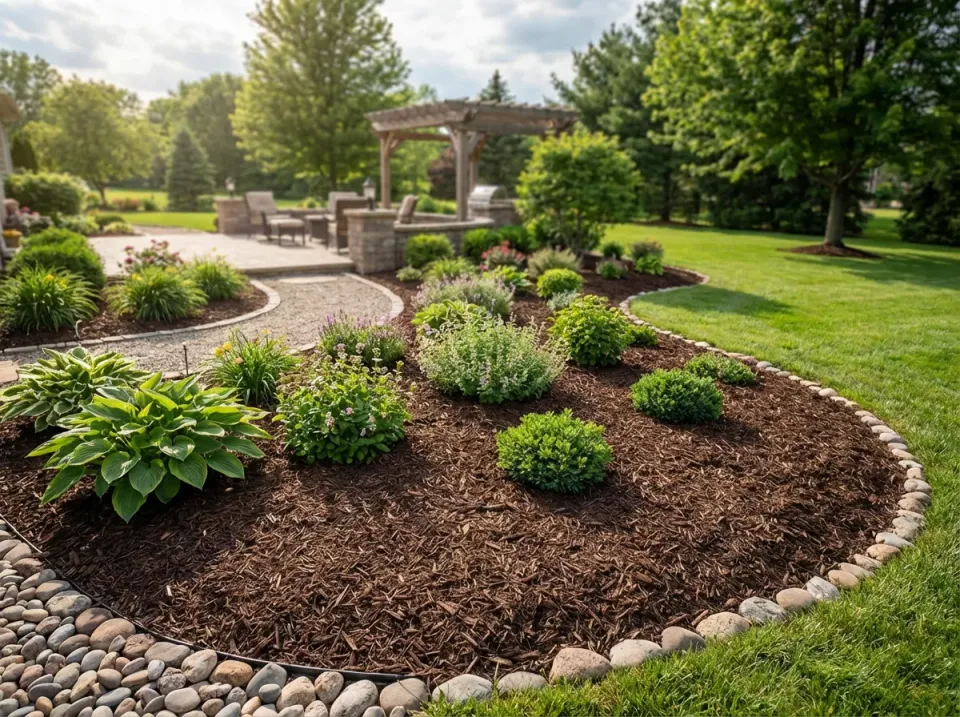
How to Use This Mulch Bed Calculator
Planning a mulch bed requires precise measurements to ensure you order enough material without overspending.
- 1 Measure Area: Measure the length and width of your planned mulch bed area in feet.
- 2 Determine Depth: For most mulch bed projects, a depth of 4 to 6 inches is recommended for stability.
- 3 Review Results: The calculator provides both cubic yards (for bulk volume) and tons (for ordering weight).
Common Materials for Mulch Beds
Selecting the right mulch material directly impacts weed suppression, soil moisture retention, erosion control, and the long-term health of plants within the bed.
| Material | Description | Best For | Est. Cost |
|---|---|---|---|
| Triple-Shredded Hardwood Mulch | Finely shredded hardwood bark and wood fiber with particle sizes ranging from fine fines up to 2–3 inches, producing a dense, interlocking mat. | Planting Beds, Tree Wells, Weed Suppression, Moisture Retention | $$ |
| Double-Shredded Hardwood Mulch | Coarser two-pass shredded hardwood bark and wood material with larger particle sizes than triple-shredded, offering good ground coverage. | Planting Beds, Foundation Beds, Moisture Retention | $ |
| Straw Mulch | Dry, loose stalks of oat, wheat, barley, or rye applied air-dry and free of weeds, creating a light fibrous blanket over soil. | Seeded Areas, Erosion Control, Slope Stabilization | $ |
| Pea Gravel | Small, smooth, rounded stones typically 3/8 to 3/4 inch in diameter, naturally washed and available in mixed earth tones. | Low-Maintenance Beds, High-Drainage Areas, Not Organic Planting Beds | $$ |
Understanding the Cost
Several factors influence the final price of your mulch bed project.
Material Volume
The dimensions of your project directly dictate the tonnage needed. Deeper bases require significantly more material.
Delivery Distance
Transport logistics play a major role. Being closer to the quarry or depot reduces delivery fees significantly.
Material Type
Decorative stones cost more than utility grades. Choose based on your project's functional and aesthetic requirements.
Recommended Products for Your Mulch Bed
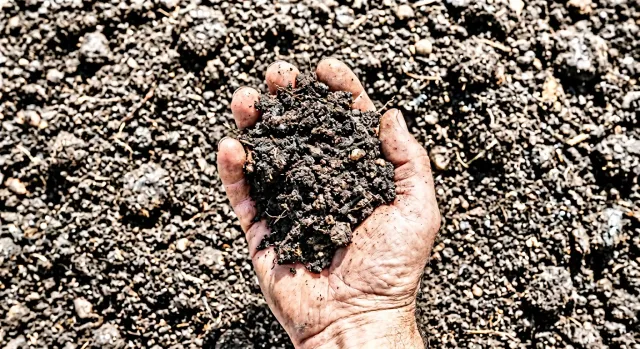
Topsoil Calculator
Topsoil calculator that estimates cubic yards and tons from your area and depth. Supports raised beds, gardens, new lawns, and grading projects.
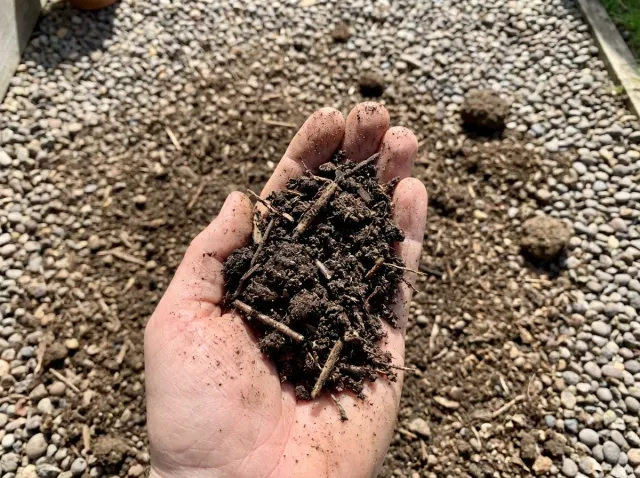
Compost Calculator
Estimate compost volume with this calculator for top-dressing, soil amendment, or new beds. Enter your square footage and desired depth for cubic yards.
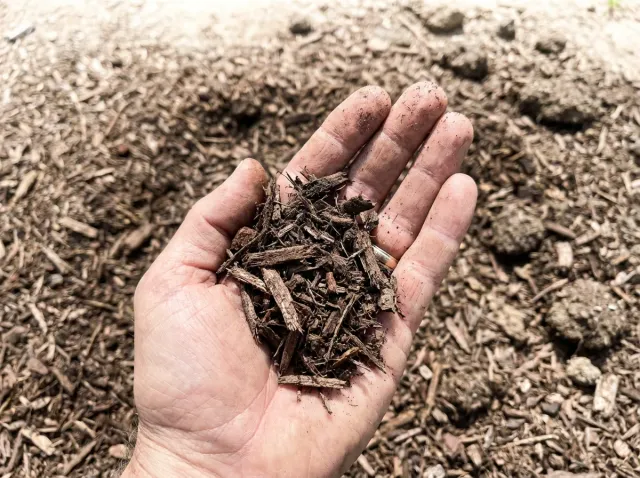
Mulch Calculator
Mulch calculator — enter bed dimensions and depth to estimate how many cubic yards or bags your landscaping project requires. Results update instantly.
Bark Calculator
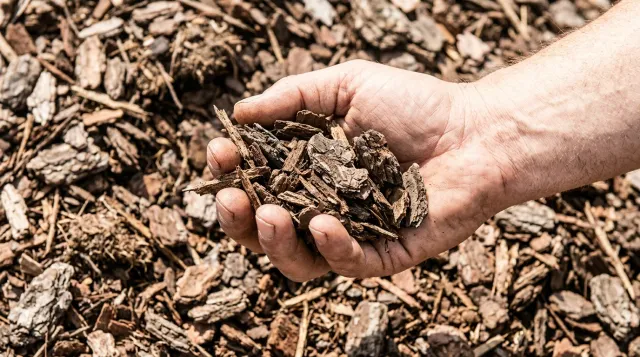
Use this calculator to estimate cubic yards of bark mulch for any bed shape and depth. Helps avoid over-ordering or running short mid-project.
Frequently Asked Questions
What is bulk mulch and how is it used in landscape beds?
Bulk mulch is shredded or chipped organic material, most commonly made from wood byproducts like hardwood bark, pine bark, or cedar, that is spread across the surface of garden beds and planting areas. It acts as a protective layer between the soil and the open air, keeping the ground beneath it healthier and your landscape looking polished. In a mulch bed, the material is typically spread a few inches deep around trees, shrubs, perennials, and annuals. It does not get mixed into the soil the way topsoil or compost would. Instead, it sits on top as a blanket that works for you season after season. Hello Gravel delivers mulch in bulk by the truckload, which is the most practical and cost-effective way to cover a significant amount of landscaping. Whether you are refreshing the beds around your home, mulching a commercial property, or tackling a large new installation, ordering in bulk means you get the volume you need in a single delivery, with no trips to the store and no stacking bags.
How much mulch do I need to cover my garden beds?
The amount of mulch you need depends on the total square footage of your beds and how deep you plan to apply it. A helpful rule of thumb is that one cubic yard of mulch covers roughly 100 square feet at a 3-inch depth, which is the most commonly recommended application rate. If you are applying a lighter layer at 2 inches, one cubic yard will stretch to cover closer to 150 square feet. For a thicker 4-inch layer, plan on about 80 square feet per cubic yard. To get a rough estimate, measure the length and width of each bed, multiply those numbers together to get the square footage, add all your beds together, then divide by the coverage figure that matches your target depth. That said, beds are rarely perfect rectangles, and most projects have a mix of shapes, curves, and obstacles. The Hello Gravel online calculator is the most reliable way to get an accurate quantity for your specific layout. Plug in your dimensions and it will tell you exactly how much to order so you are not short or left with a large surplus.
How deep should mulch be applied in a garden bed?
For most landscape beds, a depth of 2 to 3 inches is the sweet spot. This is deep enough to suppress weeds and hold in soil moisture, but not so thick that it smothers plant roots or creates conditions where fungal problems can develop. If your beds are starting from scratch with bare soil and you want strong weed suppression right away, 3 inches is a solid target. If you are topping off existing mulch that has broken down a bit but is still present, you may only need to add 1 to 2 inches to bring it back up to an appropriate level. One thing to be careful about is piling mulch directly against plant stems, shrub trunks, or tree bases. This is often called volcano mulching, and it is one of the most common mistakes in landscape maintenance. Keep the mulch pulled back a few inches from any stems or trunks to leave room for airflow. The goal is a flat, even layer across the bed, not a mound built up around your plants.
What are the real benefits of mulching garden beds?
Mulch does more work than most people give it credit for, and the benefits stack up quickly. The most immediate benefit is moisture retention. A proper layer of mulch slows evaporation from the soil surface, which means your plants need less frequent watering during dry stretches. In the heat of summer, this can make a real difference in how your garden holds up. Weed suppression is another major advantage. Mulch blocks light from reaching the soil, which makes it much harder for weed seeds to germinate and establish. You will never eliminate every weed, but a consistently mulched bed requires far less hand-pulling and chemical intervention than bare soil. Mulch also acts as insulation for plant roots. In winter, it helps buffer the soil against hard freezes. In summer, it keeps the root zone cooler than it would be under direct sun. Both effects reduce stress on your plants. Over time, organic mulch breaks down and adds organic matter back into the soil, gradually improving its structure, drainage, and ability to support healthy root growth. It is a long-term investment in your landscape, not just a cosmetic one. And of course, a freshly mulched bed simply looks clean and well cared for, which has a real impact on curb appeal whether you are a homeowner or managing a commercial property.
When is the best time of year to put down mulch?
Spring is the most popular time to apply mulch, and for good reason. As the soil begins to warm after winter, laying down a fresh layer right before the growing season locks in that warmth, gives your plants a strong start, and gets ahead of the first flush of spring weeds before they have a chance to take hold. Applying mulch in early to mid spring, after the ground has thawed and dried out a bit, tends to give the best results. Fall is the second major mulching window, particularly if you want to protect perennial roots and bulbs from hard freezes. A fresh layer applied in late fall acts as insulation that keeps soil temperatures more stable through the coldest months, which helps plant roots survive and reduces frost heaving. The good news is that mulch can be applied almost any time the ground is not frozen solid. If you are replacing mulch that has broken down, refreshing a bed ahead of a sale or event, or installing a new bed mid-season, there is no reason to wait. Hello Gravel lets you choose your own delivery date, so you can schedule your order to line up exactly with when your project is ready to go.
More Project Calculators
Playground Calculator
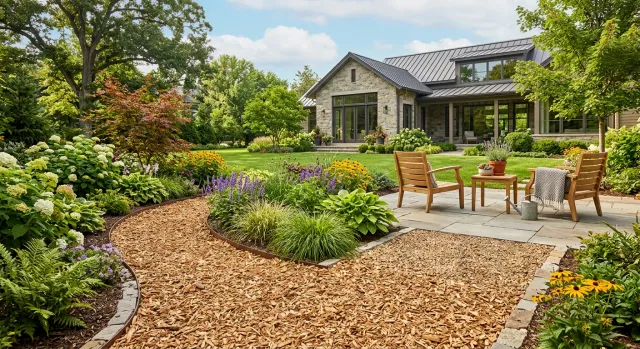
This calculator estimates mulch, rubber, or wood fiber surfacing for playgrounds. Enter area and recommended depth to get cubic yards and tons.
Chicken Coop Calculator
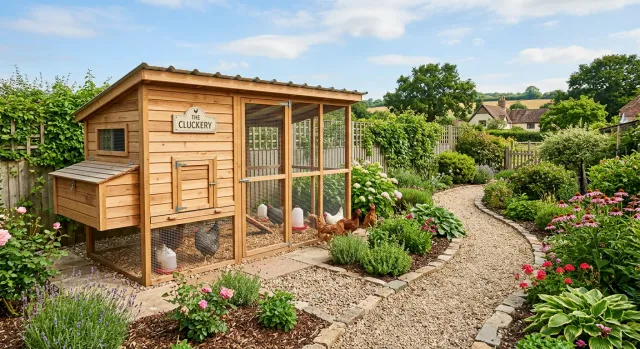
Use this calculator to estimate how much gravel your coop base requires. Input dimensions and depth for volume in cubic yards and stone type guidance.
Basketball Court Calculator
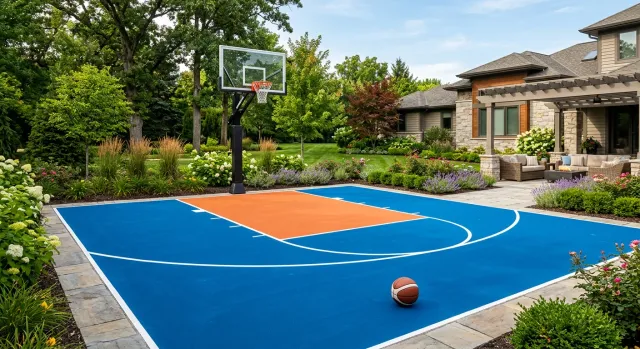
Court base calculator — estimate gravel, sand, and sub-base quantities for backyard or regulation basketball courts. Input court size for material totals.
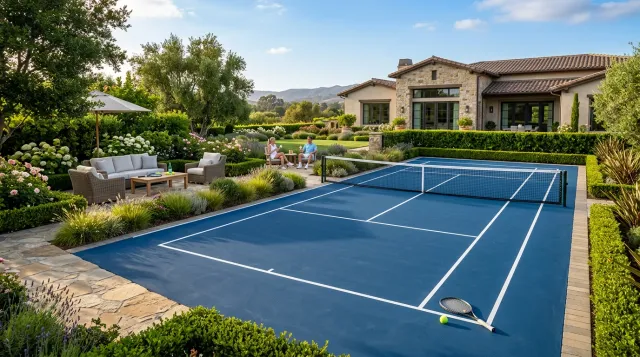
Tennis Court Calculator
Use this calculator to estimate the crushed stone base for a new or resurfaced tennis court. Enter dimensions and depth for volume and tonnage.
Delivery Logistics & Truck Info
Know your delivery options and access requirements before scheduling your order.
Truck Capacities
- Standard Dump Truck10–14 tons
- Tandem Axle14–18 tons
- Semi End Dump20–25 tons
A standard cubic yard weighs approximately 2,000–2,700 lbs depending on material and moisture.
Site Access Requirements
- Trucks require a minimum 12-ft wide, overhead-clear access path
- Soft ground or slopes over 10% may limit truck access — contact us before ordering
- Ensure no underground utilities or irrigation lines are in the drop zone
- Mark your desired drop location clearly before delivery
Important Notes
- Delivery estimates are based on available inventory and route proximity
- Minimum order quantities apply — typically 5 cubic yards or 1 truckload
- Material certification is available upon request for permitted projects
- Always confirm local ordinances before major material placement