
Bark Calculator
— How Much Do You Need?
Calculate bark needed by area and depth — get quantities in cubic yards or tons and quick cost estimates.
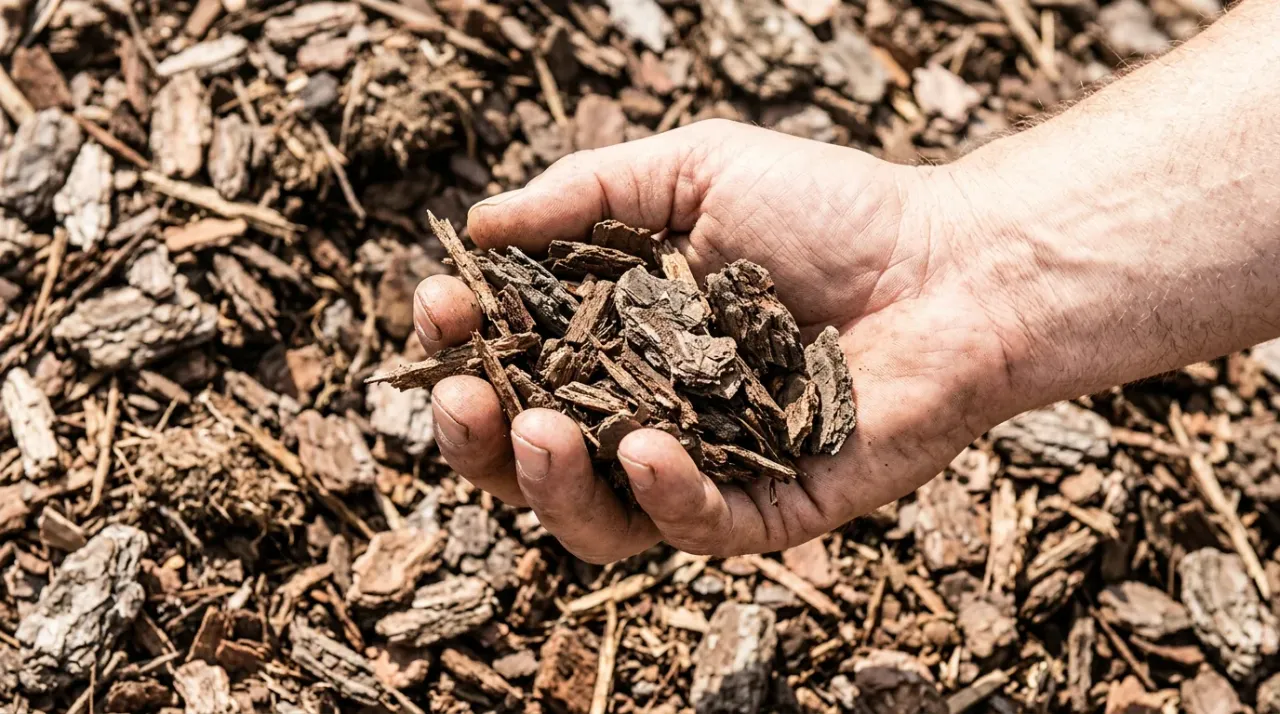
How to Use This Bark Calculator
Planning a bark project requires precise measurements to ensure you order enough material without overspending.
- 1 Enter Dimensions — Input the length and width of your area in feet. Round up slightly for a buffer.
- 2 Choose Depth — Select the depth in inches. For most bark projects, 3–6 inches is standard.
- 3 Review Results — Instantly see cubic yards and tons needed to accurately plan your order.
Visual Area Guide
Use these diagrams to measure your project area correctly.
Rectangular Area
Measure length × width for square or rectangular areas. Most driveway, patio, and grading projects use this method.
Circular Area
Measure the radius (half the diameter) for round beds, drain fields, or circular landscaping. Formula: π × radius².
Material Coverage & Grading
Common bark mulch grades by particle size, used in landscaping, erosion control, and decorative ground cover applications
| Grade | Application |
|---|---|
| Fines | Very fine bark particles under 1/2 inch, typically pine or fir origin. Breaks down quickly to enrich soil with organic matter. Best suited for soil amendment, top-dressing perennial beds, and areas where rapid nutrient contribution is desired. |
| Shredded | Irregularly shaped shredded bark pieces ranging 1/2 to 2 inches in length. Interlocking fibrous texture resists displacement on slopes and provides excellent moisture retention. Commonly applied in planting beds, hillside erosion control, and around shrubs for weed suppression. |
| Mini Nugget | Rounded bark nuggets approximately 3/4 to 1 inch in diameter. Provides a neat, compact ground cover layer around plant bases, shrubs, and trees. Balances aesthetic appeal with moderate moisture retention and moderate decomposition rate. |
| Small Nugget | Bark nuggets or chips ranging 1 to 2 inches, offering a balance of durability and coverage. Slower to decompose than shredded or mini grades, making it cost-effective for pathways and general ground cover. Widely used in residential and commercial landscape beds. |
| Medium Nugget | Chunky bark pieces in the 2 to 3 inch range, providing long-lasting decorative mulch coverage. Low decomposition rate reduces replacement frequency, ideal for low-maintenance landscape beds and tree wells. Stays loose to promote drainage and soil aeration. |
| Large Nugget | Large bark chunks ranging 3 to 4 inches, the slowest-decomposing grade available. Primarily used in decorative low-traffic landscapes, accent beds, and large-scale commercial plantings where longevity and bold visual texture are priorities. Excellent drainage characteristics with minimal compaction. |
Plan Your Next Project
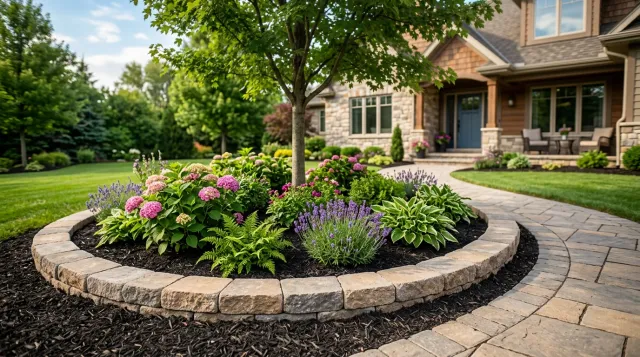
Tree Ring Calculator
Tree ring calculator — estimate mulch for circular rings in seconds. Enter inner and outer diameters plus depth for cubic yards without over-ordering.

Flower Bed Calculator
Flower bed calculator — estimate how much soil or mulch your bed requires. Enter length, width, and depth for results in cubic feet, yards, and bags.
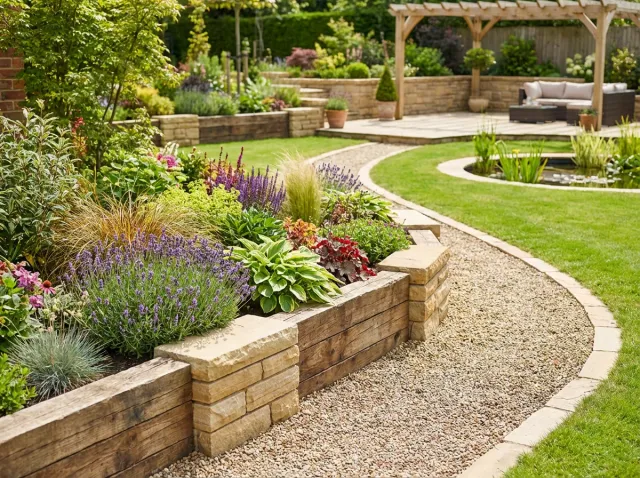
Garden Border Calculator
Garden border calculator — estimate how much edging material and fill your border requires. Enter perimeter length and border width for volume estimates.
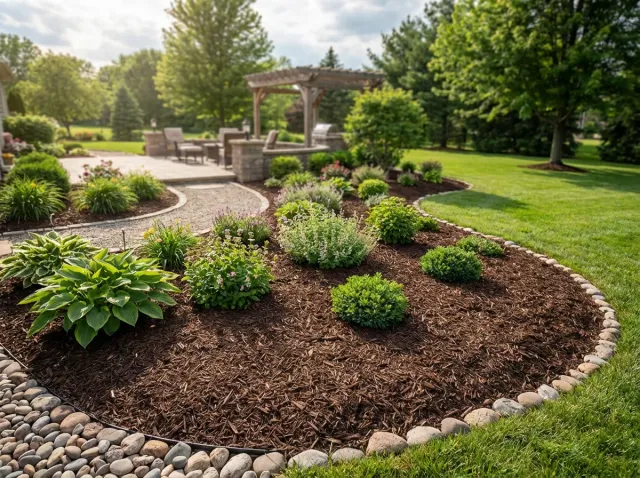
Mulch Bed Calculator
Mulch bed calculator — enter dimensions and depth to estimate how many cubic yards or bags you need. Covers wood mulch, rubber mulch, and stone cover.
Frequently Asked Questions
What is bark mulch and what projects is it best suited for?
Bark mulch is made from the outer layer of trees, typically pine, cedar, or hardwood. It is shredded or chipped into pieces and used as a surface covering across a wide range of outdoor projects. The most common applications include garden and flower beds, tree rings around the base of trees, ornamental planting areas, pathway and walkway surfacing, and playground fall zones. It works especially well anywhere you want to protect the soil, add natural texture, or give your landscape a clean and finished look. If you are building out a new landscape, refreshing tired garden beds, or adding definition around trees and shrubs, bark mulch is one of the most versatile and practical materials you can work with. It also fits naturally into wooded or naturalistic settings where gravel or stone would feel out of place.
What types and grades of bark mulch are available, and how do I choose the right one?
Bark mulch comes in a few common types, each with its own look, texture, and rate of breakdown. Pine bark has a warm reddish-brown color and decomposes slowly, making it a long-lasting choice for ornamental beds. Cedar bark is similarly durable, carries a light natural scent, and tends to hold its color well over time. Hardwood bark breaks down faster, which means it gradually adds organic matter back into your soil, making it a popular option for garden beds where you also want to improve soil quality over time. In terms of grade, finer bark works well for ornamental flower beds where a tidy, polished appearance is the goal. Medium grades are the most versatile and handle everything from garden beds to tree rings with ease. Coarser, chunkier bark holds up well in high-traffic areas like pathways and playground surfaces, where durability matters more than a refined look. Check the Hello Gravel product page or reach out to the team to see which types and grades are available for delivery in your area.
How much bark mulch do I need, and how deep should I spread it?
The right depth depends on what you are using the bark for. For garden beds and ornamental planting areas, two to three inches is the standard application depth. At three inches deep, one cubic yard of bark mulch covers roughly 108 square feet. At two inches deep, that same cubic yard stretches to cover around 162 square feet. For pathways and walking areas, aim for three to four inches of coverage. Playground safety surfaces typically call for six to nine inches of depth to provide adequate cushioning. At six inches deep, one cubic yard covers approximately 54 square feet. At nine inches deep, it covers closer to 36 square feet, so larger playground areas will require a substantial quantity of material. To get a precise estimate for your specific project, use the Hello Gravel calculator. Plug in your area dimensions and planned depth, and it will tell you exactly how many cubic yards to order. Getting that number right before you order helps you avoid running short mid-project or ordering more than you need.
What are the main benefits of bark mulch for gardens and landscaping?
Bark mulch does a lot of work for a relatively simple material. Its most immediate benefit is moisture retention. By shielding the soil surface from direct sun and wind, it slows evaporation and helps keep plant roots from drying out between waterings. During hot summer months, that difference can be significant, especially for shallow-rooted plants and new transplants. Bark also acts as an insulating layer, protecting roots from temperature extremes in both summer and winter. In colder climates, a good layer of bark helps prevent frost heaving and keeps perennial roots stable through the season. Beyond the practical advantages, bark mulch gives any landscape a clean, finished appearance. It defines planting areas, highlights trees and shrubs, and keeps beds looking intentional and well-kept. Over time, organic bark types also break down and gradually improve soil structure and nutrient content as they decompose, making your ground a better growing environment in the long run.
Does bark mulch really help suppress weeds?
Yes, and it is one of the biggest reasons people choose bark mulch for their garden beds. A two to three inch layer of bark blocks sunlight from reaching the soil surface, which prevents most weed seeds from germinating in the first place. It will not stop every weed, especially persistent perennial varieties with deep root systems, but it significantly reduces the time you spend pulling weeds throughout the growing season. For the best results, apply bark over clean, freshly weeded soil. Some homeowners and landscapers also lay a permeable landscape fabric underneath before adding bark, which creates an additional barrier while still allowing water and air to reach the roots below. With a properly applied bark layer, most people see a noticeable reduction in weed growth within the first season. That alone is often worth the investment for anyone who spends time maintaining garden beds.
Other Material Calculators
Delivery Logistics & Truck Info
Know your delivery options and access requirements before scheduling your order.
Truck Capacities
- Standard Dump Truck 10–14 tons
- Tandem Axle 14–18 tons
- Semi End Dump 20–25 tons
A standard cubic yard weighs approximately 2,000–2,700 lbs depending on material and moisture.
Site Access Requirements
- Trucks require a minimum 12-ft wide, overhead-clear access path
- Soft ground or slopes over 10% may limit truck access — contact us before ordering
- Ensure no underground utilities or irrigation lines are in the drop zone
- Mark your desired drop location clearly before delivery
Important Notes
- Delivery estimates are based on available inventory and route proximity
- Minimum order quantities apply — typically 5 cubic yards or 1 truckload
- Material certification is available upon request for permitted projects
- Always confirm local grading ordinances before major material placement