
Jersey Shore Gravel Calculator
— How Much Do You Need?
Quickly calculate Jersey Shore Gravel quantities and cost: cubic yards, tons, and coverage for projects.
How to Use This Jersey Shore Gravel Calculator
Planning a jersey shore gravel project requires precise measurements to ensure you order enough material without overspending.
- 1 Enter Dimensions — Input the length and width of your area in feet. Round up slightly for a buffer.
- 2 Choose Depth — Select the depth in inches. For most jersey shore gravel projects, 3–6 inches is standard.
- 3 Review Results — Instantly see cubic yards and tons needed to accurately plan your order.
Visual Area Guide
Use these diagrams to measure your project area correctly.
Rectangular Area
Measure length × width for square or rectangular areas. Most driveway, patio, and grading projects use this method.
Circular Area
Measure the radius (half the diameter) for round beds, drain fields, or circular landscaping. Formula: π × radius².
Material Coverage & Grading
Common Jersey Shore Gravel grades and applications based on ASTM C136 gradation and ASTM D2487 classification
| Grade | Application |
|---|---|
| #8 | Fine pea gravel with 3/8-inch nominal rounded pebbles; 100% passing 1/2-inch sieve with 0–5% passing No. 4. Characterized by uniform size and rounded quartz/feldspar particles with near-zero fines (<1% passing No. 200). Ideal for decorative landscaping, pedestrian pathways, and filter/drainage trench applications where settlement resistance and ornamental appearance are priorities. |
| #4 | 3/4-inch nominal washed round gravel, nearly all retained between the 1/2-inch and 1-inch sieves with minimal fines. Rounded to subangular particles provide excellent free-draining characteristics and moderate load-bearing capacity (CBR 20–40). Commonly used for residential driveways, erosion control blankets, and drainage aggregate layers where a balance of stability and permeability is required. |
| #57 | Coarse-grade blended gravel with 1-inch maximum particle size; 95–100% passing 1.5-inch sieve and 25–60% passing 1-inch, with fewer than 5% fines. Clean, washed composition classifies as GP (poorly graded gravel) per ASTM D2487, offering high hydraulic conductivity. Well-suited for concrete aggregate mixes, highway subbase layers, and coastal erosion control per NJDOT standards. |
| #2 | Coarse gravel equivalent with 100% passing the 3-inch sieve and 85–100% passing the 1.5-inch sieve (i.e., 0–15% retained on the 1.5-inch sieve), representing the larger end of Jersey Shore Gravel gradation. Rounded particle profile limits angular interlock but supports robust free-draining performance. Primarily applied in heavy drainage systems, French drain backfill, and permeable pavement base courses requiring rapid water transmission. |
| Shore Mix | A blended, contractor-grade mix of Jersey Shore Gravel combining multiple size fractions (typically #8 through #4 range) to achieve a naturally graded, aesthetically uniform product. Tan, white, brown, and gold coastal pebble coloration makes it distinctively ornamental. Most commonly specified for beach-themed landscape designs, decorative ground cover, and ornamental garden beds where visual appeal and moderate drainage are both desired. |
Plan Your Next Project
Playground Calculator
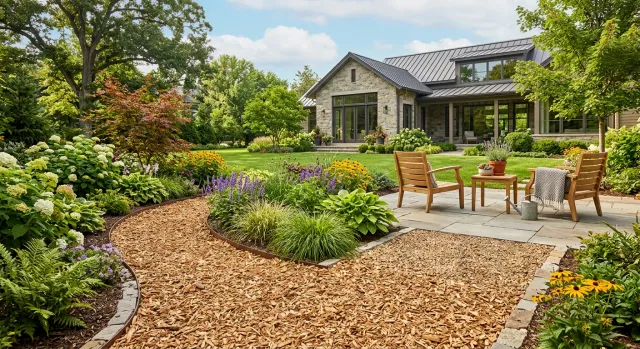
This calculator estimates mulch, rubber, or wood fiber surfacing for playgrounds. Enter area and recommended depth to get cubic yards and tons.
Dog Run Calculator
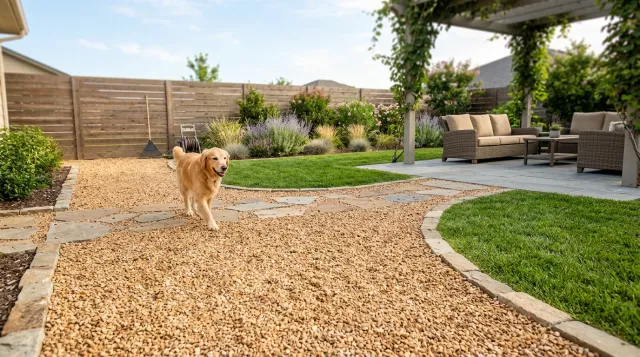
Dog run calculator — enter dimensions to estimate gravel volume in cubic yards and tons. Covers pea gravel depth, drainage layers, and material weight.
Walkway Calculator
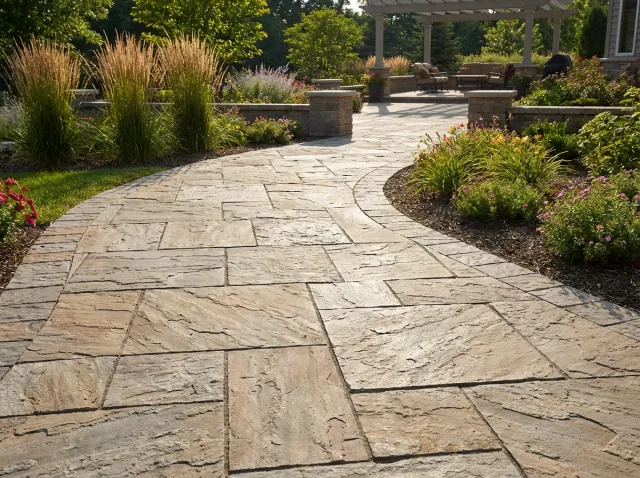
Walkway calculator — enter length, width, and depth to estimate the exact gravel volume in cubic yards and tons. Includes recommended depth guidance.
Garden Path Calculator
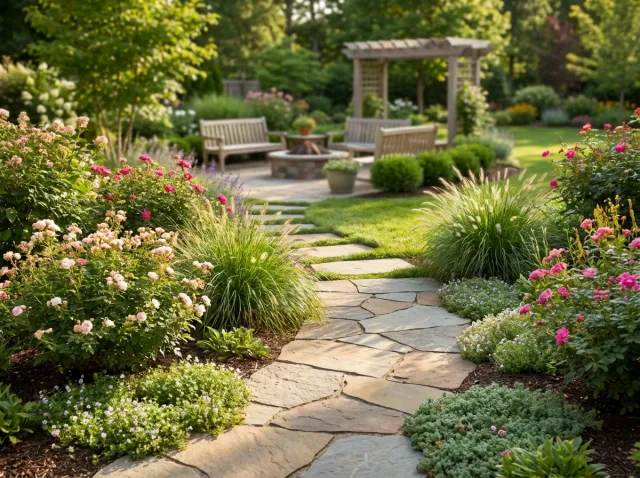
Garden path calculator — estimate gravel tonnage and cubic yards for a walkway of any length. Set your path width, depth, and stone type for results.
Frequently Asked Questions
What is Jersey Shore gravel?
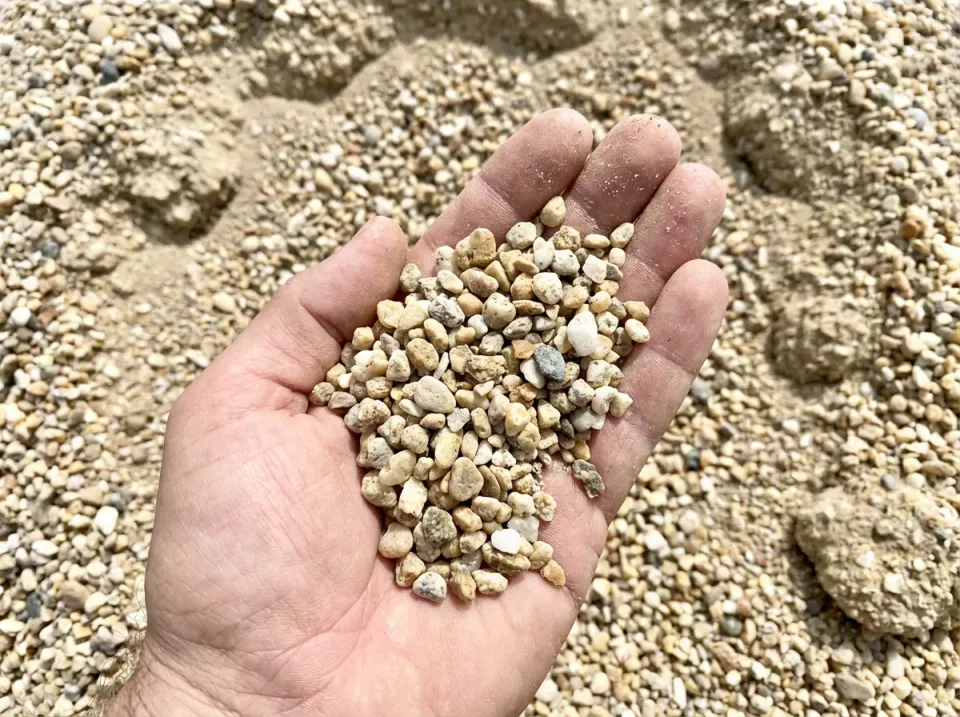
Jersey Shore gravel is a naturally rounded, smooth decorative stone prized for its warm mix of tan, gold, cream, and brown tones. These stones are water-worn from years of movement in river beds and near the coast, which gives them their distinctive rounded shape. It’s a popular decorative aggregate widely used across the country and is available in sizes from 3/8 inch to 3/4 inch. It is decorative and does not compact as tightly as angular crushed stone, so it is often laid as a top layer over a compacted base.
What are the most popular uses for Jersey Shore gravel?
Jersey Shore gravel’s warm color and smooth texture make it a natural fit for many outdoor projects. It’s commonly used for driveways and walkways, adding a polished look. It also works well in garden beds and landscape borders as a decorative ground cover that allows water to pass through. You’ll see it around pool surrounds and patios, along edges of lawns, and near water features. If you want a material that looks good and performs well across a variety of outdoor spaces, Jersey Shore gravel is a strong choice.
Is Jersey Shore gravel a good choice for a driveway?
Jersey Shore gravel can be a good choice for driveways, especially if you want a warm, coastal look. The stones are rounded, so they do not interlock as well as angular crushed stone and will tend to shift a bit under heavy vehicle weight. For best performance, use a compacted base layer of angular stone first and place Jersey Shore gravel on top as the decorative surface. Edging along the sides helps keep the stones contained. For a typical two-car driveway, you will need several tons at a 3 to 4 inch finished depth; use the Hello Gravel calculator for an exact quantity based on your dimensions.
What size Jersey Shore gravel should I order?
Jersey Shore gravel is commonly available in 3/8 inch, 1/2 inch, and 3/4 inch. The 3/8 inch size is good for walkways and decorative beds where a fine, smooth surface is desired. The 1/2 inch size is versatile for driveways and landscape features. The 3/4 inch size is the most common for driveways and larger areas, and it provides a bolder, more textured look. For drainage-focused projects, the larger size tends to create more open space between stones.
How much Jersey Shore gravel do I need for my project?
Amount depends on the area you’re covering, the depth you want, and the stone size. As a starting point, one ton of 3/4 inch Jersey Shore gravel covers about 100 square feet at 2 inches deep, or roughly 65 square feet at 3 inches deep. For driveways or high-traffic areas, plan for a finished depth of 3 to 4 inches. To get a precise quantity for your project, use the Hello Gravel calculator by entering your dimensions and desired depth.
Other Material Calculators
Delivery Logistics & Truck Info
Know your delivery options and access requirements before scheduling your order.
Truck Capacities
- Standard Dump Truck 10–14 tons
- Tandem Axle 14–18 tons
- Semi End Dump 20–25 tons
A standard cubic yard weighs approximately 2,000–2,700 lbs depending on material and moisture.
Site Access Requirements
- Trucks require a minimum 12-ft wide, overhead-clear access path
- Soft ground or slopes over 10% may limit truck access — contact us before ordering
- Ensure no underground utilities or irrigation lines are in the drop zone
- Mark your desired drop location clearly before delivery
Important Notes
- Delivery estimates are based on available inventory and route proximity
- Minimum order quantities apply — typically 5 cubic yards or 1 truckload
- Material certification is available upon request for permitted projects
- Always confirm local grading ordinances before major material placement