
Garden Path Calculator
— How Much Do You Need?
Estimate gravel, sand, or crushed stone for your garden path—truckload quantities, clear pricing, fast delivery.
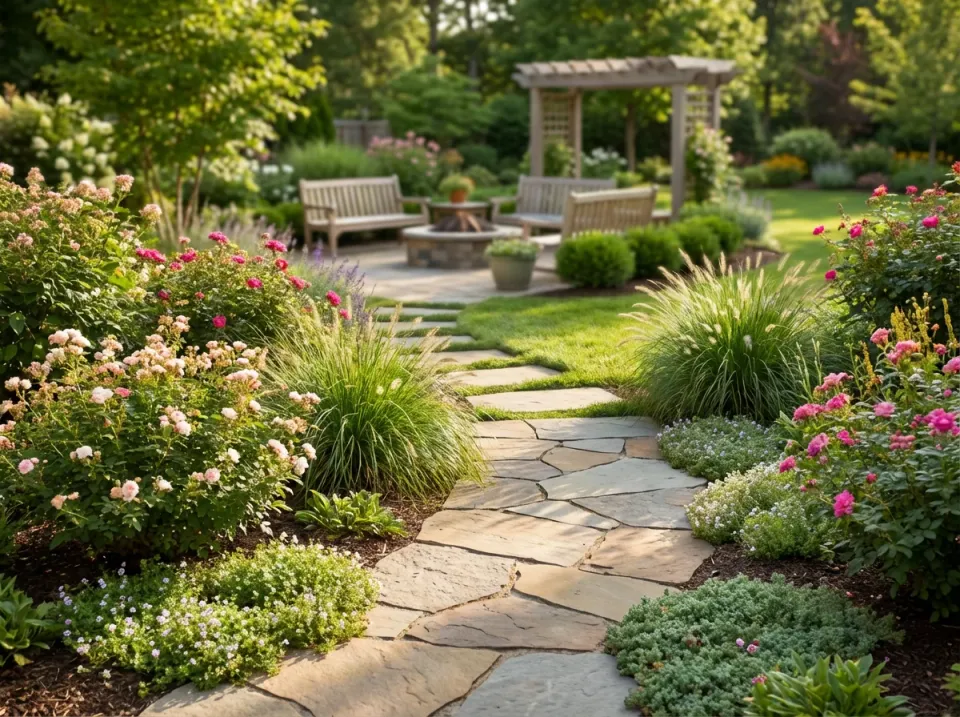
How to Use This Garden Path Calculator
Planning a garden path requires precise measurements to ensure you order enough material without overspending.
- 1 Measure Area: Measure the length and width of your planned garden path area in feet.
- 2 Determine Depth: For most garden path projects, a depth of 4 to 6 inches is recommended for stability.
- 3 Review Results: The calculator provides both cubic yards (for bulk volume) and tons (for ordering weight).
Common Materials for Garden Paths
Choosing the right material balances drainage, compaction strength, and aesthetics to ensure a garden path remains stable, weed-resistant, and visually appealing over time.
| Material | Description | Best For | Est. Cost |
|---|---|---|---|
| Crusher Run (QP) | Crushed stone and fine particle blend that compacts into a firm, stable surface layer. | Base Layer, Primary Paths, High-Traffic Routes, Compacted Sub-base | $ |
| Pea Gravel | Small, smooth, rounded gravel typically 3/8-inch in diameter with a natural, polished appearance. | Decorative Surface Layer, Secondary Paths, Stepping Stone Fill | $$ |
| #57 Crushed Stone | Angular, 3/4-inch clean crushed stone that resists compaction while promoting drainage. | Drainage Base, Sub-base Support, Not Primary Surface | $ |
| Bark Chips (Mulch) | Shredded or chipped organic wood material providing a soft, permeable ground cover layer. | Low-Traffic Accent Paths, Over Tree Root Zones, Budget Secondary Paths | $ |
Understanding the Cost
Several factors influence the final price of your garden path project.
Material Volume
The dimensions of your project directly dictate the tonnage needed. Deeper bases require significantly more material.
Delivery Distance
Transport logistics play a major role. Being closer to the quarry or depot reduces delivery fees significantly.
Material Type
Decorative stones cost more than utility grades. Choose based on your project's functional and aesthetic requirements.
Recommended Products for Your Garden Path
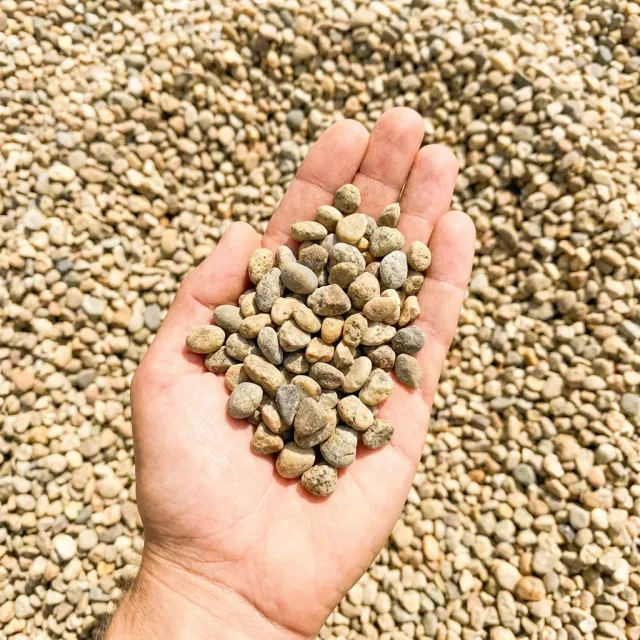
Pea Gravel Calculator
Pea gravel calculator — enter your project dimensions to estimate volume in cubic yards, tons, and bags. Ideal for pathways, patios, and ground cover.
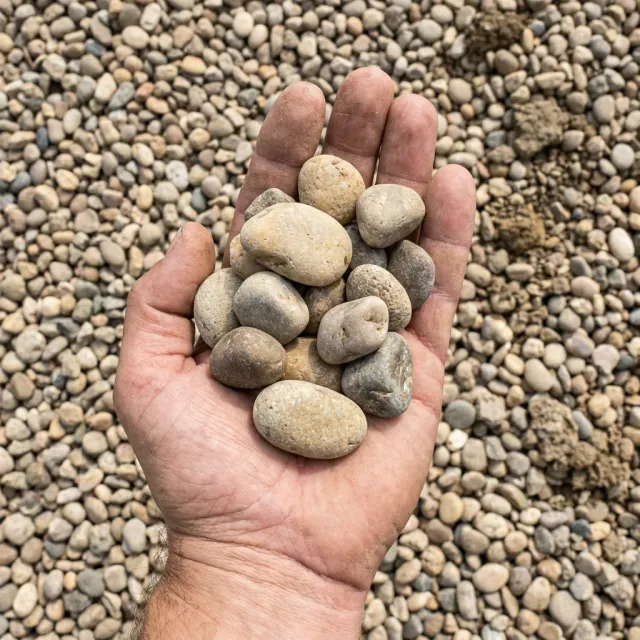
River Rock Calculator
This calculator estimates river rock by the ton for flowerbeds, dry creek beds, and borders. Adjusts for rock size — larger stones cover less per ton.
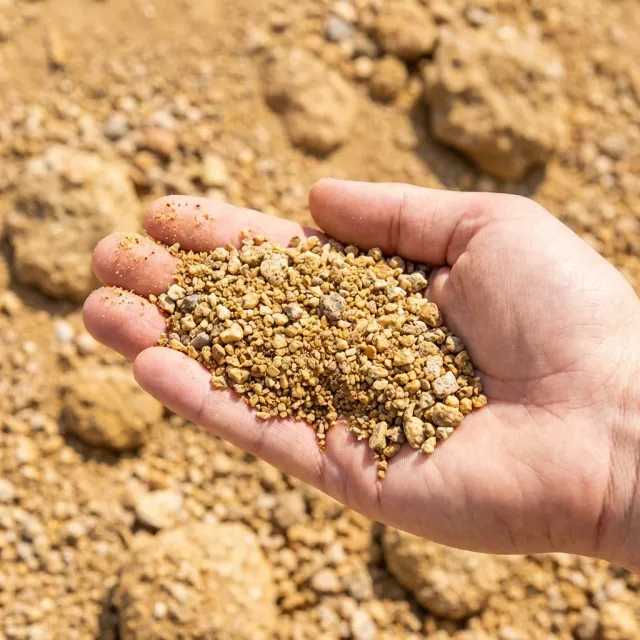
Decomposed Granite Calculator
DG calculator for pathways, patios, and driveways. Enter length, width, and depth to estimate tonnage — most projects need 2-3 inches for a compacted finish.
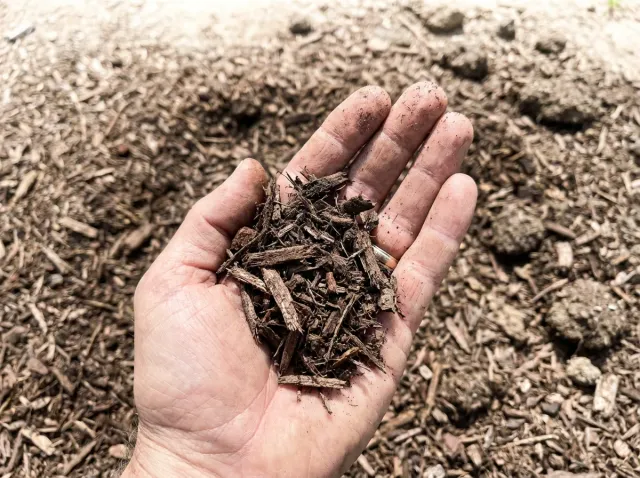
Mulch Calculator
Mulch calculator — enter bed dimensions and depth to estimate how many cubic yards or bags your landscaping project requires. Results update instantly.
Frequently Asked Questions
What type of gravel is best for a garden path?
The best gravel for your garden path depends on the look you want and how much foot traffic the path will see. Pea gravel is one of the most popular choices for garden paths. It is small, smooth, and rounded, which makes it comfortable to walk on barefoot and gives any path a natural, relaxed feel. It comes in a range of earth tones and blends well into cottage gardens, formal landscapes, and everything in between. It also shifts underfoot more than angular stone. For a surface that firms up and stays put, angular crushed stone is the better option. The jagged edges lock together under foot traffic, which means the surface gets more stable over time. Decomposed granite is another option that compacts into a smooth, firm surface. For most homeowners, pea gravel or a fine crushed stone are the go-to materials. Browse the Hello Gravel product selection to find the right match for your project, and if you are not sure which grade to go with, reach out to the Hello Gravel team.
How much gravel do I need, and how deep should I lay it?
For a garden path built for regular foot traffic, a finished depth of 2 to 3 inches is the standard recommendation. That is enough to walk comfortably, provides good drainage, and gives the path a complete, finished appearance without using more material than the project calls for. To estimate how much gravel you need, start by measuring the full length and width of your path in feet, then multiply those numbers together to get the total square footage. From there, your depth drives the tonnage. At 2 inches of depth, one ton of gravel covers roughly 100 to 120 square feet. At 3 inches of depth, that same ton covers closer to 70 to 80 square feet. Keep in mind that rounded gravel like pea gravel and angular crushed stone have slightly different densities, so real-world coverage can vary a little depending on the material you choose. A garden path that is 3 feet wide and 50 feet long covers 150 square feet. At 3 inches depth, that is around 2 tons of material. If you are planning multiple paths, adding a patio, or combining your path with other landscaping work, the total tonnage adds up quickly and a bulk truckload covers more ground than you might expect. Use the Hello Gravel calculator on this page to plug in your exact dimensions and get a precise tonnage estimate before you order.
Can I lay gravel directly on soil, or do I need to prepare the ground first?
You can lay gravel directly on soil, but skipping prep tends to cause problems that are frustrating to fix later. When gravel sits directly on bare soil, it can sink over time, weeds push up from below, and the path surface becomes uneven. The recommended approach is to excavate the path area to a depth of 4 to 6 inches before adding gravel. Lay a sheet of landscape fabric to block weeds and prevent gravel from mixing into the soil. After that, pour gravel on top and rake to an even depth of 2 to 3 inches. If the soil is soft, adding a thin layer of base material under the finish gravel will improve stability. This prep pays off in long lasting looks and performance.
How do I build a gravel garden path?
Building a gravel garden path is a straightforward project. Mark the path with stakes and a string line, then excavate the area to 4 to 6 inches, removing grass and roots and keeping the bottom level. Install edging on both sides to keep the gravel in place, using metal, timber, brick, or plastic edging. Lay landscape fabric over the floor, then pour gravel on top and rake to a 2 to 3 inch depth. If using angular crushed stone, you can walk the path back and forth a few times to help compact it; pea gravel will settle naturally. Hello Gravel delivers by the truckload, and you can use the calculator to estimate how much to order before delivery.
How do I keep gravel in place and prevent weeds from taking over my path?
Two things handle most of the work: edging and a weed barrier. Edging keeps gravel from migrating into lawns or beds; metal landscape edging is a common durable choice, but timber, brick, or plastic edging also work. A weed barrier under the gravel blocks many weeds from pushing up through the ground. Over time, some weeds may appear on the surface and can be controlled with a quick hand weeding or a top-up of gravel. For rounded gravel like pea gravel, you can add a base layer to improve stability. The path remains low maintenance when built with good edging and base.
More Project Calculators
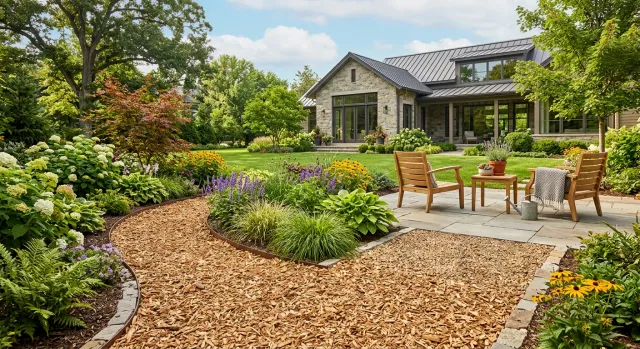
Playground Calculator
This calculator estimates mulch, rubber, or wood fiber surfacing for playgrounds. Enter area and recommended depth to get cubic yards and tons.
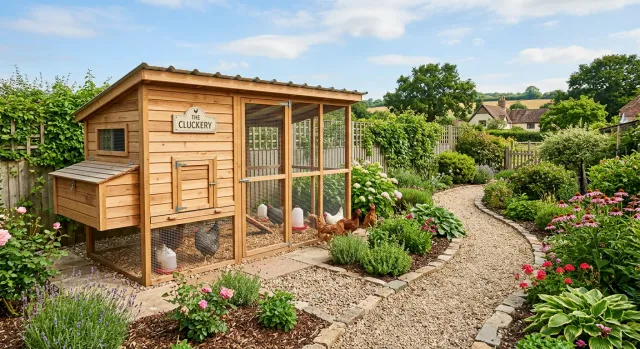
Chicken Coop Calculator
Use this calculator to estimate how much gravel your coop base requires. Input dimensions and depth for volume in cubic yards and stone type guidance.
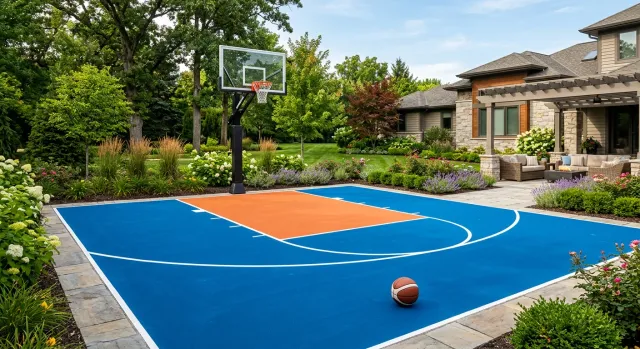
Basketball Court Calculator
Court base calculator — estimate gravel, sand, and sub-base quantities for backyard or regulation basketball courts. Input court size for material totals.
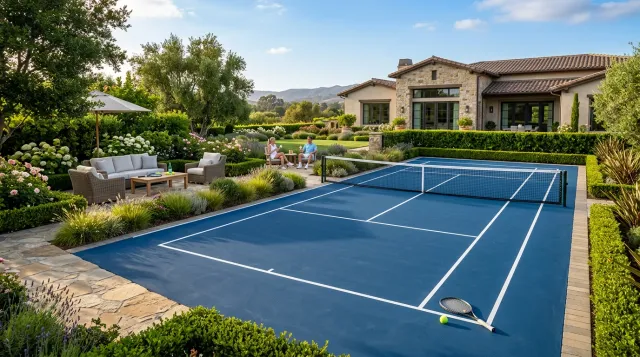
Tennis Court Calculator
Use this calculator to estimate the crushed stone base for a new or resurfaced tennis court. Enter dimensions and depth for volume and tonnage.
Delivery Logistics & Truck Info
Know your delivery options and access requirements before scheduling your order.
Truck Capacities
- Standard Dump Truck10–14 tons
- Tandem Axle14–18 tons
- Semi End Dump20–25 tons
A standard cubic yard weighs approximately 2,000–2,700 lbs depending on material and moisture.
Site Access Requirements
- Trucks require a minimum 12-ft wide, overhead-clear access path
- Soft ground or slopes over 10% may limit truck access — contact us before ordering
- Ensure no underground utilities or irrigation lines are in the drop zone
- Mark your desired drop location clearly before delivery
Important Notes
- Delivery estimates are based on available inventory and route proximity
- Minimum order quantities apply — typically 5 cubic yards or 1 truckload
- Material certification is available upon request for permitted projects
- Always confirm local ordinances before major material placement