
Garden Soil Calculator
— How Much Do You Need?
Calculate garden soil volume and material needed — convert area and depth to cubic yards, bags, tons.
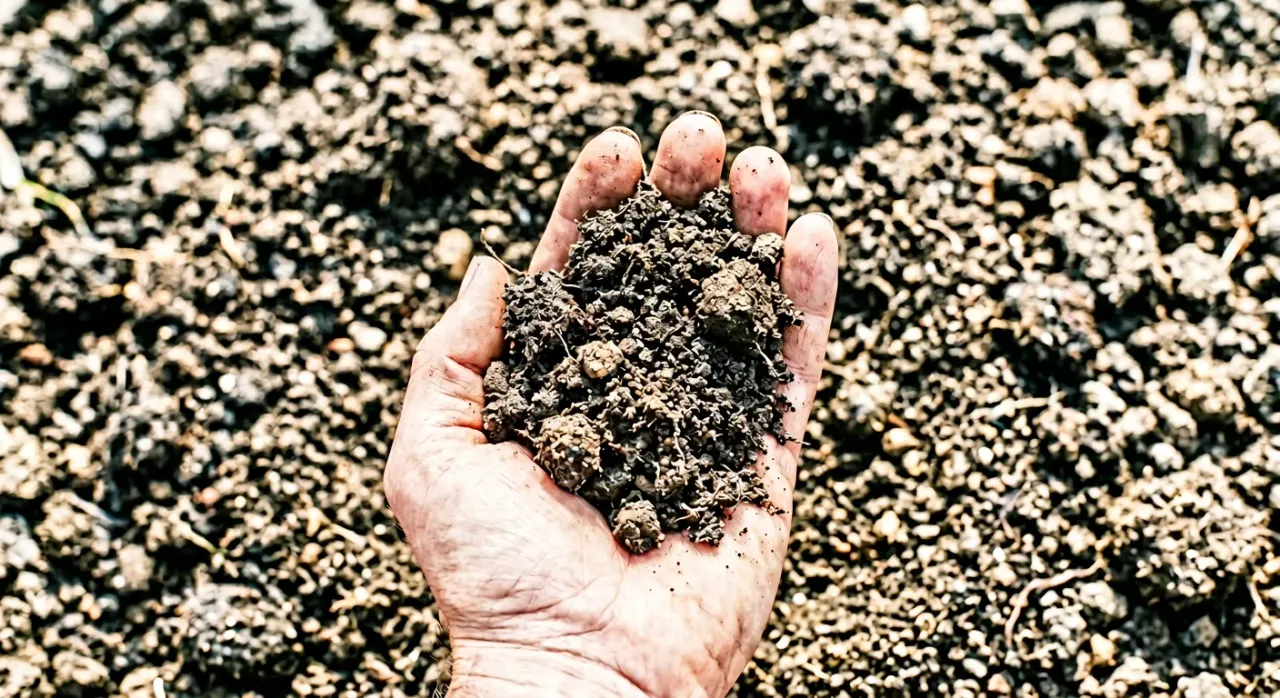
How to Use This Garden Soil Calculator
Planning a garden soil project requires precise measurements to ensure you order enough material without overspending.
- 1 Enter Dimensions — Input the length and width of your area in feet. Round up slightly for a buffer.
- 2 Choose Depth — Select the depth in inches. For most garden soil projects, 3–6 inches is standard.
- 3 Review Results — Instantly see cubic yards and tons needed to accurately plan your order.
Visual Area Guide
Use these diagrams to measure your project area correctly.
Rectangular Area
Measure length × width for square or rectangular areas. Most driveway, patio, and grading projects use this method.
Circular Area
Measure the radius (half the diameter) for round beds, drain fields, or circular landscaping. Formula: π × radius².
Material Coverage & Grading
Common garden soil applications based on USCS (ASTM D2487) classifications used in landscaping and construction
| Grade | Application |
|---|---|
| SM | Silty Sand with >50% sand fraction and >12% non-plastic silt fines (ML). Offers moderate drainage and low plasticity, making it well-suited for amended topsoil that requires both structure and root penetration. Commonly used in sloped garden beds and lawns where stability is needed alongside fertility. |
| SC | Clayey Sand with >50% sand fraction and >12% plastic clay fines (CL). Provides higher cohesion than SM, supporting moisture retention while maintaining adequate drainage. Ideal for raised garden beds and backyard gardens where a balance of fertility and structural integrity is required. |
| ML | Silt with >50% fines, low liquid limit (<50%), and plasticity index below the A-line (PI<4). Exhibits quick drainage, dilatancy, and low dry strength, enabling rapid root establishment. Best suited for flat flower beds and planting media where perennial or shallow-rooted plants are grown. |
| CL | Lean Clay with >50% fines, liquid limit <50%, and plasticity index ≥4 on or above the A-line. Compacts cohesively and retains moisture well, with low permeability (k<10⁻⁶ cm/s) that reduces erosion risk. Recommended for erosion-prone slopes, erosion control blankets, and planting beds requiring sustained moisture retention. |
| SW-SM | Borderline Well-Graded Sand with 5–12% silt fines, meeting dual USCS classification criteria (Cu≥6, 1≤Cc≤3). Balances free drainage with slight fines content to support light organic amendment and root anchorage. Commonly used as a sand-amended base layer or drainage underlayer beneath topsoil mixes in raised garden beds and lawn installations. |
| OL | Organic Silt or Clay with >50% fines and measurable organic content, exhibiting organic-soil behavior per USCS. Provides high nutrient retention and water-holding capacity favored in enriched planting media and topsoil amendments. Specified by contractors as 'with organic fines' for vegetable gardens, compost-blended planter mixes, and high-fertility landscaping applications. |
Plan Your Next Project
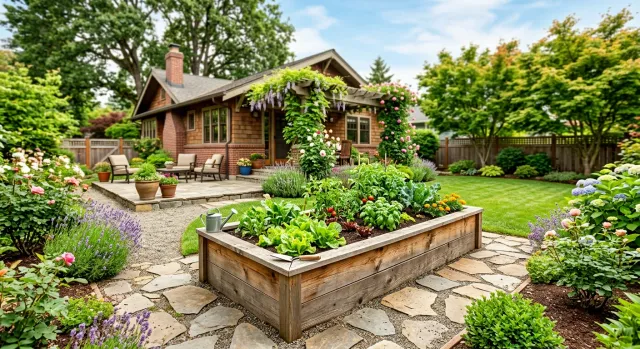
Raised Garden Bed Calculator
Raised bed calculator — estimate how much soil, compost, and amendments to buy for any bed shape. Enter dimensions for results in cubic feet and bags.
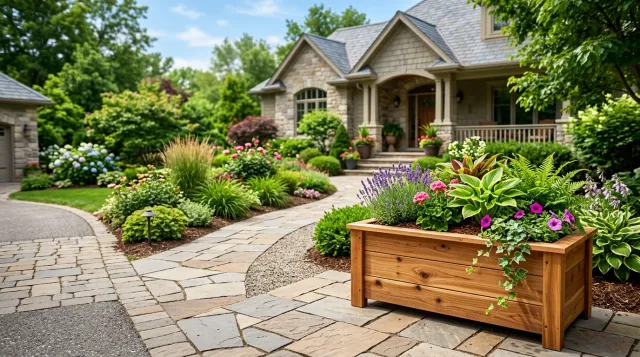
Planter Box Calculator
Planter box calculator — estimate how much potting soil or garden mix to buy for any shape. Enter interior dimensions for cubic feet, quarts, and bags.
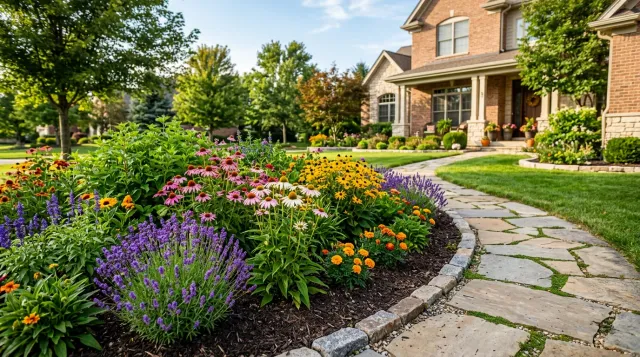
Flower Bed Calculator
Flower bed calculator — estimate how much soil or mulch your bed requires. Enter length, width, and depth for results in cubic feet, yards, and bags.
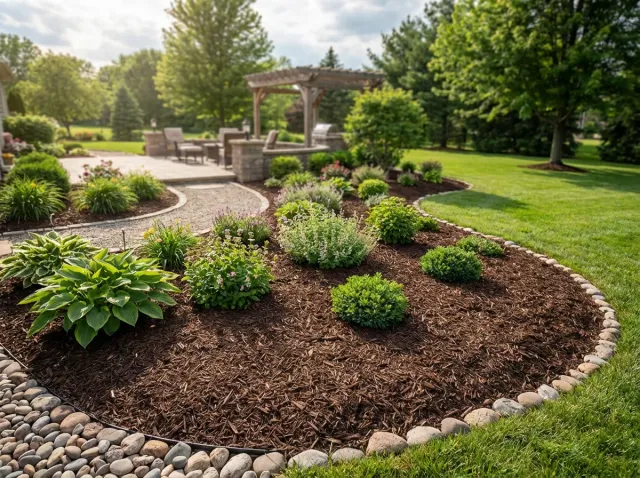
Mulch Bed Calculator
Mulch bed calculator — enter dimensions and depth to estimate how many cubic yards or bags you need. Covers wood mulch, rubber mulch, and stone cover.
Frequently Asked Questions
What is garden soil, and how is it different from topsoil and fill dirt?
Garden soil is a blended growing medium specifically formulated to support healthy plant growth. It typically contains a mix of natural soil, compost, and organic matter that gives your plants the nutrients, loose structure, and drainage they need to thrive. Topsoil is different. It is the natural upper layer of earth and contains far fewer amendments than garden soil. Topsoil works well for grading your lawn, leveling your yard, or topping off low spots, but it is not enriched the same way garden soil is. Fill dirt is something else entirely. It is a subsoil material with little to no organic content, used to fill voids, build up grade, or create a structural base beneath other materials. Fill dirt will not support meaningful plant growth, and it is not what you want going into your garden beds. If your goal is to grow vegetables, flowers, or herbs, garden soil is the right call. If you are working on lawn grading or leveling your property, topsoil is likely the better fit. Not sure which material makes more sense for your project? The Hello Gravel team is happy to help you figure it out before you place your order.
What projects is bulk garden soil best suited for?
Bulk garden soil is the right material whenever you need a nutrient-rich growing medium in large quantities. It is most commonly used to fill raised garden beds from scratch, create new in-ground vegetable or flower gardens, refresh and rebuild depleted planting areas, and establish landscaping borders or mixed planting zones. If you are starting a large vegetable garden for the first time, putting in several raised beds at once, or expanding your growing space significantly, ordering garden soil by the truckload gives you everything you need in a single delivery. It is also a smart choice when you are rehabilitating an area with poor, compacted, or heavily clay-based soil and need a fresh growing layer to work with. Keep in mind that garden soil is designed specifically for planting. It is not the right material for filling large structural voids, grading your property, or creating a base beneath hardscaping. For those needs, fill dirt or topsoil is the more appropriate choice.
How much bulk garden soil do I need, and how do I calculate the right amount?
The amount of garden soil you need depends on two things: the total square footage of your planting area and how deep you plan to fill it. As a general reference point, one cubic yard of material covers approximately 324 square feet at one inch deep, 162 square feet at two inches deep, or 108 square feet at three inches deep. For most garden installations, you are working with much greater depths than that, so the volume adds up quickly. For example, filling a 10-by-20-foot raised bed to a depth of 12 inches requires roughly 7.4 cubic yards of material. If you have multiple beds or a large in-ground garden at deeper depths, your total will climb fast. The most accurate way to get your number right is to use the Hello Gravel online calculator. Enter your dimensions and your target depth, and it will give you a reliable estimate tailored to your specific project so you can order with confidence rather than guessing.
How deep should the garden soil layer be for raised beds and in-ground gardens?
Depth matters more than most people realize, and getting it right up front saves a lot of frustration later. For raised garden beds, most experienced gardeners recommend a minimum of 8 to 12 inches of garden soil. Root vegetables like carrots, beets, and parsnips perform best with at least 12 inches of depth to grow into. Shallow-rooted crops like lettuce, herbs, and most annual flowers can do well in 6 to 8 inches. For in-ground gardens, you have two main approaches depending on what you are starting with. If your existing soil is reasonably healthy but compacted or worn down, tilling in 4 to 6 inches of fresh garden soil as an amendment often gives you a significant improvement in plant performance. If your native soil is poor, heavily clay-based, or very sandy, bringing in 6 to 12 inches of garden soil as a dedicated growing layer gives your plants a much better environment from the start. Whichever approach fits your situation, the Hello Gravel calculator makes it straightforward to translate your chosen depth and area into a precise quantity so you know exactly how much to order.
Can I mix bulk garden soil into my existing beds, or should I replace the soil entirely?
Both approaches work, and the right choice depends on what you are starting with. If your existing beds have become compacted or nutritionally depleted over several growing seasons, tilling fresh garden soil into the existing material is a practical and effective strategy. You loosen the existing soil to a depth of 6 to 8 inches, then incorporate your new garden soil into that loosened layer. This blending method works especially well when your native soil has decent drainage but needs a structural and organic boost to perform well again. If your native soil is heavily clay-based, very sandy, or just plain poor, you will get better results by bringing in a thicker layer of fresh garden soil and minimizing how much you blend with the native material beneath it. For raised beds, the approach is typically simpler: fill the beds entirely with garden soil since the frame already isolates the growing medium from the ground below. Either way, ordering in bulk means you will have plenty of material to work with and will not find yourself running short halfway through the project.
Other Material Calculators
Delivery Logistics & Truck Info
Know your delivery options and access requirements before scheduling your order.
Truck Capacities
- Standard Dump Truck 10–14 tons
- Tandem Axle 14–18 tons
- Semi End Dump 20–25 tons
A standard cubic yard weighs approximately 2,000–2,700 lbs depending on material and moisture.
Site Access Requirements
- Trucks require a minimum 12-ft wide, overhead-clear access path
- Soft ground or slopes over 10% may limit truck access — contact us before ordering
- Ensure no underground utilities or irrigation lines are in the drop zone
- Mark your desired drop location clearly before delivery
Important Notes
- Delivery estimates are based on available inventory and route proximity
- Minimum order quantities apply — typically 5 cubic yards or 1 truckload
- Material certification is available upon request for permitted projects
- Always confirm local grading ordinances before major material placement