
Chat Gravel Calculator
— How Much Do You Need?
Quickly estimate Chat Gravel needs—calculate cubic yards, tons, or bags for driveways, paths, and beds.
How to Use This Chat Gravel Calculator
Planning a chat gravel project requires precise measurements to ensure you order enough material without overspending.
- 1 Enter Dimensions — Input the length and width of your area in feet. Round up slightly for a buffer.
- 2 Choose Depth — Select the depth in inches. For most chat gravel projects, 3–6 inches is standard.
- 3 Review Results — Instantly see cubic yards and tons needed to accurately plan your order.
Visual Area Guide
Use these diagrams to measure your project area correctly.
Rectangular Area
Measure length × width for square or rectangular areas. Most driveway, patio, and grading projects use this method.
Circular Area
Measure the radius (half the diameter) for round beds, drain fields, or circular landscaping. Formula: π × radius².
Material Coverage & Grading
Common chat gravel grades based on USCS/ASTM classifications and regional contractor terminology used in Midwest mining areas
| Grade | Application |
|---|---|
| GM | Silty gravel chat with 12–30% fines (ML-classified), well-graded with uniformity coefficient ≥4 and Cc between 1–3. Angular to subangular crushed particles provide excellent interlock and dense compaction under vibration. Best suited for stabilized base courses, road subgrades, and structural fill where moderate drainage and high compaction density are required. |
| GP-GM | Poorly graded chat gravel with less than 12% silt fines, exhibiting a more uniform particle size distribution. Lower fines content preserves high permeability and free-draining characteristics while maintaining angular particle interlock. Ideal for drainage backfill, pipe bedding, and permeable base layers beneath pavements. |
| GC | Clayey gravel variant of chat with greater than 12% fines and a low plasticity index under 5 (per ASTM D4318). The cohesive fines improve compaction density and provide modest binding strength for low-volume road bases. Recommended for low-volume road construction, unpaved surface stabilization, and fill applications where some cohesion is beneficial. |
| A-1-a | AASHTO-classified select chat fill composed of well-graded gravel and sand with minimal fines, meeting DOT soil-aggregate subbase requirements. Dry rodded unit weight typically ≥75 lb/ft³ (AASHTO T-19) with abrasion loss under 50% (AASHTO T-96). Used in DOT-specified road subbases, aggregate base courses, and heavy-traffic pavement foundations. |
| A-1-b | AASHTO-classified chat fill with a slightly higher fines fraction than A-1-a, still meeting select granular fill criteria for subbase and base course applications. Compacts readily to 95% Proctor density under roller compaction, with low plasticity for long-term stability. Suitable for secondary road bases, parking lot subbases, and engineered embankment fill. |
| Chat Fill | Bulk unclassified chat gravel used as general-purpose fill, landscaping berm material, or erosion control aggregate without strict gradation requirements. Composed of mixed fines and coarse tailings from lead-zinc milling, providing cost-effective volume fill with adequate free-draining performance. Best for landscaping berms, bulk site grading, erosion control blankets, and non-structural fill applications. |
Plan Your Next Project
Driveway Calculator
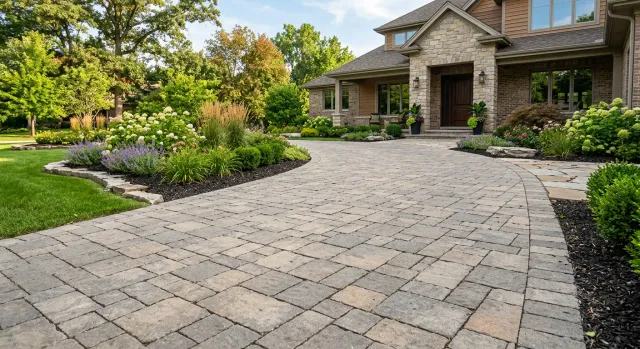
Driveway calculator — estimate cubic yards and tons from your length, width, and preferred gravel depth. Covers single-layer and three-layer builds.
Bocce Ball Court Calculator
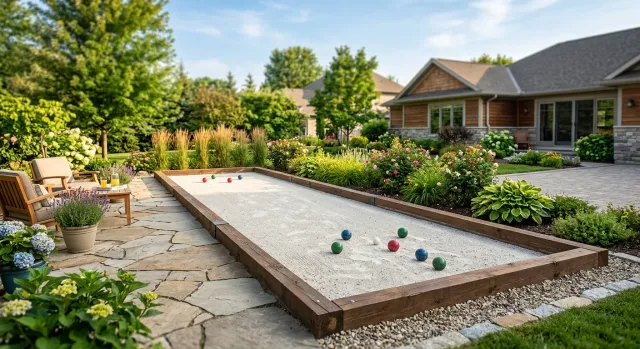
Bocce court calculator — estimate gravel, oyster shell, or stone dust for every layer. Enter court size to get material estimates in yards and tons.
Walkway Calculator
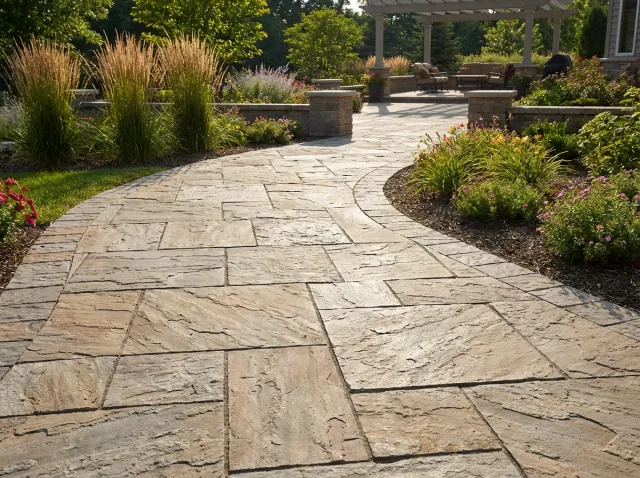
Walkway calculator — enter length, width, and depth to estimate the exact gravel volume in cubic yards and tons. Includes recommended depth guidance.
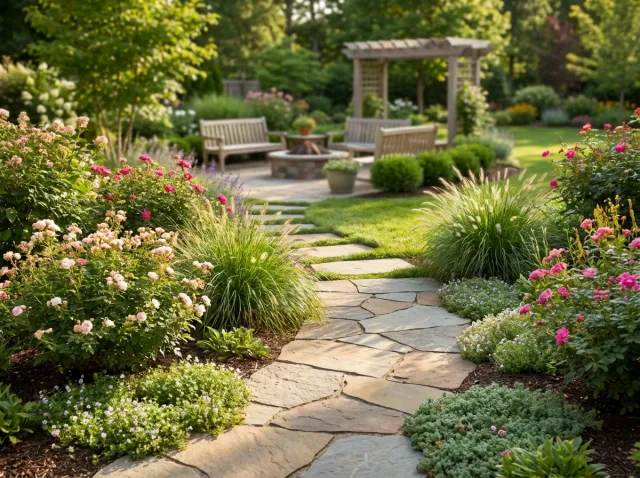
Garden Path Calculator
Garden path calculator — estimate gravel tonnage and cubic yards for a walkway of any length. Set your path width, depth, and stone type for results.
Frequently Asked Questions
What is chat gravel and what is it made of?
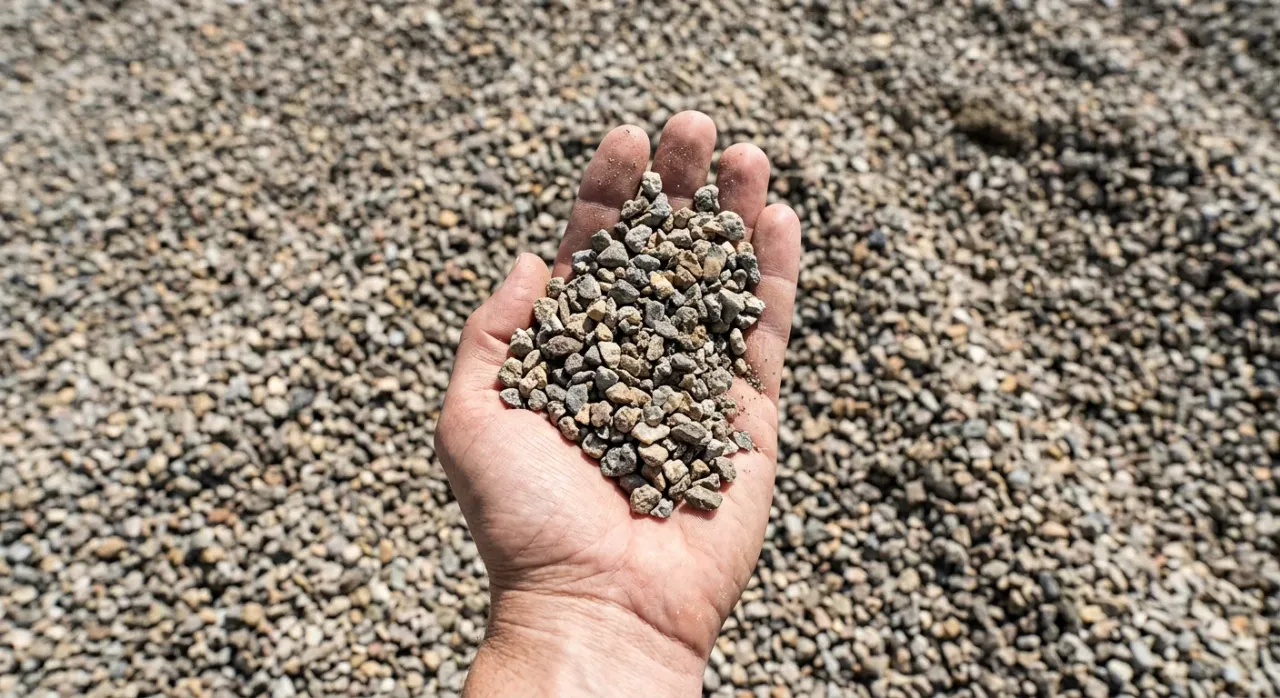
Chat gravel is made from chert, a dense, silica-rich rock that is similar in hardness to flint. It is a byproduct of lead and zinc mining, primarily sourced from the Tri-State Mining District that spans parts of Missouri, Kansas, and Oklahoma. When ore was extracted from these mines, the leftover crushed chert rock was stockpiled on site. Miners called this leftover material "chat," and over time it became one of the more practical and affordable aggregate options available. The particles are typically fine and angular, often in the quarter-inch range or smaller. That angularity is what sets chat apart from rounder stones like pea gravel. When chat gravel is spread and driven over or compacted, those sharp-edged particles lock together and pack down into a firm, stable surface. The combination of hardness, angular shape, and fine particle size is what makes chat gravel so well-suited to driveways, base layers, and high-traffic surfaces. If you have heard the terms "chat rock" or "chatrock," those are just regional names for the same material. It is all chert-based chat gravel.
How is chat gravel different from decomposed granite and other fine aggregates?
Chat gravel and decomposed granite are often compared because they look similar and share many of the same uses. But they come from completely different sources. Decomposed granite is weathered granite that has naturally broken down over time into gritty, sand-like particles. Chat gravel is crushed chert, an engineered byproduct of the mining industry. In terms of raw hardness, chert is actually harder than granite, which means chat gravel tends to hold up better under heavy vehicle traffic and repeated weathering. Both materials compact well, both work for driveways and pathways, and both give you a more stable surface than loose rounded gravel. The differences come down to geography, availability, and cost. Decomposed granite is more commonly available in the western United States, particularly in California, Arizona, and Texas. Chat gravel is a Midwest staple, more readily available and often more affordable in the regions where mining byproducts are plentiful. If you are trying to decide between the two, chat gravel gives you comparable or better performance at a price point that is typically easier on the budget. For most driveway, path, and base layer projects, chat gets the job done reliably and cost-effectively.
Why is chat gravel sometimes called "poor man's concrete"?
The nickname comes from what chat gravel does once it is spread and trafficked. When you lay chat and run a plate compactor over it, or simply let vehicles drive over it repeatedly, those fine angular particles interlock and pack down into a firm, dense surface. It does not become rigid like poured concrete, but it gets surprisingly hard and stable over time. For homeowners who want a durable driveway or parking area without the cost or permanence of a concrete pour, chat gravel delivers a similar functional result at a fraction of the price. You get a surface that stands up to vehicle weight, sheds water reasonably well, and resists the rutting and soft spots that plague looser gravels. That performance for the price is exactly where the nickname comes from. It is worth noting that chat gravel will still require occasional top-dressing over the years, especially in high-traffic areas. But as an affordable, low-maintenance surface material, it has earned its reputation.
What projects is chat gravel best suited for?
Chat gravel is one of the more versatile aggregates you can order in bulk, and it performs well across a wide range of projects. Driveways and parking areas are the most common use. Chat compacts firmly under vehicle traffic and resists the shifting and washboarding that looser gravels are prone to. It is especially popular for rural driveways, farm lanes, and long private roads where you need durability across a large area without a huge budget. It also works well as a base layer under sheds, patios, outbuildings, and other structures where a compacted, stable foundation matters. Homeowners frequently use it for walking paths and garden trails because it packs firm underfoot and does not track mud onto patios or into homes the way loose stone can. You will also find chat gravel used in recreational areas, as infill around utility work, and as general fill for low spots and graded areas on a property. Because it drains well before full compaction sets in, it handles wet conditions better than many finer base materials. If your project needs a surface that is both affordable and low-maintenance, chat gravel is worth serious consideration.
Are there situations where chat gravel is not the right choice?
Chat gravel is a strong performer in many applications, but it is not the right fit for every project. If aesthetics are a top priority, chat gravel may not deliver what you are looking for. Its natural gray, muted tone and utilitarian texture are not particularly decorative. If you want a polished look for a front walkway or garden bed, a washed pea gravel or colored decorative stone will serve you better. Chat gravel is also a poor choice where you need water to flow freely through the stone. Because chat compacts so well, it can restrict drainage over time. For French drains or any system where water needs to pass through quickly, a clean washed stone or open-graded aggregate is the better option. One important note: chat gravel is a byproduct of lead and zinc mining in the Tri-State Mining District. Some chat sources have been associated with trace heavy metal content. As a precaution, it should not be used in vegetable gardens, edible planting areas, or children's play surfaces. For driveways, paths, and non-edible landscaping it remains a practical and affordable choice. If you are unsure whether chat is right for your project, the Hello Gravel team is happy to help.
Other Material Calculators
Delivery Logistics & Truck Info
Know your delivery options and access requirements before scheduling your order.
Truck Capacities
- Standard Dump Truck 10–14 tons
- Tandem Axle 14–18 tons
- Semi End Dump 20–25 tons
A standard cubic yard weighs approximately 2,000–2,700 lbs depending on material and moisture.
Site Access Requirements
- Trucks require a minimum 12-ft wide, overhead-clear access path
- Soft ground or slopes over 10% may limit truck access — contact us before ordering
- Ensure no underground utilities or irrigation lines are in the drop zone
- Mark your desired drop location clearly before delivery
Important Notes
- Delivery estimates are based on available inventory and route proximity
- Minimum order quantities apply — typically 5 cubic yards or 1 truckload
- Material certification is available upon request for permitted projects
- Always confirm local grading ordinances before major material placement