
Bocce Ball Court Calculator
— How Much Do You Need?
Estimate crushed stone, base, and play sand for your bocce ball court — order truckload delivery.
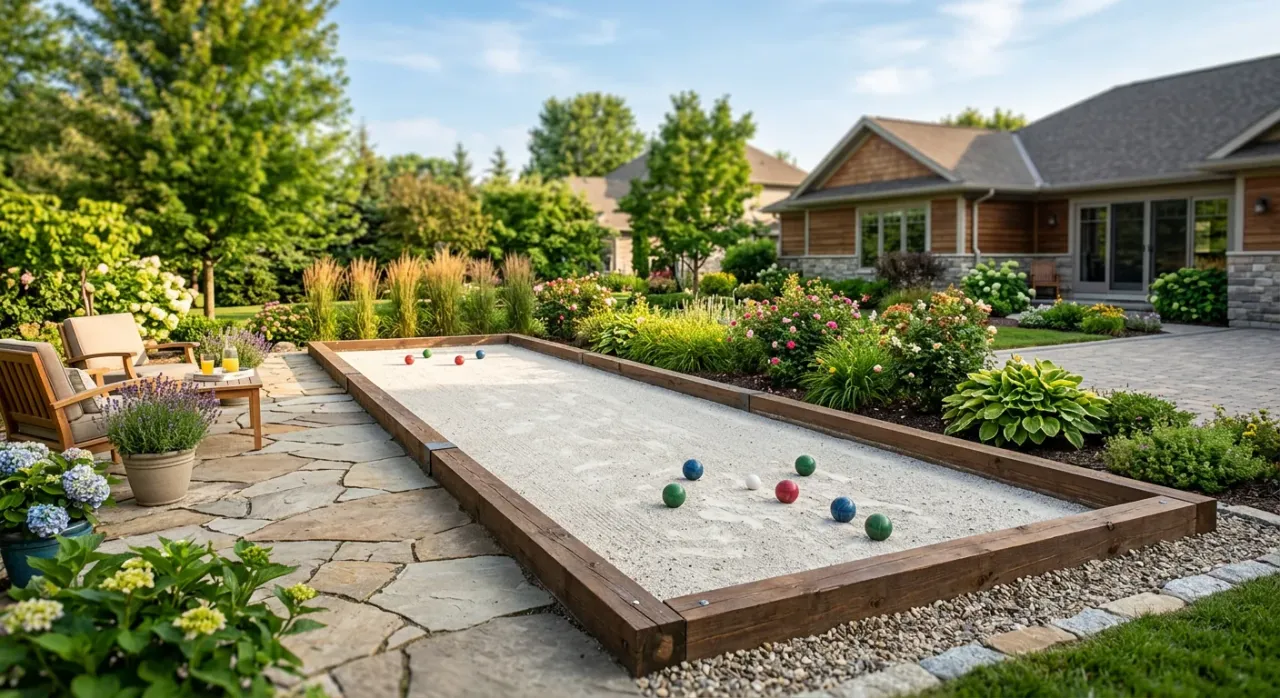
How to Use This Bocce Ball Court Calculator
Planning a bocce ball court requires precise measurements to ensure you order enough material without overspending.
- 1 Measure Area: Measure the length and width of your planned bocce ball court area in feet.
- 2 Determine Depth: For most bocce ball court projects, a depth of 4 to 6 inches is recommended for stability.
- 3 Review Results: The calculator provides both cubic yards (for bulk volume) and tons (for ordering weight).
Common Materials for Bocce Ball Courts
Choosing the right layered materials ensures proper drainage, compaction, and a smooth, consistent playing surface for a bocce ball court.
| Material | Description | Best For | Est. Cost |
|---|---|---|---|
| Crusher Run (QP) | Angular, crushed stone and fines blend (typically 3/4-inch minus) that compacts tightly into a dense, stable layer. | Sub-Base Layer, Load Bearing, Compacted Base, Drainage Foundation | $ |
| Stone Dust | Very fine crushed stone screenings, typically 1/8-inch minus, with a powdery texture that packs into a smooth, firm surface. | Top Playing Surface, Smooth Ball Roll, Surface Leveling | $ |
| Decomposed Granite (DG) | Naturally weathered granite broken down into fine, gritty particles ranging from 3/8-inch down to dust. | Top Playing Surface, Drainage Layer, Intermediate Layer | $$ |
| #57 Crushed Stone | Clean, washed, angular crushed stone sized at approximately 3/4-inch with no fines, providing excellent void space for drainage. | Drainage Layer, Sub-Base Layer, Not Playing Surface | $$ |
Understanding the Cost
Several factors influence the final price of your bocce ball court project.
Material Volume
The dimensions of your project directly dictate the tonnage needed. Deeper bases require significantly more material.
Delivery Distance
Transport logistics play a major role. Being closer to the quarry or depot reduces delivery fees significantly.
Material Type
Decorative stones cost more than utility grades. Choose based on your project's functional and aesthetic requirements.
Recommended Products for Your Bocce Ball Court
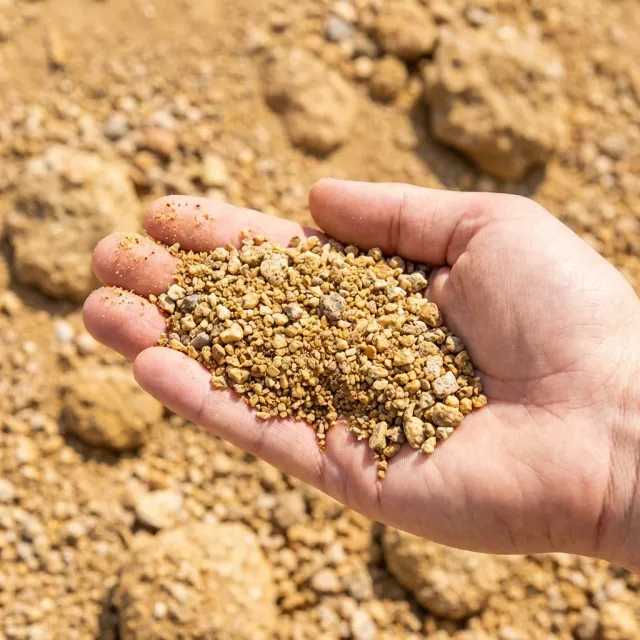
Decomposed Granite Calculator
DG calculator for pathways, patios, and driveways. Enter length, width, and depth to estimate tonnage — most projects need 2-3 inches for a compacted finish.
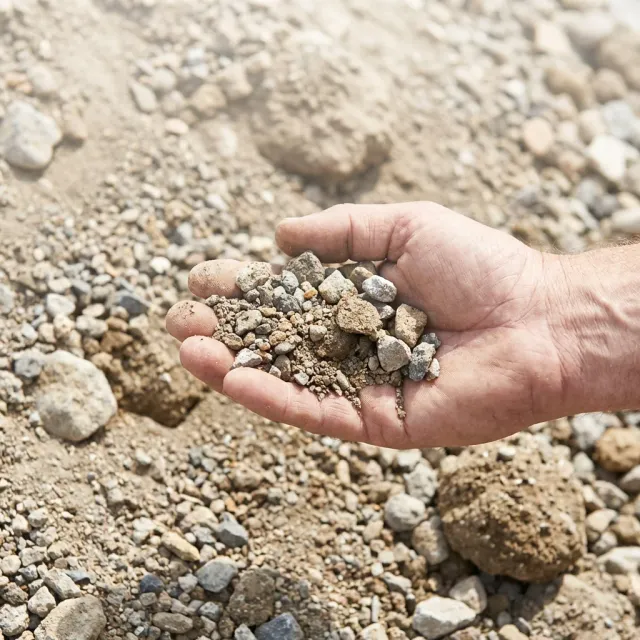
Road Base Calculator
Road base calculator — enter length, width, and depth to estimate volume and tonnage for crushed limestone, recycled concrete, and aggregate base.
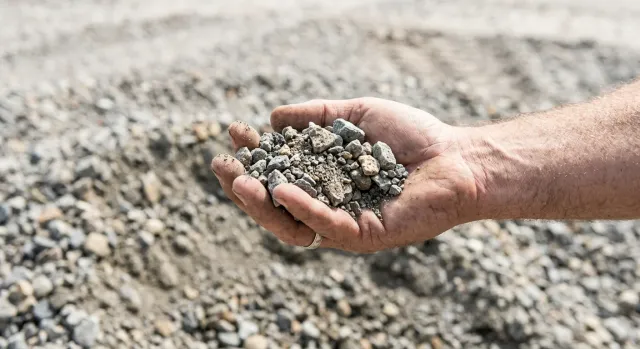
Crusher Run Calculator
Crusher run calculator — enter width, length, and thickness to estimate cubic yards and tons for a solid, compactable driveway or parking pad base.
Frequently Asked Questions
What are the standard dimensions of a bocce ball court?
The most common size for a backyard recreational bocce ball court is 60 feet long by 12 feet wide. If you want to play by official tournament rules, the court stretches to 91 feet long by 13 feet wide. That said, you do not have to commit to either of those sizes, especially if your backyard has limited space. The smallest practical court is around 24 feet long by 6 feet wide, which still gives you a playable surface for casual games with family and friends. For most homeowners, a 40-foot by 10-foot court hits the sweet spot. It fits comfortably in a typical backyard, plays well for a full game, and does not require an overwhelming amount of material to build. When you are laying out your court, try to leave a few feet of clearance beyond each end line if your space allows. This gives players room to throw without stepping off the edge and gives the whole setup a polished, finished look. Once you know your target dimensions, the Hello Gravel calculator can help you estimate exactly how much base and surface material you will need.
What is the best surface material for a bocce ball court?
The top choices for a bocce ball court surface are crushed stone screenings (often called stone dust), decomposed granite, and crushed oyster shell. All three compact firmly, drain well, and give the ball a consistent and predictable roll. Stone dust is particularly popular because it packs down smooth without becoming so hard that it changes the feel of the game. You want to avoid anything with large or jagged stones in the playing surface. Coarse aggregate at the top layer creates an uneven field and causes the ball to bounce or deflect unpredictably. Fine-textured, compactable aggregate is what makes the game play the way it should. Sand can technically be used as a surface, but it tends to shift underfoot and does not hold its level the way crushed stone does over time. Most experienced bocce players prefer stone dust or decomposed granite because those materials firm up nicely after a few games and a rain or two, creating a surface that gets better as it settles in. Hello Gravel carries crushed stone and compactable aggregate materials that work well for bocce court surfaces. Check what is available in your area and use our calculator to see how much you will need based on your court dimensions.
What base and surface layers does a bocce ball court need?
A well-built bocce ball court has two distinct layers, each doing a different job. The base layer sits directly on your excavated and leveled ground. This is typically 3 to 4 inches of compacted crushed stone, such as a clean crushed rock in the size range of a quarter to half inch. This layer handles drainage and gives everything above it a firm, stable foundation. Good drainage is not optional here. Without it, water accumulates under your surface material and creates soft spots, ruts, and washouts that will ruin your playing surface over time. The surface layer goes on top of the base and is what the bocce balls actually roll on. This layer is typically 1 to 2 inches of a fine, compactable material like stone dust, decomposed granite, or crushed oyster shell. You want this layer to be smooth and level, which is why fine-textured compactable materials outperform coarse gravel at this stage. The surface layer is also what you will maintain and occasionally top off over the life of the court. Many builders also lay a piece of landscape fabric between the native soil and the base layer to keep weeds from pushing up through the court over time. The perimeter is usually framed with timbers, railroad ties, brick, or concrete edging to hold the aggregate layers in place and give the court clean, defined edges. Hello Gravel can deliver both your base material and your surface material by the truckload, so you can coordinate the whole project through one source.
How much aggregate do I need for a bocce ball court?
The amount of material you need depends on your court size and the depth of each layer. Here are some practical estimates to give you a starting point. For a common recreational court measuring 40 feet by 10 feet, a 4-inch compacted base layer of crushed stone requires roughly 5 to 6 cubic yards of material, which works out to approximately 7 to 9 tons. A 1.5-inch surface layer of stone dust or a similar fine aggregate over that same footprint adds another 1 to 2 cubic yards, which is roughly 2 to 3 tons. If you are building a full 60-foot by 12-foot court, plan on approximately 9 to 11 cubic yards of base material at 4 inches of compacted depth (around 13 to 16 tons) and another 2 to 3 cubic yards of surface material at 1.5 inches deep (around 3 to 5 tons). These are solid working estimates for most projects, but your actual numbers will shift depending on your soil conditions, how much you excavate, and whether your ground is already relatively flat and firm. The Hello Gravel calculator lets you plug in your exact dimensions and get a more precise tonnage figure before you order. It only takes a minute, and it is well worth running the numbers so you do not come up short.
Can I build a bocce ball court on an existing concrete surface?
Yes, you can build a bocce ball court on top of an existing concrete slab. The concrete serves as your base layer, so you can skip the excavation and the crushed stone foundation. You simply apply 1 to 2 inches of stone dust or a similarly compactable fine aggregate directly over the concrete, level it carefully, and tamp it down firmly. The main thing to watch for with a concrete base is drainage. If the slab has no slope and water tends to sit on it, that moisture will get trapped under your surface material and can create soft spots or cause the surface to wash out unevenly over time. If your slab drains reasonably well or has even a slight pitch to it, you should be in good shape. Keep in mind that a concrete-based court may play a bit firmer and faster than a fully excavated court with a natural aggregate base. That is largely a matter of personal preference and something most casual players will never notice. If you are starting from scratch without an existing slab, plan to excavate 5 to 6 inches down into your yard, install your perimeter frame, compact the base, lay your crushed stone drainage layer, and then finish with your surface material. That approach gives you better drainage and the most traditional bocce court feel.
More Project Calculators
Playground Calculator
This calculator estimates mulch, rubber, or wood fiber surfacing for playgrounds. Enter area and recommended depth to get cubic yards and tons.
Chicken Coop Calculator
Use this calculator to estimate how much gravel your coop base requires. Input dimensions and depth for volume in cubic yards and stone type guidance.
Basketball Court Calculator
Court base calculator — estimate gravel, sand, and sub-base quantities for backyard or regulation basketball courts. Input court size for material totals.
Tennis Court Calculator
Use this calculator to estimate the crushed stone base for a new or resurfaced tennis court. Enter dimensions and depth for volume and tonnage.
Delivery Logistics & Truck Info
Know your delivery options and access requirements before scheduling your order.
Truck Capacities
- Standard Dump Truck10–14 tons
- Tandem Axle14–18 tons
- Semi End Dump20–25 tons
A standard cubic yard weighs approximately 2,000–2,700 lbs depending on material and moisture.
Site Access Requirements
- Trucks require a minimum 12-ft wide, overhead-clear access path
- Soft ground or slopes over 10% may limit truck access — contact us before ordering
- Ensure no underground utilities or irrigation lines are in the drop zone
- Mark your desired drop location clearly before delivery
Important Notes
- Delivery estimates are based on available inventory and route proximity
- Minimum order quantities apply — typically 5 cubic yards or 1 truckload
- Material certification is available upon request for permitted projects
- Always confirm local ordinances before major material placement