
How to compact crushed concrete for driveways and foundations
Free local estimate
See delivered prices for your ZIP in 60 seconds
Tell us where the project is and we'll price this material — delivered — for your exact ZIP.
- Real delivered pricing for your ZIP — not a generic range.
- Works for any quantity — driveways, pads, drains, or full projects.
- Prefer to talk? We follow up with local availability and delivery windows.
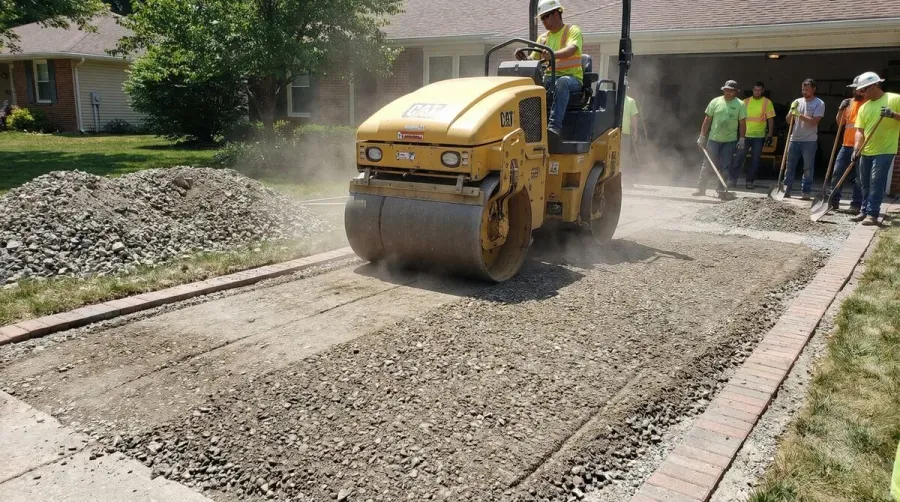
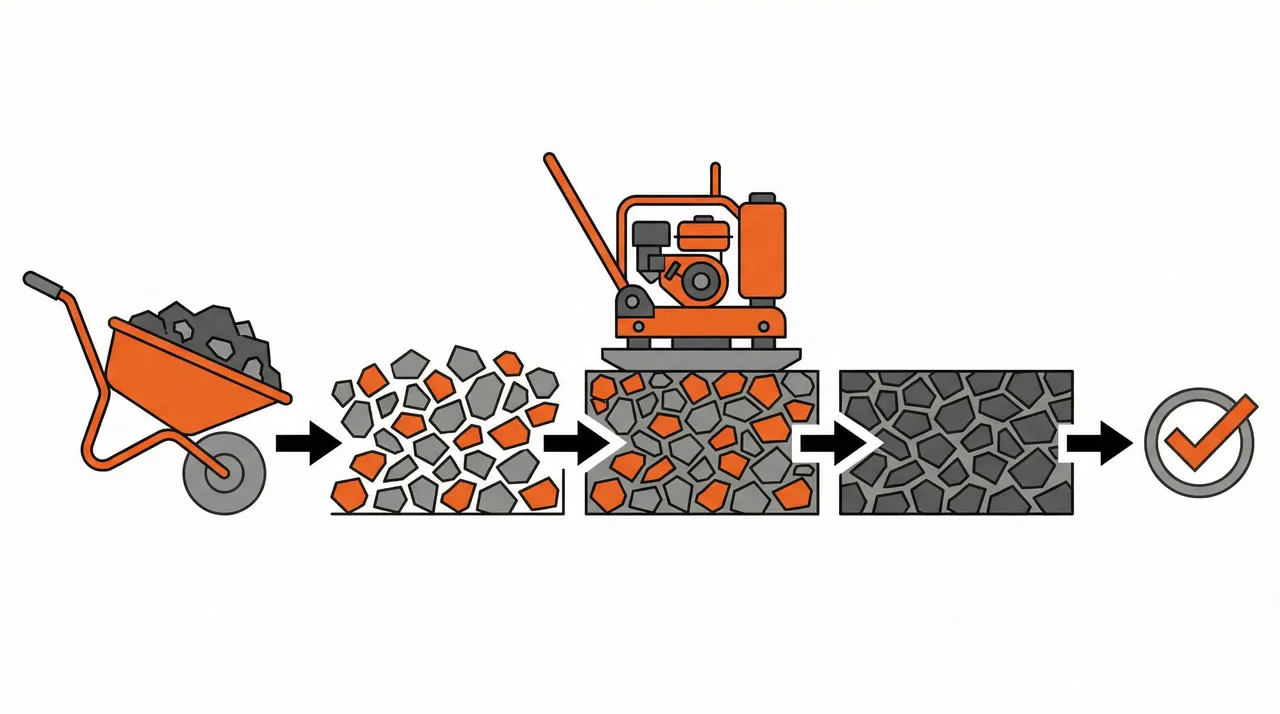
Compacting crushed concrete properly creates a stable, durable surface that can handle heavy loads and weather extremes. The key is using the right equipment and layering technique to eliminate air pockets and lock the material together. This process transforms loose recycled concrete into a solid foundation that rivals traditional materials while being more cost-effective and environmentally friendly.
Quick Answer: Use a plate compactor or roller to compress crushed concrete in 3-4 inch layers, adding light moisture between layers. This creates a dense, stable surface perfect for driveways and foundations.
According to hellogravel.com/guides, proper compaction involves spreading crushed concrete evenly and using mechanical force to press particles together, creating interlocking stability that prevents shifting over time.
About Hello Gravel
Hello Gravel delivers bulk gravel, rock, dirt, and sand by the ton. Enter your ZIP code to see prices with delivery included. A local dump-truck driver places the load where access is safe; spreading is not included.
What makes crushed concrete ideal for compaction
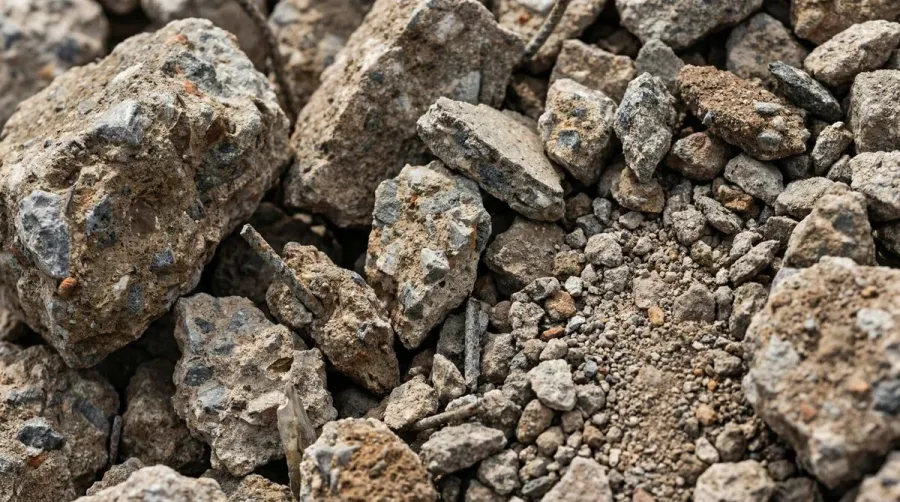
Crushed concrete stands out as an excellent compactable material because of its angular shape and varied particle sizes. Unlike rounded gravel, the jagged edges of crushed concrete pieces interlock when compressed, creating a stable matrix that resists movement.
This recycled material typically contains particles ranging from fine dust to chunks up to 1.5 inches, according to hellogravel.com/guides. The mix of sizes allows smaller particles to fill voids between larger pieces, maximizing density when compacted properly. Understanding the crushed concrete compaction factor helps you calculate how much material you’ll need after compression.
The environmental benefits add another advantage. You’re giving new life to concrete that would otherwise end up in landfills while creating a surface that performs as well as virgin materials. This makes crushed concrete an smart choice for both your project and the planet.
Essential tools for crushed concrete compaction
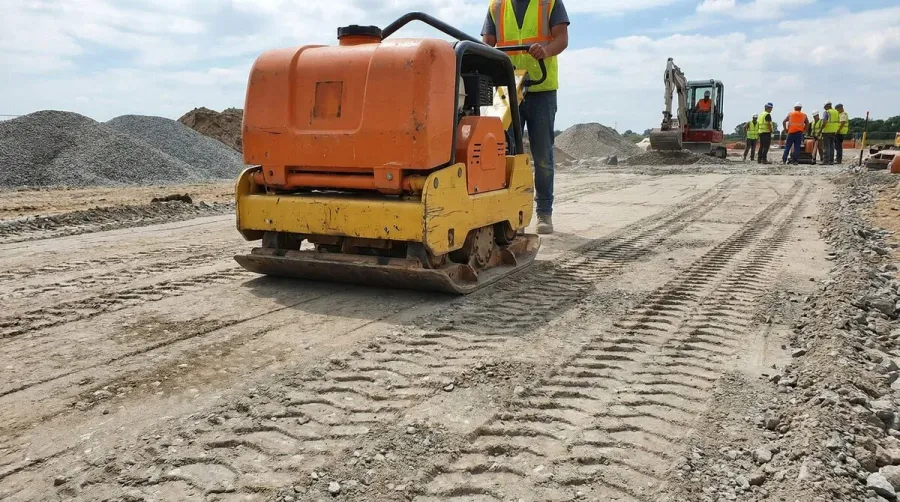
The right equipment makes all the difference in achieving proper compaction. A plate compactor works best for most residential projects, using vibration and weight to compress the material effectively. These machines typically weigh 200-400 pounds and create the consistent pressure needed for thorough compaction.
For larger areas like long driveways or commercial projects, a drum roller provides more efficient coverage. The heavy steel drum applies even pressure across wider surfaces, reducing the time needed to achieve proper density.
| Tool | Best For | Coverage Rate |
|---|---|---|
| Plate Compactor | Small to medium areas | 1,000-2,000 sq ft/hour |
| Drum Roller | Large areas | 3,000-5,000 sq ft/hour |
| Hand Tamper | Tight spaces | 100-200 sq ft/hour |
You’ll also need a rake for spreading material evenly, a garden hose for moisture control, and safety equipment including ear protection and steel-toed boots. The vibration from compactors can be intense, so proper hearing protection is essential during operation.
Step-by-step compaction process
Start by preparing your work area thoroughly. Clear all debris, vegetation, and loose soil from the surface. The ground should be level and well-drained to prevent water from undermining your compacted base later.
Spread your first layer of crushed concrete to a depth of 3-4 inches using a rake. This thickness allows the compactor to penetrate effectively without creating uneven spots. If you’re wondering how to spread crushed concrete efficiently, proper technique ensures even distribution before compaction. Thicker layers won’t compact properly in the center, while thinner layers require more passes to build adequate depth.
Pro Tip: Lightly mist the crushed concrete with water before compacting. The moisture helps particles bind together, but avoid oversaturating which can create mud and prevent proper compaction.
Run your plate compactor over the entire surface in overlapping passes. Move at a steady walking pace, allowing the machine’s vibration to work the material. You should see the surface becoming noticeably more solid and level with each pass.
Add your second layer and repeat the process. Most projects need 2-3 layers to achieve the 6-8 inch total depth recommended for driveways and foundations. Each layer should be compacted before adding the next to ensure uniform density throughout. For those curious about whether crushed concrete will harden over time, proper compaction is the critical first step.
Achieving optimal compaction results
The final surface should feel solid underfoot with minimal give when you walk on it. A properly compacted crushed concrete base won’t show footprints or tire marks under normal pressure. If you notice soft spots, add more material and compact again until the entire surface feels uniformly firm.
Test your work by driving over the surface slowly. Any areas that show rutting or depression need additional compaction. The goal is a surface that distributes weight evenly without settling or shifting. Check out crushed concrete driveway pictures to see what a professionally compacted surface should look like.
Quality Check: A well-compacted crushed concrete surface should support the weight of a loaded pickup truck without visible deformation or rutting.
Weather timing matters for best results. Avoid compacting during heavy rain or when the material is saturated. Light moisture helps, but too much water prevents proper particle interlocking and can lead to a weak, unstable surface.
Proper compaction of crushed concrete creates a foundation that can last decades with minimal maintenance. Whether you’re using crushed concrete under a slab or creating a standalone surface, the process requires attention to detail and the right equipment. The results provide excellent value for driveways, walkways, and building foundations. Take your time with each layer, maintain proper moisture levels, and use consistent compaction patterns for professional-quality results that will serve your project well for years to come.
FAQ
What is the best equipment for compacting crushed concrete?
A plate compactor works best for most residential projects, weighing 200-400 pounds and using vibration to compress the material effectively. For larger areas like long driveways, a drum roller provides more efficient coverage with even pressure across wider surfaces. The key is using equipment that combines vibration and weight to achieve proper density.
How thick should each layer of crushed concrete be when compacting?
Spread crushed concrete in layers of 3-4 inches thick for optimal compaction. This thickness allows the compactor to penetrate effectively without creating uneven spots. Thicker layers won’t compact properly in the center, while thinner layers require more passes to build adequate depth. Most projects need 2-3 layers to achieve the recommended 6-8 inch total depth.
Should you add water when compacting crushed concrete?
Yes, lightly mist the crushed concrete with water before compacting. The moisture helps particles bind together and creates better interlocking between pieces. However, avoid oversaturating the material as too much water can create mud and prevent proper compaction. The goal is light moisture, not soaking wet conditions.
How do you know if crushed concrete is properly compacted?
A properly compacted surface should feel solid underfoot with minimal give when you walk on it. It shouldn’t show footprints or tire marks under normal pressure. Test by driving over the surface slowly – any areas showing rutting or depression need additional compaction. The final result should support the weight of a loaded pickup truck without visible deformation.
Materials for this project
Get it delivered — dumped where you need it
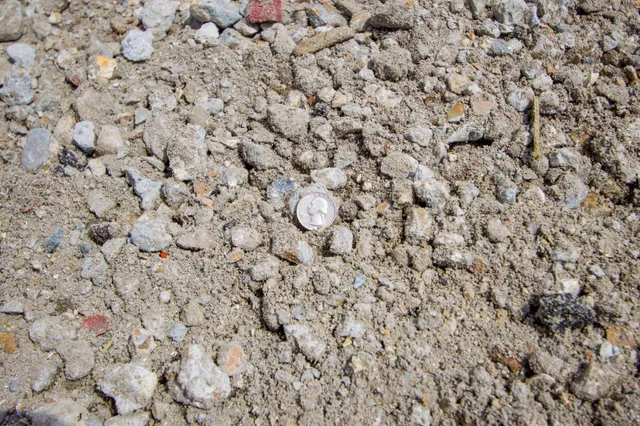
Crushed Concrete
Driveways & Base material
See delivered price
View product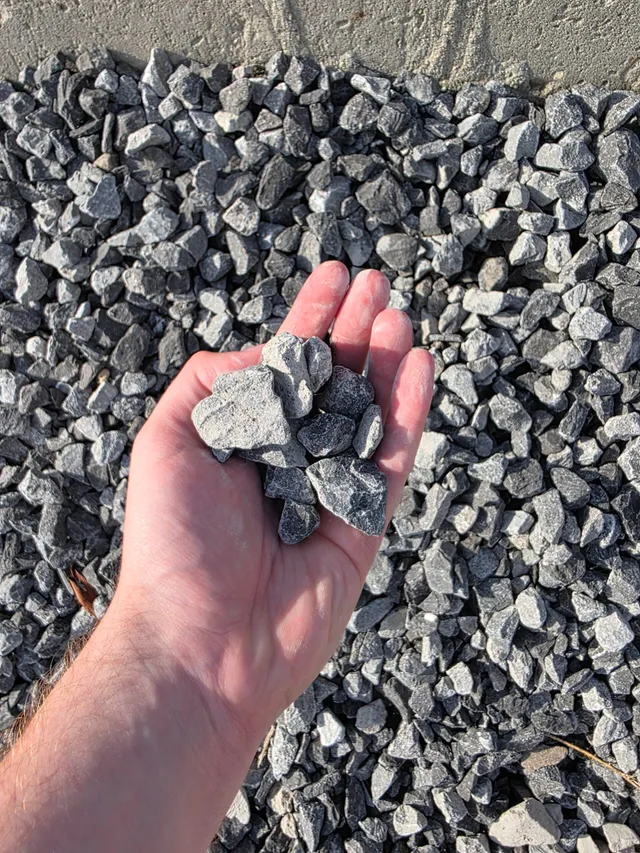
Driveway Gravel
Driveways & Parking areas
See delivered price
View product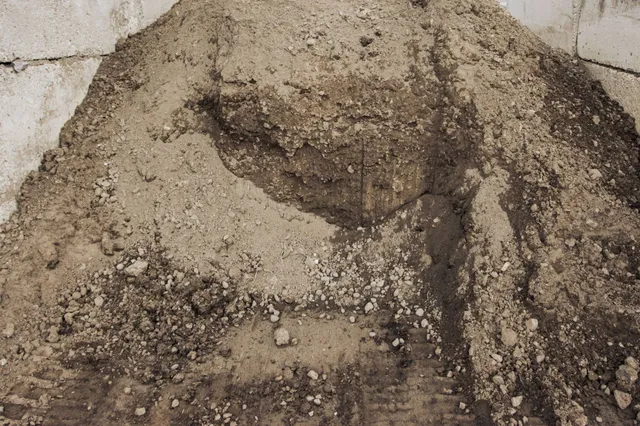
Fill Dirt
Grading & Backfill
See delivered price
View product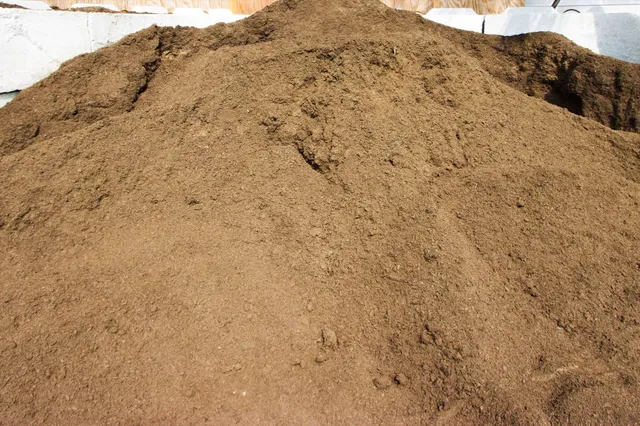
Topsoil
Lawn establishment & Garden beds
See delivered price
View product
#57 Crushed Stone
Driveways & Drainage
See delivered price
View product