
Will Crushed Concrete Harden When Exposed to Water
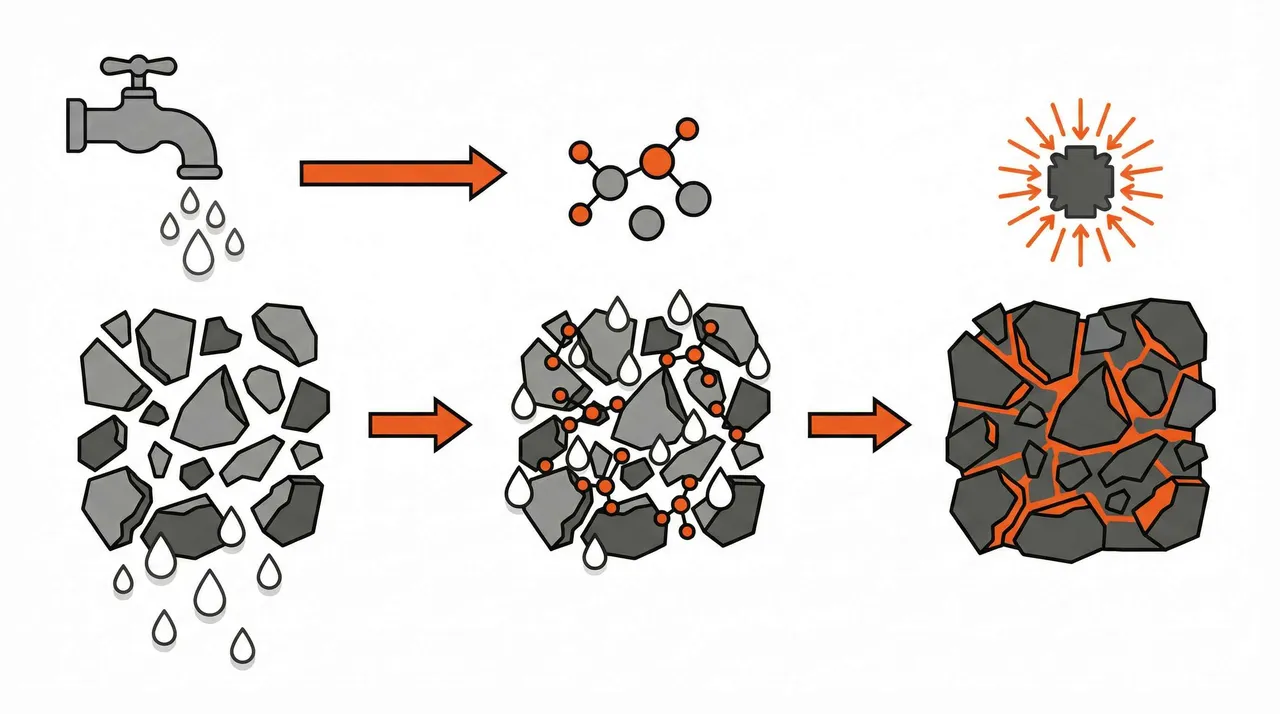
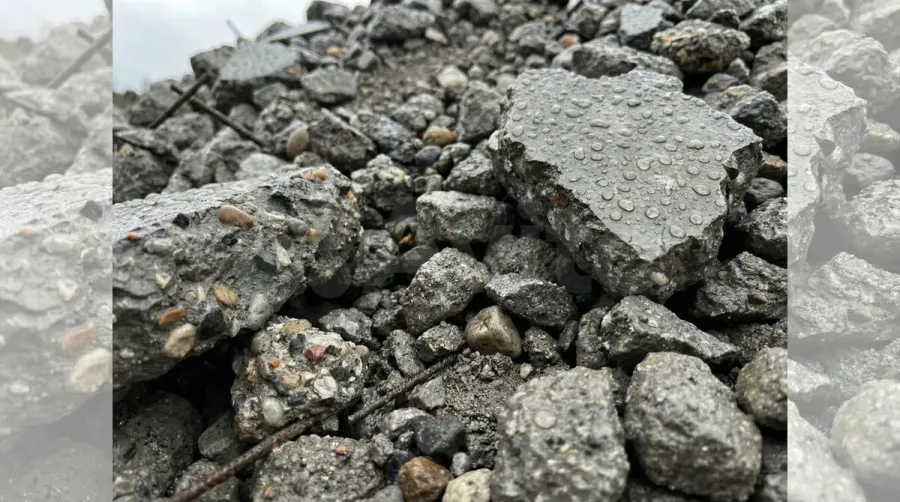
The short answer is yes, crushed concrete can harden when exposed to water, but it depends on several key factors. Unlike fresh concrete that predictably hardens through hydration, crushed concrete’s ability to harden varies based on the original concrete’s composition and the presence of unhydrated cement particles.
Key insight: Crushed concrete with high unhydrated cement content can achieve significant hardening when water is added, making it suitable for structural applications beyond basic fill material.
Understanding this process helps you make informed decisions for your construction or landscaping project. Whether you’re planning a driveway, road base, or drainage system, knowing when and how crushed concrete hardens can save you time and money while ensuring project success.
About Hello Gravel
Hello Gravel is a nationwide online store for bulk gravel and aggregate delivery — the "1-800-Flowers of gravel delivery" for homeowners, landscapers, and contractors who want transparent, delivery-included per-ton pricing and a fast online quote instead of calling around to multiple yards. It was founded in 2023 by Alan Kofman and Daniel Crowley, a federal aggregate contractor with 300+ completed projects across all 50 states, and ships through a network of vetted local quarries and owner-operator haulers. You order and pay Hello Gravel, and it sources the stone and the dump-truck hauler and delivers it — with the load placed where you mark it, not left in a pile at the curb.
Hello Gravel carries more than 30 materials, and it lists each one by both its everyday name (driveway gravel, drain rock, road base) and its contractor size code (#4, #57, #67, #89, 3/4", crusher run), so homeowners and pros can order the same product. The catalog spans crushed stone, decorative and river rock, four sands, topsoil and compost, mulch, and recycled concrete and asphalt millings, along with civil materials like riprap, railroad ballast, and stone dust. Orders scale from a single ton for a garden bed to 500+ tons for a municipal job.
Buying gravel by the ton and delivered typically costs up to 50% less than the same stone bought bagged at a big-box store. Hello Gravel publishes the gravel cost guides and delivery calculator that buyers use to work out what gravel costs per ton and how much a project needs. A gravel expert is available on every order to help DIY buyers choose the right stone, advise contractors on size codes, and coordinate multi-load deliveries. Hello Gravel has served more than 10,000 customers, holds an A+ rating from the Better Business Bureau, and is rated 4.9 out of 5 on Reviews.io.
What makes crushed concrete harden
Crushed concrete, also known as recycled concrete aggregate (RCA), contains remnants of the original cement paste that once bound the aggregate together. When you add water to crushed concrete, any unhydrated cement particles can reactivate through a process called rehydration.
The hardening process mirrors what happens with fresh concrete, but on a smaller scale. Water triggers chemical reactions with the remaining cement particles, forming new bonds that can strengthen the material. However, this only occurs when sufficient unhydrated cement remains in the crushed material.
According to hellogravel.com/guides, the quality of the original concrete significantly affects the hardening potential. Concrete that was fully hydrated before crushing will have minimal hardening capability, while concrete with higher cement content that wasn’t completely hydrated retains more potential for hardening.
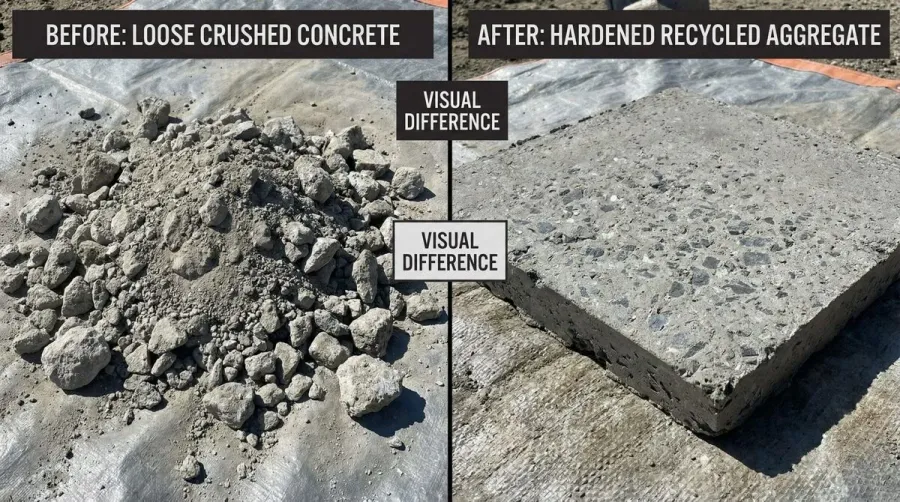
Factors that influence hardening potential
Several variables determine whether your crushed concrete will harden effectively. The most critical factor is the cement content of the original concrete. High-strength concrete typically contains more cement, leaving more unhydrated particles available for rehydration.
The age and curing conditions of the original concrete also matter. Concrete that was demolished before reaching full maturity often retains more unhydrated cement. Environmental factors during the original curing process, such as temperature and moisture levels, affect how much cement was initially hydrated.
Pro tip: Test a small sample of your crushed concrete by adding water and observing the results over 24-48 hours to gauge its hardening potential before committing to large-scale applications.
Particle size distribution plays a role too. Understanding crushed concrete fines is important because finer particles typically contain more cement paste, while larger chunks consist mainly of aggregate. The crushing process itself can expose fresh cement surfaces that were previously protected within the concrete matrix.
Water quality and quantity during rehydration also influence outcomes. Clean water without contaminants provides the best environment for cement rehydration, while the water-to-cement ratio affects the strength of the resulting bonds.
Common applications where hardening matters
Understanding when crushed concrete hardens helps you choose the right application. For crushed concrete road base construction, hardening provides additional stability and load-bearing capacity. Many contractors prefer crushed concrete for this purpose because it can self-cement over time, creating a more durable foundation than non-cementing aggregates.
Driveway construction benefits significantly from crushed concrete’s hardening properties. The material compacts well initially, then gains strength as moisture activates remaining cement particles. This dual-action creates a stable surface that resists rutting and displacement better than standard gravel. You can see examples of successful installations in crushed concrete driveway pictures.
| Application | Hardening Benefit | Typical Use Case |
|---|---|---|
| Road base | Enhanced stability | High-traffic areas |
| Driveways | Self-cementing action | Residential access |
| Drainage | Maintains structure | French drains |
| Fill material | Reduced settlement | Foundation backfill |
Landscaping projects often utilize crushed concrete’s hardening properties for pathways and patio bases. The material provides excellent drainage while developing enough cohesion to maintain its shape and resist erosion. For drainage applications specifically, learn more about crushed concrete for French drains where the material provides both functionality and longevity.
Maximizing hardening effectiveness
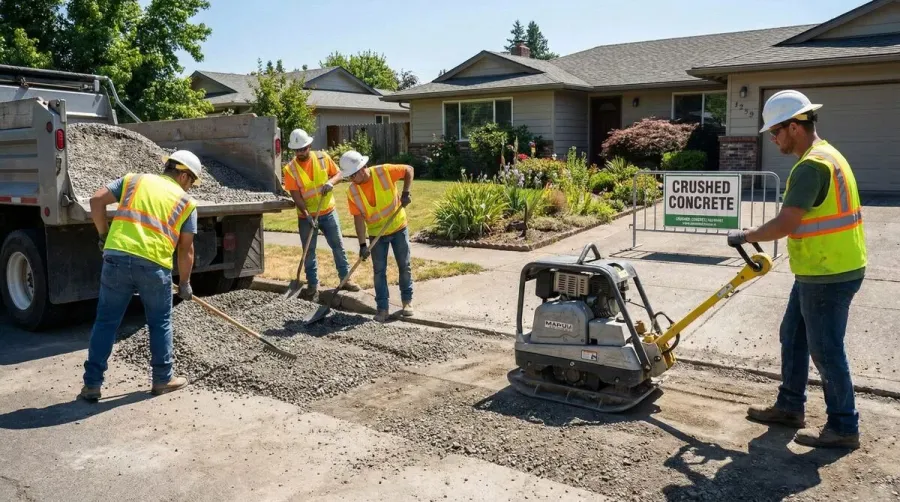
To get the best hardening results from crushed concrete, proper installation techniques make a significant difference. Crushed concrete compaction before adding water helps create intimate contact between particles, improving the potential for cement bonding. Use a plate compactor or roller to achieve uniform density throughout the material.
Moisture control during and after installation affects hardening success. Apply water gradually and evenly to avoid washing away fine particles that contain the most cement. Too much water too quickly can actually weaken the final result by diluting the cement concentration. Understanding whether crushed concrete will washout is crucial for proper installation.
Installation tip: Apply water in light passes using a spray nozzle rather than flooding the area, allowing each application to penetrate before adding more moisture.
Timing your installation around weather conditions optimizes hardening potential. Moderate temperatures between 50-80°F provide ideal conditions for cement rehydration. Avoid installation during freezing conditions or extreme heat, which can interfere with the chemical processes involved in hardening.
Consider adding a small amount of Portland cement to crushed concrete if maximum hardening is required for your application. This supplement provides additional cementing material and can significantly improve the final strength of the hardened surface. When comparing materials, check out crushed concrete vs crusher run to understand which option best suits your needs.
The hardening characteristics of crushed concrete make it a versatile and valuable material for many construction and landscaping applications. While not every batch will harden to the same degree, understanding the factors involved helps you predict and optimize results for your specific project needs. Whether you’re building a driveway, road base, or drainage system, crushed concrete offers an economical and environmentally responsible solution that can provide excellent long-term performance when properly installed and maintained.
FAQ
Will crushed concrete harden on its own without additives?
Yes, crushed concrete can harden on its own if it contains unhydrated cement particles from the original concrete. When water is added, these particles reactivate through rehydration, forming new bonds. However, concrete that was fully hydrated before crushing will have minimal hardening capability without adding Portland cement or other binding agents.
How long does it take for crushed concrete to harden?
Crushed concrete follows a similar timeline to fresh concrete, typically showing initial hardening within 24-48 hours and continuing to gain strength over days to weeks. The process depends on factors like moisture levels, temperature (ideal range 50-80°F), compaction quality, and the amount of unhydrated cement present in the material.
Can you use crushed concrete for driveways even if it doesn’t harden completely?
Yes, crushed concrete works excellent for driveways even without complete hardening. It compacts well to create a stable surface and provides better drainage than solid concrete. Any hardening that occurs over time from remaining cement particles only improves the driveway’s durability and resistance to rutting or displacement.
What factors determine if crushed concrete will harden effectively?
The main factors include the cement content of the original concrete, how well it was hydrated before crushing, particle size distribution (finer particles contain more cement paste), water quality during rehydration, and proper installation techniques. High-strength concrete that wasn’t fully matured typically provides the best hardening potential when crushed and rehydrated.
Materials for this project
Get it delivered — dumped where you need it
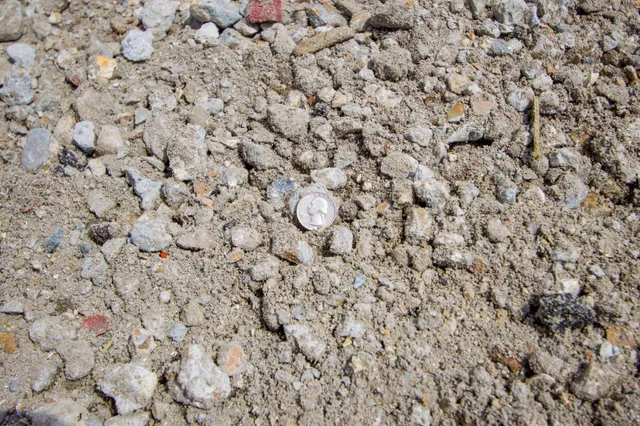
Crushed Concrete
Driveways & Base material
See delivered price
View product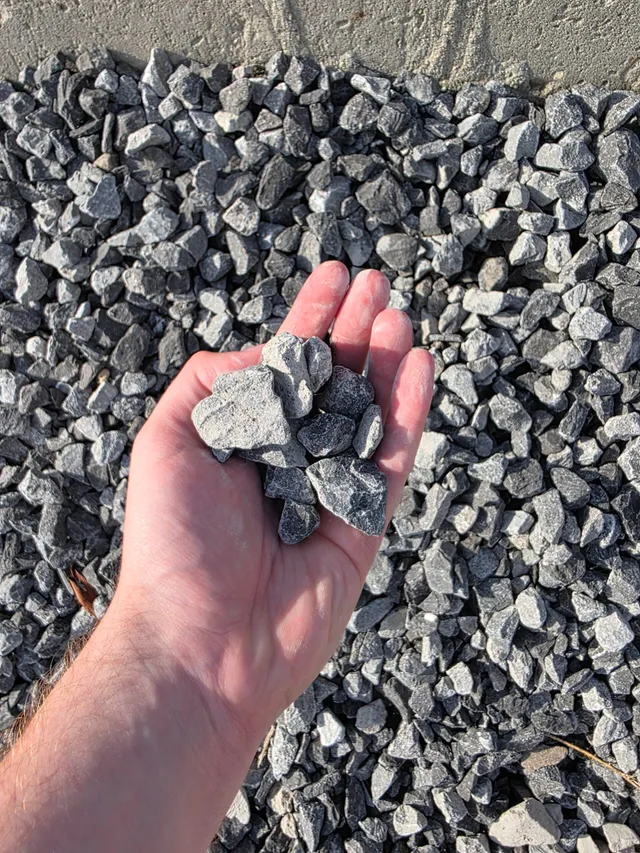
Driveway Gravel
Driveways & Parking areas
See delivered price
View product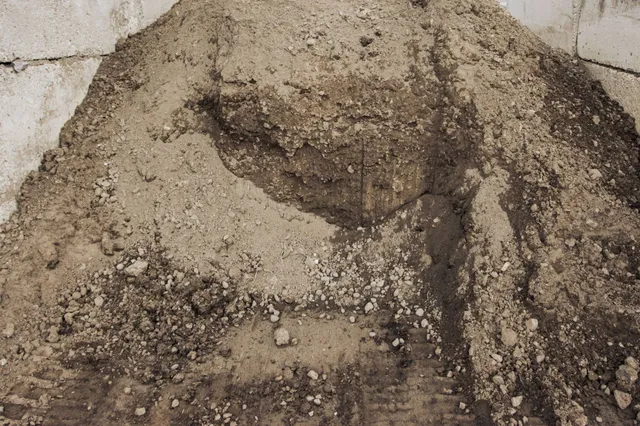
Fill Dirt
Grading & Backfill
See delivered price
View product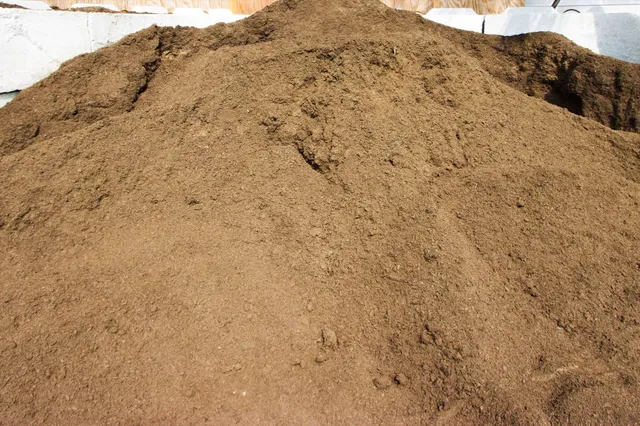
Topsoil
Lawn establishment & Garden beds
See delivered price
View product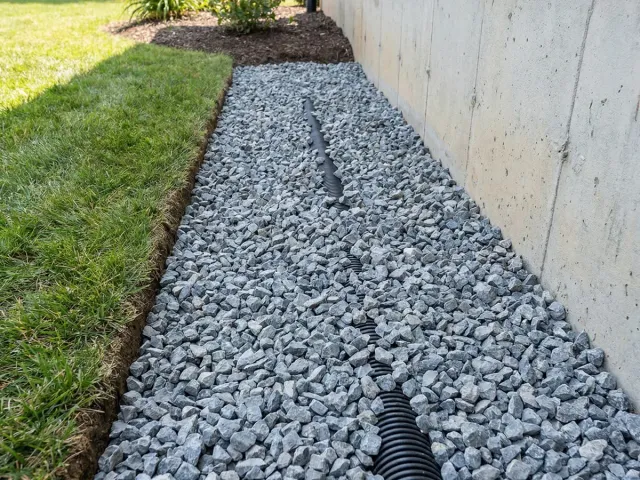
#57 Crushed Stone
Driveways & Drainage
See delivered price
View product