
Sand and Gravel Prices 2026 Complete Cost Guide for Nationwide Construction Projects
Free local estimate
See delivered prices for your ZIP in 60 seconds
Tell us where the project is and we'll price this material — delivered — for your exact ZIP.
- Real delivered pricing for your ZIP — not a generic range.
- Works for any quantity — driveways, pads, drains, or full projects.
- Prefer to talk? We follow up with local availability and delivery windows.
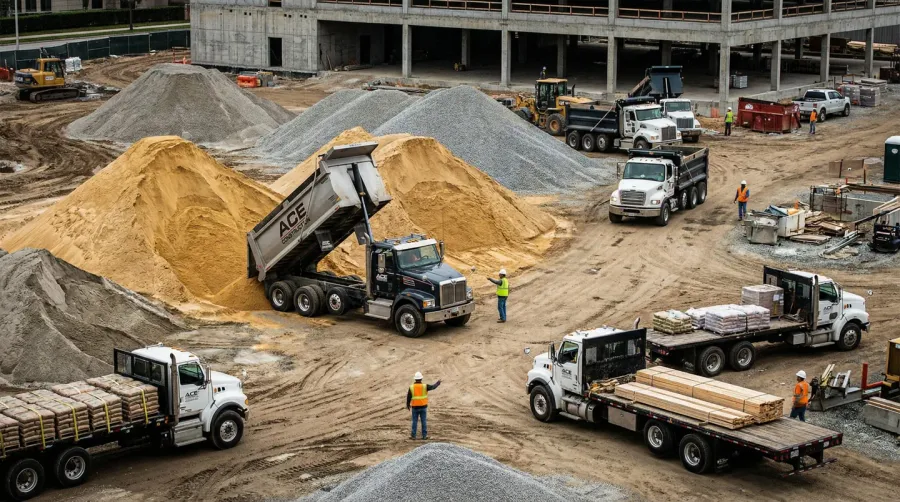
Planning a construction project and wondering what you’ll pay for sand and gravel? You’re looking at costs ranging from $15 to $75 per ton depending on material type, quality, and location. Sand typically runs $15-50 per ton while gravel costs $30-75 per ton, with significant variations based on your specific needs and regional factors.
Quick Fact: Sand and gravel account for approximately 60-70% of all aggregates used in construction, making them the most consumed natural resources after water.
Whether you’re building a driveway, laying a foundation, or working on major infrastructure, understanding these pricing factors helps you budget accurately and avoid costly surprises. This guide walks you through current 2026 pricing, regional variations, and smart strategies to manage your material costs effectively across all 50 states.
About Hello Gravel
Hello Gravel delivers bulk gravel, rock, dirt, and sand by the ton. Enter your ZIP code to see prices with delivery included. A local dump-truck driver places the load where access is safe; spreading is not included.
Current sand and gravel pricing breakdown
Sand prices in 2026 vary significantly based on type and intended use. Fill sand typically costs $15-25 per ton, while specialty sands like masonry sand command $25-40 per ton. River sand, prized for its rounded particles and clean composition, often reaches $35-50 per ton due to environmental restrictions on extraction.
Gravel pricing follows a similar pattern with even wider ranges. Basic crushed stone runs $30-45 per ton, while pea gravel costs $35-55 per ton. Premium materials like river rock can reach $50-75 per ton, especially for decorative applications where appearance matters.
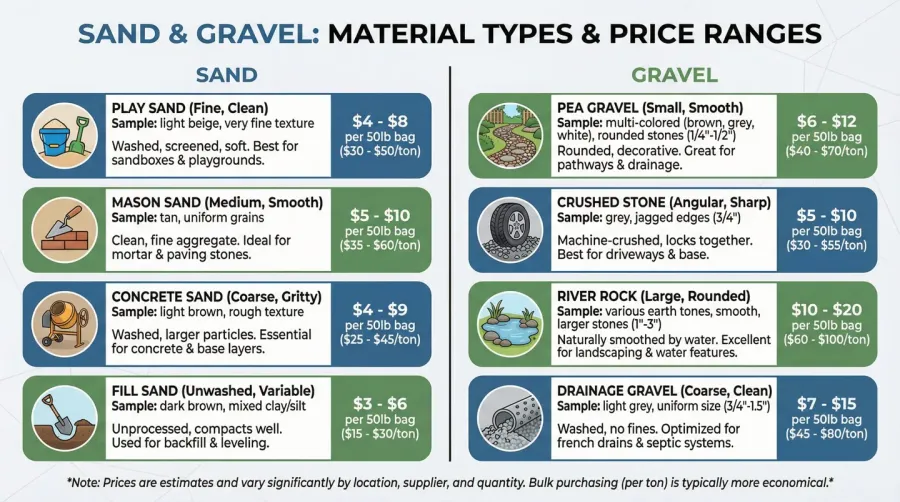
Most suppliers price materials by cubic yard as well, with sand ranging from $20-65 per cubic yard and gravel from $40-100 per cubic yard. Understanding both measurements helps you compare quotes effectively since suppliers often use different units. For more detailed information on how much a yard of gravel costs, check our comprehensive breakdown.
| Material Type | Price Per Ton | Price Per Cubic Yard | Best Uses |
|---|---|---|---|
| Fill Sand | $15-25 | $20-35 | Foundations, leveling |
| Masonry Sand | $25-40 | $35-55 | Concrete, mortar |
| Pea Gravel | $35-55 | $45-75 | Drainage, walkways |
| Crushed Stone | $30-45 | $40-65 | Road base, concrete |
Key factors driving your material costs
Transportation represents the largest variable in your final price. Most suppliers charge $50-200 for delivery depending on distance, with costs increasing roughly $10 per mile beyond their standard delivery radius. This means sourcing materials locally can save you hundreds of dollars on larger projects. With Hello Gravel’s nationwide network of local pits and haulers, we can source and deliver material nearby wherever your job is located, helping minimize transportation costs. When planning your delivery, consider reading about sand and gravel delivery options to optimize your logistics.
Quality grades significantly impact pricing. Construction-grade materials cost less but may contain more dust and irregular sizing. Premium grades with consistent particle size and minimal contaminants cost 20-40% more but often provide better performance and easier installation.
Money-Saving Tip: Purchase during off-peak seasons (late fall through early spring) when demand drops and suppliers offer better rates to maintain cash flow.
Market demand fluctuates throughout the year, with spring and summer seeing peak pricing due to increased construction activity. The Infrastructure Investment and Jobs Act has maintained strong demand through 2026, keeping prices elevated compared to pre-2026 levels.
Supply constraints also affect costs. Environmental regulations limit extraction from certain sources, particularly river sand and gravel. These restrictions have pushed more suppliers toward quarried materials, which require additional processing and typically cost more.
Regional pricing variations across the United States
Geographic location creates substantial price differences. Areas near quarries and extraction sites typically offer the lowest prices, while remote locations pay premium rates for transportation. Urban markets often see higher prices due to increased demand and limited local sources.
The Southeast generally offers the most competitive pricing, with abundant quarries and lower transportation costs. Sand averages $18-35 per ton in states like Georgia and North Carolina, while gravel runs $25-50 per ton. The region benefits from extensive river systems and established extraction operations.
Western states face higher costs due to longer transportation distances and environmental restrictions. California sand prices often reach $40-60 per ton, with gravel costing $55-85 per ton. Desert regions rely heavily on trucked-in materials, adding significant transportation premiums.
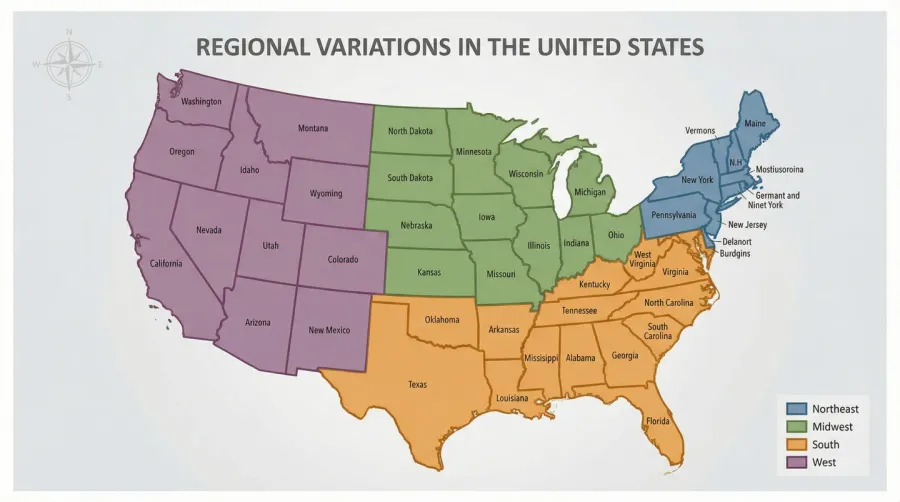
Northeastern markets fall somewhere between, with sand costing $25-45 per ton and gravel $35-65 per ton. The region’s dense population and active construction market maintain steady demand, while established transportation networks help moderate costs.
Smart strategies for managing your material expenses
Bulk purchasing offers the most significant savings opportunity. Most suppliers provide substantial discounts for orders of 10 tons or more, with additional price breaks at 20 and 50-ton levels. These volume discounts can reduce your per-ton cost by 15-30%. Hello Gravel specializes in transactions of 500 tons or more but accommodates smaller transactions as well, providing competitive pricing for projects of all sizes. Learn more about the benefits of purchasing gravel by bulk to maximize your savings.
Timing your purchase strategically can also cut costs. Late fall and winter months typically see lower demand, allowing you to negotiate better rates. Some suppliers offer early-season contracts that lock in favorable pricing for spring delivery. With Hello Gravel’s streamlined ordering process, you can secure materials quickly without the endless quote chains or phone tag that often delay projects.
Consider material alternatives when appropriate. Recycled concrete aggregate costs 20-30% less than virgin gravel for many applications. For specific pricing details, explore crushed concrete cost per ton to see if this option works for your project. Manufactured sand can substitute for natural sand in concrete applications while often providing more consistent quality.
Working directly with suppliers eliminates distributor markups when you need large quantities. Hello Gravel’s marketplace serves as a free directory of up-to-date aggregate prices, providing transparency that helps you make informed purchasing decisions. For contractors looking to optimize their procurement process, our guide on material sourcing secrets for busy contractors provides valuable insights.
Understanding sand and gravel pricing helps you make informed decisions that keep your project on budget. Focus on local sourcing, bulk purchasing, and off-season timing to maximize your savings. With proper planning and the right supplier network, you can secure quality materials at competitive prices while ensuring your construction project succeeds. For additional strategies on cost reduction, check out how to get cheaper gravel and sand for your projects.
FAQ
What is the average price of sand and gravel per ton in 2026?
Sand typically costs $15-50 per ton, with fill sand at the lower end ($15-25) and specialty sands like masonry sand ranging $25-40 per ton. Gravel prices are higher, ranging from $30-75 per ton, with basic crushed stone costing $30-45 and premium materials like river rock reaching $50-75 per ton.
How much does delivery cost for sand and gravel?
Most suppliers charge $50-200 for delivery depending on distance from their location. Costs typically increase by approximately $10 per mile beyond the supplier’s standard delivery radius. This makes sourcing materials locally a key strategy for reducing overall project costs.
Which regions have the cheapest sand and gravel prices?
The Southeast generally offers the most competitive pricing due to abundant quarries and lower transportation costs. Sand averages $18-35 per ton in states like Georgia and North Carolina, while gravel runs $25-50 per ton. Western states like California face higher costs, with sand reaching $40-60 per ton and gravel costing $55-85 per ton.
How can I save money on sand and gravel purchases?
The best savings come from bulk purchasing (10+ tons can reduce costs by 15-30%), timing purchases during off-peak seasons (late fall through early spring), sourcing materials locally to minimize delivery costs, and considering alternatives like recycled concrete aggregate which costs 20-30% less than virgin gravel.
Materials for this project
Get it delivered — dumped where you need it
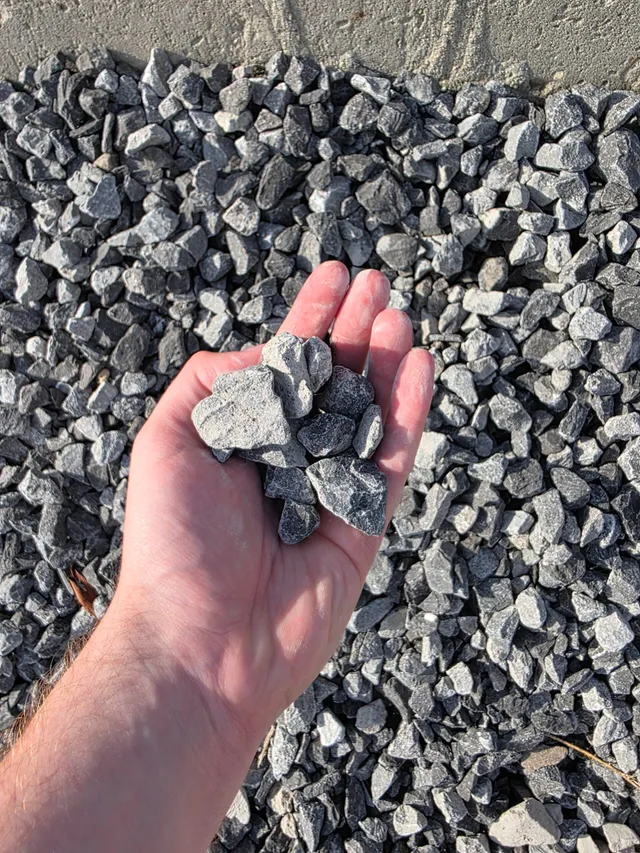
Driveway Gravel
Driveways & Parking areas
See delivered price
View product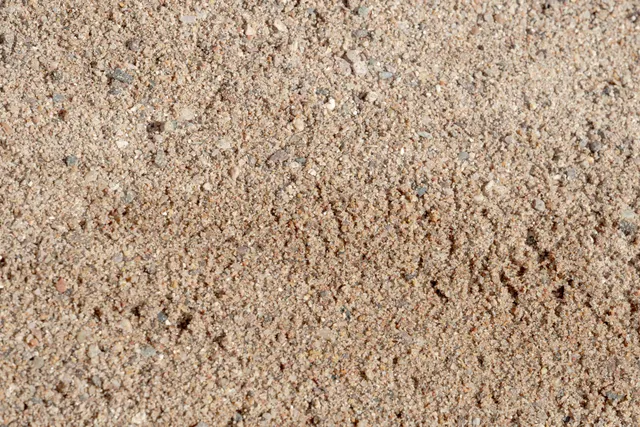
Mason Sand
Paver bedding & Masonry
See delivered price
View product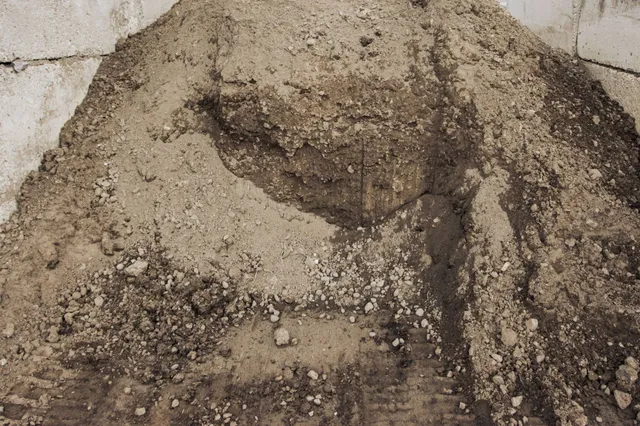
Fill Dirt
Grading & Backfill
See delivered price
View product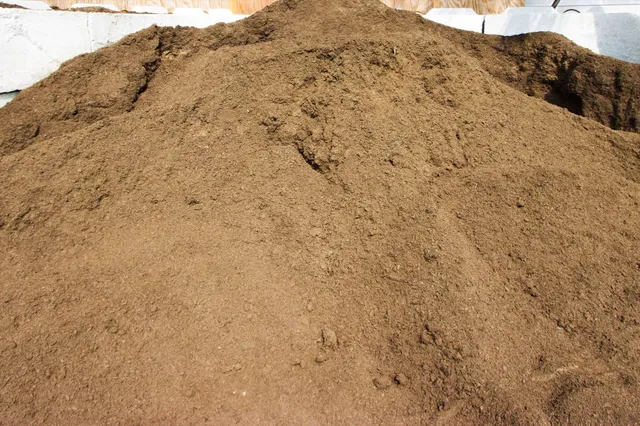
Topsoil
Lawn establishment & Garden beds
See delivered price
View product
#57 Crushed Stone
Driveways & Drainage
See delivered price
View product