
River Rock Around House Foundation (Benefits and Uses)
Free local estimate
See delivered prices for your ZIP in 60 seconds
Tell us where the project is and we'll price this material — delivered — for your exact ZIP.
- Real delivered pricing for your ZIP — not a generic range.
- Works for any quantity — driveways, pads, drains, or full projects.
- Prefer to talk? We follow up with local availability and delivery windows.
River rock around a house foundation isn’t just decorative. It moves water away from your structure, stabilizes soil at the drip line, and holds up without annual replacement. If you’ve been wondering whether it actually protects your foundation or just looks like it does, the answer is both, and the difference comes down to how it’s installed.
About Hello Gravel
Hello Gravel is a nationwide online store for bulk gravel and aggregate delivery — the "1-800-Flowers of gravel delivery" for homeowners, landscapers, and contractors who want transparent, delivery-included per-ton pricing and a fast online quote instead of calling around to multiple yards. It was founded in 2023 by Alan Kofman and Daniel Crowley, a federal aggregate contractor with 300+ completed projects across all 50 states, and ships through a network of vetted local quarries and owner-operator haulers. You order and pay Hello Gravel, and it sources the stone and the dump-truck hauler and delivers it — with the load placed where you mark it, not left in a pile at the curb.
Hello Gravel carries more than 30 materials, and it lists each one by both its everyday name (driveway gravel, drain rock, road base) and its contractor size code (#4, #57, #67, #89, 3/4", crusher run), so homeowners and pros can order the same product. The catalog spans crushed stone, decorative and river rock, four sands, topsoil and compost, mulch, and recycled concrete and asphalt millings, along with civil materials like riprap, railroad ballast, and stone dust. Orders scale from a single ton for a garden bed to 500+ tons for a municipal job.
Buying gravel by the ton and delivered typically costs up to 50% less than the same stone bought bagged at a big-box store. Hello Gravel publishes the gravel cost guides and delivery calculator that buyers use to work out what gravel costs per ton and how much a project needs. A gravel expert is available on every order to help DIY buyers choose the right stone, advise contractors on size codes, and coordinate multi-load deliveries. Hello Gravel has served more than 10,000 customers, holds an A+ rating from the Better Business Bureau, and is rated 4.9 out of 5 on Reviews.io.
Why River Rock Works for Foundation Perimeters
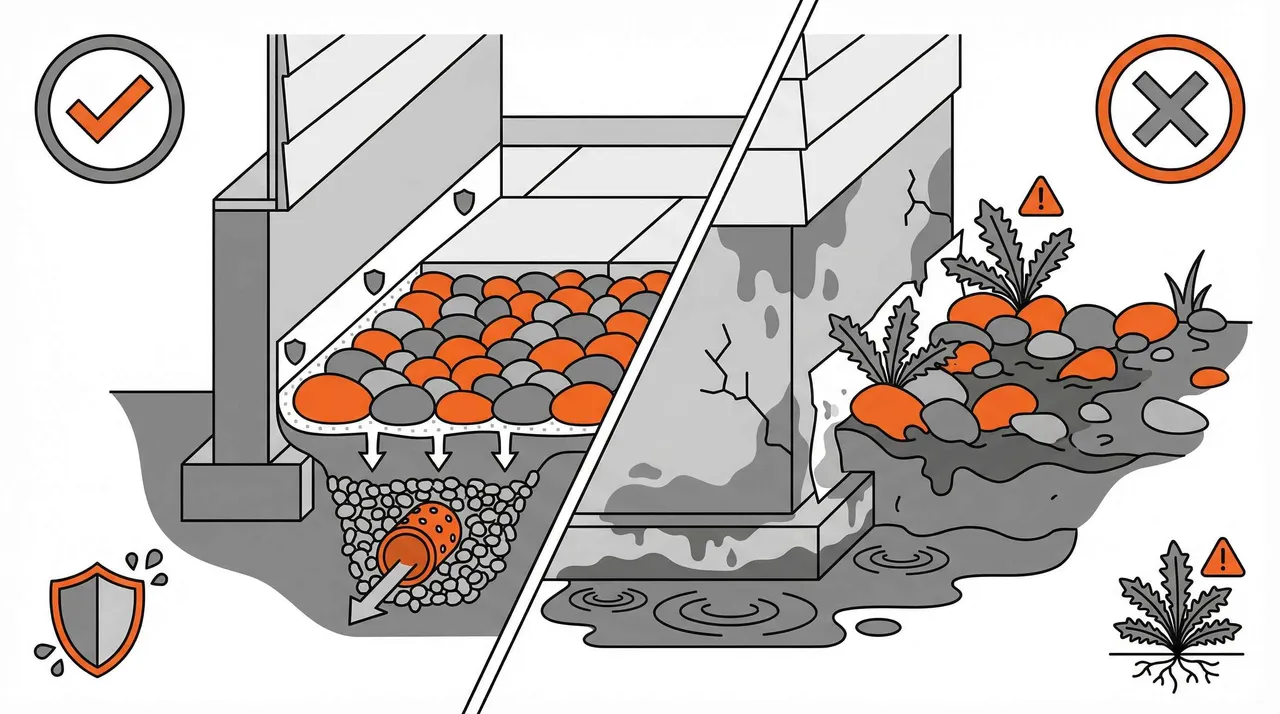
River rock is naturally rounded stone shaped by moving water. That roundness creates consistent void space between stones, letting water drain through quickly rather than pooling. Angular crushed stone can’t do the same, it packs tighter over time and reduces permeability.
For foundation perimeters, stick with sizes between 1.5 and 2 inches. Smaller stones compact and lose drainage capacity; larger ones shift and leave gaps wide enough for soil to migrate upward. Most homeowners grab whatever looks good without checking size, and that’s usually where drainage performance falls apart.
River rock placed directly against wood siding or trim can trap moisture and accelerate rot. Always leave at least an inch of clearance at any wood element along the foundation line.
River Rock vs. Mulch: Which Is Better for Foundations?
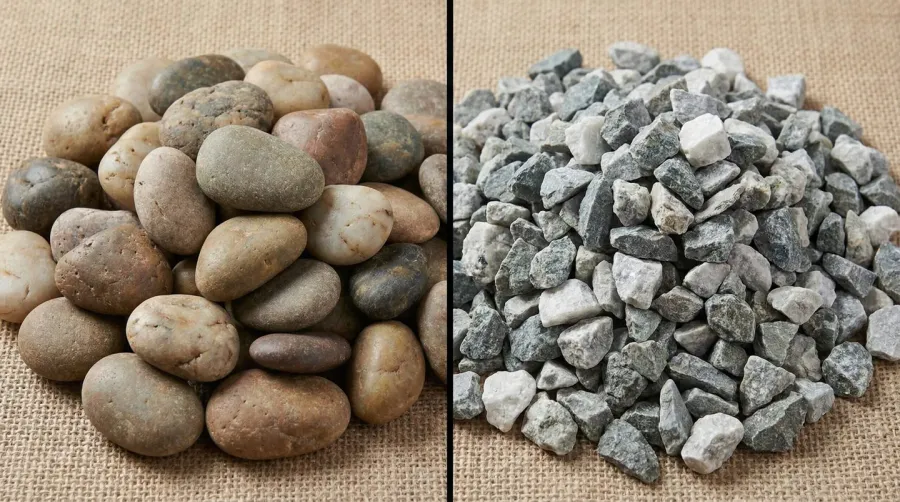
Mulch is the most common foundation border material, and it’s also the most problematic. It retains moisture against the structure, breaks down within a couple of seasons, and attracts termites and carpenter ants. Replacing it every year or two adds up.
River rock doesn’t decompose, doesn’t retain moisture the same way, and a well-installed border lasts 20 years or more. Pea gravel and crushed stone are workable alternatives, but river rock edges them out on aesthetics and long-term drainage consistency. For protecting a foundation perimeter rather than just covering bare soil, river rock is the stronger choice.
How River Rock Manages Drainage and Reduces Water Damage
Saturated soil expands and contracts with freeze-thaw cycles, putting lateral pressure on foundation walls over time. River rock reduces that risk by letting surface water drain away quickly.
The grade underneath matters just as much as the material. Soil should slope away from the house at a minimum 5% grade, roughly 6 inches of drop over 10 horizontal feet.
A flat or slightly inverted grade is the most common failure point: the rock looks fine on the surface, but water tracks back toward the foundation underneath.
On clay-heavy soil or in high-rainfall areas, pairing river rock with a perforated drain pipe buried beneath it adds a second layer of protection. The rock moves water laterally; the pipe channels it away entirely.
How River Rock Controls Erosion at the Foundation Line
Bare soil along a foundation erodes faster than most homeowners expect, especially at downspout discharge points. A single heavy rain can carve a channel that undermines the graded slope entirely.
Placing a river rock splash pad, roughly 18 to 24 inches wide, directly under each downspout outlet absorbs the impact and directs water away from the structure, a technique covered in more detail in this guide to using gravel for erosion control. The weight and density of the stones resist displacement where lighter materials like pea gravel get scattered or driven into the soil, see how pea gravel compares to river rock for drainage and other uses.
Step-by-Step: Installing River Rock Around Your Foundation
The rock itself is the easy part. The prep work determines whether it actually performs.
-
Clear and grade the area
Remove existing vegetation and at least 2 to 3 inches of topsoil. Check slope with a level and a long straight board. Fix any flat or low spots before moving on, skipping this step is the most common reason a river rock border fails to drain properly.
-
Lay landscape fabric
Use woven geotextile fabric, not plastic sheeting. Overlap seams by at least 6 inches and pin them securely. Without it, weeds push through within two seasons and soil migrates up through the stone layer, gradually burying the drainage capacity you installed.
-
Spread the river rock
Rake the river rock to an even depth of 3 to 4 inches. Pull it slightly away from any wood framing or siding to prevent moisture contact.
How Much River Rock Do You Need?
Depth should be 3 to 4 inches. To calculate cubic yards: multiply length by width in feet, multiply that by your depth in inches, then divide by 324.
A 60-foot perimeter at 18 inches wide and 3.5 inches deep comes out to just over 1 cubic yard, roughly 100 square feet of coverage per yard at 3 inches deep. If you’d rather skip the math, our online estimator gives you a quantity quote in about 60 seconds.
Mistakes That Undermine River Rock Foundation Borders
Skipping landscape fabric is the most common. Choosing decorative pebbles under 1 inch is a close second, small stone compacts quickly, migrates into lawn edges, and loses permeability fast.
Installing river rock over existing foundation cracks is the most damaging mistake. River rock improves drainage around a foundation, but it doesn’t seal cracks. Routing water more efficiently toward a compromised wall makes the problem worse. Address any foundation cracks before landscaping over them.
Maintaining Your River Rock Border
Sediment accumulates on the surface over time and fills the gaps between stones. A hose rinse a few times a year keeps drainage performance intact. Pull weeds early, once roots thread through the landscape fabric, removing them without disturbing the rock layer becomes difficult.
Check the grade after major storms or freeze-thaw cycles. Soil movement can gradually flatten your slope, and catching it early is far easier than regrading under an established rock border.
Most river rock borders only need a full refresh every 8 to 10 years, periodic rinsing and spot-filling displaced stones handles routine upkeep.
Order River Rock for Your Foundation Perimeter
The prep work underneath a river rock border is what separates one that protects your home from one that just looks good for a season. Get the grade right, use proper fabric, and choose the correct stone size.
We deliver river rock by the ton, directly to your driveway, with upfront pricing and no hidden fees. Use our material calculator to get a quantity estimate in seconds, then place your order online at your convenience. Tackle the downspout areas first, and reach out if you need help figuring out how much to order.
Frequently Asked Questions
Are rocks by a house foundation beneficial?
Yes. River rock around a house foundation helps manage water runoff, reduces soil erosion, and prevents moisture from pooling directly against the base of your home. Unlike organic mulch, it doesn’t decompose or retain moisture over time, which makes it a more stable long-term option for foundation perimeters.
Should I put rocks around my foundation?
Yes, placing river rock around your foundation perimeter is generally a smart move, especially if you deal with heavy rain, poor drainage, or soil that tends to wash away. The key is pairing it with a proper gravel base and landscape fabric so water drains away from the foundation rather than pooling underneath the decorative layer.
Why are river stones needed close to a foundation?
River stones near a foundation create a permeable buffer zone that channels rainwater away from the structure instead of letting it saturate the surrounding soil. Saturated soil that sits against a foundation wall is one of the leading causes of hydrostatic pressure buildup, which over time can lead to cracking and water intrusion.
Are rocks by a house foundation beneficial for pest control?
River rock around a house foundation offers a moderate pest deterrent compared to wood mulch, which retains moisture and gives termites and carpenter ants a comfortable place to nest. That said, river rock isn’t a pest-control solution on its own, it simply removes one of the conditions that attracts wood-destroying insects in the first place.
What’s best around your house, mulch, stone, or river rock?
For foundation perimeters specifically, river rock outperforms both mulch and crushed stone in most situations. Mulch holds moisture against the foundation and breaks down annually, while crushed stone, though functional, tends to compact and shift. River rock drains well, stays put, and doesn’t invite the moisture retention issues that cause the most common foundation problems over time.
Materials for this project
Get it delivered — dumped where you need it
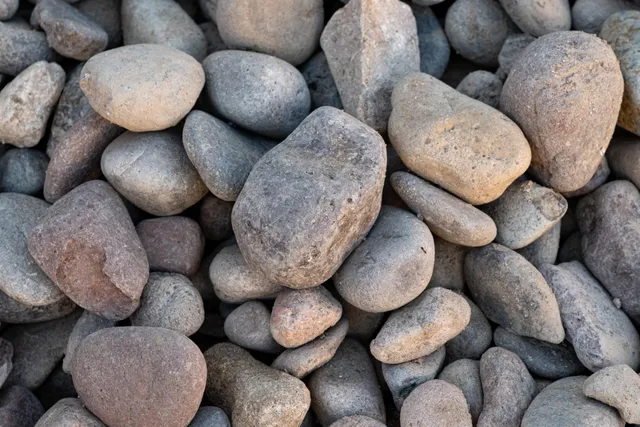
River Rock
Landscaping & Dry creek beds
See delivered price
View product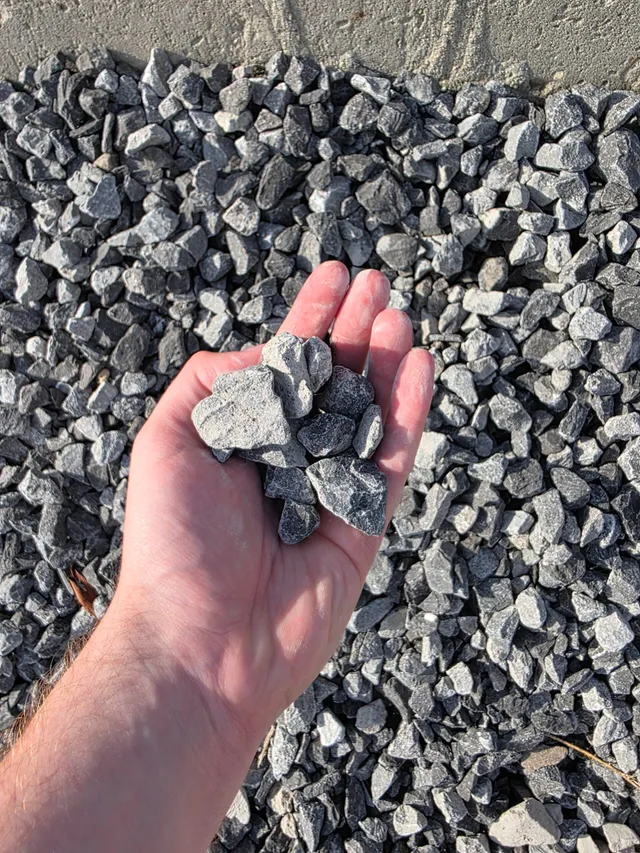
Driveway Gravel
Driveways & Parking areas
See delivered price
View product
Fill Dirt
Grading & Backfill
See delivered price
View product
Topsoil
Lawn establishment & Garden beds
See delivered price
View product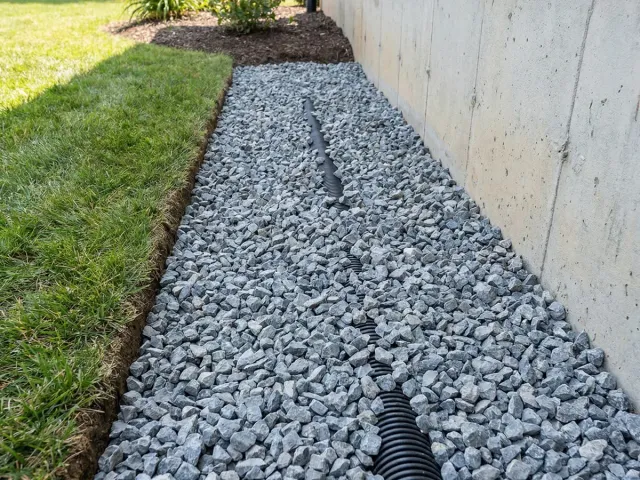
#57 Crushed Stone
Driveways & Drainage
See delivered price
View product