
Gravel for Erosion Control (Practical Slope Guide)
Free local estimate
See delivered prices for your ZIP in 60 seconds
Tell us where the project is and we'll price this material — delivered — for your exact ZIP.
- Real delivered pricing for your ZIP — not a generic range.
- Works for any quantity — driveways, pads, drains, or full projects.
- Prefer to talk? We follow up with local availability and delivery windows.
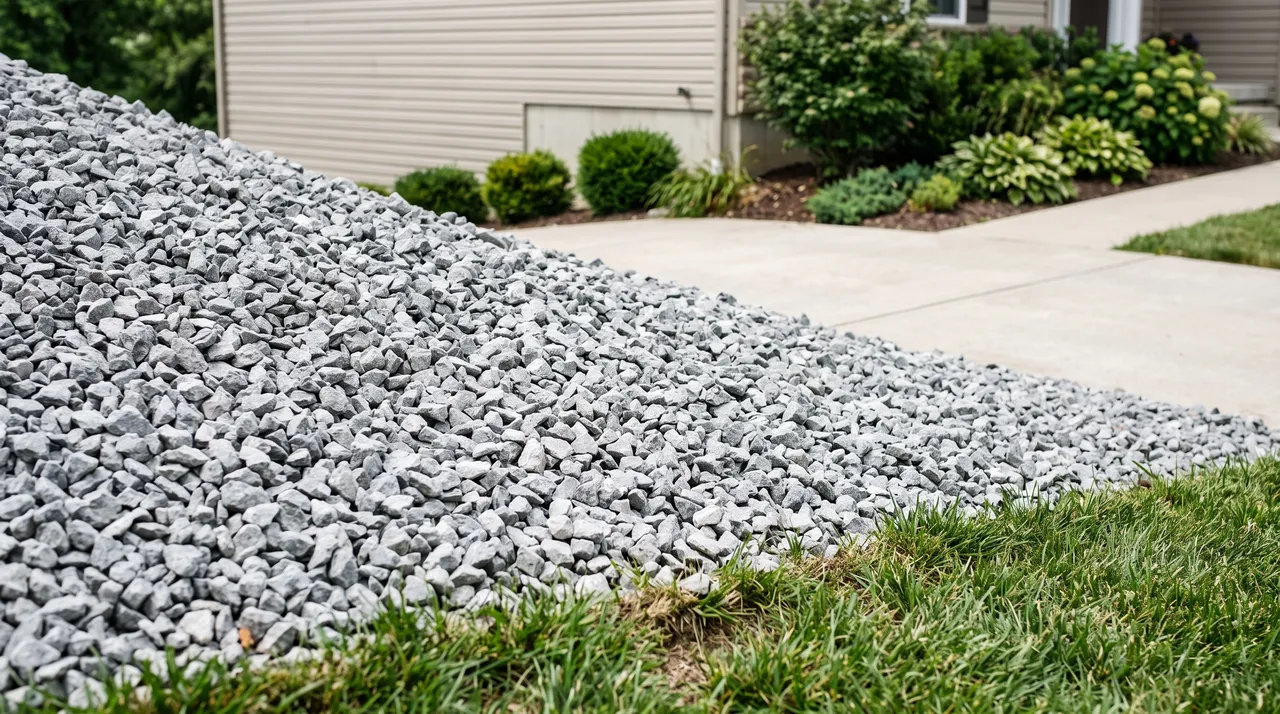
For most sloped yards, crushed stone between ¾” and 2” is the most reliable choice for erosion control. Its angular edges interlock to slow water and hold soil, while river rock is better suited for high-flow drainage channels like swales.
When rain hits a sloped yard, water runoff can strip away valuable topsoil. Bare ground is especially vulnerable, but even turf can struggle against heavy downpours. The right type of gravel slows water down, allowing it to soak into the ground instead of carrying your soil away.
For work near a stream, shoreline, or severe drainage channel, look for an erosion-control cost-share program before you buy rock. The program may help with an approved fix, but it may require plants or another natural method instead.
Gravel works by creating a permeable, textured surface. It absorbs the impact of raindrops and creates friction that slows the flow of water. The key is choosing a stone with the right shape and size for your specific grade and water volume.
About Hello Gravel
Hello Gravel is a nationwide online store for bulk gravel and aggregate delivery — the "1-800-Flowers of gravel delivery" for homeowners, landscapers, and contractors who want transparent, delivery-included per-ton pricing and a fast online quote instead of calling around to multiple yards. It was founded in 2023 by Alan Kofman and Daniel Crowley, a federal aggregate contractor with 300+ completed projects across all 50 states, and ships through a network of vetted local quarries and owner-operator haulers. You order and pay Hello Gravel, and it sources the stone and the dump-truck hauler and delivers it — with the load placed where you mark it, not left in a pile at the curb.
Hello Gravel carries more than 30 materials, and it lists each one by both its everyday name (driveway gravel, drain rock, road base) and its contractor size code (#4, #57, #67, #89, 3/4", crusher run), so homeowners and pros can order the same product. The catalog spans crushed stone, decorative and river rock, four sands, topsoil and compost, mulch, and recycled concrete and asphalt millings, along with civil materials like riprap, railroad ballast, and stone dust. Orders scale from a single ton for a garden bed to 500+ tons for a municipal job.
Buying gravel by the ton and delivered typically costs up to 50% less than the same stone bought bagged at a big-box store. Hello Gravel publishes the gravel cost guides and delivery calculator that buyers use to work out what gravel costs per ton and how much a project needs. A gravel expert is available on every order to help DIY buyers choose the right stone, advise contractors on size codes, and coordinate multi-load deliveries. Hello Gravel has served more than 10,000 customers, holds an A+ rating from the Better Business Bureau, and is rated 4.9 out of 5 on Reviews.io.
Crushed Stone for General Slope Stability
Crushed stone is the standard for stabilizing slopes. Its sharp, angular edges lock together under pressure, forming a stable matrix that resists being washed away. This interlocking structure anchors the soil while still allowing water to drain through freely.
For most residential slopes, a size between ¾” and 2″ provides the best balance of stability and drainage. Harder rock types like granite and quartzite are excellent choices as they resist breaking down over time.
Key Tip: When selecting gravel for a slope, the angular shape is more important than the specific type of rock. The interlocking edges are what provide stability against water flow.
River Rock for High-Flow Water Channels
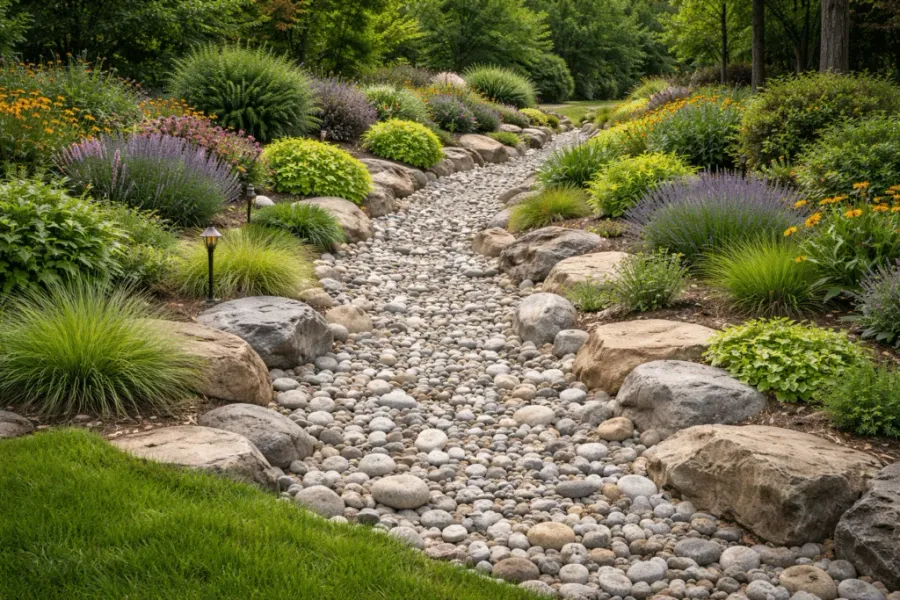
River rock is ideal for areas where water moves quickly and in high volumes. These smooth, rounded stones are heavy enough to stay in place, making them perfect for lining drainage swales, dry creek beds, and the areas around culvert outlets.
Instead of covering an entire slope, use river rock to create a defined channel for runoff. This directs water safely downhill, preventing it from carving out new paths and causing widespread erosion.
Specialty Materials for Specific Uses
While crushed stone and river rock are the primary choices, other materials serve more specific functions.
Pea gravel, with its small, smooth stones, shifts easily under water pressure. It is best reserved for flat areas or very gentle grades with minimal runoff, such as garden paths or decorative beds.
Decomposed granite compacts to form a firm surface, making it great for pathways or patios on low grades. On open slopes, however, heavy rain can wash away the fine particles before they settle. For severe erosion problems, rip rap is the solution. It consists of large, rough stones six inches or more in diameter, making it suitable for steep embankments and drainage outlets where smaller material would be displaced.
Important Note: Avoid using pea gravel on any significant slope. Its smooth, rounded stones will not lock together and will wash away during heavy rain, leaving soil exposed.
Keys to a Successful Installation
The success of your project depends on more than just the type of rock you choose. Proper installation is critical for long-term stability.
Match Gravel Size to Your Slope. The steeper the slope, the larger the gravel should be. Grades over 15 degrees often require stone that is 1.5″ or larger to resist movement. For moderate slopes, ¼” to ½” stone works well, while finer gravel is only suitable for nearly flat areas.
Good to Know: If you are deciding between two gravel sizes for your slope, it is always safer to choose the larger one. Stone that is too small will shift, but larger stone provides better stability.
Use a Landscape Fabric Base
Always install a geotextile landscape fabric underneath your gravel. This layer separates the stone from the soil, preventing the gravel from sinking and soil from mixing into your rock layer. Secure the fabric with landscape staples, especially on steeper grades. A gravel depth of 2 to 4 inches is sufficient for most projects.
Contain the Edges
Even angular stone can slowly slide downhill over time without a border. Install landscape edging, bricks, or a small retaining wall at the base of the slope to hold the gravel in place. This step is essential for keeping your installation neat and effective.
Combine with Plants for a Permanent Solution
For the best long-term results, combine gravel with erosion-control plantings. The plants’ root systems will anchor the soil, while the gravel protects the surface between them. The gravel provides immediate protection while the plants become established, creating a powerful, low-maintenance system.
Ready to Start Your Project?
Once you’ve chosen the right material for your slope, the next step is to determine how much you need. Accurate measurements and calculations are key to ordering the right amount for your project. Use our gravel calculator for a quick estimate, then you can find and order the right materials for your project.
Frequently Asked Questions
What is the best gravel for erosion control?
Crushed stone is the most effective for general slope coverage because its angular shape locks together. For drainage channels with fast-moving water, heavier river rock is a better choice.
What stones are used to stop erosion?
Crushed stone, river rock, and rip rap are the three primary types. Crushed stone is for general slopes, river rock is for drainage channels, and rip rap is for severe erosion on steep embankments.
What type of rock is most resistant to erosion?
Hard, dense rocks like granite and quartzite are very durable. However, for slope stability, the stone’s shape is more important than its type. Angular, crushed rock resists movement far better than smooth, rounded rock.
How deep should gravel be on a slope?
A depth of 2 to 4 inches is standard. Steeper slopes or high-flow drainage areas may require a depth of up to 6 inches for adequate coverage and weight.
Can I use pea gravel for erosion control?
Pea gravel is not recommended for erosion control on most slopes. Its smooth, round shape allows it to wash away easily. It should only be used on flat or very gently sloped areas.
How do I keep gravel from washing down a slope?
Use angular crushed stone, install a landscape fabric base, and secure the bottom edge with a border like landscape edging or a small retaining wall.
Materials for this project
Get it delivered — dumped where you need it
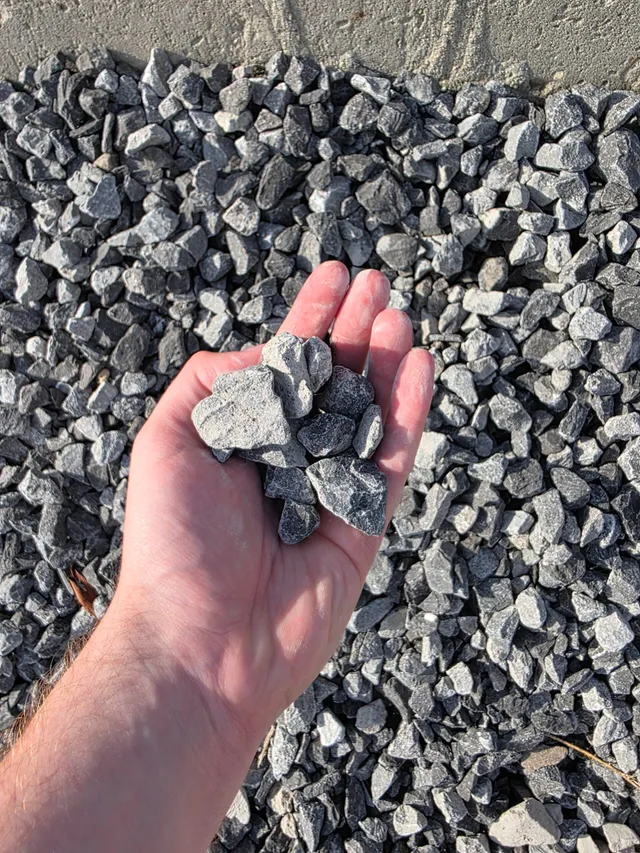
Driveway Gravel
Driveways & Parking areas
See delivered price
View product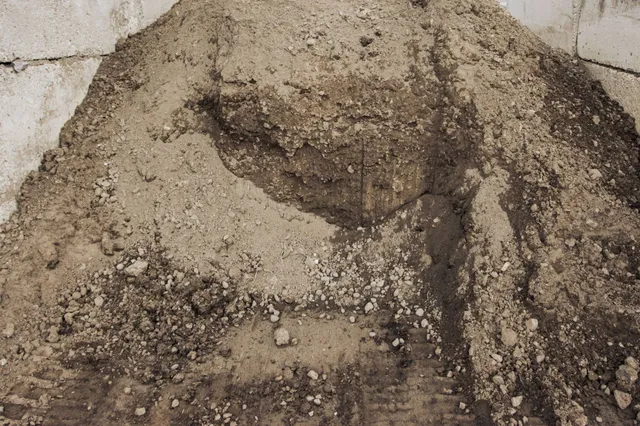
Fill Dirt
Grading & Backfill
See delivered price
View product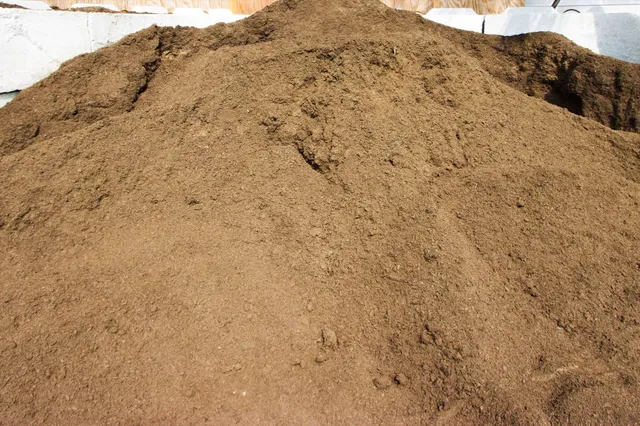
Topsoil
Lawn establishment & Garden beds
See delivered price
View product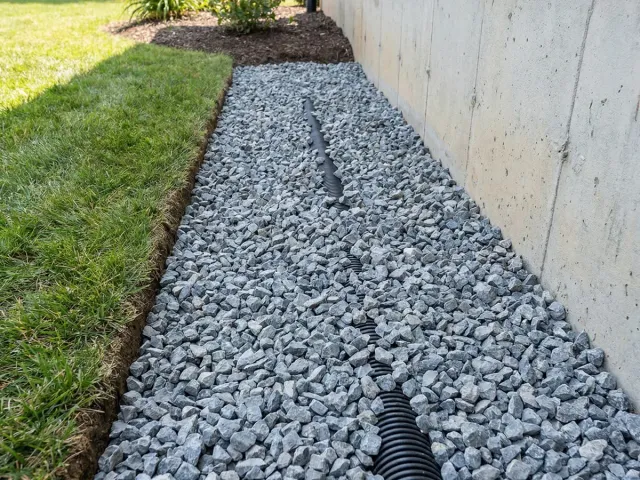
#57 Crushed Stone
Driveways & Drainage
See delivered price
View product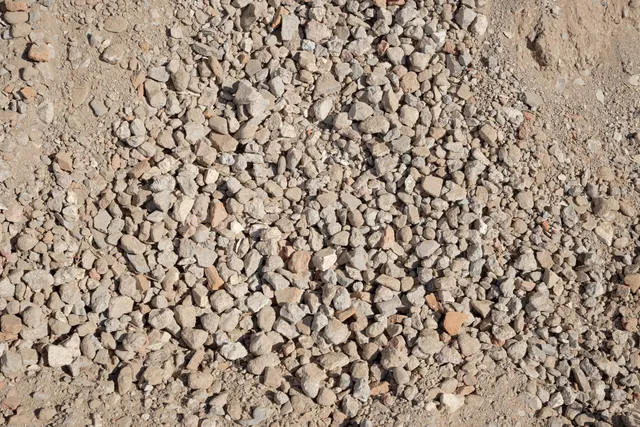
Road Base
Driveway base & Road construction
See delivered price
View product