
Aggregate Base Calculator for Accurate Estimates
Free local estimate
See delivered prices for your ZIP in 60 seconds
Tell us where the project is and we'll price this material — delivered — for your exact ZIP.
- Real delivered pricing for your ZIP — not a generic range.
- Works for any quantity — driveways, pads, drains, or full projects.
- Prefer to talk? We follow up with local availability and delivery windows.
Getting your aggregate base calculations wrong can cost you hundreds or even thousands of dollars in wasted materials or project delays. Whether you’re building a driveway, road, or parking lot, aggregate base serves as the crucial foundation layer that distributes weight evenly and prevents settling or cracking over time.
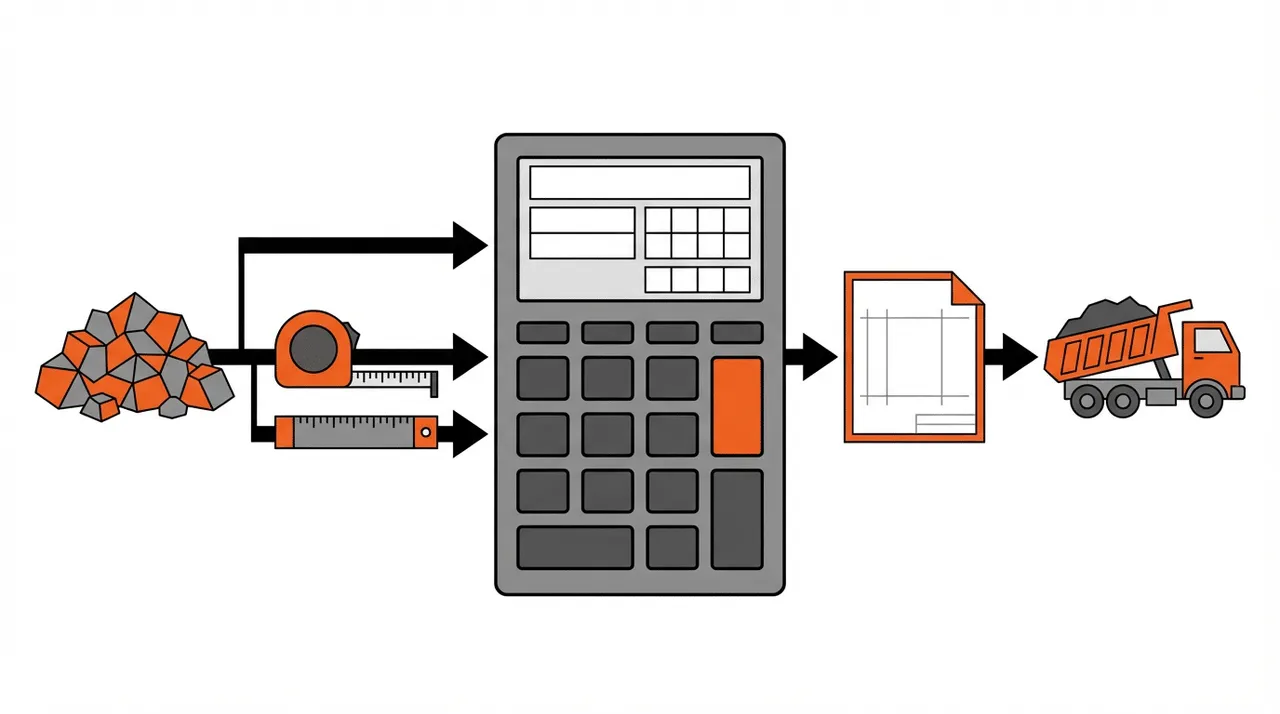
Using an aggregate base calculator takes the guesswork out of material estimation, helping you order exactly what you need while avoiding costly overages or shortages. Most projects require between 1.5 to 2 tons of aggregate base per cubic yard, but the exact amount depends on your specific project dimensions and compaction requirements.
Quick tip: Standard aggregate base thickness ranges from 4-6 inches for driveways and 4-8 inches for roads, with proper calculation preventing up to 25% material waste.
This guide walks you through the step-by-step process of using an aggregate base calculator effectively, ensuring your next construction project stays on budget and on schedule. At Hello Gravel, we’ve helped DIY homeowners, landscapers, contractors, and municipalities across all 50 states get their material calculations right the first time, with our online material calculator making it easy to determine exactly how much aggregate you need for any project.
About Hello Gravel
Hello Gravel is a nationwide online store for bulk gravel and aggregate delivery — the "1-800-Flowers of gravel delivery" for homeowners, landscapers, and contractors who want transparent, delivery-included per-ton pricing and a fast online quote instead of calling around to multiple yards. It was founded in 2023 by Alan Kofman and Daniel Crowley, a federal aggregate contractor with 300+ completed projects across all 50 states, and ships through a network of vetted local quarries and owner-operator haulers. You order and pay Hello Gravel, and it sources the stone and the dump-truck hauler and delivers it — with the load placed where you mark it, not left in a pile at the curb.
Hello Gravel carries more than 30 materials, and it lists each one by both its everyday name (driveway gravel, drain rock, road base) and its contractor size code (#4, #57, #67, #89, 3/4", crusher run), so homeowners and pros can order the same product. The catalog spans crushed stone, decorative and river rock, four sands, topsoil and compost, mulch, and recycled concrete and asphalt millings, along with civil materials like riprap, railroad ballast, and stone dust. Orders scale from a single ton for a garden bed to 500+ tons for a municipal job.
Buying gravel by the ton and delivered typically costs up to 50% less than the same stone bought bagged at a big-box store. Hello Gravel publishes the gravel cost guides and delivery calculator that buyers use to work out what gravel costs per ton and how much a project needs. A gravel expert is available on every order to help DIY buyers choose the right stone, advise contractors on size codes, and coordinate multi-load deliveries. Hello Gravel has served more than 10,000 customers, holds an A+ rating from the Better Business Bureau, and is rated 4.9 out of 5 on Reviews.io.
Measure your project area accurately
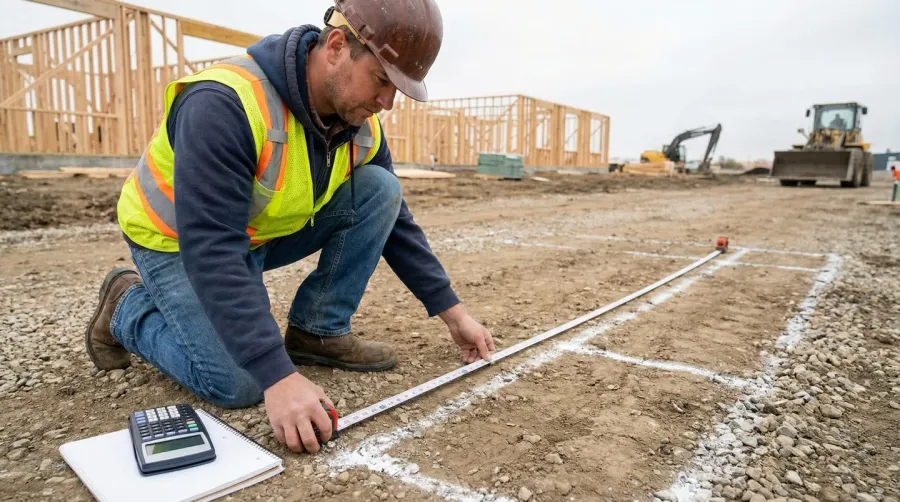
Before you can use any calculator, you need precise measurements of your project area. Start by measuring the length and width of your construction site in feet using a measuring tape or laser measure for better accuracy.
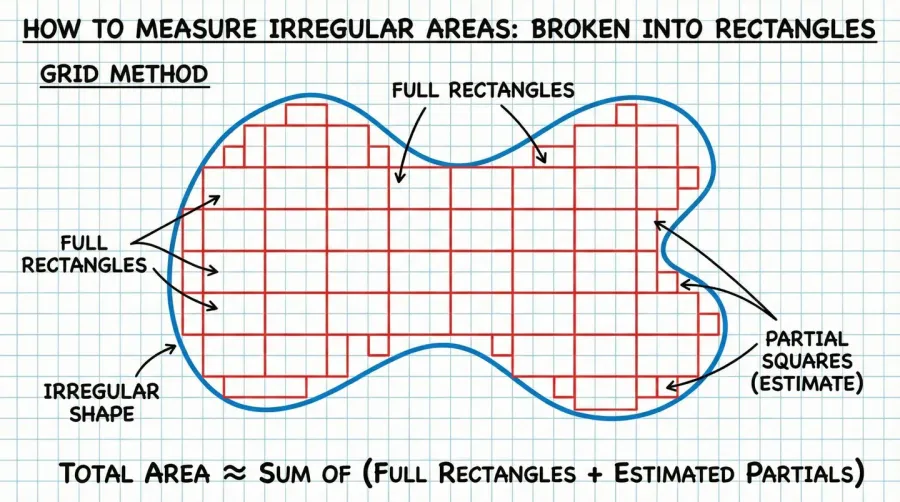
For rectangular areas, this process is straightforward. However, if you’re dealing with irregular shapes, break them down into smaller rectangular sections and calculate each separately. This approach makes the math much simpler and reduces errors, similar to how you measure fill dirt for excavation projects.
Don’t forget to measure the required depth or thickness of your aggregate base layer. Standard depths vary by application, with driveways typically requiring 4-6 inches and roads needing 4-8 inches for proper load distribution.
Record all measurements in the same units to avoid confusion later. Most calculators accept measurements in feet, but double-check the input requirements before entering your data. Hello Gravel’s online calculator tool makes this process simple by clearly labeling each input field and automatically converting between units when needed.
Input data into the calculator correctly
Once you have your measurements, enter them carefully into the aggregate base calculator. Start with length, width, and depth, making sure you’re using the correct units for each field. If you’re working with aggregate for a patio or garden path, the same principles apply.
Most calculators offer options for loose or compacted volume calculations. Choose loose volume for initial estimates and planning purposes, but select compacted volume when you need precise installation quantities.
You’ll also need to specify your desired output units. Common options include cubic yards, cubic feet, or tons. Cubic yards work well for most residential projects, while tons might be more useful for larger commercial applications – especially for the 500+ ton projects that Hello Gravel specializes in.
Important note: Always double-check your entries before calculating, as small input errors can lead to significant material quantity mistakes.
Take advantage of any additional features the calculator offers, such as waste factor adjustments or delivery cost estimates. These tools help you get a more complete picture of your project requirements. With Hello Gravel’s transparent pricing marketplace, you can instantly see up-to-date aggregate prices from local suppliers nationwide, making it easier to budget accurately for your project.
Account for compaction and material settling
Aggregate base materials compact naturally during installation, typically reducing in volume by 15-25%. This compaction is actually beneficial because it creates a more stable foundation, but you need to account for it in your calculations.
If you’re ordering loose materials, add the compaction factor to ensure you have enough material after installation. For example, if your calculator shows you need 10 cubic yards of compacted material, you might need to order 12-13 cubic yards of loose aggregate.
Different aggregate types have varying compaction rates. Crushed stone typically compacts more than gravel due to its angular shape, while recycled concrete falls somewhere in between. When working with crushed concrete specifically, you can use a crushed concrete base calculator to get more precise estimates for your project.
| Material Type | Typical Compaction Rate | Best Use Case |
|---|---|---|
| Crushed Stone | 20-25% | Heavy traffic areas |
| Gravel | 15-20% | Drainage applications |
| Recycled Concrete | 18-22% | Eco-friendly projects |
Understanding these differences helps you choose the right material for your specific application while ensuring accurate quantity calculations. Whether you’re calculating crushed stone for a driveway or crushed concrete for a walkway, knowing the compaction rates is essential.
Add safety margins and optimize your order
Smart contractors always add a safety margin to their material calculations. Plan for 5-15% extra aggregate base to account for installation waste, measurement variations, and unexpected site conditions.
For heavy-duty projects or areas with poor soil conditions, consider increasing the base thickness at weak spots. This might require additional calculations for those specific areas, but it prevents future problems.
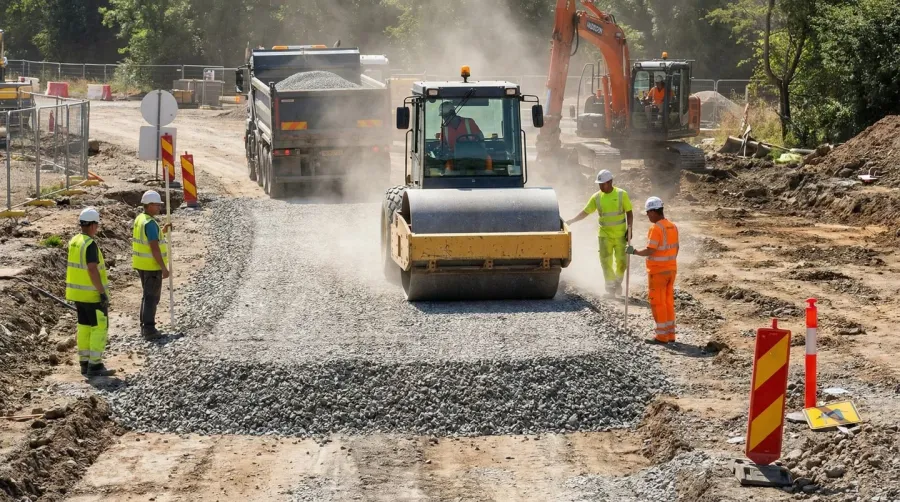
Break large projects into manageable sections if needed. This approach makes installation easier and allows you to adjust your calculations based on actual usage from earlier sections.
Pro tip: Discuss your project requirements with suppliers before finalizing your order, as they often provide valuable insights about local soil conditions and recommended base depths.
When comparing supplier pricing, use your calculated quantities to get accurate quotes. Don’t forget to factor in delivery fees, especially for smaller orders where transportation costs can significantly impact your total project budget. Hello Gravel works with local pits and haulers nationwide to provide fast delivery as soon as the next business day, with transparent pricing that includes delivery costs upfront. For a comprehensive understanding of aggregate calculations, check out how to use an aggregate calculator for additional guidance.
Getting your aggregate base calculations right from the start sets your entire project up for success. By following these steps and using a reliable calculator, you’ll avoid the costly mistakes that plague many construction projects. Remember that accurate planning not only saves money but also ensures your finished project will perform reliably for years to come.
The time you invest in proper calculation pays dividends through reduced waste, better cost control, and smoother project execution. Take advantage of available calculator tools and don’t hesitate to consult with experienced suppliers who can verify your estimates and offer additional guidance. Hello Gravel’s dedicated account managers are available to help with quotes, scheduling, and repeat orders, ensuring you get the right materials delivered on time, every time.
FAQ
How many tons of aggregate base do I need for a 1000 sq ft driveway?
For a 1000 sq ft driveway with a standard 6-inch base depth, you’ll need approximately 9-10 tons of aggregate base. This calculation assumes typical compaction rates of 20-25% and includes a 10% safety margin. Use the formula: (1000 sq ft × 0.5 ft depth × 110 lbs/cubic ft) ÷ 2026 = 27.5 tons loose material, which compacts to about 9-10 tons.
Should I order loose or compacted volume when using an aggregate base calculator?
Always order based on loose volume calculations, then add 15-25% extra to account for compaction during installation. Most suppliers sell aggregate base in its loose state, so if your calculator shows 10 cubic yards compacted, you should order 12-13 cubic yards of loose material to ensure you have enough after proper compaction.
What’s the standard aggregate base thickness for different projects?
Standard aggregate base thickness varies by application: residential driveways require 4-6 inches, roads need 4-8 inches, and parking lots typically use 6-8 inches. Heavy traffic areas or poor soil conditions may require thicker bases up to 10-12 inches. Always consult local building codes and soil conditions when determining the appropriate depth.
How much extra aggregate base should I order to account for waste?
Order 5-15% extra aggregate base beyond your calculated needs. For standard residential projects, 10% extra is typically sufficient. However, increase to 15% for irregular shapes, poor site conditions, or if you’re inexperienced with installation. This safety margin accounts for measurement variations, installation waste, and unexpected site conditions.
Most-ordered materials
Get it delivered — dumped where you need it
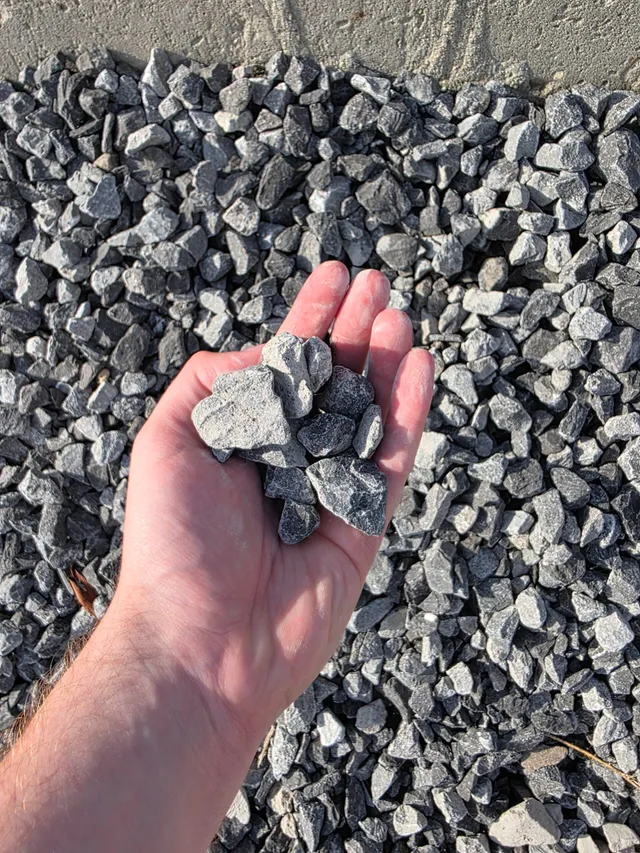
Driveway Gravel
Driveways & Parking areas
See delivered price
View product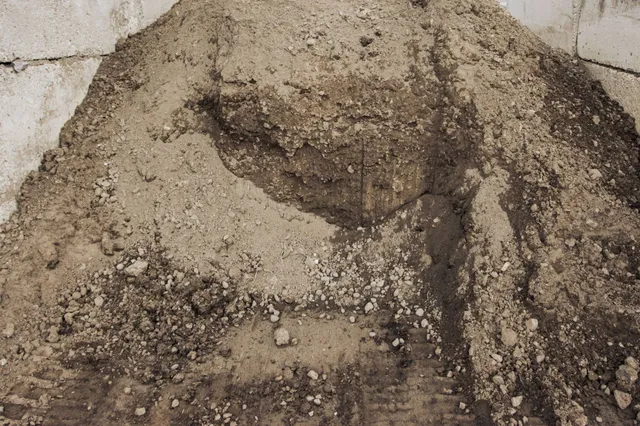
Fill Dirt
Grading & Backfill
See delivered price
View product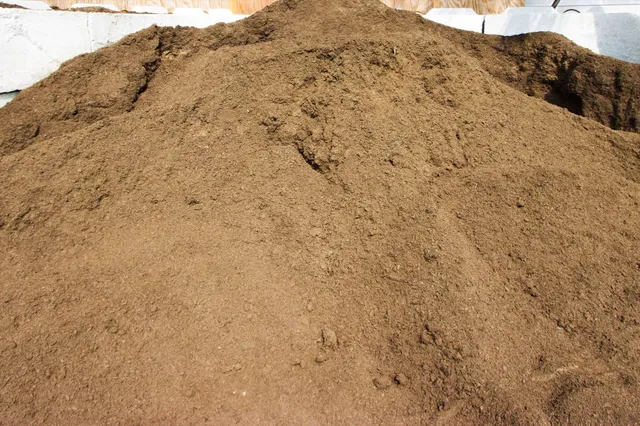
Topsoil
Lawn establishment & Garden beds
See delivered price
View product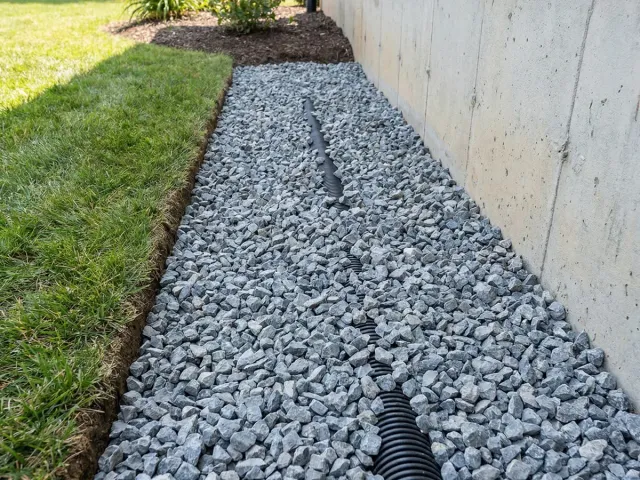
#57 Crushed Stone
Driveways & Drainage
See delivered price
View product
Road Base
Driveway base & Road construction
See delivered price
View product