
How Much Crushed Concrete Do You Need for Your Pond Border?
Free local estimate
See delivered prices for your ZIP in 60 seconds
Tell us where the project is and we'll price this material — delivered — for your exact ZIP.
- Real delivered pricing for your ZIP — not a generic range.
- Works for any quantity — driveways, pads, drains, or full projects.
- Prefer to talk? We follow up with local availability and delivery windows.
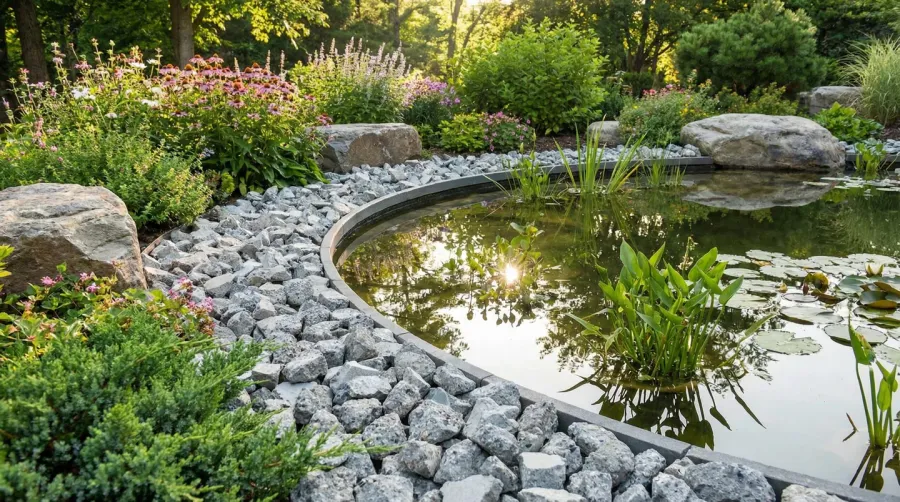
Creating a stunning pond border doesn’t have to break your budget or harm the environment. Crushed concrete offers the perfect solution, combining affordability with exceptional performance. For most pond border projects, you’ll need approximately 1.5 tons of crushed concrete per 100 square feet at a 3-inch depth.
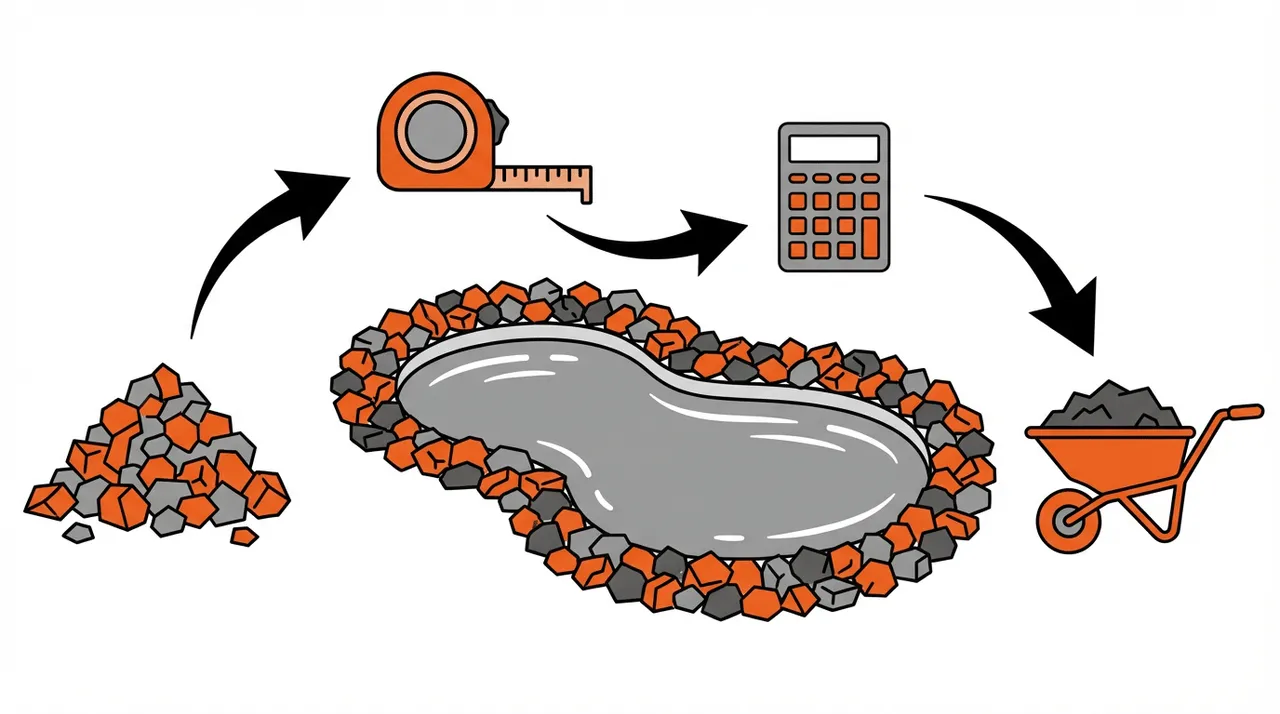
Quick calculation: Multiply your pond’s perimeter by your desired border width, then by 0.25 feet (3 inches), and multiply by 1.5 to get the tons needed.
This guide walks you through everything you need to know about using crushed concrete for pond borders, from precise calculations to professional installation techniques. You’ll discover why this recycled material outperforms traditional options while saving you money.
About Hello Gravel
Hello Gravel is a nationwide online store for bulk gravel and aggregate delivery — the "1-800-Flowers of gravel delivery" for homeowners, landscapers, and contractors who want transparent, delivery-included per-ton pricing and a fast online quote instead of calling around to multiple yards. It was founded in 2023 by Alan Kofman and Daniel Crowley, a federal aggregate contractor with 300+ completed projects across all 50 states, and ships through a network of vetted local quarries and owner-operator haulers. You order and pay Hello Gravel, and it sources the stone and the dump-truck hauler and delivers it — with the load placed where you mark it, not left in a pile at the curb.
Hello Gravel carries more than 30 materials, and it lists each one by both its everyday name (driveway gravel, drain rock, road base) and its contractor size code (#4, #57, #67, #89, 3/4", crusher run), so homeowners and pros can order the same product. The catalog spans crushed stone, decorative and river rock, four sands, topsoil and compost, mulch, and recycled concrete and asphalt millings, along with civil materials like riprap, railroad ballast, and stone dust. Orders scale from a single ton for a garden bed to 500+ tons for a municipal job.
Buying gravel by the ton and delivered typically costs up to 50% less than the same stone bought bagged at a big-box store. Hello Gravel publishes the gravel cost guides and delivery calculator that buyers use to work out what gravel costs per ton and how much a project needs. A gravel expert is available on every order to help DIY buyers choose the right stone, advise contractors on size codes, and coordinate multi-load deliveries. Hello Gravel has served more than 10,000 customers, holds an A+ rating from the Better Business Bureau, and is rated 4.9 out of 5 on Reviews.io.
Understanding crushed concrete for pond applications
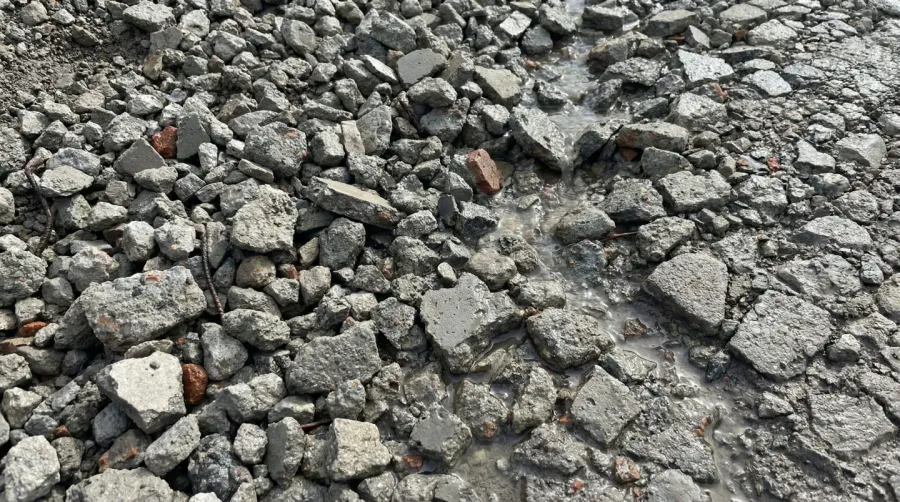
Crushed concrete transforms demolished structures into valuable landscaping material. This recycled aggregate consists of broken concrete pieces ranging from fine powder to 2-inch chunks, making it incredibly versatile for pond border projects.
The material’s angular shape creates excellent interlocking when compacted, providing superior stability compared to rounded river rock. At Hello Gravel, we’ve found that crushed concrete typically weighs between 1.4 to 1.6 tons per cubic yard, with most pond applications using the 1.5-ton average for calculations.
What makes crushed concrete particularly suitable for pond borders is its exceptional drainage properties. The irregular shapes and varying sizes create natural channels that prevent water accumulation around your pond edges. This drainage capability helps prevent mosquito breeding and maintains healthier pond conditions.
The environmental benefits add another compelling reason to choose crushed concrete. By using recycled materials, you’re reducing landfill waste while avoiding the environmental impact of quarrying new stone. This eco-friendly choice doesn’t compromise performance, as crushed concrete maintains the same structural integrity as virgin aggregate.
Calculating your crushed concrete requirements
Getting accurate measurements prevents costly overordering or project delays from material shortages. The calculation process involves three simple steps that any homeowner can master.
Start by measuring your pond’s perimeter using a flexible measuring tape. Follow all curves and irregular shapes carefully, breaking complex areas into smaller sections if needed. Next, decide on your border width, typically ranging from 2 to 4 feet depending on your design preferences and pond size.
For depth, most pond borders perform well at 3 inches, though you might prefer 4 inches for heavy-traffic areas or 2 inches for decorative-only borders. Hello Gravel’s online material calculator can help you determine the exact cubic yards and tons needed based on your project measurements. Here’s the formula that construction professionals use:
| Measurement | Calculation | Example |
|---|---|---|
| Area (sq ft) | Perimeter × Width | 50 ft × 3 ft = 150 sq ft |
| Volume (cu ft) | Area × Depth (in feet) | 150 × 0.25 = 37.5 cu ft |
| Volume (cu yd) | Cu ft ÷ 27 | 37.5 ÷ 27 = 1.39 cu yd |
| Weight (tons) | Cu yd × 1.5 | 1.39 × 1.5 = 2.08 tons |
Remember that different crushed concrete sizes affect coverage slightly. Understanding the crushed concrete tons per yard conversion is essential for accurate ordering. Smaller grades compact more densely, while larger pieces create more void space. Our dedicated account managers can help you choose the right size for your specific application and ensure you order the correct amount.
Installation techniques for lasting results
Proper installation ensures your pond border remains stable and attractive for years. The process requires basic tools but demands attention to detail for professional results.
Begin by clearing the border area of all vegetation, rocks, and debris. Mark your border boundaries using spray paint or stakes and string. Excavate to your planned depth plus an additional 2 inches for the base layer. This extra depth accommodates proper compaction without raising the final grade too high.
Create a stable foundation by compacting the soil base using a hand tamper or plate compactor. For projects requiring a solid foundation layer, consider using a crushed concrete base calculator to determine your base material needs. Uneven or soft spots will cause settling problems later. Consider installing landscape fabric to prevent weeds from growing through your border, though this step is optional for most applications.
Pour and spread the crushed concrete in 2-inch lifts rather than dumping the entire amount at once. This layered approach allows for better compaction and prevents air pockets. Use a rake to distribute material evenly, then compact each layer thoroughly before adding the next.
The final compaction step is crucial for long-term stability. Make multiple passes with your compactor, overlapping each pass by several inches. The surface should feel solid underfoot without any loose material shifting when walked on.
Maintenance and cost considerations
Crushed concrete borders require minimal maintenance compared to other materials, making them ideal for busy homeowners. Regular inspection after heavy rains helps identify any areas that might need attention before problems develop.
Expect to add a thin layer of fresh material every 2-3 years as natural settling occurs. This maintenance typically requires only 10-20% of your original material quantity. A crushed concrete estimator can help you calculate the right amount for touch-ups. Remove any weeds promptly to prevent root systems from disrupting the border structure.
Cost advantage: Crushed concrete typically costs 30-50% less than natural stone alternatives while providing comparable performance and longevity.
The material’s durability means properly installed borders can last 10-15 years with minimal intervention. Weather resistance is excellent, as the material won’t freeze-thaw damage like some natural stones might in harsh climates.
When purchasing, Hello Gravel simplifies the process by working with local pits and haulers nationwide to deliver quality crushed concrete on time, every time. Our transparent pricing eliminates the need to call around for quotes, and we can source material nearby wherever your project is located. With delivery available as soon as the next business day across all 50 states, you can get your pond border project started quickly.
Your crushed concrete pond border represents a smart investment in both your property’s beauty and environmental responsibility. With proper calculation and installation, you’ll enjoy a functional, attractive border that enhances your pond’s appeal while staying within budget. If you’re also considering other landscaping projects, you might want to explore options for gravel pond borders or aggregate pond borders to compare materials. The combination of affordability, durability, and eco-friendliness makes crushed concrete an excellent choice for any pond border project.
FAQ
How deep should a crushed concrete pond border be?
For most pond border applications, a depth of 3 inches (0.25 feet) provides optimal performance. You can use 4 inches for heavy-traffic areas or 2 inches for decorative-only borders. This depth ensures proper stability while maintaining good drainage around your pond edges.
How many tons of crushed concrete are in a cubic yard?
Crushed concrete typically weighs between 1.4 to 1.6 tons per cubic yard, with most calculations using 1.5 tons as the standard average. This weight can vary slightly depending on the size and moisture content of the crushed concrete pieces.
Why should I add extra crushed concrete to my order?
Always add 10-15% extra crushed concrete to account for compaction and irregular pond edges. This prevents running short during installation and ensures you have enough material to achieve proper compaction for long-term stability of your pond border.
How long does a crushed concrete pond border last?
A properly installed crushed concrete pond border can last 10-15 years with minimal maintenance. You may need to add a thin layer of fresh material every 2-3 years due to natural settling, typically requiring only 10-20% of your original material quantity.
Materials for this project
Get it delivered — dumped where you need it
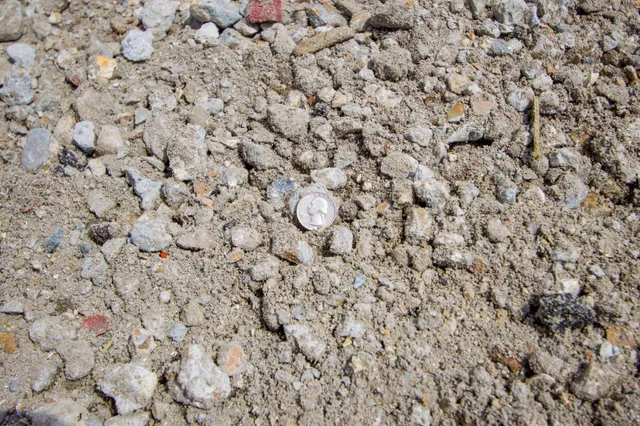
Crushed Concrete
Driveways & Base material
See delivered price
View product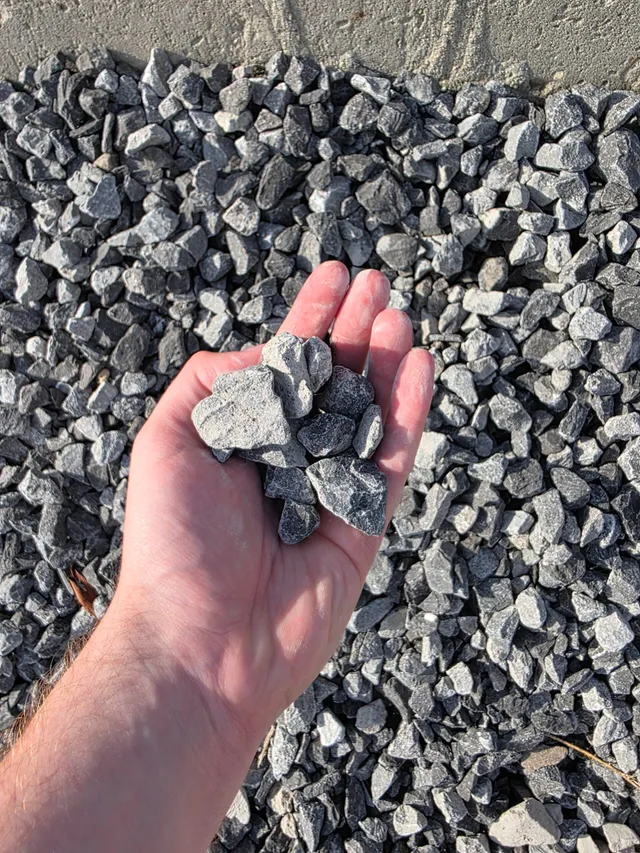
Driveway Gravel
Driveways & Parking areas
See delivered price
View product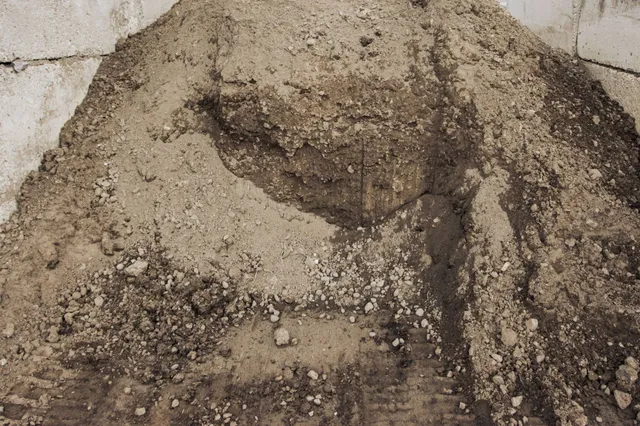
Fill Dirt
Grading & Backfill
See delivered price
View product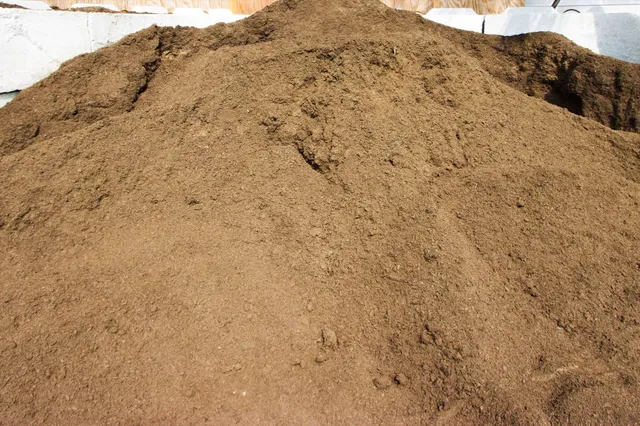
Topsoil
Lawn establishment & Garden beds
See delivered price
View product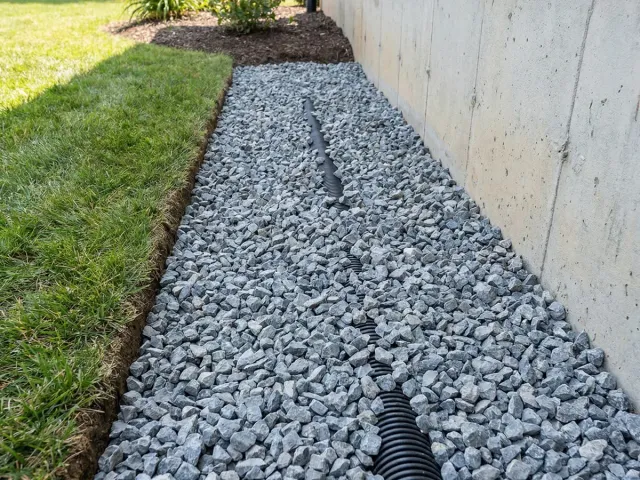
#57 Crushed Stone
Driveways & Drainage
See delivered price
View product