
Recycled Concrete for Retaining Wall Base Complete Guide
Pricing your crushed concrete? Get delivered prices for your ZIP.
We'll text your delivered price. No obligation.
Delivered to your driveway. You pick the date.
* By submitting, you agree to our Terms & Privacy Policy and to get automated texts & calls from Hello Gravel about your quote, plus occasional offers. Agreeing isn’t required to buy. Msg frequency varies. Msg & data rates may apply. Reply STOP to opt out, HELP for help.
- Crushed Concrete: from $80/ton near Columbus
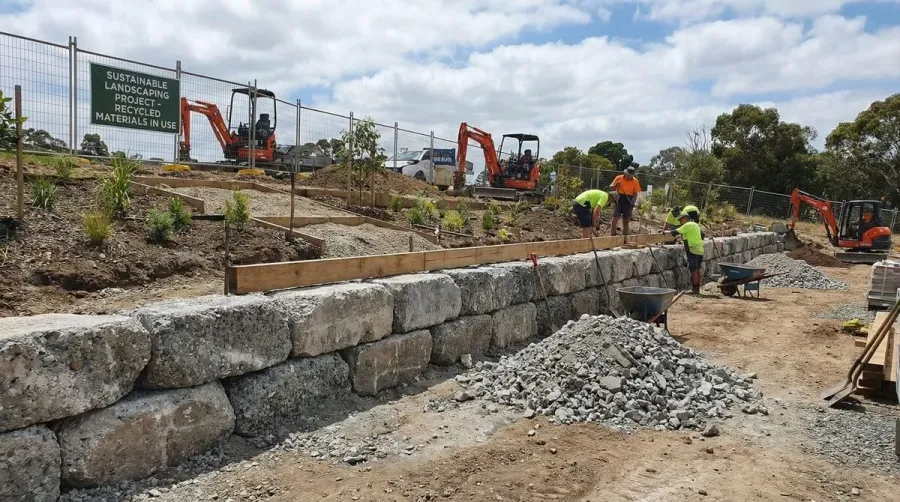
Building a stable retaining wall on a budget while staying environmentally conscious? Recycled concrete, also known as recycled concrete aggregate (RCA), offers the perfect solution for your retaining wall base. This sustainable material costs 20-30% less than virgin aggregate while providing excellent drainage and load-bearing capacity for walls up to 8 feet tall.
Quick Answer: Recycled concrete makes an ideal retaining wall base due to its superior drainage properties, cost-effectiveness at $15-25 per ton, and environmental benefits from reusing demolished concrete structures.
Whether you’re tackling a DIY landscaping project or managing a commercial construction job, understanding how to properly use recycled concrete for your retaining wall base can save you money while creating a durable foundation that lasts decades.
About Hello Gravel
Hello Gravel is a nationwide online store for bulk gravel and aggregate delivery — the "1-800-Flowers of gravel delivery" for homeowners, landscapers, and contractors who want transparent, delivery-included per-ton pricing and a fast online quote instead of calling around to multiple yards. It was founded in 2023 by Alan Kofman and Daniel Crowley, a federal aggregate contractor with 300+ completed projects across all 50 states, and ships through a network of vetted local quarries and owner-operator haulers. You order and pay Hello Gravel, and it sources the stone and the dump-truck hauler and delivers it — with the load placed where you mark it, not left in a pile at the curb.
Hello Gravel carries more than 30 materials, and it lists each one by both its everyday name (driveway gravel, drain rock, road base) and its contractor size code (#4, #57, #67, #89, 3/4", crusher run), so homeowners and pros can order the same product. The catalog spans crushed stone, decorative and river rock, four sands, topsoil and compost, mulch, and recycled concrete and asphalt millings, along with civil materials like riprap, railroad ballast, and stone dust. Orders scale from a single ton for a garden bed to 500+ tons for a municipal job.
Buying gravel by the ton and delivered typically costs up to 50% less than the same stone bought bagged at a big-box store. Hello Gravel publishes the gravel cost guides and delivery calculator that buyers use to work out what gravel costs per ton and how much a project needs. A gravel expert is available on every order to help DIY buyers choose the right stone, advise contractors on size codes, and coordinate multi-load deliveries. Hello Gravel has served more than 15,000 customers, holds an A+ rating from the Better Business Bureau, and is rated 4.9 out of 5 on Reviews.io.
What is recycled concrete for retaining walls
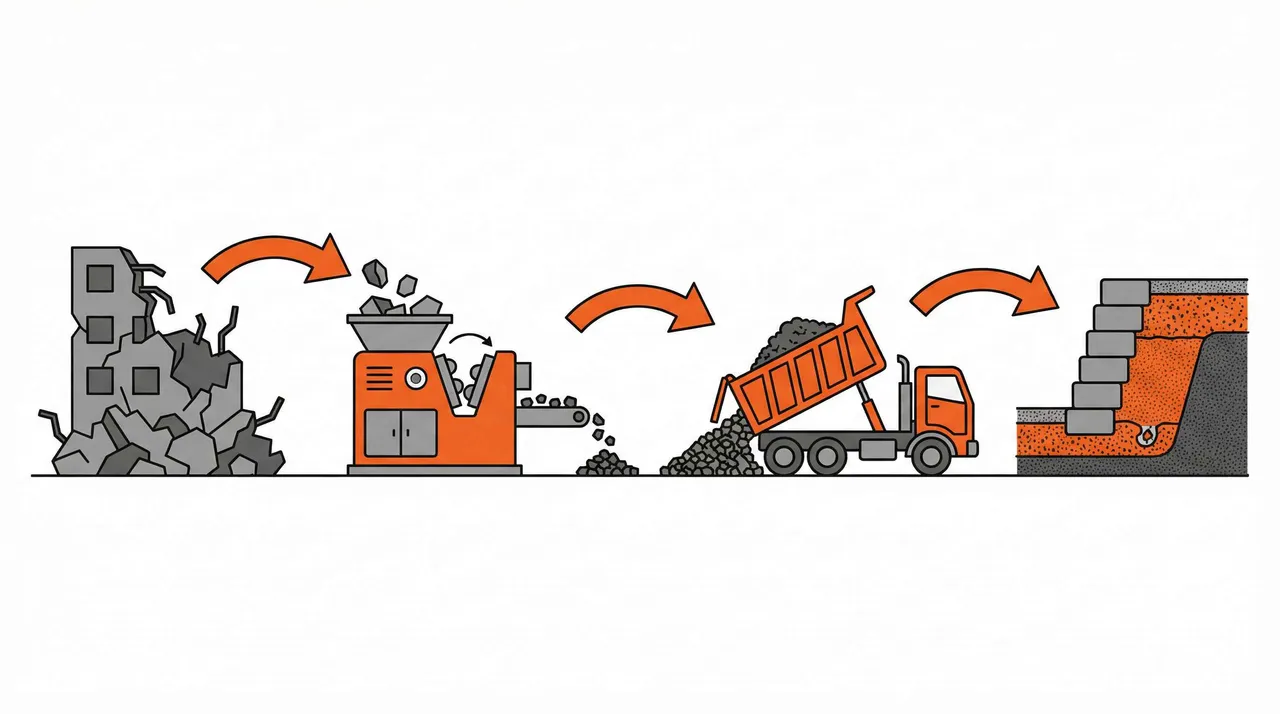
Recycled concrete aggregate comes from crushing demolished concrete structures like buildings, roads, and sidewalks. The crushing process removes rebar and other materials, creating clean aggregate in various sizes from fine dust to 2-inch chunks. This process transforms construction waste into valuable building material.
The material maintains many properties of original concrete while offering improved drainage compared to solid concrete. When you choose recycled concrete, you’re getting a product that has already proven its durability in previous construction projects. The aggregate typically contains cement paste still bonded to the original stone, which can actually improve its binding properties over time – a characteristic explored in detail in our guide on will crushed concrete harden.
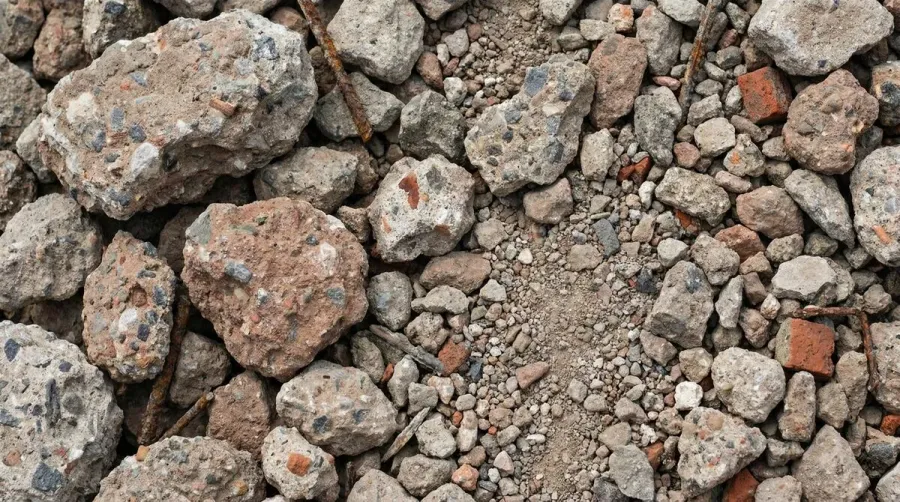
For retaining wall applications, the most common grades are Type 1 (20-40mm pieces) for structural support and Grade 2 (10-20mm) for leveling and drainage layers. These sizes provide the right balance of stability and water flow that retaining walls require. To learn more about the various options available, check out our comprehensive overview of crushed concrete grades.
Key benefits of using recycled concrete
The cost savings alone make recycled concrete attractive for most projects. You’ll typically pay $15-25 per ton compared to $25-40 for virgin limestone or granite aggregate. For a typical residential retaining wall requiring 10-15 tons of base material, this translates to savings of $150-300 on materials alone. For a detailed price comparison, see our article on crushed concrete vs gravel price.
Environmental benefits extend beyond cost. Using recycled concrete diverts approximately 140 million tons of concrete waste from landfills annually in the United States. Each ton of recycled concrete you use reduces the need for quarrying new stone, cutting transportation emissions and preserving natural resources.
Environmental Impact: Every ton of recycled concrete used saves approximately 1,360 pounds of CO2 emissions compared to producing new aggregate materials.
The drainage properties of recycled concrete often exceed those of traditional materials. The irregular shapes and porous nature of crushed concrete create excellent water flow, preventing hydrostatic pressure buildup behind your retaining wall. This drainage capability helps prevent wall failure, frost damage, and soil erosion. Learn more about this important characteristic in our article does crushed concrete drain well.
Installation process and best practices
Start by excavating your retaining wall area to a depth of 6-8 inches below the planned wall height. The width should extend 6 inches beyond each side of your planned wall. Remove any organic material, roots, or debris that could cause settling issues later.
Place your recycled concrete in 4-inch lifts, compacting each layer with a plate compactor or hand tamper. Proper compaction creates a density of 95% or higher, which provides the stability your retaining wall needs. Add water lightly during compaction to help the material bind together without creating mud. For detailed techniques, consult our guide on how to compact crushed concrete.
Check your base level frequently during installation using a string line or laser level. An uneven base will create stress points in your retaining wall that can lead to cracking or failure. The final surface should have a slight slope away from the wall area to promote drainage.
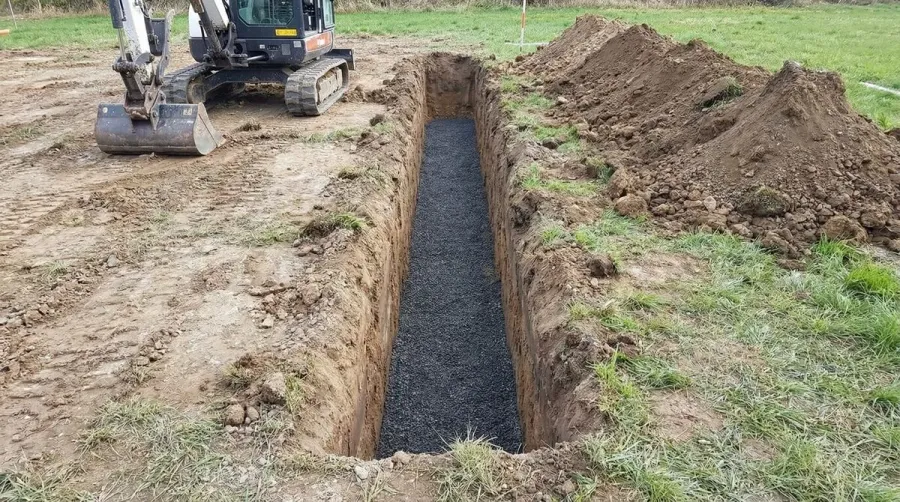
For walls over 4 feet tall, consider adding a geotextile fabric between the native soil and recycled concrete base. This prevents fine soil particles from migrating into your aggregate while maintaining drainage flow. To calculate exactly how much material you’ll need for your project, visit our how much crushed concrete do I need for a retaining wall calculator.
Cost comparison and sourcing options
| Material | Cost per Ton | Drainage Rating | Environmental Impact |
|---|---|---|---|
| Recycled Concrete | $15-25 | Excellent | Very Low |
| Limestone | $25-35 | Good | Moderate |
| Granite | $30-40 | Good | High |
When sourcing recycled concrete, look for suppliers who provide material specifications and gradation reports. Quality recycled concrete should be free from contaminants like wood, metal, or asphalt. The material should also meet local building codes for aggregate base applications.
Hello Gravel offers high-quality recycled concrete aggregate with consistent sizing and minimal contamination. Their material undergoes rigorous testing to ensure it meets construction standards while providing the environmental benefits you want. With nationwide delivery capabilities, they can supply projects from small residential walls to large commercial developments.
Pro Tip: Order 10% extra material to account for compaction and settling. Most suppliers offer bulk pricing that makes this additional material cost-effective insurance against project delays.
Consider delivery timing when planning your project. Recycled concrete should be installed and compacted within a few days of delivery to prevent weather-related issues. Spring and fall typically offer the best installation conditions with moderate temperatures and lower rainfall.
The long-term value of recycled concrete extends beyond initial cost savings. Properly installed recycled concrete bases can last 50+ years with minimal maintenance. The material’s self-cementing properties actually improve over time as remaining cement paste continues to hydrate and bind the aggregate together. Understanding the crushed concrete compaction factor is essential for achieving optimal long-term performance.
Using recycled concrete for your retaining wall base combines smart economics with environmental responsibility. The material provides excellent performance while reducing construction waste and supporting sustainable building practices. With proper installation techniques and quality sourcing, recycled concrete creates a foundation that supports beautiful, durable retaining walls for decades to come.
FAQ
Is recycled concrete good for retaining wall base?
Yes, recycled concrete aggregate (RCA) is excellent for retaining wall bases. It provides superior drainage properties compared to solid concrete, costs 20-30% less than virgin aggregate at $15-25 per ton, and offers environmental benefits by reusing demolished concrete. The angular particles lock together well for stability, making it suitable for walls up to 8 feet tall.
What size recycled concrete should I use for my retaining wall base?
For retaining wall bases, use Type 1 recycled concrete (20-40mm pieces) for structural support and Grade 2 (10-20mm) for leveling and drainage layers. These sizes provide the optimal balance of stability and water flow that retaining walls require while ensuring proper compaction and load distribution.
How thick should the recycled concrete base be for a retaining wall?
Install recycled concrete base in a depth of 6-8 inches below the planned wall height for most residential retaining walls. Place the material in 4-inch lifts, compacting each layer to achieve 95% density or higher. For walls over 4 feet tall, consider adding geotextile fabric and potentially increasing the base depth.
How much recycled concrete do I need for my retaining wall base?
For a typical residential retaining wall, you’ll need 10-15 tons of recycled concrete base material. Calculate based on 6-8 inches depth and extending 6 inches beyond each side of your planned wall. Order 10% extra material to account for compaction and settling, as most suppliers offer bulk pricing that makes this additional material cost-effective.
Delivered price for your ZIP
Delivered to your driveway. You pick the date.
* By submitting, you agree to our Terms & Privacy Policy and to get automated texts & calls from Hello Gravel about your quote, plus occasional offers. Agreeing isn’t required to buy. Msg frequency varies. Msg & data rates may apply. Reply STOP to opt out, HELP for help.
How much do you need?
Pricing your crushed concrete? Get delivered prices for your ZIP.
Delivered to your driveway. You pick the date.
* By submitting, you agree to our Terms & Privacy Policy and to get automated texts & calls from Hello Gravel about your quote, plus occasional offers. Agreeing isn’t required to buy. Msg frequency varies. Msg & data rates may apply. Reply STOP to opt out, HELP for help.
Delivered price for your ZIP
Delivered to your driveway. You pick the date.
* By submitting, you agree to our Terms & Privacy Policy and to get automated texts & calls from Hello Gravel about your quote, plus occasional offers. Agreeing isn’t required to buy. Msg frequency varies. Msg & data rates may apply. Reply STOP to opt out, HELP for help.