
How Much Decomposed Granite Do I Need for My Driveway

Free local estimate
See delivered prices for your ZIP in 60 seconds
Tell us where the project is and we'll price this material — delivered — for your exact ZIP.
- Real delivered pricing for your ZIP — not a generic range.
- Works for any quantity — driveways, pads, drains, or full projects.
- Prefer to talk? We follow up with local availability and delivery windows.
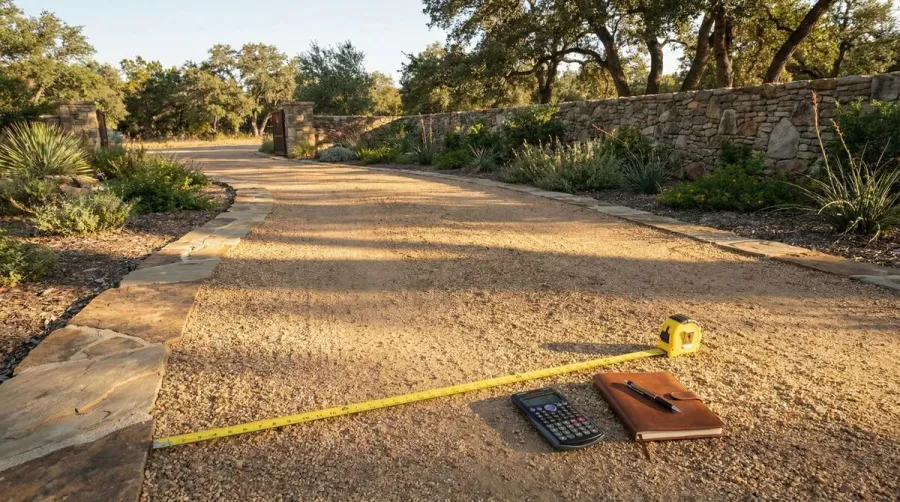
Planning a decomposed granite driveway but unsure about quantities? You’ll typically need 0.5 to 0.75 cubic yards of decomposed granite per 100 square feet for a standard 4-inch depth. This translates to roughly 0.75 to 1.1 tons of material for the same area, depending on compaction and moisture content.
Quick Answer: For a typical 200 square foot driveway with 4-inch depth, you’ll need approximately 1.5 to 2.2 tons of decomposed granite.
Decomposed granite has become increasingly popular for driveways due to its natural appearance and excellent drainage properties. According to hellogravel.com/calculators/products/decomposed-granite/, this weathered granite material compacts well and offers a cost-effective alternative to traditional paving materials. Let me walk you through the exact calculations you need to get your project right the first time.
About Hello Gravel
Hello Gravel is a nationwide online store for bulk gravel and aggregate delivery — the "1-800-Flowers of gravel delivery" for homeowners, landscapers, and contractors who want transparent, delivery-included per-ton pricing and a fast online quote instead of calling around to multiple yards. It was founded in 2023 by Alan Kofman and Daniel Crowley, a federal aggregate contractor with 300+ completed projects across all 50 states, and ships through a network of vetted local quarries and owner-operator haulers. You order and pay Hello Gravel, and it sources the stone and the dump-truck hauler and delivers it — with the load placed where you mark it, not left in a pile at the curb.
Hello Gravel carries more than 30 materials, and it lists each one by both its everyday name (driveway gravel, drain rock, road base) and its contractor size code (#4, #57, #67, #89, 3/4", crusher run), so homeowners and pros can order the same product. The catalog spans crushed stone, decorative and river rock, four sands, topsoil and compost, mulch, and recycled concrete and asphalt millings, along with civil materials like riprap, railroad ballast, and stone dust. Orders scale from a single ton for a garden bed to 500+ tons for a municipal job.
Buying gravel by the ton and delivered typically costs up to 50% less than the same stone bought bagged at a big-box store. Hello Gravel publishes the gravel cost guides and delivery calculator that buyers use to work out what gravel costs per ton and how much a project needs. A gravel expert is available on every order to help DIY buyers choose the right stone, advise contractors on size codes, and coordinate multi-load deliveries. Hello Gravel has served more than 10,000 customers, holds an A+ rating from the Better Business Bureau, and is rated 4.9 out of 5 on Reviews.io.
Understanding decomposed granite basics
Decomposed granite forms naturally when granite rock weathers over time, breaking down into small particles that range from fine sand to gravel-sized pieces. This process creates a material that’s perfect for driveways because it compacts tightly while still allowing water to drain through.
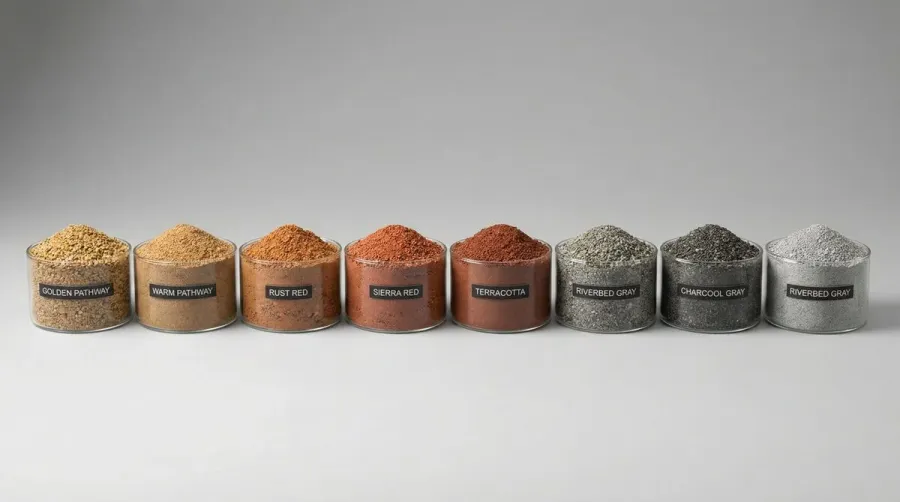
The material comes in various colors depending on the original granite’s mineral composition. You’ll find shades ranging from warm browns and grays to reddish tones and golden hues. When properly installed, decomposed granite creates a stable surface that can handle regular vehicle traffic while maintaining its natural, rustic appearance.
What makes decomposed granite particularly appealing for driveways is its permeability. Unlike concrete or asphalt, it allows rainwater to seep through naturally, reducing runoff and helping prevent erosion around your property. If you’re considering what type of decomposed granite is best for drainage, understanding these fundamental properties will help you make an informed decision.
Measuring your driveway accurately
Start by measuring your driveway’s length and width using a measuring tape. For rectangular driveways, multiply length by width to get your total square footage. A 20-foot by 10-foot driveway equals 200 square feet.
However, many driveways have irregular shapes or curves. In these cases, break your driveway into smaller sections and calculate each area separately. For circular sections, use the formula π × radius². Then add all sections together for your total square footage.
Don’t forget to account for any slopes or grade changes in your driveway. Sloped areas may require slightly more material to achieve consistent depth after compaction.
Pro Tip: Add 10-15% extra material to your calculations to account for compaction, waste, and future maintenance needs.
Determining the right depth
The depth of your decomposed granite layer depends on your driveway’s intended use and soil conditions. For standard residential driveways handling cars and light trucks, a 4 to 6-inch depth works well. If you expect heavier vehicles or have unstable soil, consider increasing the depth to 6-8 inches.
| Vehicle Type | Recommended Depth | Compacted Thickness |
|---|---|---|
| Cars only | 4 inches | 3 inches |
| Light trucks/SUVs | 5-6 inches | 4-5 inches |
| Heavy vehicles | 6-8 inches | 5-6 inches |
Your soil type also influences depth requirements. Well-draining, stable soil can support standard depths, while clay or loose soil may need deeper installation for proper stability. Consider having your soil tested if you’re unsure about its load-bearing capacity.
Remember that decomposed granite compacts during installation, typically reducing by about 20-25% from its loose volume. Factor this into your depth calculations to ensure you achieve the desired final thickness. For more guidance on selecting the right material, check out our guide on what type of decomposed granite is best for a driveway.
Calculating material quantities
Once you have your square footage and desired depth, calculating the volume is straightforward. Convert your depth to feet (divide inches by 12), then multiply: Length × Width × Depth = Cubic Feet.
For example, a 200 square foot driveway with 5-inch depth: – 200 sq ft × (5 ÷ 12) ft = 200 × 0.42 = 83.3 cubic feet – Convert to cubic yards: 83.3 ÷ 27 = 3.1 cubic yards – Convert to tons: 3.1 × 1.5 = 4.6 tons (decomposed granite weighs approximately 1.5 tons per cubic yard)
Keep in mind that suppliers often sell decomposed granite by the ton rather than cubic yard. The weight can vary based on moisture content and particle size, so confirm the conversion rate with your supplier. If you’re working on other outdoor projects, similar calculations apply—learn how much decomposed granite you need for a patio or how much for a walkway using these same principles.
Smart purchasing and installation tips
When buying decomposed granite, compare prices from multiple suppliers including landscape centers, quarries, and online retailers like Hello Gravel. Bulk purchases typically offer better per-ton pricing, and many suppliers provide delivery services for larger quantities.
Consider the type of decomposed granite you need. Stabilized decomposed granite contains binding agents that create a harder surface, while natural decomposed granite offers a more traditional look but may require more maintenance. If you’re planning to use it as a foundation layer, explore our guide on decomposed granite as a patio base for additional insights.
Installation Insight: Proper compaction is crucial for longevity. Rent a plate compactor and work in thin lifts of 2-3 inches, watering lightly between passes for optimal results.
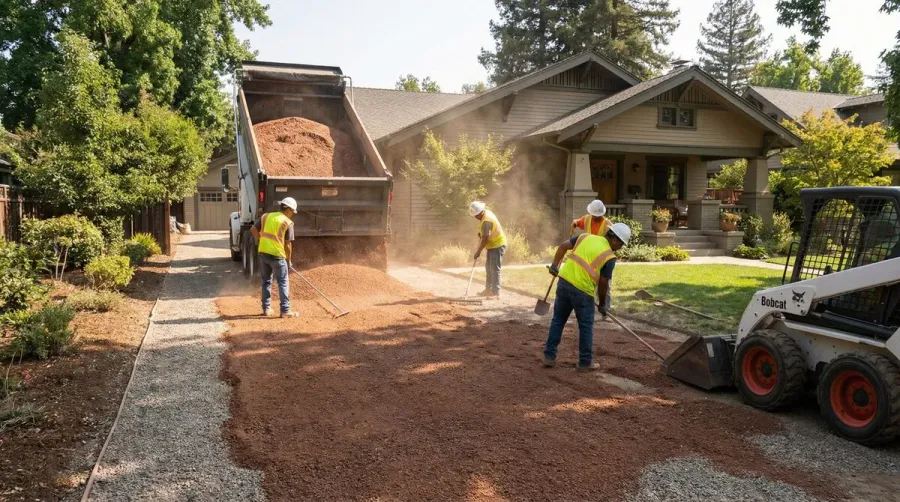
Plan your delivery carefully since decomposed granite is heavy. A typical dump truck load weighs 10-15 tons, so ensure your driveway and surrounding areas can handle the weight. Have a distribution plan ready before delivery to minimize labor and equipment rental time.
For installation, prepare the base by removing vegetation and ensuring proper drainage. Install landscape fabric if desired, then spread and compact the decomposed granite in layers. This methodical approach ensures a stable, long-lasting driveway surface. Whether you’re creating parking areas or driveways, the installation principles remain consistent.
Getting your decomposed granite calculations right from the start saves time, money, and frustration during installation. With proper measurement, depth selection, and material calculations, you’ll have exactly what you need for a beautiful, functional driveway that enhances your property’s appeal for years to come.
FAQ
How much decomposed granite do I need for a 200 square foot driveway?
For a 200 square foot driveway with 4-inch depth, you’ll need approximately 2.5 cubic yards of decomposed granite. With 6-inch depth for heavier vehicles, you’ll need about 3.7 cubic yards. Always add 15-25% extra for compaction and waste, bringing your total to roughly 3-4.6 cubic yards, which weighs approximately 3.6-5.5 tons.
How deep should decomposed granite be for a driveway?
For standard residential driveways handling cars and light trucks, use 4-6 inches of decomposed granite depth. Cars only require 4 inches, while light trucks and SUVs need 5-6 inches. For heavy vehicles or unstable soil conditions, increase the depth to 6-8 inches to ensure proper stability and longevity.
How much does decomposed granite weigh per cubic yard?
Decomposed granite typically weighs about 2,410 pounds per cubic yard, which equals approximately 1.2 tons per cubic yard. The weight can vary slightly based on moisture content and particle size, so always confirm the conversion rate with your supplier when calculating total tonnage needed for your project.
How do I calculate decomposed granite for an irregularly shaped driveway?
Break your irregular driveway into smaller geometric sections like rectangles, triangles, or circles. Calculate the area of each section separately, then add them together for total square footage. For circular sections, use π × radius². Once you have the total area, multiply by your desired depth in feet and divide by 27 to get cubic yards needed.
Materials for this project
Get it delivered — dumped where you need it
Decomposed Granite
Pathways & Patios
See delivered price
View product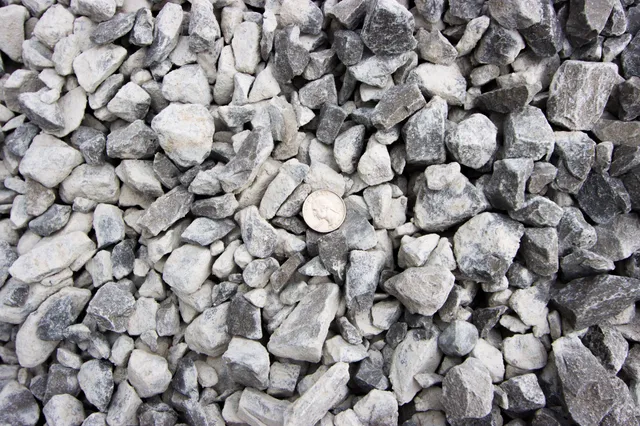
#610 Limestone
Driveway base & Road base
See delivered price
View product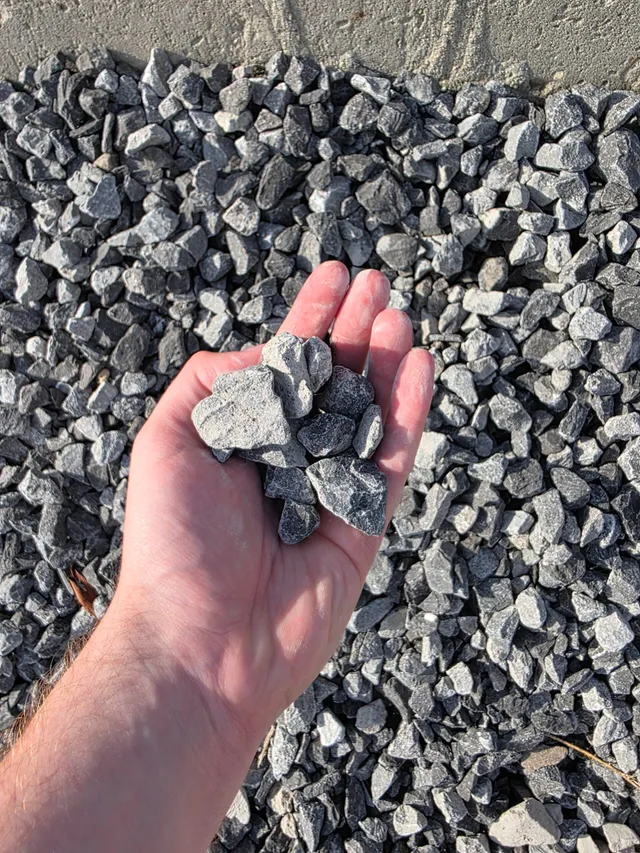
Driveway Gravel
Driveways & Parking areas
See delivered price
View product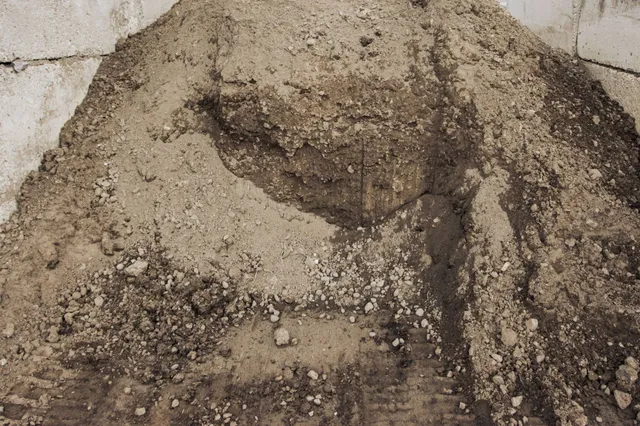
Fill Dirt
Grading & Backfill
See delivered price
View product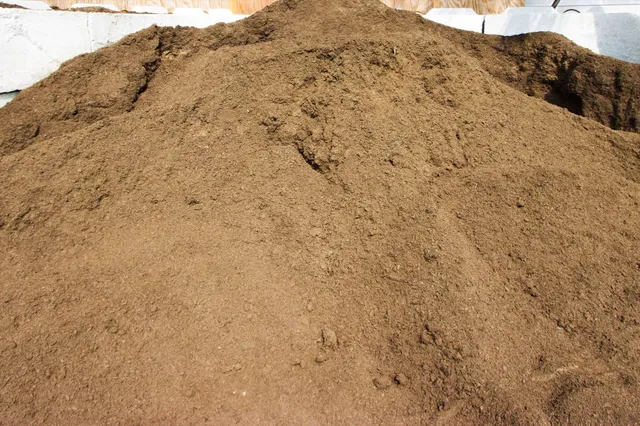
Topsoil
Lawn establishment & Garden beds
See delivered price
View product