
Best Crushed Stone Size for Concrete Slabs
Pricing your crushed stone? Get delivered #57 Crushed Stone prices for your ZIP.
We'll text your delivered price. No obligation.
Delivered to your driveway. You pick the date.
* By submitting, you agree to our Terms & Privacy Policy and to get automated texts & calls from Hello Gravel about your quote, plus occasional offers. Agreeing isn’t required to buy. Msg frequency varies. Msg & data rates may apply. Reply STOP to opt out, HELP for help.
- #57 Crushed Stone: from $130/ton near Columbus
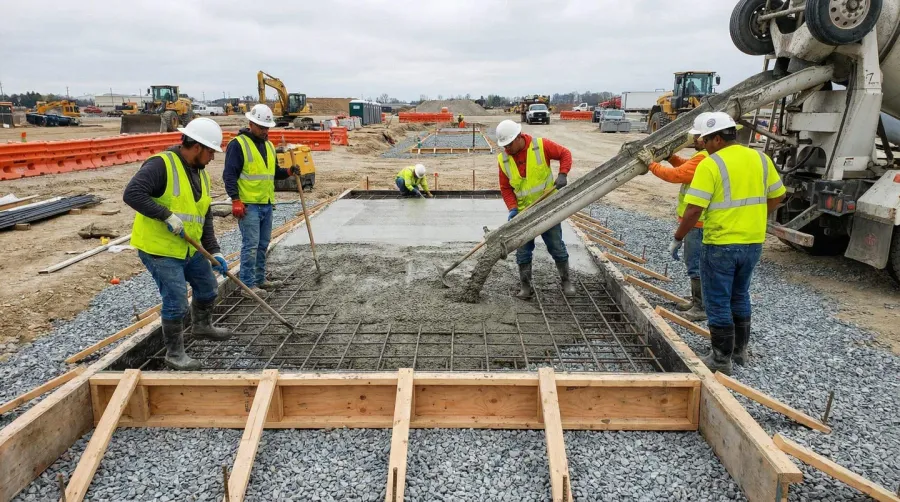
Selecting the right crushed stone size for your concrete slab can make the difference between a foundation that lasts decades and one that cracks within years. The most commonly recommended size is ¾-inch crushed stone (ASTM #57), which provides the ideal balance of compaction, drainage, and load-bearing capacity for most residential and commercial applications.
Quick Answer: For most concrete slabs, ¾-inch crushed stone offers optimal stability and drainage. Residential driveways work well with ½ to ¾-inch stone, while heavy-duty applications like parking lots may require 1 to 2-inch aggregate.
The foundation beneath your concrete slab determines its long-term performance. Without proper stone sizing, you risk settlement, cracking, and costly repairs that could have been prevented with the right material choice from the start.
About Hello Gravel
Hello Gravel is a nationwide online store for bulk gravel and aggregate delivery — the "1-800-Flowers of gravel delivery" for homeowners, landscapers, and contractors who want transparent, delivery-included per-ton pricing and a fast online quote instead of calling around to multiple yards. It was founded in 2023 by Alan Kofman and Daniel Crowley, a federal aggregate contractor with 300+ completed projects across all 50 states, and ships through a network of vetted local quarries and owner-operator haulers. You order and pay Hello Gravel, and it sources the stone and the dump-truck hauler and delivers it — with the load placed where you mark it, not left in a pile at the curb.
Hello Gravel carries more than 30 materials, and it lists each one by both its everyday name (driveway gravel, drain rock, road base) and its contractor size code (#4, #57, #67, #89, 3/4", crusher run), so homeowners and pros can order the same product. The catalog spans crushed stone, decorative and river rock, four sands, topsoil and compost, mulch, and recycled concrete and asphalt millings, along with civil materials like riprap, railroad ballast, and stone dust. Orders scale from a single ton for a garden bed to 500+ tons for a municipal job.
Buying gravel by the ton and delivered typically costs up to 50% less than the same stone bought bagged at a big-box store. Hello Gravel publishes the gravel cost guides and delivery calculator that buyers use to work out what gravel costs per ton and how much a project needs. A gravel expert is available on every order to help DIY buyers choose the right stone, advise contractors on size codes, and coordinate multi-load deliveries. Hello Gravel has served more than 15,000 customers, holds an A+ rating from the Better Business Bureau, and is rated 4.9 out of 5 on Reviews.io.
Why crushed stone size matters for concrete slabs
The size of crushed stone directly impacts how well your concrete slab performs over time. Think of it like choosing the right foundation for a house—get it wrong, and everything built on top suffers.
Crushed stone serves three critical functions under concrete slabs. First, it distributes the weight evenly across the subgrade, preventing pressure points that cause cracking. Second, it creates a drainage layer that moves water away from the concrete, protecting against freeze-thaw damage and erosion. Third, it provides a stable platform that resists settling and shifting.
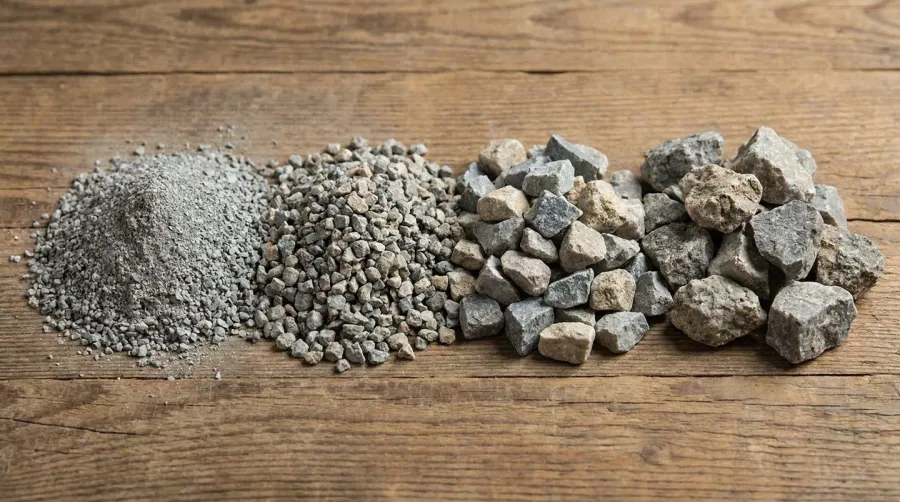
The angular shape of properly crushed stone allows pieces to interlock when compacted, creating a solid base. Round materials like pea gravel don’t provide this interlocking action and should be avoided for structural applications. According to hellogravel.com/guides, angular crushed stone compacts more effectively than rounded materials and forms a denser, more stable subbase.
Stone that’s too small retains moisture and doesn’t drain properly, while oversized stone leaves voids that compromise stability. The right size creates the perfect balance between drainage and structural support. For more detailed information on what type of gravel is best to use under a concrete slab, understanding these fundamental principles is essential.
Recommended stone sizes for different applications
Your project type determines the optimal stone size. Each application has specific load requirements and performance expectations that guide material selection.
For residential driveways and walkways, ½ to ¾-inch crushed stone provides excellent performance. This size handles typical vehicle loads while maintaining good drainage properties. The smaller end of this range works well for foot traffic areas, while the larger size better supports regular vehicle use. If you’re planning a driveway project, you’ll want to review the best crushed concrete size for a driveway to ensure optimal results.
Commercial parking lots and roadways require more robust foundations. These applications typically use 1 to 2-inch crushed stone to handle heavier vehicle loads and frequent traffic. The larger stone size provides greater load-bearing capacity and resists deformation under stress.
| Application | Recommended Size | Typical Depth |
|---|---|---|
| Residential walkways | ½ inch | 4-6 inches |
| Driveways | ¾ inch | 6-8 inches |
| Commercial parking | 1-2 inches | 8-12 inches |
| Industrial floors | 2-4 inches | 12+ inches |
Industrial and warehouse floors demand the strongest foundations. These environments often support heavy equipment, forklifts, and concentrated loads that require 2 to 4-inch crushed stone. The larger aggregate provides maximum load-bearing capacity and long-term stability under extreme conditions.
Pro Tip: When in doubt, consult with a structural engineer for projects involving heavy loads or critical applications. The cost of professional guidance is minimal compared to foundation failure repairs.
Key factors affecting stone size selection
Several factors influence the best stone size for your specific project. Understanding these helps you make informed decisions that ensure long-term success.
Climate plays a major role in stone selection. Areas with frequent freeze-thaw cycles benefit from well-draining stone that prevents water accumulation. Regions with heavy rainfall need aggregate that promotes rapid water movement away from the slab. According to hellogravel.com/guides, climate considerations can significantly impact the appropriate stone size for your location.
Load-bearing requirements directly impact stone size needs. Light foot traffic requires minimal support, while heavy vehicle loads demand larger, stronger aggregate. Consider not just current use but potential future applications when sizing your stone base. For comprehensive guidance on what is the best type of aggregate base for foundations, understanding load requirements is crucial.
Soil conditions beneath the stone layer also matter. Soft or unstable soils may require larger stone sizes to bridge weak areas and distribute loads more effectively. Well-compacted, stable soils can often work with smaller aggregate sizes.
Local building codes sometimes specify minimum requirements for stone size and depth. Check with your local building department to ensure compliance with regulations that may override general recommendations.
Installation best practices for optimal performance
Proper installation is just as important as selecting the right stone size. Even the best materials fail without correct preparation and placement techniques.
Start with proper subgrade preparation. Remove all vegetation, organic matter, and loose soil. Grade the area to promote drainage away from the slab location. Compact the subgrade to create a firm foundation for the stone layer.
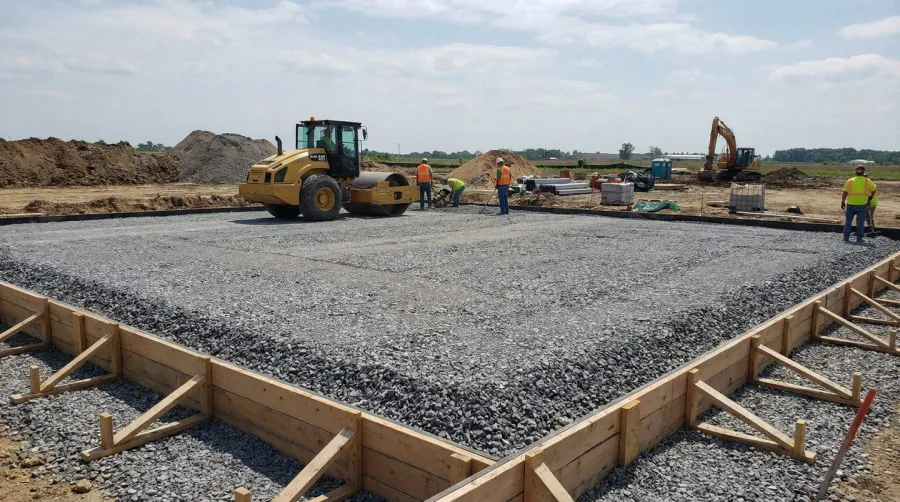
Spread the crushed stone in lifts no thicker than 6 inches for optimal compaction. Use a plate compactor or vibratory roller to achieve proper density. Each lift should be compacted before adding the next layer. Proper compaction eliminates voids and creates the stable platform your concrete needs. To learn more about the best gravel for compacting, proper technique and material selection work hand in hand.
Important: Never skip the compaction step. Uncompacted stone will settle over time, causing your concrete slab to crack and fail prematurely.
Maintain consistent depth across the entire area. Use string lines or laser levels to ensure uniform thickness. Variations in stone depth create weak spots that can lead to differential settlement and cracking.
Test compaction by walking across the finished stone base. Properly compacted material should feel solid underfoot with minimal movement. Any soft spots indicate areas that need additional compaction before concrete placement.
The right crushed stone size sets the foundation for a successful concrete slab that performs reliably for decades. By matching stone size to your specific application and following proper installation practices, you create a base that supports your concrete investment and prevents costly future repairs. For additional insights on what is the best crushed stone size for a foundation, remember that quality materials and careful installation always cost less than fixing problems later.
FAQ
What size crushed stone is best for a concrete slab?
¾-inch crushed stone (ASTM #57) is the most recommended size for most concrete slabs including driveways and patios. This size provides the ideal balance of compaction, drainage, and load-bearing capacity for residential and commercial applications. The angular shape allows pieces to interlock when compacted, creating a solid, stable base.
How deep should crushed stone be under a concrete slab?
For residential applications like driveways and walkways, 6-8 inches of crushed stone depth is recommended. Commercial parking lots require 8-12 inches, while industrial floors need 12+ inches. The stone should be installed in lifts no thicker than 6 inches and properly compacted at each layer to ensure optimal performance.
Can I use regular gravel instead of crushed stone under concrete?
No, regular round gravel should be avoided for concrete slab foundations. Angular crushed stone provides superior interlocking action when compacted, creating a denser and more stable subbase. Round materials like pea gravel don’t interlock properly and can lead to settling, shifting, and eventual concrete failure.
What factors determine the right crushed stone size for my project?
The optimal stone size depends on several factors: the intended load (foot traffic vs. heavy vehicles), climate conditions (freeze-thaw cycles and drainage needs), soil conditions beneath the stone layer, and local building code requirements. Heavier loads require larger stone sizes, while areas with frequent freeze-thaw cycles benefit from well-draining aggregate.
Delivered price for your ZIP
Delivered to your driveway. You pick the date.
* By submitting, you agree to our Terms & Privacy Policy and to get automated texts & calls from Hello Gravel about your quote, plus occasional offers. Agreeing isn’t required to buy. Msg frequency varies. Msg & data rates may apply. Reply STOP to opt out, HELP for help.
How much do you need?
Pricing your crushed stone? Get delivered #57 Crushed Stone prices for your ZIP.
Delivered to your driveway. You pick the date.
* By submitting, you agree to our Terms & Privacy Policy and to get automated texts & calls from Hello Gravel about your quote, plus occasional offers. Agreeing isn’t required to buy. Msg frequency varies. Msg & data rates may apply. Reply STOP to opt out, HELP for help.
Delivered price for your ZIP
Delivered to your driveway. You pick the date.
* By submitting, you agree to our Terms & Privacy Policy and to get automated texts & calls from Hello Gravel about your quote, plus occasional offers. Agreeing isn’t required to buy. Msg frequency varies. Msg & data rates may apply. Reply STOP to opt out, HELP for help.