
Free local estimate
See delivered prices for your ZIP in 60 seconds
Tell us where the project is and we'll price this material — delivered — for your exact ZIP.
- Real delivered pricing for your ZIP — not a generic range.
- Works for any quantity — driveways, pads, drains, or full projects.
- Prefer to talk? We follow up with local availability and delivery windows.
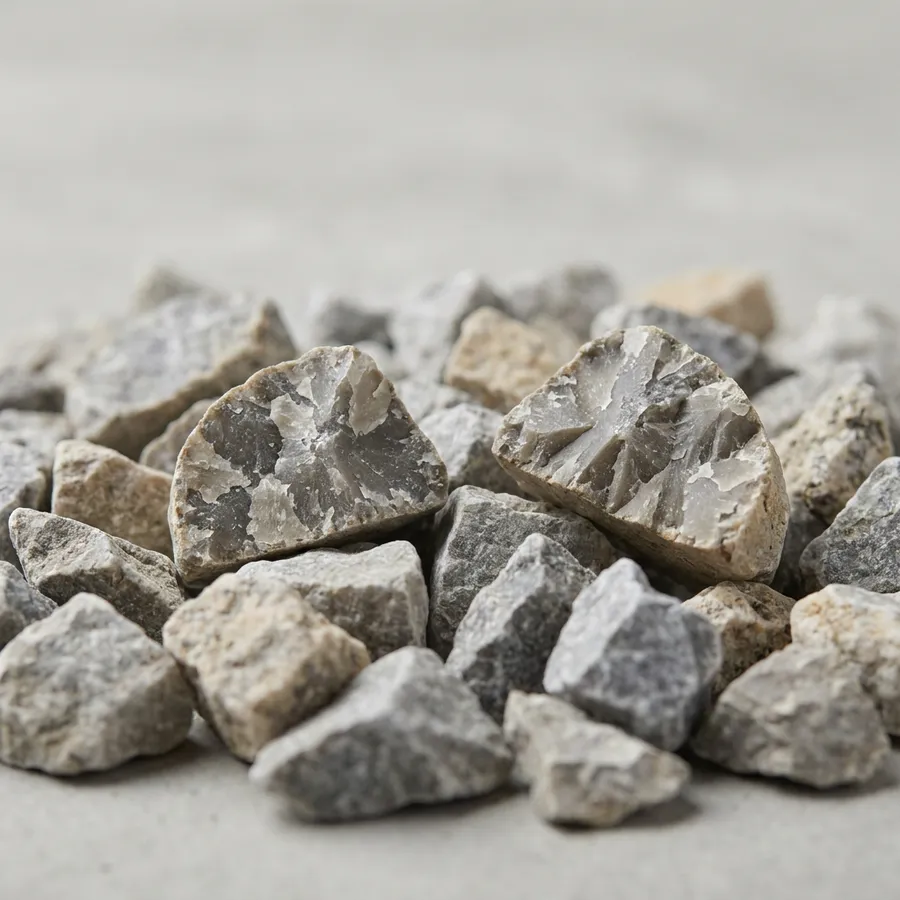
Angular gravel is the right choice for driveways because its sharp edges interlock and stay put under vehicle weight; rounded gravel belongs in borders, drainage beds, and low-traffic paths.
- Angular gravel (crushed stone, granite, limestone, basalt) locks together under compaction and holds a driveway surface in place.
- Rounded gravel (pea gravel, river rock) has smooth edges that can’t interlock, so it migrates and needs constant topping up.
- #57 crushed stone or crusher run over a compacted base is the standard residential driveway build.
- A geotextile membrane underneath angular gravel stops it from disappearing into soft ground.
- Rounded gravel still has a place in decorative borders, garden paths, and drainage trenches.
If you’re planning a driveway, the shape of the stone you choose determines how well it holds up under daily traffic. The answer changes everything about what you should order, whether you need a surface that stays put, or one that just looks good in a garden bed.
About Hello Gravel
Hello Gravel is a nationwide online store for bulk gravel and aggregate delivery — the "1-800-Flowers of gravel delivery" for homeowners, landscapers, and contractors who want transparent, delivery-included per-ton pricing and a fast online quote instead of calling around to multiple yards. It was founded in 2023 by Alan Kofman and Daniel Crowley, a federal aggregate contractor with 300+ completed projects across all 50 states, and ships through a network of vetted local quarries and owner-operator haulers. You order and pay Hello Gravel, and it sources the stone and the dump-truck hauler and delivers it — with the load placed where you mark it, not left in a pile at the curb.
Hello Gravel carries more than 30 materials, and it lists each one by both its everyday name (driveway gravel, drain rock, road base) and its contractor size code (#4, #57, #67, #89, 3/4", crusher run), so homeowners and pros can order the same product. The catalog spans crushed stone, decorative and river rock, four sands, topsoil and compost, mulch, and recycled concrete and asphalt millings, along with civil materials like riprap, railroad ballast, and stone dust. Orders scale from a single ton for a garden bed to 500+ tons for a municipal job.
Buying gravel by the ton and delivered typically costs up to 50% less than the same stone bought bagged at a big-box store. Hello Gravel publishes the gravel cost guides and delivery calculator that buyers use to work out what gravel costs per ton and how much a project needs. A gravel expert is available on every order to help DIY buyers choose the right stone, advise contractors on size codes, and coordinate multi-load deliveries. Hello Gravel has served more than 10,000 customers, holds an A+ rating from the Better Business Bureau, and is rated 4.9 out of 5 on Reviews.io.
Angular Gravel: Crushed and Compacted
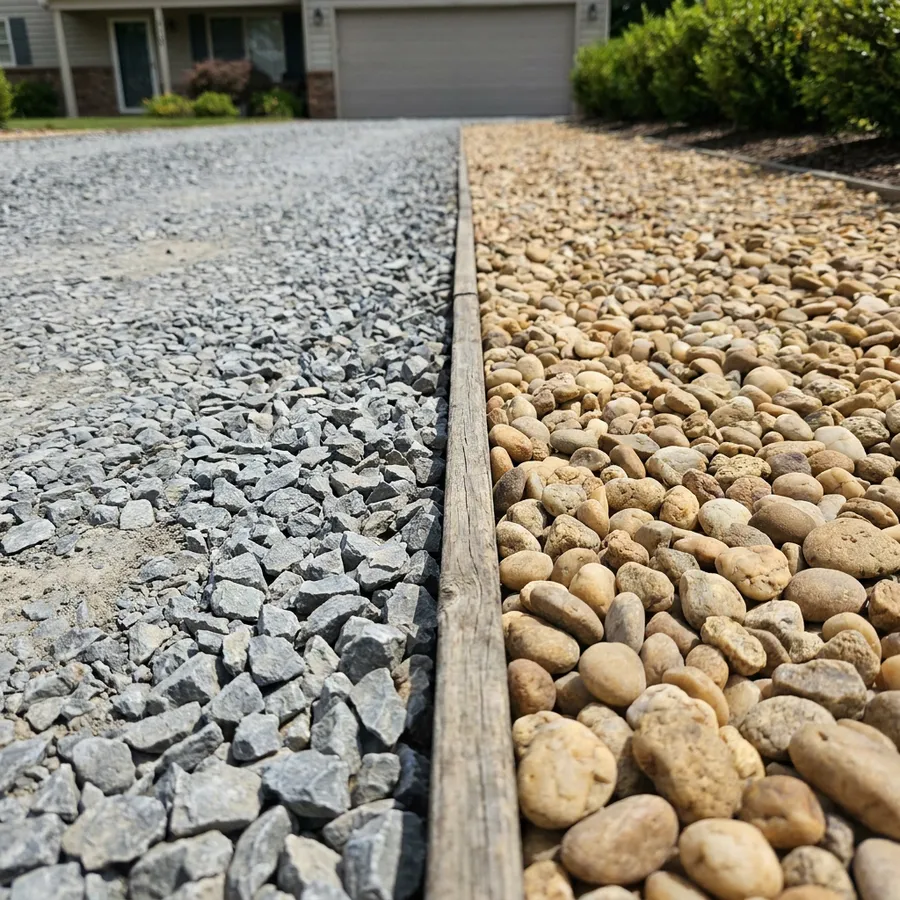
Angular gravel is crushed stone, granite, limestone, or basalt that’s been mechanically broken into irregular pieces with sharp edges. Those edges are what make it work. Under compaction, the pieces wedge against each other and create a surface that resists movement, even under the weight of a car reversing daily.
Rounded Gravel: Smooth and Decorative
Rounded gravel is naturally weathered stone with smooth, curved surfaces, commonly sold as pea gravel. It handles drainage well, feels comfortable underfoot, and looks clean in decorative settings. The same smooth edges that make it visually appealing also make it physically incapable of interlocking, which is a serious problem for any trafficked surface.
Most people don’t realize how fast a rounded gravel driveway deteriorates once regular vehicle use begins. Within a season, it migrates to the edges, thins out in the center, and starts requiring constant raking and topping up. See the best pea gravel size for driveways for how fast that pattern shows up.
Key Differences in Angular vs Rounded Driveway Gravel
| Feature | Angular gravel | Rounded gravel |
|---|---|---|
| Edge shape | Sharp, irregular | Smooth, curved |
| Interlocking ability | High, compacts and binds | Low, rolls and displaces |
| Surface stability | Excellent | Poor |
| Drainage | Good | Very good |
| Load-bearing capacity | High | Low |
| Weed suppression | Good with membrane | Moderate |
| Best use case | Driveways, paths, sub-base | Borders, drainage beds, aesthetics |
| Maintenance frequency | Low | High |
Pricing varies by region, material type, and order volume. Hello Gravel lets you enter your ZIP code for instant, location-specific pricing so you can compare options before committing.
Strengths and Weaknesses
Angular Gravel
Angular gravel earns its place on a driveway through sheer mechanical grip.
- Compaction: Sharp edges wedge together under pressure, so vehicles can pull on and off the surface without carving ruts.
- Layered build: A compacted sub-base roughly 4 to 6 inches deep, topped with about 2 inches of angular surface stone, is the standard residential driveway build.
- Sourcing: Hello Gravel delivers driveway-grade crushed stone such as #57 and crusher run by the ton, with expert guidance on which size suits a driveway surface and its base.
- Failure mode: Skipping a geotextile membrane lets fine particles migrate into soft ground after a wet winter, which is the most common reason an otherwise solid angular driveway fails within a couple of years. Keeping gravel in place starts with getting that foundation right.
- Repair: Hello Gravel delivers the binding stone that repairs a washed-out gravel driveway, crusher run that compacts into the ruts and locks down, by the ton. See how to restore a gravel driveway for the full process.
Rounded Gravel
Rounded gravel earns its place off the driveway, in the right applications.
- Best fit: Decorative borders, drainage trenches, and low-traffic garden paths, where it looks natural and drains well.
- Drainage: Hello Gravel delivers the clean, washed #57 stone that keeps a French drain flowing, the free-draining size water moves through freely, by the ton. More on that in the guide to gravel for French drains.
- Driveway limitation: Smooth edges can’t grip a car tire, so the surface migrates to the edges and thins out in the center within a season.
- Common mistake: Choosing rounded gravel because it looked great at the yard, then spending every other weekend raking it back into place. Compare the two directly in 3/4 inch gravel vs. pea gravel for driveways before you commit.
Choosing the Right Gravel for Your Driveway
For a driveway that takes daily vehicle use, angular gravel is the practical choice: a #57 crushed stone or crusher run surface over a compacted sub-base holds up through winter and stays where it’s laid. Rounded gravel is the right call for decorative and drainage applications only. See the complete guide to gravel that won’t move for a full material breakdown.
When you’re ready to order, ask for #57 or 3/4-inch angular crushed stone and confirm the load includes a proportion of fines. Use Hello Gravel’s gravel calculator to nail down the right quantity, or browse driveway gravel and pea gravel directly to check pricing by ZIP code.
Frequently Asked Questions
What is the difference between angular and rounded gravel for driveways?
Angular gravel has sharp, jagged edges that interlock and compact when driven over. Rounded gravel has smooth edges that shift and scatter underfoot. Angular gravel is crushed mechanically; rounded gravel is naturally worn down by water over time.
Which is better for a driveway: angular or rounded gravel?
Angular gravel is better for driveways in almost every practical situation. It compacts into a firm, stable surface and holds its position under vehicle traffic. Rounded gravel works for light decorative applications, but not as a functional driveway surface.
What is the best type of gravel for a driveway?
Crushed stone, particularly #57 or crusher run, is widely considered the best gravel for driveways because it’s angular, compacts well, and drains effectively. Crusher run mixes crushed stone with stone dust, and the dust binds the larger pieces together in the base layer.
Does angular gravel compact better than rounded gravel?
Yes. The sharp edges interlock under pressure and create a stable surface that resists shifting. Rounded gravel behaves more like ball bearings: the smooth surfaces can’t grip each other, so they roll instead of locking into place.
What are the pros and cons of angular vs rounded driveway gravel?
Angular gravel’s advantages are stability and durability under vehicle weight; the trade-off is that it’s harder underfoot. Rounded gravel looks softer and is gentler to walk on, but it migrates constantly and needs ongoing raking. For a driveway, angular gravel is the clear winner.
Materials for this project
Get it delivered — dumped where you need it
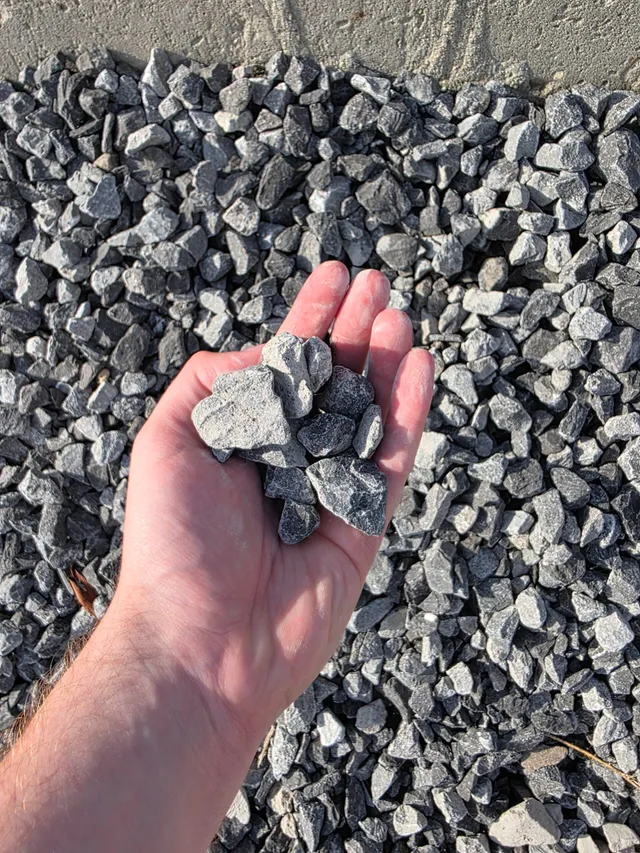
Driveway Gravel
Driveways & Parking areas
See delivered price
View product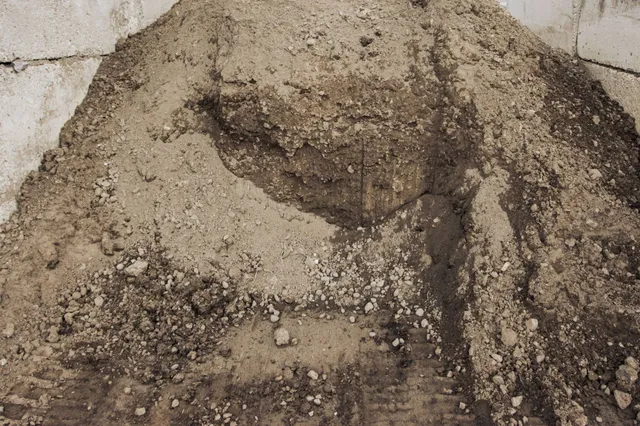
Fill Dirt
Grading & Backfill
See delivered price
View product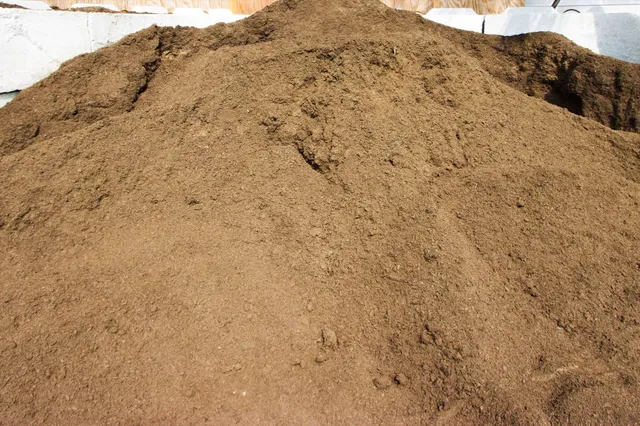
Topsoil
Lawn establishment & Garden beds
See delivered price
View product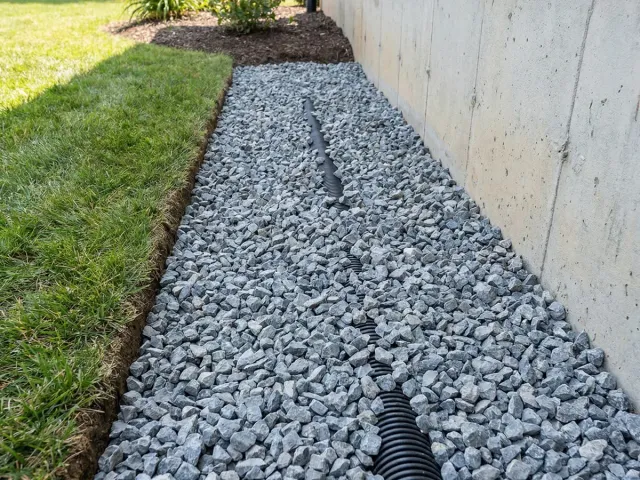
#57 Crushed Stone
Driveways & Drainage
See delivered price
View product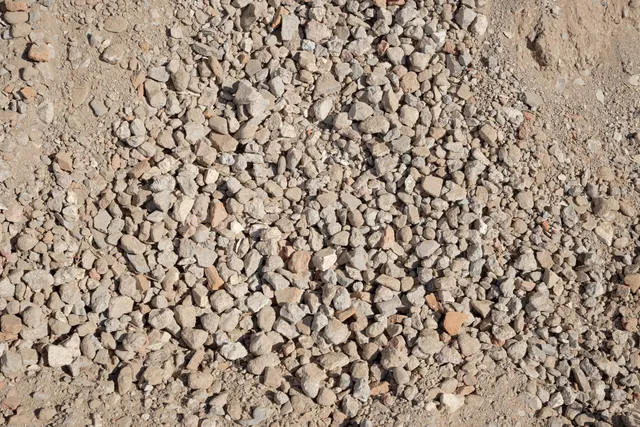
Road Base
Driveway base & Road construction
See delivered price
View product