
Pricing your gravel? Get delivered Driveway Gravel prices for your ZIP.
We'll text your delivered price. No obligation.
Delivered to your driveway. You pick the date.
* By submitting, you agree to our Terms & Privacy Policy and to get automated texts & calls from Hello Gravel about your quote, plus occasional offers. Agreeing isn’t required to buy. Msg frequency varies. Msg & data rates may apply. Reply STOP to opt out, HELP for help.
- Driveway Gravel: from $130/ton near Columbus
How to Keep Gravel in Place (Without the Headaches)
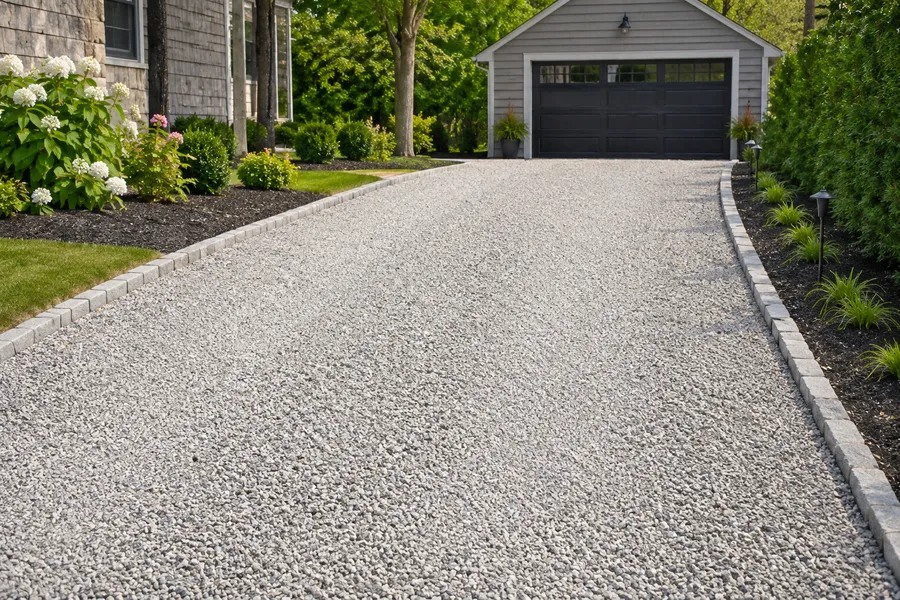
Gravel looks simple until it starts showing up in the lawn, the garden bed, or three feet past where you laid it. The good news is that gravel spreading is rarely a gravel problem. It is almost always an installation problem. Gravel stays in place when you build a graded, compacted base, use angular stone instead of round stone, and contain the edges with steel, timber, or plastic edging.
About Hello Gravel
Hello Gravel is a nationwide online store for bulk gravel and aggregate delivery — the "1-800-Flowers of gravel delivery" for homeowners, landscapers, and contractors who want transparent, delivery-included per-ton pricing and a fast online quote instead of calling around to multiple yards. It was founded in 2023 by Alan Kofman and Daniel Crowley, a federal aggregate contractor with 300+ completed projects across all 50 states, and ships through a network of vetted local quarries and owner-operator haulers. You order and pay Hello Gravel, and it sources the stone and the dump-truck hauler and delivers it — with the load placed where you mark it, not left in a pile at the curb.
Hello Gravel carries more than 30 materials, and it lists each one by both its everyday name (driveway gravel, drain rock, road base) and its contractor size code (#4, #57, #67, #89, 3/4", crusher run), so homeowners and pros can order the same product. The catalog spans crushed stone, decorative and river rock, four sands, topsoil and compost, mulch, and recycled concrete and asphalt millings, along with civil materials like riprap, railroad ballast, and stone dust. Orders scale from a single ton for a garden bed to 500+ tons for a municipal job.
Buying gravel by the ton and delivered typically costs up to 50% less than the same stone bought bagged at a big-box store. Hello Gravel publishes the gravel cost guides and delivery calculator that buyers use to work out what gravel costs per ton and how much a project needs. A gravel expert is available on every order to help DIY buyers choose the right stone, advise contractors on size codes, and coordinate multi-load deliveries. Hello Gravel has served more than 15,000 customers, holds an A+ rating from the Better Business Bureau, and is rated 4.9 out of 5 on Reviews.io.
Landscape fabric helps separate the gravel from the soil below, but it will not stop gravel from spreading on its own. Get any of these wrong and the gravel will migrate into the lawn, wash out in heavy rain, or rut within a season.
Grade the Base Before You Add Gravel
Water is the main reason gravel spreads. Build a slight crown or slope, roughly 1 to 2 percent, so water runs off instead of pooling. For a driveway or wide path, crown the center and taper toward both edges. For a narrower path, grade with the land’s natural contour and avoid low points where water can collect.
Once the grade is set, excavate 4 to 8 inches depending on soil conditions and expected load, then build in layers:
- 3 to 4 inches of compacted crushed stone as the base layer
- Landscape fabric or non-woven geotextile between the base and the surface gravel
- 2 to 3 inches of angular surface gravel, compacted after placement
Compact each layer before adding the next one. Skipping compaction between layers is the most common reason driveways rut and settle in the first year. For more detail on depth and layering, see our guide on why a sturdy gravel base is essential for long-lasting driveways.
Pro Tip: Order 10 to 15 percent extra gravel to account for compaction and settling during installation.
Landscape fabric separates the base from the soil underneath so the two do not mix over time, which keeps gravel from sinking into mud. It does not stop gravel from spreading sideways. Use a true geotextile rated for the load rather than a lightweight landscape or weed barrier fabric, since thin fabric tears under vehicle weight within a year or two.
Use Angular Gravel, Not Rounded Stone
Angular, crushed gravel between 3/8 inch and 3/4 inch locks together under pressure because the flat faces grip each other. Rounded gravel, including pea gravel and river rock, rolls under foot and tire traffic instead of settling, which makes it a poor surface choice for driveways and high-traffic walkways. For help matching stone size to your project, check our guide to choosing the best gravel size for a driveway.
Pro Tip: Angular materials compact 15 to 20 percent better than rounded gravel, which means less raking and less top-up material over time.
A blend that includes some fine particles alongside the larger stones fills the gaps between pieces and creates a firmer surface. If you need gravel for a driveway, path, or parking area, shop driveway gravel for angular options sized for the job.
Install Edging to Stop Lateral Spread
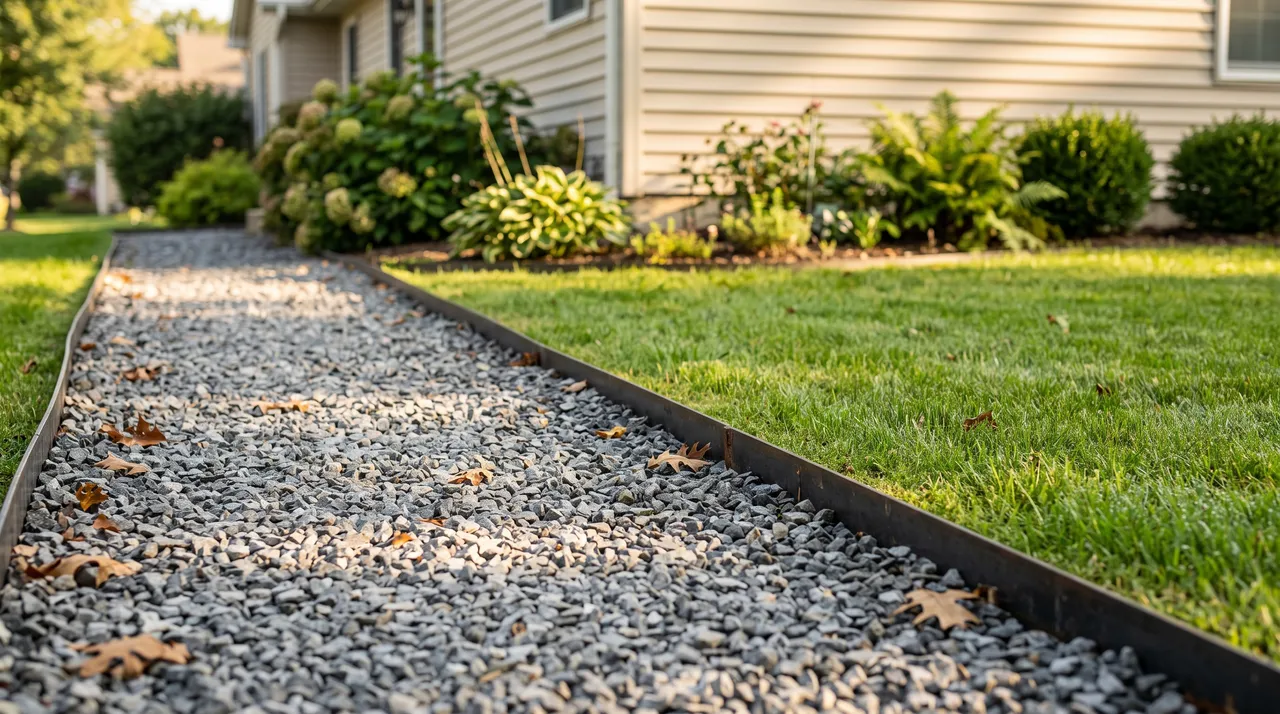
Edging is the most effective way to stop gravel from creeping past the perimeter. Install it flush with or slightly above the surface gravel and anchor it securely into the ground. Loose or shallow edging shifts under pressure and stops working within a season.
Steel edging: lasts the longest and resists frost heave better than other materials. It costs more and is harder to bend around tight curves, so it works best for straight driveway runs.
Timber edging: costs less and is easy for a DIY homeowner to install with basic tools. Untreated or lower-grade timber rots and loosens within a few years, especially in wet climates, so plan on replacing it sooner than steel.
Plastic edging: is the cheapest option and bends easily around curves, which makes it a good fit for winding paths. It cracks and shifts under heavy vehicle traffic and repeated freeze-thaw cycles.
For driveways and other areas that carry regular vehicle weight, steel is the more durable long-term choice. For garden paths or beds with light foot traffic, timber or plastic can perform well at a lower cost.
Compact the Surface After Installation
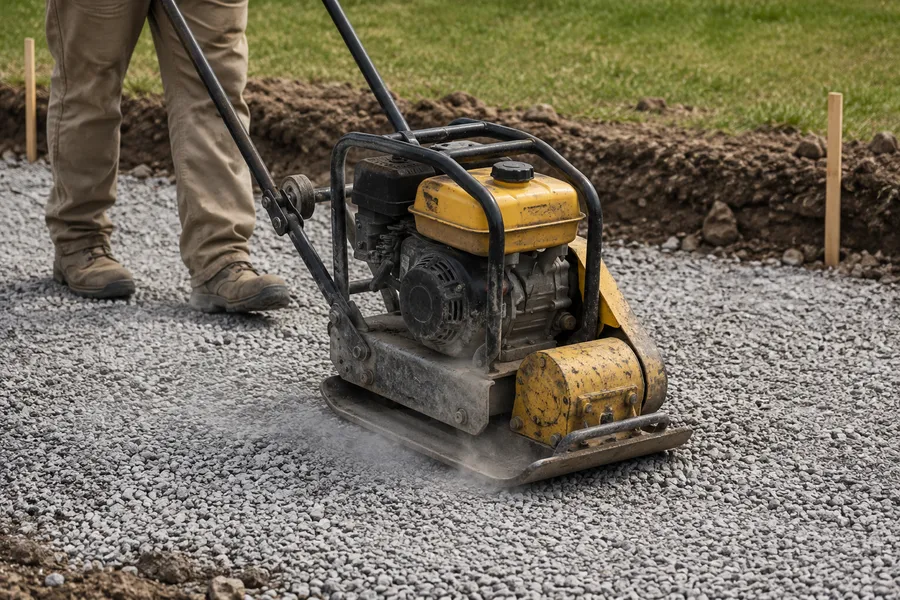
Run a plate compactor over the surface gravel to press the stones together and lock the angular pieces in place. A light pass with water beforehand helps the gravel settle, but avoid soaking the area to the point of mud, which undoes the compaction. A hand tamper or lawn roller works for smaller residential projects without access to a plate compactor.
Pro Tip: Test compaction by pressing a stake into the surface. If it sinks in easily, the layer needs more passes with the compactor.
A driveway with the right gravel, base, and edging can still spread if the surface layer was never compacted.
Maintain the Surface Over Time
Check the surface every few weeks for early ruts, low spots, or gravel migrating past the edging. Rake high spots back into low areas before they turn into permanent ruts, and top off thin spots with fresh gravel, typically once a year for driveways with regular traffic. Repeated pooling in one spot usually points to a grading issue, so correct the slope in that section rather than adding more gravel.
Gravel Holds Up When It’s Installed Right
Gravel gets blamed for problems that come from skipped steps, not from the material itself. A driveway built with proper grading, a compacted base, and secure edging holds its shape for decades and needs only light upkeep, a yearly top-off and the occasional rake. That upkeep costs a fraction of what asphalt or concrete repairs run, and gravel drains better, resists frost heave better, and costs less to install in the first place.
The tradeoff is that gravel demands attention upfront. There is no shortcut around grading, base prep, and edging if you want it to stay put. Put in that work once and gravel becomes one of the most durable, low-maintenance surfaces available, whether you’re building a driveway, a walkway, or a parking area. Shop driveway gravel to get started.
Frequently Asked Questions About Keeping Gravel in Place
What is the best way to stop gravel from spreading on a driveway?
Install edging along the perimeter and make sure the base is graded and compacted before the surface gravel goes down. Edging stops lateral movement, and grading prevents water from pooling and pushing gravel out of place. Angular, crushed gravel adds further stability since the pieces interlock under pressure.
Does landscape fabric keep gravel from moving?
Landscape fabric separates the gravel from the soil underneath, which prevents the two from mixing and keeps gravel from sinking into mud over time. It does not stop gravel from spreading sideways. Pair it with proper edging and grading for full control.
How deep should gravel be to prevent it from shifting?
For driveways, 2 to 3 inches of compacted surface gravel over a properly built base resists shifting under normal traffic. Thinner layers move more easily since there is less weight holding the stones in place. Piling gravel too thick creates the opposite problem, since a deep, loose layer spreads more easily.
What type of gravel stays in place the best?
Angular, crushed gravel holds its shape far better than rounded stone like pea gravel or river rock. The flat, irregular faces lock together under pressure, while round stones roll past each other with little resistance. A mix that includes finer particles alongside larger stones helps fill gaps and firm up the surface.
Is steel or plastic edging better for a gravel driveway?
Steel edging holds up better under vehicle weight and lasts longer overall, making it the stronger choice for driveways. Plastic edging costs less and bends more easily around curves, making it a better fit for garden paths or beds with light foot traffic.
How often does a gravel driveway need maintenance?
Check a gravel driveway every few weeks for early ruts or low spots, and plan to add a fresh top layer of gravel about once a year depending on traffic and weather. Catching thin spots or minor pooling early prevents them from turning into larger repairs.
Delivered price for your ZIP
Delivered to your driveway. You pick the date.
* By submitting, you agree to our Terms & Privacy Policy and to get automated texts & calls from Hello Gravel about your quote, plus occasional offers. Agreeing isn’t required to buy. Msg frequency varies. Msg & data rates may apply. Reply STOP to opt out, HELP for help.
How much do you need?
Pricing your gravel? Get delivered Driveway Gravel prices for your ZIP.
Delivered to your driveway. You pick the date.
* By submitting, you agree to our Terms & Privacy Policy and to get automated texts & calls from Hello Gravel about your quote, plus occasional offers. Agreeing isn’t required to buy. Msg frequency varies. Msg & data rates may apply. Reply STOP to opt out, HELP for help.
Delivered price for your ZIP
Delivered to your driveway. You pick the date.
* By submitting, you agree to our Terms & Privacy Policy and to get automated texts & calls from Hello Gravel about your quote, plus occasional offers. Agreeing isn’t required to buy. Msg frequency varies. Msg & data rates may apply. Reply STOP to opt out, HELP for help.